Thick, dry branches can quickly turn routine pruning into a tiring job, especially when standard bypass loppers struggle to make a clean cut. Anvil garden loppers are designed for this tougher work, using a flat lower jaw and sharp upper blade to concentrate force on hard or dead wood.
This roundup compares 10 popular options by cutting capacity, leverage, handle length, ratchet or compound action, reach, and ease of handling. Whether you need a compact tool for occasional pruning or a long-reach lopper for heavier branches, the right choice depends on the size and condition of the wood you cut most often.
Best 10 Anvil Garden Loppers Picks for 2026
Heavy-Duty Choice
TABOR TOOLS GG12A 30-Inch Anvil Lopper

- 2-inch cutting capacity
- Compound action for extra force
- 30-inch reach with comfort grips
Best For: Thick, dry branches and higher limbs
Compact Power Pick
Fiskars 15-Inch PowerGear Anvil Lopper
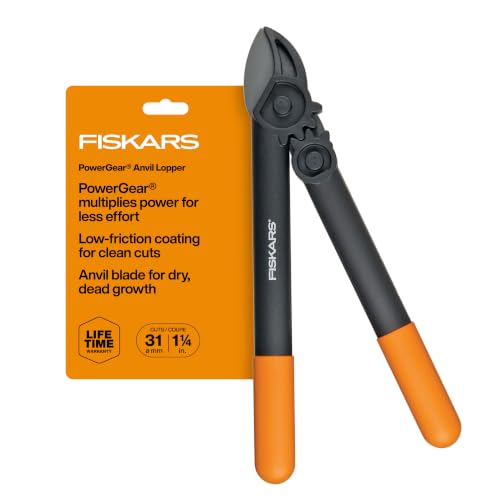
- 1.25-inch cutting capacity
- Lightweight compact design
- PowerGear leverage system
Best For: Dry branches and easy-to-carry pruning
Balanced Mid-Size Option

- 1.5-inch cutting capacity
- Teflon-coated carbon steel blade
- Non-slip comfort grips
Best For: Moderately thick, dry branches
Maximum Leverage Pick
Fiskars 32-Inch Ratchet Anvil Loppers

- 2-inch cutting capacity
- Ratchet action compounds force
- 32-inch reach for thick branches
Best For: Heavy-duty cuts in thick, dry wood
Maximum Reach Power
GARTOL Extendable Ratchet Anvil Lopper

- Four-step ratchet helps cut thick, dry branches
- 28–41-inch telescoping aluminum handles
- PTFE-coated high-carbon steel blade with TPR grips
Best For: Thick deadwood, hardwood, and high branches
Simple Yard Maintenance

- Cuts branches up to 1.6 inches thick
- Gear system and sawtooth design improve leverage
- Low-friction, replaceable SK-5 blade
Best For: Routine garden and yard pruning
Long-Handle Reliability
Spear & Jackson Razorsharp Ratchet Lopper

- Ratchet action cuts thick branches in short steps
- Extends from 28 to 40½ inches
- PTFE-coated SK5 blade with 10-year guarantee
Best For: Hard-to-reach branches and long-term garden use
Best Lightweight Pick
SUIZAN 18-Inch Japanese Anvil Loppers

- Lightweight 1.37-pound design
- Cuts branches up to 30 mm
- Japanese steel anvil blade
Best For: Portable pruning of deadwood, shrubs, and hedges
Best for Hardwood Leverage
GARTOL 29-Inch Compound Anvil Lopper

- Three-times compound force multiplication
- Cuts branches up to 2 inches
- Replaceable blade and anvil system
Best For: Heavy-duty pruning of dry and woody branches
Best Long-Reach Option
Corona 32-Inch Compound Anvil Lopper

- 32-inch handles add reach
- Compound action boosts cutting force
- 1.5-inch anvil capacity
Best For: Tree trimming and higher, hard-to-reach branches
Heavy-Duty Choice – TABOR TOOLS GG12A 30-Inch Anvil Lopper
For gardeners comparing anvil garden loppers for tough pruning, the TABOR TOOLS GG12A combines a 30-inch reach with compound action and a 2-inch cutting capacity. Its anvil head is intended for dry, dead, and woody branches where extra leverage matters.
Best For: Cutting thick, dry branches and handling higher limbs with added leverage.
Pros:
- Compound action helps multiply cutting power.
- 2-inch capacity suits thick, dry, and woody growth.
- 30-inch handles provide additional reach and leverage.
- Hardened carbon steel blade has a low-friction coating and replacement blades are available.
Cons:
- The 30-inch design may be more tool than needed for compact pruning tasks.
- Anvil heads are better suited to dry wood than live green branches.
The GG12A is a strong pick when cutting force and reach take priority. Pair it with a bypass lopper for live green wood to cover a wider range of pruning work.
Compact Power Pick – Fiskars 15-Inch PowerGear Anvil Lopper
The Fiskars 15-inch PowerGear is a compact option for shoppers seeking anvil garden loppers that are easier to carry and maneuver. Its leverage-multiplying mechanism is rated for dry and dead branches up to 1.25 inches thick.
Best For: Routine trimming of dry, dead branches when a lightweight, compact tool is preferred.
Pros:
- PowerGear technology multiplies leverage for easier cuts.
- Lightweight 14.4-ounce design can reduce muscle strain.
- Low-friction coating helps reduce gumming and improve rust resistance.
- Covered by a full lifetime warranty.
Cons:
- Its 1.25-inch capacity is lower than several heavy-duty alternatives.
- The 15-inch length offers less reach and leverage for high branches.
This Fiskars is well suited to smaller yards and lighter pruning sessions. Choose a larger lopper if your regular work involves branches near the upper end of its capacity.
Balanced Mid-Size Option – Scotts 21-Inch Anvil Lopper
The Scotts 21-inch anvil lopper offers a middle ground for gardeners who want more reach than a compact pruner without moving to an extra-long model. Its 1.5-inch capacity and coated carbon steel blade are designed for dry, hard, and thick branches.
Best For: General-purpose pruning of moderately thick, dry branches with a comfortable grip.
Pros:
- 1.5-inch cutting capacity handles moderately thick branches.
- Teflon coating helps resist sap buildup and rust.
- Non-slip comfort grips support control and reduce hand fatigue.
Cons:
- It has less cutting capacity than the 2-inch models in this roundup.
- The supplied notes do not specify a compound or ratchet mechanism.
Scotts provides a practical mid-size choice for routine heavy pruning. It makes the most sense when you want a balance of reach, capacity, and grip comfort rather than maximum leverage.
Maximum Leverage Pick – Fiskars 32-Inch Ratchet Anvil Loppers
For demanding pruning, these Fiskars anvil garden loppers combine a 32-inch reach with a ratchet mechanism that compounds force through a series of squeezes. The 2-inch capacity and anvil blade are aimed at thick, dry, and dead branches.
Best For: Heavy-duty cutting where extended reach and reduced squeezing effort are priorities.
Pros:
- Ratchet design builds cutting force with successive squeezes.
- 2-inch capacity handles thick, dry, and dead branches.
- 32-inch handles provide substantial reach and leverage.
- Hardened steel blade has a low-friction coating to reduce sap buildup and resist rust.
Cons:
- The 32-inch length may be cumbersome for close, compact pruning.
- Anvil construction is intended for dead wood rather than live green branches.
This model is the most leverage-focused option in the group. It is a compelling fit for large, tough cuts, especially when repeated ratcheting is preferable to one forceful squeeze.
Maximum Reach Power – GARTOL Extendable Ratchet Anvil Lopper
For gardeners comparing anvil garden loppers for thick, dry wood, the GARTOL combines adjustable reach with a four-step ratcheting mechanism. Its handles extend from 28 to 41 inches, while the high-carbon steel, PTFE-coated blade is designed for branches up to 2–2.5 inches thick.
Best For: Cutting thick deadwood, hardwood, dense shrubs, and higher branches without using a ladder.
Pros:
- Four-step ratchet system helps reduce hand effort on thick branches.
- Adjustable aluminum handles provide 28–41 inches of reach.
- Non-slip TPR grips and a heat-treated, PTFE-coated steel blade support comfortable, durable use.
Cons:
- At 1.88 kg, it may feel heavy during extended pruning.
- The stated cutting capacity varies between 2 and 2.5 inches depending on the product description.
The GARTOL is a strong choice when cutting power and reach matter most. Its ratchet action is particularly useful for dry, resistant branches, while the telescoping handles add flexibility for larger shrubs and tree canopies.
Simple Yard Maintenance – WORKPRO 28-Inch Anvil Lopper
If you need anvil garden loppers for routine yard work, the WORKPRO offers a straightforward 28-inch design with a 1.6-inch cutting capacity. Its gear system and sawtooth blade design are intended to hold branches securely while reducing the effort needed for pruning.
Best For: General garden maintenance, trimming branches up to 1.6 inches thick, and homeowners who want a low-maintenance lopper.
Pros:
- Gear system provides extra leverage for easier cutting.
- Low-friction coating helps reduce gumming and improve rust resistance.
- Replaceable SK-5 carbon steel blade and soft PP+TPR grips add practical durability.
Cons:
- Its 1.6-inch capacity is lower than the capacity of the telescoping models here.
- The fixed 28-inch handles do not provide adjustable reach.
The WORKPRO is a practical pick for everyday pruning rather than especially large or hard-to-reach branches. Its gear-assisted action, coated blade, and replaceable blade make it a sensible option for regular garden upkeep.
Long-Handle Reliability – Spear & Jackson Razorsharp Ratchet Lopper
The Spear & Jackson 8290RS is anvil garden lopper designed for thick, hard-to-reach branches. Its ratchet action cuts in short steps, and the tubular aluminum handles extend from 28 to 40½ inches for added reach and leverage.
Best For: Gardeners who want a lightweight telescoping lopper for thicker branches and long-term supported use.
Pros:
- Ratchet mechanism makes thicker branches easier to cut in stages.
- Telescoping handles extend to 40½ inches for hard-to-reach limbs.
- SK5 carbon steel, PTFE-coated blade resists rust and is backed by a 10-year guarantee against manufacturing faults.
Cons:
- The product details do not specify a cutting diameter beyond the listed 2-inch cutting width.
- Its ratchet action may be slower than a conventional lopper for small branches.
This model balances reach, leverage, and manageable weight with a proven ratcheting design. It is especially appealing if a long guarantee and comfortable non-slip handles are priorities when choosing anvil loppers.
Best Lightweight Pick – SUIZAN 18-Inch Japanese Anvil Loppers
For gardeners who want compact anvil garden loppers, the SUIZAN 18-inch model combines a lightweight build with a Japanese steel blade designed for thick, dry wood. Its anvil action is rated for branches up to 1-1/8 inches (30 mm), while the aluminum handles help keep the tool portable.
Best For: Routine pruning, deadwood, shrubs, hedges, and gardeners who value a lightweight, easy-to-store lopper.
Pros:
- Compact 18.31-inch design weighs about 1.37 pounds.
- Japanese steel blade with anvil action cuts branches up to 30 mm.
- Oval aluminum handles and elastomer grips support control and comfort.
- Includes a blade cover and instruction manual.
Cons:
- Its 30 mm capacity is lower than the larger loppers in this roundup.
- The short handles provide less leverage for very heavy branches.
The SUIZAN is a practical choice when portability matters more than maximum reach. It suits smaller pruning jobs and thick deadwood while avoiding the bulk of a full-length heavy-duty lopper.
Best for Hardwood Leverage – GARTOL 29-Inch Compound Anvil Lopper
The GARTOL is one of the more force-focused anvil garden loppers, using a multi-pivot compound system to multiply hand force by three times. Its 29-inch handles and 2-inch cutting capacity make it suited to dry, dead, and other hard branches.
Best For: Heavy-duty yard cleanup and gardeners who need extra leverage for hardwood or dry branches.
Pros:
- Compound action multiplies hand force by three times.
- 2-inch capacity is designed for dry, dead, or woody growth.
- SK5 carbon steel blade has a low-friction Teflon coating.
- Replaceable blade and anvil system supports long-term use.
Cons:
- At about 1.38 kg, it is substantially heavier than the compact SUIZAN.
- The 29-inch length may feel cumbersome for close, light pruning.
Choose the GARTOL when cutting power is the priority. The long handles and compound mechanism can reduce effort on demanding branches, though the added size and weight are worth considering before purchase.
Best Long-Reach Option – Corona 32-Inch Compound Anvil Lopper
For shoppers seeking long-handled anvil garden loppers, the Corona 32-inch model emphasizes reach and compound cutting power. Its anvil blade is intended for dry, dead, or hard branches, with a listed cutting capacity of 1.5 inches.
Best For: Tree trimming, thick-branch pruning, and reaching higher or harder-to-access branches.
Pros:
- 32-inch handles provide extra reach and leverage.
- Compound action helps multiply cutting force.
- Anvil blade is suited to dry, dead, and hard branches.
- Heavy-duty construction is intended for demanding yard maintenance.
Cons:
- Its 1.5-inch capacity is lower than the GARTOL’s 2-inch rating.
- The long handles may be less convenient for tight spaces or small shrubs.
- At 2.7 pounds, it is not the lightest option here.
The Corona stands out when reach is as important as cutting force. It is a sensible fit for larger landscape work and higher branches, provided you are comfortable handling a longer, heavier tool.
How We Picked These Anvil Garden Loppers
We focused on the features that matter most during real pruning jobs: stated cutting capacity, handle length, leverage systems, blade materials and coatings, grip comfort, weight, and adjustability. The selection includes compact models for controlled work, long-handled tools for added reach, and ratchet or compound-action designs that help multiply force on thick, dry branches.
Because cutting capacity can vary with wood species, freshness, and user strength, treat each advertised maximum as a guideline rather than a target for every cut. Anvil loppers are generally best suited to dead, dry, or hard branches; bypass loppers are often preferable for live stems when minimizing crushing matters.
Quick Comparison
| Feature | What to look for | Best suited to |
|---|---|---|
| Length | 15 to 21 inches | Compact pruning and easier control |
| Length | 28 to 32 inches | General yard work and added leverage |
| Extendable handles | Adjustable reach | Mixed-height branches and storage flexibility |
| Ratchet action | Step-by-step cutting | Hard branches or users who want reduced hand strain |
| Compound action | Multiple pivot points | High leverage through thicker cuts |
Key Buying Factors for Anvil Garden Loppers
Cutting Capacity and Branch Type
Match the lopper to the branches you actually prune. Models rated around 1.25 to 1.6 inches can handle many routine jobs, while 2-inch tools provide more capacity for thick deadwood. Avoid forcing the jaws beyond their rating, since this can damage the blade, pivot, or handles.
Leverage, Ratchets, and Compound Action
Longer handles usually provide more leverage, but they can also feel heavier and less maneuverable. Ratchet mechanisms divide a cut into stages, while compound-action systems increase mechanical advantage through linked pivots. These features are valuable if you regularly cut dense wood or want to limit hand fatigue.
Reach, Weight, and Control
Telescoping handles offer useful flexibility, but check the locking mechanism and overall weight before buying. A compact lopper may be easier to position accurately in dense branches, while a 30-inch or longer model can reduce bending and help reach higher limbs.
Blade and Handle Design
Look for sharp carbon or hardened steel blades, low-friction or protective coatings, and comfortable non-slip grips. Anvil surfaces should remain aligned with the cutting blade. Clean and dry the tool after use, and follow the manufacturer’s guidance for sharpening and lubrication.
Who Should Buy Which Anvil Garden Loppers?
Choose a compact 15- to 21-inch model if you prune occasionally, work in tight spaces, or prioritize low weight. A 28- to 32-inch compound-action lopper is a strong all-purpose choice for homeowners managing thicker branches. Select a ratchet model if reducing hand force is your main concern, particularly for dry hardwood. Telescoping anvil loppers make sense when branch heights vary or storage flexibility is important.
For frequent professional-style pruning, prioritize durable pivots, replaceable or serviceable blades where available, secure handle locks, and a comfortable grip over maximum advertised capacity alone. Whichever model you choose, wear eye protection and make sure the branch is stable before cutting.