Thick branches can turn routine pruning into a tiring job, especially when a standard lopper lacks the leverage or cutting capacity you need. The best compound action garden loppers multiply your effort through linked pivots, helping you tackle larger growth with fewer strenuous cuts.
We’ve gathered 10 heavy-duty options with bypass or anvil blades, fixed or extendable handles, and cutting capacities suited to different pruning tasks. Use the guide below to compare reach, blade style, power, and handling before choosing the right pair for your yard.
Best 10 Compound Action Garden Loppers Picks for 2026
Heavy-Duty Anvil Pick
Corona 32-Inch Compound Action Lopper

- Compound leverage helps cut tough branches
- Anvil blade suits dry and dead wood
- 32-inch handles provide reach and power
Best For: Thick, dry branches and demanding yard cleanup
Precision Bypass Choice
Fiskars 28-Inch Power-Lever Lopper

- Power-Lever design boosts cutting force
- Bypass head handles branches up to 1.75 inches
- Comfort grips improve control
Best For: Routine pruning of living tree and garden branches
Adjustable Reach Option
YRTSH Extendable Compound Loppers
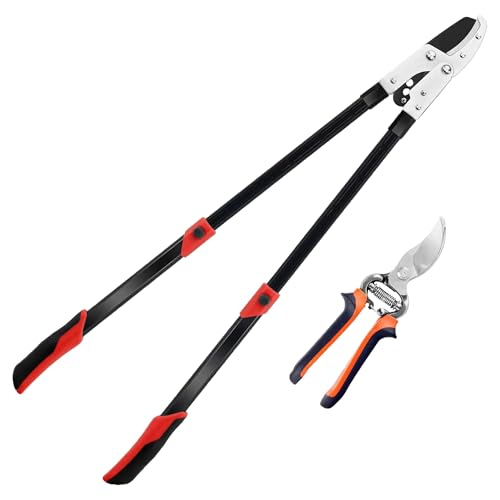
- Adjusts from 28 to 41 inches
- Compound action supports thick-branch cutting
- 2-inch stated capacity with coated alloy-steel blade
Best For: High branches and mixed-height pruning tasks
Low-Effort Ratchet Pick
Fiskars 32-Inch Ratchet Anvil Lopper

- Ratchet action compounds force with easy squeezes
- 2-inch capacity targets thick dead branches
- Low-friction blade coating resists gumming
Best For: Low-effort cutting of thick, dry, dead wood
Best for Easy Setup
Corona FL 3470 Compound Action Bypass Lopper

- Cuts live branches up to 1-1/2 inches
- Handles extend from 21 to 33 inches
- Compound action and bypass blades support cleaner cuts
Best For: Adjustable-reach pruning of trees, shrubs, and fruit branches
Best Heavy-Duty Reach
AIRAJ 27-41-Inch Compound Action Anvil Lopper

- Handles branches up to 2 inches thick
- Telescopes from 27 to 41 inches
- Includes an extra replaceable SK5 steel blade
Best For: Thick branches and high-reach tree trimming
Best for Low-Effort Cutting
Fiskars PowerGear2 32-Inch Bypass Lopper

- Cuts branches up to 2 inches thick
- PowerGear2 mechanism multiplies leverage
- Low-friction blade and SoftGrip handles improve usability
Best For: Low-effort cutting of thick tree branches
Heavy-Duty Power Pick
GARTOL 29-Inch Compound Anvil Lopper

- Three-times force multiplication for easier cutting
- Handles dry wood up to 2 inches thick
- Teflon-coated SK5 blade with replaceable system
Best For: Hardwood cleanup and users needing extra cutting leverage
Reach & Leverage Pick
TABOR TOOLS GG22A Extendable Anvil Lopper

- Adjusts from 27 to 40 inches
- Three-times compound cutting leverage
- Cuts dry wood up to 1 3/4 inches
Best For: Higher limbs and gardeners wanting adjustable reach
Long-Reach Classic
TABOR TOOLS GG12A 30-Inch Anvil Lopper

- 2-inch capacity for thick dry branches
- 30-inch handles add reach and leverage
- Compound action reduces required cutting force
Best For: Fixed-handle heavy-duty pruning and dry-wood cleanup
Heavy-Duty Anvil Pick – Corona 32-Inch Compound Action Lopper
For gardeners seeking compound action garden loppers for demanding pruning, this 32-inch Corona model emphasizes leverage and durability. Its compound action helps multiply cutting force, while the anvil blade is suited to dry, dead, and hard branches up to 1.5 inches thick.
Best For: Homeowners and professionals trimming thick, dry branches, higher limbs, and overgrown shrubs.
Pros:
- Compound action provides extra cutting leverage.
- Anvil blade is designed for dry, dead, or hard wood.
- Long fiberglass and steel handles add reach and cutting power.
- Heavy-duty construction suits regular yard maintenance.
Cons:
- Anvil design is less targeted to making bypass-style cuts on live green branches.
- Its 32-inch length may be more tool than needed for small pruning jobs.
The Corona is a straightforward choice when reach, force, and anvil-style cutting matter most. It is particularly well matched to cleanup work involving thick or dead wood.
Precision Bypass Choice – Fiskars 28-Inch Power-Lever Lopper
These compound action garden loppers use Fiskars Power-Lever technology to deliver more cutting power than traditional designs. The 28-inch bypass lopper handles branches up to 1.75 inches and combines coated steel blades with comfort-focused grips.
Best For: Routine tree and garden pruning where clean bypass cuts, control, and comfortable handling are priorities.
Pros:
- Power-Lever compound design increases cutting power.
- Bypass head is suited to trimming living branches.
- Low-friction coating supports smoother cuts and resists gumming and rust.
- SoftGrip touchpoints and non-slip handles improve comfort and control.
Cons:
- Its 1.75-inch capacity is lower than some heavy-duty 2-inch options.
- At 3.2 pounds, it may feel substantial during extended overhead work.
Choose this Fiskars model for a balance of leverage and precision. Its bypass cutting head and ergonomic grip make it a practical all-around option for maintaining trees and garden growth.
Adjustable Reach Option – YRTSH Extendable Compound Loppers
For shoppers comparing compound action garden loppers with adjustable reach, the YRTSH model extends from 28 to 41 inches. Its alloy-steel, low-friction-coated blade offers a stated 2-inch capacity, while the compound design is intended to reduce effort on thick branches.
Best For: Cutting thick or high branches, shrubs, hedges, and other growth where adjustable handle length is useful.
Pros:
- Six-step adjustment provides a 28-to-41-inch reach range.
- Compound action adds power for thick-branch cutting.
- 2-inch stated cutting capacity supports heavier pruning tasks.
- Soft, non-slip grips help with comfort during longer jobs.
Cons:
- The supplied specifications list two items, so buyers should verify the package contents and configuration.
- Its anvil blade is not described as a bypass-style head for precision cuts on live wood.
- Adjustable handles introduce more setup considerations than fixed-length loppers.
The YRTSH stands out for versatility: shorten it for closer work or extend it when reach and leverage are more important. It is a useful fit for mixed pruning tasks involving branches at different heights.
Low-Effort Ratchet Pick – Fiskars 32-Inch Ratchet Anvil Lopper
This Fiskars model is a strong candidate among compound action garden loppers for thick, dry, and dead branches. Its ratchet mechanism compounds force through a series of easier squeezes, and the 32-inch handles provide leverage for cuts up to 2 inches in diameter.
Best For: Gardeners who want maximum mechanical assistance when removing thick, dry, or dead wood.
Pros:
- Ratchet action builds cutting force through multiple squeezes.
- Anvil blade is designed for thick, dry, and dead branches.
- 2-inch capacity handles substantial pruning jobs.
- Low-friction steel blade coating helps reduce gumming and adds rust resistance.
Cons:
- The anvil design is specialized for hard and dead wood rather than bypass-style live-branch pruning.
- Repeated ratchet squeezes may be slower than a single continuous cut for smaller branches.
- Its 32-inch length may be less convenient in tight spaces.
The ratchet mechanism makes this Fiskars a sensible choice when reducing hand effort is the priority. Its long handles, 2-inch capacity, and anvil head are oriented toward heavy cleanup rather than delicate pruning.
Best for Easy Setup – Corona FL 3470 Compound Action Bypass Lopper
Corona FL 3470 Compound Action Bypass Lopper with Extendable Handles, 1-1/2" Cut, 21" to 33" Length
Check Price On AmazonFor gardeners who want adaptable reach without giving up maneuverability, the Corona FL 3470 is a practical compound action garden lopper. Its dual-pivot mechanism boosts leverage, while the handles extend from 21 to 33 inches for higher limbs and tougher cuts.
Best For: Pruning live branches, fruit trees, shrubs, and seasonal yard growth when you need adjustable reach and clean bypass cuts.
Pros:
- Compound action helps reduce effort on branches up to 1-1/2 inches thick.
- Extendable handles provide extra reach and cutting power.
- High-carbon-steel bypass blades make smooth, scissor-style cuts.
Cons:
- Its 1-1/2-inch capacity is lower than some heavier-duty options.
- At 3 pounds, it may feel substantial during extended overhead work.
The Corona is a well-rounded choice for routine tree and shrub maintenance, especially if one lopper needs to cover both close-in pruning and higher branches.
Best Heavy-Duty Reach – AIRAJ 27-41-Inch Compound Action Anvil Lopper
The AIRAJ is a heavy-duty compound action garden lopper built for thicker branches and elevated cuts. Its four-pivot design increases cutting force, while the aluminum handle adjusts from 27 to 41 inches for added reach.
Best For: Tackling branches up to 2 inches thick and reaching higher limbs during demanding tree and garden maintenance.
Pros:
- Four pivot points provide strong compound cutting leverage.
- Six-position telescoping handle adjusts from 27 to 41 inches.
- Includes a replaceable SK5 steel blade for long-term practicality.
- Teflon-coated blade is designed for smooth cuts and rust resistance.
Cons:
- At 3.5 pounds, it is heavier than more compact loppers.
- The long extended handle may be less convenient in tight spaces.
Choose the AIRAJ when branch thickness and reach are higher priorities than compact handling. Its replaceable blade is also useful for gardeners planning frequent, demanding use.
Best for Low-Effort Cutting – Fiskars PowerGear2 32-Inch Bypass Lopper
The Fiskars PowerGear2 is a strong compound action garden lopper for gardeners who want increased cutting power with a fixed 32-inch reach. Its PowerGear2 mechanism multiplies leverage through the toughest part of the cut, and the coated steel blade handles branches up to 2 inches thick.
Best For: Cutting thick tree branches with less effort while maintaining comfortable control during routine yard and garden work.
Pros:
- PowerGear2 technology increases leverage over traditional designs.
- 32-inch bypass blade cuts branches up to 2 inches thick.
- Low-friction coating helps reduce gumming and improve rust resistance.
- SoftGrip handles support comfort and control.
Cons:
- The fixed 32-inch length offers less reach flexibility than telescoping models.
- At 3.9 pounds, it is the heaviest option in this selection.
The Fiskars is a compelling pick when leverage and comfortable cutting matter most. It combines a substantial 2-inch capacity with a low-friction blade and a full lifetime warranty.
Heavy-Duty Power Pick – GARTOL 29-Inch Compound Anvil Lopper
For gardeners seeking compound action garden loppers for demanding cleanup, the GARTOL 29-inch model emphasizes leverage and control. Its multi-pivot system is designed to multiply hand force while the anvil head handles dry, dead, and woody branches up to 2 inches thick.
Best For: Hardwood, dry branches, and gardeners who want reduced hand effort during heavy-duty pruning.
Pros:
- Compound mechanism is designed to multiply cutting force by three times.
- 2-inch cutting capacity suits thick, dry, and woody growth.
- Teflon-coated SK5 carbon steel blade resists sap buildup and rust.
- 29-inch handles and non-slip TPR grips provide leverage and control.
Cons:
- Anvil design is intended for dry and dead wood rather than live green branches.
- Its long, heavy-duty construction may feel less convenient for light pruning.
Choose this GARTOL if cutting power, a 2-inch capacity, and long-term serviceability matter most. The replaceable blade and anvil system are useful details for gardeners planning to keep the tool in regular rotation.
Reach & Leverage Pick – TABOR TOOLS GG22A Extendable Anvil Lopper
The TABOR TOOLS GG22A is a practical choice among compound action garden loppers when reach is as important as cutting force. Its telescopic handles adjust from 27 to 40 inches, while the compound anvil mechanism is built for dry, dead, and woody branches up to 1 3/4 inches.
Best For: Reaching higher limbs and adjusting handle length for added leverage during dry-wood pruning.
Pros:
- Telescopic handles lock at various lengths between 27 and 40 inches.
- Compound action is designed to multiply applied cutting force three times.
- Hardened carbon steel blade has a low-friction, non-stick coating.
- Rubberized anti-shock grips add comfort during forceful cuts.
Cons:
- Its 1 3/4-inch stated capacity is lower than the 2-inch models in this roundup.
- Anvil construction is best suited to dry and dead wood, not live green branches.
This is the most flexible option for gardeners who alternate between close-in pruning and higher limbs. The adjustable length adds versatility, though the anvil head makes it a specialized tool for woody, dry growth.
Long-Reach Classic – TABOR TOOLS GG12A 30-Inch Anvil Lopper
The TABOR TOOLS GG12A offers a straightforward compound action garden lopper design with a fixed 30-inch handle. It combines extra reach and leverage with an anvil head rated for branches up to 2 inches, making it suitable for thick, dry, dead, and woody growth.
Best For: Routine heavy-duty pruning where a fixed long handle and 2-inch cutting capacity are preferred.
Pros:
- Compound action multiplies cutting power for thick, dry branches.
- 2-inch capacity supports demanding woody-growth cleanup.
- 30-inch handles provide extra leverage and access to higher limbs.
- Hardened carbon steel blade has a low-friction non-stick coating.
Cons:
- Fixed 30-inch handles offer less reach flexibility than the extendable GG22A.
- Anvil-style cutting is intended primarily for dry and dead wood.
The GG12A is a solid fit when you want long handles without an adjustable mechanism. It provides a balanced combination of compound leverage, a 2-inch capacity, and a coated carbon steel blade for recurring dry-wood work.
How We Picked the Best Compound Action Garden Loppers
We focused on loppers that use compound-action, power-lever, ratchet, or comparable mechanisms to increase cutting force. The selection includes bypass models for live wood and anvil models for dry or dead branches, along with fixed-length and telescoping designs. We also considered stated cutting capacity, handle length, reach, construction, replacement-part availability where noted, and the practical tradeoff between power and maneuverability.
Cut capacity is a manufacturer claim and depends on wood species, moisture, branch condition, blade sharpness, and the user’s technique. Forcing a lopper beyond its rating can damage the tool or produce an unsafe, ragged cut.
Quick Comparison
| Best For | What to Look For |
|---|---|
| Live branches | Bypass blades and clean, controlled cuts |
| Dry or dead wood | Anvil blades with high stated capacity |
| Overhead or distant growth | Extendable handles and manageable weight |
| Maximum leverage | Compound, PowerGear, or ratchet mechanisms |
| Frequent pruning | Comfortable grips, durable pivots, and replaceable parts |
Key Buying Factors for Compound Action Garden Loppers
Blade Type
Choose bypass loppers for living branches because their scissor-like blades generally leave a cleaner surface that supports healing. Anvil loppers close one blade against a flat surface and are often better suited to dry, hard, or dead wood. If you prune both types, owning the appropriate blade style—or choosing a model based on your most common task—can improve results.
Cutting Capacity and Mechanism
A 1.5- to 2-inch rating covers many residential pruning jobs, but capacity alone does not determine ease of use. Compound pivots distribute force across multiple moving points, while ratchet mechanisms allow incremental cuts. These designs can help with thick branches, though they may feel slower or more complex than a simple lopper on small growth.
Length, Reach, and Weight
Long handles provide leverage and reach but can be awkward in dense shrubs or tiring when held overhead. Telescoping models offer useful versatility, yet their locking hardware adds weight and potential maintenance needs. Favor the shortest length that safely reaches your target, especially if you value precise placement.
Ergonomics and Maintenance
Look for non-slip grips, comfortable handles, a secure pivot, and blades that can be cleaned and sharpened. After pruning, remove sap and debris, dry the tool, and lightly lubricate moving parts. Never use loppers as a lever, twist them sideways, or cut wood beyond their stated capacity.
Who Should Buy Which Compound Action Garden Loppers?
Choose a bypass model if your main goal is pruning healthy trees, shrubs, and ornamental growth. Anvil models make more sense for dead limbs, dry wood, and demanding cleanup work. Select an extendable pair for varied tree heights or hard-to-reach branches, but choose fixed handles when compact handling and lower weight matter most. For especially tough cuts, prioritize a compound or ratchet system; for frequent general maintenance, balance cutting power with comfort, control, and ease of storage.