Choosing the right anvil pruning shears can make tough garden cleanup faster and less tiring. Their blade-and-anvil design is especially useful for cutting dry stems, dead wood, and branches that are too demanding for lightweight bypass pruners.
We compared 10 popular options across cutting capacity, blade materials, ratcheting assistance, handle comfort, durability, and ease of maintenance to help you find the best fit for your garden and workload.
Best 10 Anvil Pruning Shears Picks for 2026
Best for Dry Growth
Fiskars Power-Lever Anvil Pruner

- Power-Lever design increases cutting leverage
- Precision-ground, low-friction steel blade
- Lifetime warranty included
Best For: Dead stems, winter-killed growth, and small branches
Best for Low-Effort Cutting
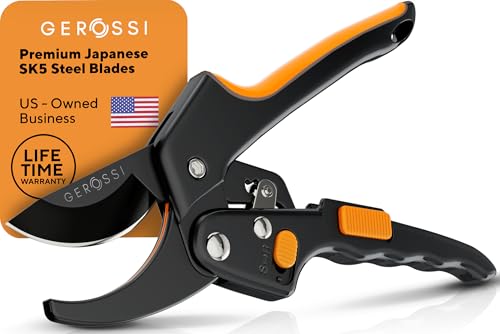
- Single-cut and three-step ratchet modes
- Designed to multiply hand power threefold
- Cuts branches up to 0.75 inches
Best For: Thicker branches and gardeners needing reduced hand effort
Best Everyday Value

- SK-5 steel blade with protective black coating
- Anvil groove for dead and dried plants
- Spring-assisted opening and safety lock
Best For: Routine pruning of dry growth and small garden branches
Best Heavy-Duty Ratchet
gonicc Professional Anvil Pruner
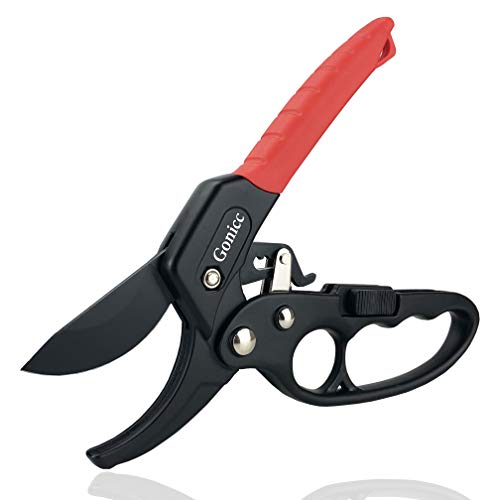
- Three-times-power ratchet mechanism
- SK-5 steel blade for precise cuts
- Reinforced chrome vanadium handles
Best For: Light branches, shrubs, hedges, and users wanting extra leverage
Adjustable Heavy-Duty Pick

- Anvil design for dry, woody growth
- Adjustable handle opening
- SK5 blade and sealed internal spring
Best For: Tough pruning and gardeners needing a more adaptable grip
Proven Everyday Pick
Spear & Jackson 7158AS Anvil Pruner

- Cuts woody branches up to 15mm
- Rust-resistant blade coatings
- Lightweight, ambidextrous design
Best For: Routine pruning of smaller woody branches
Replaceable-Blade Pick
LeafLux LFXP1108S Anvil Shears

- SK5 blade rated 58–60 HRC
- Replaceable blade design
- Non-slip handle and internal spring
Best For: Small-branch pruning with long-term maintainability
Best for Extra Cutting Power
Heavy Duty Ratchet Anvil Shears

- Three-stage ratchet action reduces strain
- Cuts branches up to 1 inch, depending on conditions
- Manganese steel blade with safety latch
Best For: Thick stems, stalks, and small branches
Best for Hard, Dry Wood
LÖWE Professional Anvil Pruner

- Handles hard, dry, and old wood
- Carbon steel blade has sliding-lacquer coating
- Replaceable parts and one-hand safety lock
Best For: Established branches and medium to large hands
Best for Light Precision Work

- Cuts branches up to 1/2 inch
- Teflon-coated carbon steel blade
- Lightweight design with non-slip grip
Best For: Dry stems, dead wood, and detailed pruning
Best for Dry Growth – Fiskars Power-Lever Anvil Pruner
For gardeners comparing anvil pruning shears, the Fiskars Power-Lever model is designed for dry, dead growth and small branches. Its leverage-focused design helps increase cutting power while the precision-ground steel blade is intended to reduce cutting resistance.
Best For: Dead-heading flowers, removing winter-killed stems, stripping small logs, and cutting dry branches.
Pros:
- Power-Lever technology provides more leverage than traditional designs.
- Precision-ground steel blade with a low-friction coating for smoother cuts and improved rust resistance.
- Ambidextrous design and rubber handle.
- Includes a lifetime warranty.
Cons:
- The 0.63-inch cutting capacity is better suited to small branches and stems than larger limbs.
- The anvil design is specifically oriented toward dry and dead growth.
This Fiskars pruner is a practical choice when cutting leverage and dependable construction matter more than maximum branch capacity. It is particularly well matched to routine cleanup of dead garden growth.
Best for Low-Effort Cutting – Gerossi Ratchet Anvil Pruner
The Gerossi ratchet model stands out among anvil pruning shears with two cutting modes: a conventional single cut and a three-step ratchet cut. The ratchet mechanism is designed to multiply hand power, making thicker or dried branches easier to handle.
Best For: Gardeners who want lower-effort cutting for branches up to 0.75 inches, including users with weak hands or arthritis.
Pros:
- Two-in-one single-cut and three-step ratchet operation.
- Ratchet mode is designed to provide threefold hand-power multiplication.
- High-carbon SK-5 steel blade with corrosion-resistant coating.
- Ergonomic non-slip grip and one-hand safety lock.
Cons:
- Ratchet cutting uses multiple steps rather than one quick cut.
- Its 0.75-inch capacity limits it to relatively small branches.
Choose this Gerossi pruner if reducing hand effort is a priority. Its ratcheting system adds versatility for tougher cuts while the standard mode remains available for everyday pruning.
Best Everyday Value – WORKPRO 8-Inch Anvil Pruner
For straightforward anvil pruning shears, the WORKPRO combines an SK-5 steel blade with an anvil groove intended for dead, dried plants and stubborn branches. Its spring-assisted opening, ergonomic rubber handle, and safety lock support routine garden use.
Best For: General pruning of dry growth, young fruit branches, flowers, vegetables, and branches up to 0.75 inches.
Pros:
- SK-5 steel blade with black coating for strength and corrosion resistance.
- Anvil groove is suited to dead and dried-out plants.
- Responsive spring supports one-hand operation.
- Shock-absorbing, anti-slip rubber handle and locking mechanism.
Cons:
- The 19-millimeter cutting capacity is intended for smaller branches.
- The anvil format is less targeted toward fresh, flexible stems than dead growth.
This WORKPRO is a sensible all-purpose option for gardeners who want a conventional anvil design with comfortable handling features. It offers useful everyday capacity without adding a ratchet mechanism.
Best Heavy-Duty Ratchet – gonicc Professional Anvil Pruner
The gonicc GPPS-1011 pairs an anvil groove with a three-times-power ratchet mechanism. Among anvil pruning shears, it is built for users who want gradual, lower-effort cutting and a reinforced handle for frequent pruning of light branches, shrubs, and hedges.
Best For: Light tree branches, rose bushes, shrubs, and hedges when extra leverage and a sturdy handle are useful.
Pros:
- Ratchet mechanism multiplies hand force by up to three times.
- Premium SK-5 steel blade supports clean, precise cuts.
- Chrome vanadium handles provide a reinforced, heavy-duty construction.
- Ambidextrous cushioned, non-slip grip.
Cons:
- The ratchet requires progressive clicks rather than a single continuous cut.
- A thin layer of anti-rust oil may be present on arrival.
The gonicc is a strong fit for gardeners who value leverage and durable construction. Its 24-millimeter capacity and ratcheting action make it suitable for controlled pruning of light branches and woody garden growth.
Adjustable Heavy-Duty Pick – VT-X850 Anvil Pruning Shears
These anvil pruning shears are designed for tougher garden jobs, using a sharp Japanese SK5 steel blade against a solid anvil base. With adjustable handles, an internal spring and a stated cutting capacity of up to 0.8 inches depending on wood hardness, they suit dry stems, woody growth and small branches.
Best For: Gardeners pruning dry branches, dead stems, roses, shrubs, fruit trees and other woody growth, particularly users who value adjustable hand comfort.
Pros:
- Anvil action provides strong leverage for dry and woody material.
- Adjustable handle opening can accommodate different hand sizes and help reduce fatigue.
- Japanese SK5 blade is designed for sharpness and edge retention.
- Sealed internal spring helps prevent debris from catching in the mechanism.
Cons:
- Anvil shears are better suited to dry or dead wood than delicate green-stem trimming.
- The stated 0.8-inch capacity depends on the hardness of the wood.
The VT-X850 is a practical choice when cutting power and grip adjustability matter more than lightweight precision. Its anvil design and enclosed spring make it particularly appealing for heavier seasonal cleanup.
Proven Everyday Pick – Spear & Jackson 7158AS Anvil Pruner
Spear & Jackson 7158AS Razorsharp Advantage Anvil Pruning Shears, Pruner, Multicoloured
Check Price On AmazonThe Spear & Jackson 7158AS is a compact anvil pruning shear for woody branches up to 15mm. Its SK5 carbon steel upper blade, rust-resistant coatings and soft-feel ergonomic handles make it a straightforward option for routine garden pruning.
Best For: Gardeners wanting a lightweight, ambidextrous anvil pruner for smaller woody branches and general garden maintenance.
Pros:
- Anvil action helps minimise stem twisting on woody branches.
- SK5 carbon steel upper blade is designed to retain its sharpness.
- PTFE-coated upper blade and hard-chromed lower blade offer rust resistance.
- Soft-feel handles and a locking catch support comfortable, secure use.
Cons:
- The 15mm cutting width is more limited than that of heavier-duty models.
- The product is intended for woody branches rather than larger limbs.
At 195g, this Spear & Jackson model balances manageable weight with useful anvil cutting performance. It is a sensible choice for smaller pruning tasks where established-brand features and corrosion resistance are priorities.
Replaceable-Blade Pick – LeafLux LFXP1108S Anvil Shears
LeafLux LFXP1108S anvil pruning shears combine SK5 high-carbon steel blades with a lever system for cutting dry, wet or hardwood branches up to 15mm. The all-metal construction, non-slip PVC handle and replaceable blade are useful features for gardeners who want a durable, maintainable tool.
Best For: Gardeners pruning small branches and dry stems who value replaceable parts, a non-slip grip and an internally supported spring.
Pros:
- Heat-treated SK5 blade is rated at 58–60 HRC and cuts material up to 15mm.
- Replaceable blade can extend the shears’ service life.
- Precision lever system is designed to transfer cutting force smoothly.
- All-metal body, internal spring and ergonomic PVC handle support stable handling.
Cons:
- Not suitable for cutting metal or stainless steel.
- The 15mm capacity is intended for smaller branches rather than large limbs.
- At about 0.3kg, it is heavier than some compact pruning shears.
The LeafLux stands out for its serviceable design and sturdy construction. Choose it if replaceable blades and a secure grip are more important to you than having the lightest possible pair of anvil shears.
Best for Extra Cutting Power – Heavy Duty Ratchet Anvil Shears
These anvil pruning shears use a three-stage ratchet action to make thick stems and branches easier to cut. The manganese steel blade and aluminum body are designed for demanding garden cleanup, with a stated capacity of up to 1 inch depending on the wood and your strength.
Best For: Gardeners who want assisted cutting power for stems, stalks, and small branches.
Pros:
- Ratchet action helps reduce cutting strain.
- Neoprene insert helps hold branches and stems in place.
- Corrosion-resistant construction with a safety latch and lifetime warranty.
Cons:
- Ratchet operation may be slower than a standard single-cut pruner.
- The stated 1-inch capacity varies with wood type and user strength.
Choose this model when leverage and reduced hand effort matter more than compact simplicity. Its sturdy construction and assistive action suit heavier pruning tasks.
Best for Hard, Dry Wood – LÖWE Professional Anvil Pruner
The LÖWE 1.104 is a professional-style pair of anvil pruning shears built for hard, dry, or old wood. Its carbon steel blade, power-transfer design, and corrosion-reducing sliding lacquer support controlled cuts on branches and twigs.
Best For: Gardeners with medium to large hands who regularly prune tougher, established wood.
Pros:
- Designed to cut hard, dry, and old wood.
- Powerful cutting system supports efficient force transfer.
- Made in Germany with a one-hand safety lock and replaceable parts.
Cons:
- At 290 grams, it is heavier than some compact pruners.
- The 22-millimeter cutting width is less suited to very thick branches.
This is a strong choice for users who prioritize durable, serviceable construction and effective cutting on dry wood. Its larger 21-centimeter format may feel best in bigger hands.
Best for Light Precision Work – Scotts 8-Inch Anvil Pruner
Scotts’ anvil pruning shears are a compact option for detailed yard and garden work. The carbon steel blade has a Teflon coating to resist sap buildup and rust, while the non-slip grip is designed for comfortable handling during smaller pruning jobs.
Best For: Precise trimming of dry stems and dead wood up to 1/2 inch in diameter.
Pros:
- Handles branches up to 1/2 inch in diameter.
- Teflon-coated blade resists sap buildup and rust.
- Lightweight, compact design with a non-slip comfort grip.
Cons:
- Lower capacity than heavier-duty anvil pruners.
- Best suited to detailed work rather than thick branches.
Pick this model for maneuverability and routine precision pruning. Its coating and compact profile make it convenient for dry stems, dead wood, and smaller garden cuts.
How We Picked the Best Anvil Pruning Shears
We evaluated these Anvil Pruning Shears for the features that matter during real pruning work: stated cutting capacity, blade construction, handle design, cutting mechanism, sap resistance, and suitability for dry or woody growth. Ratchet models received extra consideration for reducing hand force, while traditional models may appeal to users who prefer a faster, simpler squeeze.
Because product specifications and included features can vary by seller, confirm the current capacity, dimensions, and warranty before ordering. Cutting capacity is also affected by wood hardness, branch shape, blade sharpness, and your grip strength.
Quick Comparison
| Best For | Look For | Why It Matters |
|---|---|---|
| Frequent heavy pruning | Ratchet mechanism and sturdy handles | Helps multiply hand force on thick stems |
| Dry stems and dead wood | Hardened or SK-5 steel blade | Supports sharp, durable cutting performance |
| General garden maintenance | About 1/2- to 5/8-inch capacity | Balances versatility and manageable size |
| Thicker branches | 3/4-inch rated capacity | Provides more clearance for demanding cuts |
| Long-term ownership | Replaceable parts, lock, and rust protection | Makes storage and maintenance easier |
Key Buying Factors for Anvil Pruning Shears
Cutting Capacity
Capacity is a useful starting point, but it is not a guarantee for every branch. A 1/2-inch model may handle routine dead stems, while a 5/8- or 3/4-inch tool offers more room for thicker, harder wood. Avoid forcing the shears beyond their rating, since this can damage the blade, anvil, or pivot.
Ratchet Versus Standard Action
Ratchet anvil pruners cut in several shorter squeezes, making them helpful for gardeners with limited hand strength or long pruning sessions. Standard-action shears are usually quicker for smaller cuts and may feel more direct. Choose based on comfort rather than capacity alone.
Blade and Anvil Quality
Look for hardened steel, SK-5 steel, or another clearly identified blade material. A cleanly aligned anvil supports the branch while the blade cuts, but the contact surface should remain free of sap and debris. A replaceable or reversible anvil can extend useful life.
Comfort, Safety, and Maintenance
Non-slip handles, a spring or ratchet system, and a secure locking mechanism improve everyday usability. After use, wipe away sap, dry the tool, and apply a small amount of lubricant to the pivot. Store it locked and protected from moisture.
Who Should Buy Which Anvil Pruning Shears?
Choose a ratchet model if you regularly cut dense dead wood, have reduced grip strength, or want to minimize hand fatigue. A conventional anvil shear is a better choice for quick cleanup, lighter workloads, and users who prefer fewer moving parts. Gardeners handling mixed growth should consider a midrange capacity around 5/8 inch, while those tackling consistently thicker dry branches may benefit from a 3/4-inch option.
For occasional pruning, prioritize a comfortable handle, dependable lock, and corrosion-resistant blade over maximum capacity. For frequent or professional use, pay closer attention to pivot durability, replacement parts, warranty coverage, and how easily the blade and anvil can be cleaned or serviced.