The best belt sanders remove material quickly, flatten rough boards, and smooth large surfaces far faster than handheld finishing sanders. The right model depends on your projects, available power, preferred sanding width, and dust-control needs.
We compared 10 options ranging from compact benchtop machines to powerful 4-by-24-inch corded sanders and cordless designs. Use the guide below to narrow the list by performance, portability, control, and value.
Best 10 Belt Sanders Picks for 2026
High-Capacity Choice
Makita 9403 4 x 24 Belt Sander

- Wide 4 x 24-inch belt for fast material removal
- Low-noise 84 dB operation
- Flush-to-wall sanding design
Best For: Large sanding jobs and demanding shop work
Cordless Jobsite Pick
DEWALT 20V MAX Brushless Belt Sander

- Brushless 20V MAX cordless design
- 25-speed dial for controlled sanding
- Tool-free belt changes and dust collection compatibility
Best For: Portable work and users invested in DEWALT 20V MAX tools
Versatile Corded Performer
Makita 9903 3 x 21 Belt Sander

- 8.8-amp motor with variable speed
- Auto-tracking belt system
- Flush-to-wall sanding capability
Best For: Controlled wood sanding in a workshop
User-Controlled Budget Pick

- Pressure-control warning system
- Lightweight 5.5-pound design
- Micro-filtration and vacuum compatibility
Best For: DIY wood projects and easier handheld sanding
Compact Workshop Combo
WEN Benchtop Belt and Disc Sander
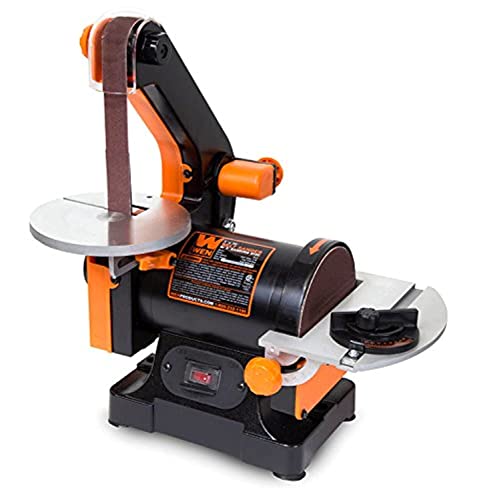
- Combines a 1-by-30-inch belt with a 5-inch disc
- Heavy-duty base helps reduce walking and wobbling
- Includes dual dust ports and a two-year warranty
Best For: Small workshop projects requiring belt and disc sanding
Variable-Speed Heavy-Duty Pick

- 9A, 1,020W motor for demanding sanding jobs
- Variable-speed dial improves application control
- Clear cover, dust bag, and five-year warranty included
Best For: Heavy-duty woodworking and controlled material removal
Lightweight Everyday Option
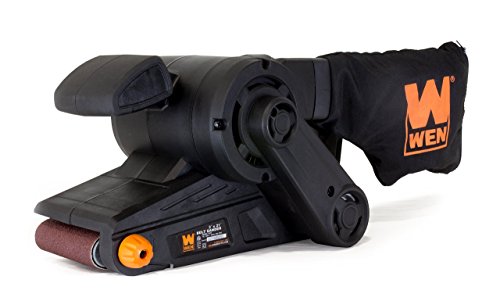
- Lightweight 6.2-pound design reduces fatigue
- 7A motor reaches over 13 feet per second
- Dust bag and lock-in safety feature included
Best For: General DIY sanding and portable workshop use
Metalworking Variable-Speed Pick
VEVOR 30 x 1-Inch Belt Grinder

- 550W motor with variable-speed VFD control
- Supports circular and flat grinding
- Includes three grits for coarse-to-fine work
Best For: Metalworking, knife making, polishing, and deburring
Woodworking Flexibility Pick
Jellas 7-Amp Handheld Belt Sander
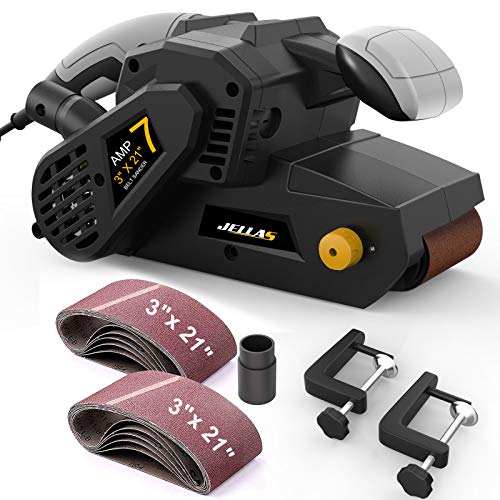
- Variable speed with six adjustment settings
- Converts from handheld to bench sander
- Includes 10 belts from 40 to 180 grit
Best For: Woodworking with handheld and table-mounted needs
High-Power Combination Pick

- 10-amp motor with 660–1,310 FPM speed range
- Works handheld or mounted to a benchtop
- Includes dust accessories and mounting hardware
Best For: Large woodworking surfaces and stationary sanding
High-Capacity Choice – Makita 9403 4 x 24 Belt Sander
The Makita 9403 is a powerful corded option for fast material removal on larger wood surfaces. Its 4-inch-wide belt runs at 1,640 feet per minute, while the low-noise 84 dB design and large front grip support more comfortable operation.
Best For: Large sanding jobs where fast stock removal and flush-edge sanding matter.
Pros:
- Wide 4 x 24-inch belt supports efficient material removal
- Low-noise 84 dB operation improves operator comfort
- Designed for sanding flush to walls with the nose and side
- Labyrinth construction helps protect the motor and bearings from dust
Cons:
- At 13 pounds, it is relatively heavy for extended overhead or vertical work
- Corded design limits mobility compared with cordless belt sanders
The 9403 is a strong fit when productivity and sanding capacity take priority. Its weight and cord are trade-offs, but the broad belt, high removal speed, and flush-sanding design make it well suited to demanding shop work.
Cordless Jobsite Pick – DEWALT 20V MAX Brushless Belt Sander
The DEWALT DCW220B brings cordless convenience to belt sanders with a brushless 20V MAX motor and variable-speed control. Its 25-speed selection dial helps match sanding speed to the material, while the tool-free belt-release system simplifies changes.
Best For: Portable sanding jobs where cordless operation, variable speed, and dust collection are priorities.
Pros:
- Brushless motor is designed for power, efficiency, and runtime
- Variable-speed trigger and 25-speed dial support application-specific control
- Tool-free belt changes save time between applications
- Compatible with a DEWALT AirLock dust collection system sold separately
Cons:
- Battery and charger are not included
- AirLock dust collection equipment is sold separately
- Battery-powered operation requires managing available runtime
This DEWALT is a practical choice for users who need to move freely around a jobsite or workshop. It offers useful control and dust-management features, but buyers should budget for the battery system and optional AirLock equipment if they do not already own them.
Versatile Corded Performer – Makita 9903 3 x 21 Belt Sander
The Makita 9903 is a corded belt sander with an 8.8-amp motor and adjustable speed from 690 to 1,440 feet per minute. Its auto-tracking belt system, flush-sanding design, and front grip make it a versatile choice for controlled work on wood surfaces.
Best For: Woodworkers who want adjustable speed and reliable belt tracking in a mid-size corded tool.
Pros:
- Variable-speed dial adapts the tool to different applications
- Auto-tracking system keeps the belt aligned without adjustment
- Designed to sand flush to walls with the nose and side
- 85 dB operation and front grip support more comfortable use
Cons:
- Corded 110V operation limits portability
- Its 3-inch belt covers less area per pass than a 4-inch model
The 9903 balances power, control, and manageable size. It is a sensible option when you need more speed flexibility than a single-speed model provides, while its automatic tracking reduces a common source of interruptions.
User-Controlled Budget Pick – SKIL 7510 3 x 18 Belt Sander
The SKIL 7510 is a lightweight corded belt sander designed to make wood sanding easier to control. Its pressure-control technology warns against excessive force, while micro-filtration, auto belt tracking, and vacuum compatibility help keep work more manageable.
Best For: DIY woodworkers who want a lighter belt sander with pressure guidance and basic dust-management features.
Pros:
- Pressure-control technology helps discourage excessive sanding force
- Lightweight 5.5-pound design is easier to handle
- Micro-filtration captures and contains fine dust particles
- Flush-edge sanding and auto tracking improve convenience
Cons:
- Its 6-amp motor is less powerful than the larger Makita models in this roundup
- 3 x 18-inch belt provides less sanding coverage than a 4-inch-wide belt
- Corded operation limits mobility
The SKIL stands out as an approachable option for routine wood projects, especially when handling comfort and pressure control matter. It is not the highest-capacity choice, but its light weight and practical dust features make it appealing for DIY use.
Compact Workshop Combo – WEN Benchtop Belt and Disc Sander
WEN Benchtop Belt and Disc Sander with 1 x 30 in. Belt and 5 in. Sanding Disc (6515T)
Check Price On AmazonIf you want more versatility than a standard belt sander, this WEN benchtop model combines a 1-by-30-inch sanding belt with a 5-inch sanding disc. Its 2.3A motor delivers up to 3,160 FPM on the belt and 3,450 RPM on the disc, while the heavy-duty base helps limit walking during use.
Best For: Small workshop projects that benefit from both belt and disc sanding in one compact machine.
Pros:
- Combines a 1-by-30-inch belt and 5-inch disc in one machine.
- Heavy-duty base helps prevent wobbling and walking.
- Includes two dust ports, a miter gauge, sanding belt, and sanding disc.
- Backed by a two-year warranty.
Cons:
- The 2.3A motor is less powerful than the 7A and 9A handheld belt sanders in this roundup.
- Its benchtop design is less suitable for sanding large surfaces by hand.
This is a practical choice when versatility and stationary workshop use matter more than handheld sanding power. The included disc and belt make it useful for varied small-scale work.
Variable-Speed Heavy-Duty Pick – Metabo HPT SB8V2 Belt Sander
For demanding woodworking jobs, the Metabo HPT SB8V2 is a powerful 3-by-21-inch belt sander with a 9A, 1,020W motor. Its variable-speed dial improves control across applications, while the clear front cover and flush-surface design help with visibility and even sanding.
Best For: Woodworkers who need strong motor performance, variable speed, and a larger sanding surface.
Pros:
- Powerful 9A, 1,020W motor handles demanding sanding work.
- Variable-speed control supports different applications.
- Clear front cover improves visibility near surfaces.
- Includes a dust bag and five-year limited warranty.
Cons:
- It is more powerful and feature-focused than necessary for lighter sanding tasks.
- The supplied notes list a hand-powered source despite the 9A motor, so buyers should verify the intended power specification.
With its 3-by-21-inch belt, strong motor, and adjustable speed, this model is oriented toward serious woodworking rather than occasional light-duty use. The clear cover and left-mounted dust bag add practical control near corners and edges.
Lightweight Everyday Option – WEN 6321 Belt Sander
The WEN 6321 is a straightforward 3-by-21-inch corded belt sander for users who want useful sanding speed without a heavy tool. Its 7A motor drives the belt at more than 13 feet per second, and the six-pound design helps reduce fatigue during extended use.
Best For: DIYers and woodworkers who want a lightweight belt sander for general projects.
Pros:
- Lightweight 6.2-pound design helps limit user fatigue.
- 7A motor drives the belt at over 13 feet per second.
- Detachable dust bag helps reduce cleanup.
- Lock-in safety feature supports continuous sanding without holding the trigger.
Cons:
- No variable-speed control is listed in the supplied specifications.
- Includes a dust bag rather than the dual-port dust setup of the benchtop WEN model.
- Backed by a two-year warranty, shorter than the Metabo HPT’s five-year warranty.
This model balances sanding power and portability well. It is a sensible pick for routine projects where a compact, light belt sander is more valuable than advanced speed adjustment.
Metalworking Variable-Speed Pick – VEVOR 30 x 1-Inch Belt Grinder
If you need belt sanders for metalworking, knife making, polishing, or deburring, the VEVOR belt grinder offers a compact benchtop setup with a 550W motor and variable-speed control. Its included belts and two grinding modes make it adaptable for both coarse and finer work.
Best For: Metalworking, knife making, polishing, and deburring tasks that benefit from vertical or horizontal operation.
Pros:
- 550W pure copper motor with stable operation and a maximum speed listed at up to 5,500 rpm.
- VFD variable-speed control supports switching between faster grinding and finer sanding.
- Includes 100-, 180-, and 240-grit belts plus circular and flat grinding options.
- Reinforced steel body supports vertical or horizontal use, with a detachable workbench.
Cons:
- The 1 x 30-inch belt format is more specialized than common woodworking belt-sander sizes.
- Its 17.4-pound benchtop design is less portable than a handheld model.
The VEVOR is a focused choice for users who want a dedicated metalworking grinder rather than a general-purpose handheld sander. Variable speed and multiple working positions add flexibility, while the supplied grits cover basic finishing stages.
Woodworking Flexibility Pick – Jellas 7-Amp Handheld Belt Sander
For woodworking projects that call for versatile belt sanders, the Jellas combines a 7-amp handheld design with variable speed and a bench-mounting option. Its 3 x 21-inch format, included sanding belts, dust bag, and long power cord make it suited to extended sanding sessions.
Best For: Woodworkers who want one sander for handheld use and occasional table-mounted work.
Pros:
- Six-dial variable-speed control ranges from 120 to 400 rpm according to the supplied specifications.
- Can be converted to a bench sander using the included metal C clamps and lock-on switch.
- Includes 10 aluminum oxide belts spanning 40, 60, 80, 120, and 180 grits.
- Detachable dust bag, two-in-one vacuum adapters, and a 10-foot power cord support practical cleanup and setup.
Cons:
- The product listing specifies a 230-volt electrical rating, so users should verify compatibility before purchase.
- Changing belts requires aligning the belt and machine arrows correctly to reduce wear and scratching.
The Jellas stands out among belt sanders for its combination of handheld convenience and bench-sanding capability. The broad selection of included grits is useful for varied woodworking jobs, while the dust-collection accessories help keep cleanup manageable.
High-Power Combination Pick – WEN 4 x 24-Inch Belt Sander
WEN 10-Amp 4-by-24-Inch Variable Speed Combination Handheld and Benchtop Belt Sander (HB424V)
Check Price On AmazonThe WEN HB424V is a strong option among belt sanders for users who want a larger 4 x 24-inch sanding surface and the choice of handheld or benchtop operation. Its 10-amp variable-speed motor, lock-on switch, and quick-release belt lever are designed for efficient stock removal and easier setup.
Best For: Larger woodworking surfaces and users who want a powerful sander that can also mount to a benchtop.
Pros:
- 10-amp motor provides variable belt speeds from 660 to 1,310 feet per minute.
- Attaches to a benchtop for upward-facing stationary sanding.
- Quick-release tension lever simplifies belt installation and grit changes.
- Includes a dust bag, 1.2-inch dust port, mounting clamps, rubber pad, two 80-grit belts, and a two-year warranty.
Cons:
- The larger 4 x 24-inch design may be less convenient for small or highly portable jobs.
- The included sanding belts are both 80 grit, so additional grits may be needed for different finishing stages.
Choose the WEN when motor power, a broad sanding area, and combination handheld/benchtop use matter more than compactness. Its speed range and mounting hardware give it useful flexibility for demanding woodworking tasks.
How We Picked the Best Belt Sanders
We focused on the specifications that matter most during real woodworking and metalworking tasks: motor output, belt dimensions, speed control, handling, dust collection, power source, and intended use. We also included both handheld and benchtop designs because they solve different problems. A wide corded sander can remove stock quickly, while a smaller variable-speed model may offer better control for edges, furniture, and finishing work.
Warranty coverage, included accessories, work-position flexibility, and compatibility with shop vacuums also influenced the selection. Since no single tool suits every workshop, the lineup includes options for beginners, serious DIY users, woodworkers, and specialized grinding or polishing work.
Quick Comparison
| Best For | Recommended Type | What to Look For |
|---|---|---|
| Large boards and rapid stock removal | 4-by-24-inch corded model | High amperage, sturdy handling, effective dust collection |
| General woodworking | 3-by-21-inch handheld sander | Variable speed, comfortable grip, easy belt changes |
| Portable jobsite work | Cordless belt sander | Brushless motor, battery platform, tool balance |
| Small parts and bench work | Benchtop belt or combination sander | Stable base, adjustable table, compact belt size |
| Metal grinding and polishing | Variable-speed belt grinder | Speed control, compatible abrasives, durable construction |
Key Buying Factors for Belt Sanders
Belt Size and Removal Rate
Wider belts cover more surface area and are useful for flattening tabletops, doors, and boards. The common 3-by-21-inch format is easier to control and offers a broad range of replacement belts. Smaller 1-by-30-inch systems suit detail work, while 4-by-24-inch models prioritize aggressive stock removal.
Motor Power and Speed Control
Higher amperage generally supports heavier work, but control is just as important as raw power. Variable-speed controls help prevent scorching, improve results on softer woods, and let one tool handle both removal and smoothing. Cordless models add mobility but require compatible batteries and may have shorter operating periods under heavy load.
Dust Collection and Ergonomics
Look for a dust bag, vacuum adapter, or enclosed collection port. Dust control improves visibility and reduces cleanup, though a shop vacuum usually performs better for extended sanding. Soft grips, balanced weight, adjustable handles, and simple belt tracking reduce fatigue and help maintain a consistent finish.
Handheld Versus Benchtop Design
Handheld sanders are more versatile for floors, panels, and assembled projects. Benchtop machines provide better stability for small workpieces and repeatable shaping. Combination models can be useful when space is limited, but they may trade some power or capacity for flexibility.
Who Should Buy Which Belt Sanders?
Choose a powerful 4-by-24-inch corded model if you frequently flatten large surfaces or remove substantial material. A 3-by-21-inch variable-speed sander is the best all-around choice for most woodworking shops. Pick a cordless model when portability and freedom from an extension cord matter more than unlimited runtime.
Beginners and occasional DIY users should prioritize manageable weight, simple controls, dust collection, and a reasonable supply of replacement belts. Choose a benchtop unit for small parts, hobby projects, and limited workshop space. For metal finishing or polishing, select a dedicated variable-speed belt grinder rather than a general-purpose wood sander. Whichever model you choose, wear eye and hearing protection, secure the workpiece, and keep the tool moving to avoid gouging or overheating the surface.