Choosing among the best circular saws for framing means balancing cutting power, handling, bevel range, portability, and long-term durability. The right saw should make repeated crosscuts and rip cuts predictable without creating unnecessary fatigue.
This roundup compares 10 proven corded and cordless models, from compact sidewinders to high-torque worm-drive saws, so you can match your framing workload and job-site setup to the right tool.
Best 10 Circular Saws for Framing Picks for 2026
Best Cordless Power
DEWALT FLEXVOLT 60V MAX Framing Saw

- Brushless 60V motor with 2-7/16-inch depth
- Left blade orientation and dust blower
- 53-degree bevel with positive stops
Best For: Cordless framing crews needing strong cutting capacity
Best Hypoid Drive
Makita 5377MG Magnesium Hypoid Saw

- Durable magnesium construction
- Oil-bath hypoid gear system
- 2-3/8-inch depth and 51.5-degree bevel
Best For: Corded framing work and maintenance-conscious users
Best Depth Adjustments
SKILSAW SPT77W-01 Worm Drive Saw

- 15-amp Dual-Field Motor
- Cut Ready depth-adjustment system
- 51-degree bevel and integrated saw hook
Best For: Corded framing users wanting fast, repeatable setup
Best Cutting Capacity

- 2-9/16-inch depth at 90 degrees
- 57-degree bevel capacity
- LED, electric brake, and rafter hook
Best For: Cordless framing cuts requiring extra reach
Maximum-Capacity Framing Saw

- Cuts up to 6-1/4 inches deep
- 15-amp Dual-Field motor
- Durable magnesium construction
Best For: Thick-stock framing and one-pass cuts
Lightweight Bevel Framing Saw
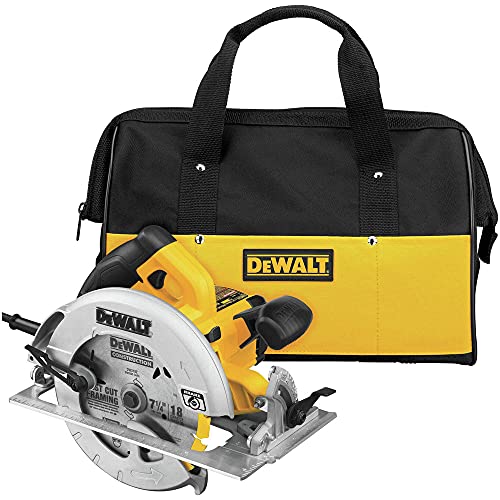
- Light 8.8-pound design
- 57-degree bevel capacity
- 15-amp motor with electric brake
Best For: Portable corded framing and bevel cuts
Contractor Framing Workhorse
Makita 5007F 7-1/4-In. Circular Saw

- 15-amp motor at 5,800 RPM
- Built-in LED cut-line lights
- Designed for framers and builders
Best For: General framing and contractor work
Best Heavy-Duty Cordless Pick
FLEXVOLT Worm-Style Framing Saw

- 60V MAX brushless motor with 9.0Ah battery
- 2-7/16-inch cut depth at 90 degrees
- Dust blower, rafter hook, and electronic brake
Best For: Demanding cordless framing work
Best Budget Corded Pick
SKIL 15-Amp Circular Saw with Laser
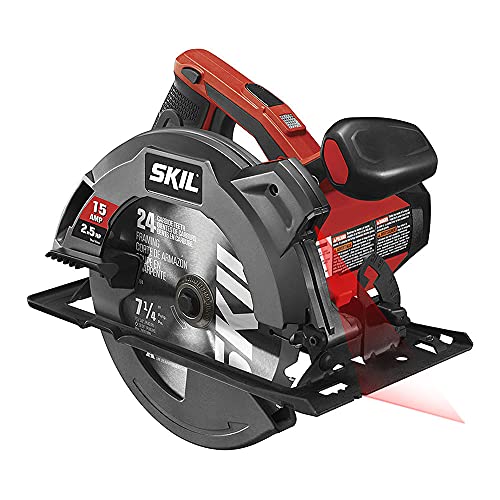
- 15-amp motor delivers 5,300 RPM
- 7-1/4-inch carbide blade included
- Laser guide and dust blower improve visibility
Best For: Outlet-powered workshop and renovation projects
Best Portable Tool-Only Pick

- Portable 20V MAX cordless design
- 2-1/8-inch cut depth at 90 degrees
- 0-to-50-degree bevel range
Best For: DEWALT 20V MAX users needing a lighter jobsite saw
Best Cordless Power – DEWALT FLEXVOLT 60V MAX Framing Saw
DEWALT FLEXVOLT 60V MAX* Circular Saw for Framing, 7-1/4-Inch, Tool Only (DCS577B)
Check Price On AmazonFor cord-free framing work, the DEWALT FLEXVOLT 60V MAX combines a brushless motor with a 7-1/4-inch blade and a 2-7/16-inch cutting depth at 90 degrees. Its left-side blade orientation, rear handle, dust blower, and electronic brake make it a practical choice among circular saws for framing.
Best For: Framing crews that want cordless power, clear sight lines, and convenient jobsite features.
Pros:
- Brushless 60V motor delivers smooth cuts and long runtime.
- Left-oriented blade and integrated dust blower help maintain cut visibility.
- 53-degree bevel capacity with stops at 45 and 22.5 degrees.
- Rafter hook, blade-wrench storage, and electronic brake add convenience.
Cons:
- Tool-only configuration requires a compatible battery and charger.
- At 10.9 pounds, it may feel substantial during extended overhead work.
This is a feature-rich cordless framing saw for users already invested in the FLEXVOLT platform. The combination of cutting capacity, visibility aids, and onboard storage makes it especially well suited to active jobsites.
Best Hypoid Drive – Makita 5377MG Magnesium Hypoid Saw
The corded Makita 5377MG uses a hypoid gear design, magnesium construction, and oil-bath technology for demanding wood-cutting work. Its 2-3/8-inch depth at 90 degrees and multiple bevel stops make it a durable option among circular saws for framing.
Best For: Jobsite users who prefer a corded hypoid saw with a durable gear housing and broad bevel range.
Pros:
- Magnesium components provide a balanced, jobsite-tough build.
- Oil-bath technology and sealed gear housing help reduce maintenance.
- Large 2-3/8-inch cutting capacity at 90 degrees.
- Bevel stops at 22.5, 45, and 51.5 degrees support varied cuts.
Cons:
- Corded operation limits mobility compared with cordless models.
- Its listed 13.2-pound weight may increase fatigue over long sessions.
The Makita is a sensible pick when continuous corded operation matters more than cordless portability. Its hypoid gearing, sealed housing, and reinforced power cord emphasize long-term jobsite use.
Best Depth Adjustments – SKILSAW SPT77W-01 Worm Drive Saw
The SKILSAW SPT77W-01 is a corded 15-amp worm-drive circular saw built for controlled framing cuts. Its Cut Ready depth-of-cut system, 51-degree bevel, and Dual-Field Motor make it a practical contender among circular saws for framing.
Best For: Framing users who prioritize quick depth adjustments, motor cooling, and a built-in rafter hook.
Pros:
- Dual-Field Motor is designed to improve cooling and tool life.
- Cut Ready system supports quick, accurate depth adjustments.
- 51-degree bevel handles a wide range of angled cuts.
- Lightweight 14.2-pound construction helps reduce fatigue for a worm-drive saw.
Cons:
- Corded power requires access to an outlet or extension cord.
- The supplied notes do not specify a maximum cutting depth.
For users who want a straightforward corded worm-drive saw, the SPT77W-01 focuses on adjustment speed and motor durability. Its integrated hook also makes temporary rafter placement more convenient.
Best Cutting Capacity – DEWALT FLEXVOLT 60V MAX Saw
DEWALT FLEXVOLT 60V MAX* Circular Saw with Brake, 7-1/4-Inch, Tool Only (DCS578B)
Check Price On AmazonThe DEWALT DCS578B is a cordless 60V MAX circular saw with a 2-9/16-inch cut depth at 90 degrees, a 57-degree bevel capacity, and a brushless motor. Those specifications make it a strong option for users comparing circular saws for framing and looking for extra cutting range.
Best For: Cordless framing applications that benefit from maximum listed depth and bevel capacity.
Pros:
- 2-9/16-inch cutting depth at a 90-degree bevel.
- 57-degree maximum bevel with stops at 22.5 and 45 degrees.
- Electric brake stops the blade after trigger release.
- Integrated LED and rafter hook support visibility and storage.
Cons:
- Tool-only package requires the specified battery system.
- Cordless operation depends on battery availability and charge.
The DCS578B stands out for its listed cutting and bevel capacities, making it useful when framing tasks call for deeper or more angled cuts. The LED, brake, and rafter hook add practical jobsite support.
Maximum-Capacity Framing Saw – SKIL 16-5/16-In. Worm Drive
For demanding circular saws for framing work, the SKIL SPT70V-11 stands out with its unusually deep cutting capacity. Its 15-amp Dual-Field motor and large included blade are designed for cutting thick lumber in one pass.
Best For: Framers and builders cutting 6x material or stock up to 6-1/4 inches thick.
Pros:
- 6-1/4-inch capacity enables one-pass cuts through 6x lumber.
- 15-amp Dual-Field motor is designed to stay cooler during demanding work.
- Magnesium construction and a die-cast footplate balance durability with reduced weight.
- Includes a 16-5/16-inch, 24-tooth SKIL blade.
Cons:
- At 27.3 pounds, it is substantially heavier than standard 7-1/4-inch saws.
- Its very large blade size is more specialized for thick-stock cuts.
This is a purpose-built choice when maximum depth matters more than portability. The square-cut footplate, brass gearing, and powerful motor support accurate, heavy-duty framing cuts.
Lightweight Bevel Framing Saw – DEWALT 7-1/4-In. DWE575SB
DEWALT Circular Saw, 7-1/4 inch, Pivoting with up to 57 Degree Bevel, Corded (DWE575SB)
Check Price On AmazonThe DEWALT DWE575SB is a practical option among circular saws for framing when low weight and bevel versatility are priorities. Its 15-amp motor, 57-degree bevel range, and 2-9/16-inch cutting depth cover common wood-cutting tasks.
Best For: Framers who want a relatively light corded saw with broad bevel capability.
Pros:
- At 8.8 pounds, it is among the lighter saws in its class.
- 57-degree bevel capacity includes stops at 45 and 22.5 degrees.
- Electric brake stops the blade after the trigger is released.
- Dust blower, aluminum base, and durable cord protection support jobsite use.
Cons:
- Its 2-9/16-inch depth is less than the SKIL model’s deep-cut capacity.
- It is corded, so work requires access to a power source.
Choose this DEWALT when maneuverability and bevel cuts matter more than extreme cutting depth. The smooth aluminum base and line-clearing dust blower also support controlled, visible cuts.
Contractor Framing Workhorse – Makita 5007F 7-1/4-In. Circular Saw
The Makita 5007F is a straightforward choice for circular saws for framing, combining a 15-amp motor with 5,800 RPM and a framing-oriented 7-1/4-inch blade. Its balanced design, LED cut-line lights, and 2-3/8-inch depth suit general jobsite cutting.
Best For: Framers, builders, masons, and siding contractors needing a durable general-purpose saw.
Pros:
- 15-amp motor delivers 5,800 RPM for demanding wood-cutting work.
- Built-in LED lights illuminate the cut line.
- 2-3/8-inch cutting depth at 90 degrees and 1-3/4 inches at 45 degrees.
- All-ball-bearing construction and a well-balanced design support jobsite handling.
Cons:
- Its cutting depth is lower than the SKIL’s deep-cut capacity.
- The listed weight is 6.17 kg, making it heavier than the DEWALT.
- It is a corded tool and does not offer the DEWALT’s stated electric brake.
The 5007F makes sense as a conventional contractor saw for repeated framing and general construction cuts. LED lighting, an improved lower guard, and an AC/DC switch add practical jobsite flexibility.
Best Heavy-Duty Cordless Pick – FLEXVOLT Worm-Style Framing Saw
DEWALT FLEXVOLT 60V MAX* Circular Saw Kit, 7-1/4-Inch, Worm Style, 9.0Ah Battery (DCS577X1)
Check Price On AmazonFor demanding circular saws for framing work, the DEWALT FLEXVOLT DCS577X1 combines a brushless motor, worm-style design, and a 60V MAX battery. Its left-side blade position and rear handle help provide a clear view of the cut line, while the 2-7/16-inch cutting depth at 90 degrees suits common framing tasks.
Best For: Framing crews and serious DIYers who want cordless power, substantial cutting depth, and jobsite-oriented features.
Pros:
- 60V MAX brushless motor reaches 5,800 RPM and includes a 9.0Ah FLEXVOLT battery.
- 2-7/16-inch depth of cut at 90 degrees and 53-degree bevel capacity support versatile cuts.
- Integrated dust blower, rafter hook, electronic brake, and onboard blade-wrench storage add convenience.
- Durable magnesium shoe and Tool Connect Tag-ready design suit jobsite use.
Cons:
- At 10.9 pounds, it is heavier than the other saws in this roundup.
- The kit is a substantial investment compared with a basic corded saw or tool-only model.
This is the most fully equipped option here for buyers prioritizing cordless framing performance and runtime over minimum weight. The included battery and charger make it a more complete package for users starting or expanding a FLEXVOLT setup.
Best Budget Corded Pick – SKIL 15-Amp Circular Saw with Laser
The SKIL 5280-01 is a practical corded choice among circular saws for framing, pairing a 15-amp motor with a 7-1/4-inch carbide-tipped blade. Its single-beam laser and dust blower are useful when making repeated cuts in wood or engineered wood, while the 51-degree bevel range covers more than standard 45-degree work.
Best For: Home workshops, renovation projects, and buyers who want straightforward corded cutting power without purchasing batteries.
Pros:
- 15-amp motor delivers 5,300 RPM for fast cuts.
- Included 7-1/4-inch, 24-tooth carbide-tipped blade is ready for wood cutting.
- Single-beam laser and dust blower help with cut-line visibility.
- 51-degree bevel capacity includes a positive stop at 45 degrees.
Cons:
- The corded design limits portability compared with cordless options.
- It lacks the cordless runtime and jobsite mobility of the DEWALT models.
Choose this SKIL when consistent access to an outlet matters more than portability. It offers useful framing-oriented capacity and visibility features in a relatively simple package, making it a sensible value option for occasional construction work.
Best Portable Tool-Only Pick – DEWALT 20V MAX Sidewinder
For portable circular saws for framing, the DEWALT DCS391B offers a 20V MAX sidewinder design with a 6-1/2-inch blade and 5,150 RPM motor. Its lightweight magnesium shoe, rubber overmolded grip, and 0-to-50-degree bevel range make it a flexible option for lumber and sheet goods, though the battery is sold separately.
Best For: DEWALT 20V MAX users who need a portable saw for framing, woodworking, and general construction cuts.
Pros:
- 20V MAX cordless design provides jobsite portability without a power cord.
- 6-1/2-inch blade cuts up to 2-1/8 inches at 90 degrees and 1-5/8 inches at 45 degrees.
- 0-to-50-degree bevel capability supports a broad range of angled cuts.
- Magnesium shoe, comfortable overmolded grip, and included 18-tooth carbide blade support control and durability.
Cons:
- Battery and charger are not included.
- Its 6-1/2-inch blade and 2-1/8-inch maximum depth provide less capacity than the 7-1/4-inch models.
This is a strong fit for buyers already invested in DEWALT 20V MAX batteries and seeking a lighter, portable saw. Its capacity is suitable for many framing and sheet-goods cuts, but users making deeper cuts may prefer a larger-blade model.
How We Picked These Circular Saws for Framing
We focused on saws with the power, capacity, and control needed for framing lumber, sheet goods, and repeated job-site cuts. The selection includes worm-drive and sidewinder designs, corded models for sustained work, and cordless options for portability. We also considered blade size, motor or battery platform, bevel capability, visibility, braking, weight, and overall suitability for professional or serious DIY use.
Because no single saw is ideal for every crew, the list includes both high-output models and more affordable choices. Tool-only cordless listings make the most sense for users who already own compatible batteries; kit versions may offer better value for newcomers to a platform.
Quick Comparison
| Type | Best For | Main Advantage |
|---|---|---|
| 15-amp corded sidewinder | General framing and renovation | Consistent power with familiar handling |
| Worm-drive saw | Heavy-duty framing and ripping | High torque and strong cutting control |
| 60V cordless saw | Mobile professional crews | Cord-free power approaching corded performance |
| 20V or compact cordless saw | Finish work, punch lists, and portability | Lower weight and easy job-site movement |
| Large 16-5/16-inch saw | Deep cuts and heavy timber | Exceptional cutting capacity |
Key Buying Factors for Circular Saws for Framing
Blade Size and Cutting Depth
A 7-1/4-inch blade is the practical standard for framing because it handles common dimensional lumber and offers widely available replacement blades. Larger blades provide greater depth for timbers and beams but usually add weight and cost. Check the manufacturer’s maximum depth at 90 and 45 degrees before buying.
Worm Drive Versus Sidewinder
Worm-drive saws typically emphasize torque and steady performance under load, making them attractive for demanding framing and ripping. Sidewinders are generally lighter, more compact, and easier to maneuver overhead or during long workdays. Neither design is automatically better; choose based on workload, comfort, and preferred balance.
Power Source and Runtime
Corded saws deliver consistent output when an appropriate outlet or generator is available. Cordless models eliminate cords and are easier to move around a structure, but runtime depends on battery capacity, material, blade sharpness, and cutting pace. High-voltage systems are better suited to heavy production work, while smaller platforms are convenient for lighter tasks.
Bevel, Brake, and Visibility Features
For framing, a smooth bevel adjustment, clear cutline visibility, positive depth stops, and a reliable electric brake can improve speed and control. Laser guides may help some users, but a well-designed blade guard, sight line, and sharp framing blade are often more useful in bright or dusty conditions.
Weight and Ergonomics
Weight matters when making repeated cuts, working from ladders, or cutting overhead. Look for a comfortable handle, stable shoe, accessible controls, and a balance point that does not force your wrist to fight the motor. A heavier high-torque saw can be worthwhile for production cutting, while a lighter model may reduce fatigue during installation work.
Who Should Buy Which Circular Saws for Framing?
Choose a high-torque worm-drive or 60V cordless model if you frame professionally, cut dense lumber frequently, or need maximum productivity. A 15-amp 7-1/4-inch corded saw is a dependable choice for workshops, remodelers, and buyers who prioritize continuous power. A compact 20V cordless saw suits punch-list work and crews already invested in that battery platform. For occasional DIY framing, an affordable corded model can provide the capacity you need without the added cost of batteries and chargers. Before purchasing, confirm included accessories, battery requirements, warranty coverage, and whether the saw’s weight and blade orientation fit your normal cutting position.