Growing winter vegetables is easier when you can shield tender seedlings and hardy greens from frost, wind, and heavy rain. The best cold frames create a more stable microclimate without requiring a full greenhouse.
This roundup compares compact wooden frames, raised-bed systems, portable tunnels, and protective covers so you can match the structure to your space, crops, and winter conditions.
Best 10 Cold Frames for Winter Vegetables Picks for 2026
Best Wooden Cold Frame
Outsunny Mini Wooden Cold Frame

- Solid fir wood frame with polycarbonate walls
- Hinged, ventilated slanted top
- Compact footprint for small gardens
Best For: Small outdoor plantings and patios
Best Frost Tent
Clear Winter Plant Protection Tent

- Breathable cover allows light, air, and water
- Steel frame with zipper closure
- Three size options for individual plants
Best For: Protecting small potted plants from frost
Best Compact Cloche
Garden Cold Frame Greenhouse Cloche

- Compact design for patios and raised beds
- Clear waterproof cover with roll-up access
- Rust-resistant tubular steel frame
Best For: Seed starting and small-space winter gardening
Best Walk-In Greenhouse
Outsunny Portable 9-Foot Mini Greenhouse

- Long 9-by-3-foot growing tunnel
- Reinforced PE cover with UV protection
- Roll-up doors and windows improve access
Best For: Protecting multiple low-growing vegetables
Best Raised-Bed Cold Frame
Galvanized Planter with Mini Greenhouse

- Three-in-one raised bed and greenhouse design
- Zippered windows support ventilation and temperature control
- Durable 6 x 3 x 2-foot galvanized metal bed
Best For: Roomy, customizable covered vegetable growing
Best Tunnel Cold Frame
Outsunny Portable Mini Greenhouse
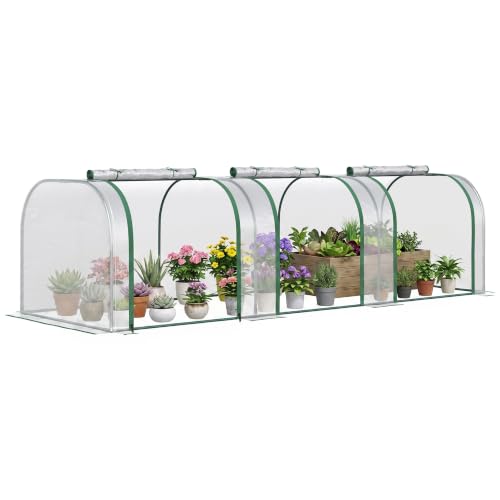
- Clear UV-waterproof cover helps protect plants from frost
- Steel frame and reinforced cover support outdoor use
- Three roll-up zippered doors aid access and ventilation
Best For: Portable seasonal protection for vegetables and flowers
Best Insulated Cold Frame

- 8 mm thermal panels provide heat insulation
- Two windows include integrated insect protection nets
- Offers protection from cold, birds, and insects
Best For: Compact, insulated protection for winter crops
Quick-Setup Row Cover

- Protects rows from cold and wind
- Zippered access and ventilation
- Foldable and includes ground nails
Best For: Low-growing vegetables, seedlings, and raised beds
Raised-Bed Station
Peak-Roof Polycarbonate Cold Frame

- Integrated raised bed and cold frame
- Twin-wall panels admit 90% sunlight
- Roof and vents help control humidity
Best For: Vegetables, herbs, and flowers in a dedicated garden spot
Walk-In Grow Shelter

- Offers a spacious 6 x 3 x 4-foot area
- Roll-up door supports access and airflow
- Steel frame and PE cover suit seasonal use
Best For: Multiple seedlings, potted plants, and larger backyard spaces
Best Wooden Cold Frame – Outsunny Mini Wooden Cold Frame
For gardeners comparing cold frames for winter vegetables, this compact wooden model offers a sturdy fir frame and transparent polycarbonate panels. Its slanted, hinged top helps shed rain and wind, while the opening provides access, sunlight, and ventilation for small plantings.
Best For: Small outdoor beds, patios, and gardeners who prefer a solid wood cold frame for extending the growing season.
Pros:
- Polycarbonate panels admit light while helping shield plants from wind, rain, and damaging UV.
- Hinged top with side supports provides ventilation and convenient plant access.
- Slanted cover helps prevent water accumulation.
- Compact 39.25-by-25.5-inch footprint suits limited spaces.
Cons:
- Its mini size limits the number and height of vegetables it can accommodate.
- Designed for outdoor use only.
This is a practical pick when you want a structured, easy-to-access cold frame with a natural wood appearance. Measure your growing area and plants carefully before buying.
Best Frost Tent – Clear Winter Plant Protection Tent
Although it is a plant tent rather than a traditional rigid cold frame, this cover is worth considering among cold frames for winter vegetables when flexible frost protection is the priority. The clear, reusable non-woven cover is designed to preserve warmth while allowing light, air, and water to reach outdoor plants.
Best For: Small potted vegetables, shrubs, and individual plants needing portable protection from frost, freezing rain, snow, and wind.
Pros:
- Clear cover supports sunlight and photosynthesis.
- Non-woven fabric is described as tear-resistant, reusable, breathable, and heat-preserving.
- Alloy-steel frame and zipper closure provide a defined protective enclosure.
- Available in three sizes, including the 36-by-36-by-38-inch version.
Cons:
- It protects individual plants rather than providing a broad growing bed.
- Size selection requires careful measurement before purchase.
- Pole assembly requires care because the poles have stretch elasticity.
This tent makes sense for targeted winter protection rather than planting several rows of vegetables. Its portable design is especially useful when only a few plants need shelter.
Best Compact Cloche – Garden Cold Frame Greenhouse Cloche
This compact cloche is a flexible option for gardeners seeking cold frames for winter vegetables in tight spaces. Its clear cover helps retain warmth, while the roll-up zippered panel allows access for watering and planting and can help manage airflow and humidity.
Best For: Seed starting, young plants, raised beds, patios, balconies, and overwintering smaller vegetables.
Pros:
- Space-efficient 47-by-23.63-inch design fits small garden areas.
- Transparent waterproof cover allows sunlight, air, and moisture to reach plants.
- Roll-up zippered access simplifies watering, planting, and maintenance.
- Tubular alloy-steel frame has a rust-resistant finish.
Cons:
- The 23.63-inch height may restrict taller crops.
- Additional insulation may be needed during colder months.
Choose this model when compact dimensions and quick access matter more than maximum growing capacity. It can also serve as a flexible cover for propagation and transplant protection.
Best Walk-In Greenhouse – Outsunny Portable 9-Foot Mini Greenhouse
For gardeners who need more planting room than a tabletop cold frame, this 9-foot portable greenhouse provides a long, low tunnel for vegetables and other plants. Its reinforced PE cover helps block UV exposure while passing through nourishing sunlight, and the roll-up openings support ventilation and access.
Best For: Grouping multiple vegetables and plants in a narrow outdoor garden space where a longer tunnel is more useful than a compact box.
Pros:
- Generous 9-by-3-by-3-foot layout accommodates multiple plants.
- Two-layer 140 GSM PE cover includes a reinforcing grid to help resist tearing.
- Cover is water resistant and UV protected while allowing 85% sunlight through.
- Powder-coated steel frame and soil-buried cover help improve stability and sealing.
Cons:
- Its 3-foot height may not suit tall crops.
- The elongated footprint requires more garden space than a standard cold frame.
- It is a soft-cover tunnel rather than a rigid framed box.
This is the strongest fit for gardeners protecting several low-growing winter vegetables together. Consider the required 9-foot length and plan for anchoring the cover securely in the soil.
Best Raised-Bed Cold Frame – Galvanized Planter with Mini Greenhouse
For gardeners comparing cold frames for winter vegetables, this Quictent kit combines a bottomless galvanized raised bed with a removable clear mini-greenhouse cover. Its zippered windows let you ventilate the growing area and adjust the temperature while helping keep birds out.
Best For: Gardeners who want a roomy, durable raised bed that can also function as a covered growing space.
Pros:
- Three-in-one design: raised bed, removable greenhouse, or combined setup.
- Large 6 x 3 x 2-foot growing area for vegetables, herbs, and flowers.
- Extra-thick galvanized metal is designed for durability, stability, and weather resistance.
- Strong middle poles help support the long sides.
Cons:
- The bottomless design does not provide a solid floor.
- Assembly is required.
- Its larger footprint may not suit small growing spaces.
This is a versatile choice if you want more than a traditional cold frame. The adjustable cover and raised-bed format make it practical for extending the season while retaining flexibility for uncovered gardening.
Best Tunnel Cold Frame – Outsunny Portable Mini Greenhouse
Among cold frames for winter vegetables, the Outsunny mini greenhouse offers a lightweight tunnel-style option for protecting plants from frost and harsh weather. Its clear UV-waterproof cover, steel frame, and roll-up zippered doors support seasonal growing and convenient access.
Best For: Gardeners seeking a portable tunnel greenhouse for vegetables, fruit, or flowers.
Pros:
- Clear cover helps shield plants during winter and extend the growing season.
- Reinforced plastic cover is designed for improved tear resistance.
- Steel frame provides reliable wind resistance.
- Three zippered doors offer access and ventilation for moisture control.
Cons:
- Assembly is required, even though no tools are needed.
- The tunnel is only about 3.3 feet wide, limiting its growing layout.
- The cover-and-frame design may require suitable outdoor placement for stability.
This model is a practical pick when portability and covered row space matter more than a rigid, high-sided frame. The multiple doors make routine plant care easier than with a single-access design.
Best Insulated Cold Frame – JUWEL Bio Protect 2000
For cold frames for winter vegetables, the JUWEL Bio Protect 2000 focuses on insulation and year-round protection in a compact bed system. Its 8 mm thermal panels, two opening windows, and integrated insect protection net help create a controlled growing environment.
Best For: Gardeners prioritizing insulated panels and built-in protection from cold, birds, and insects.
Pros:
- 8 mm thermal panels are designed to provide heat insulation.
- Two windows have handles for convenient opening and locking.
- Integrated insect protection nets help keep pests out while allowing ventilation.
- Designed for all-year protection against cold, birds, and insects.
Cons:
- Its approximately 78.74 x 30.12-inch footprint offers less space than larger tunnel models.
- The plastic construction may not suit shoppers seeking a metal frame.
- The compact height can limit taller crops.
This is the most purpose-built cold-frame option in the group, with insulation and integrated screening rather than a flexible tunnel cover. It suits gardeners who want a compact, more enclosed setup for protected seasonal growing.
Quick-Setup Row Cover – Compact PE Cold Frame
For gardeners seeking cold frames for winter vegetables without a permanent structure, this compact PE cover offers a simple way to shelter planted vegetables, fruits, and seedlings from chilly winds and cold temperatures. Its roll-up zipper door and side zippers provide access and ventilation, while the foldable design makes seasonal storage easier.
Best For: Raised beds, vegetable rows, and freshly transplanted seedlings that need lightweight weather protection.
Pros:
- Protects plants from cold temperatures and chilly winds.
- Roll-up front door and side zippers support ventilation and easy access.
- Includes six U-shaped ground nails for securing the cover.
- Foldable, reusable PE cover requires no additional tools to install.
Cons:
- At 45 x 22 x 16 inches, it is suited to low-growing plants rather than taller crops.
- The single-cover format provides limited growing capacity.
This is a practical, space-saving choice when you want a lightweight cold frame for winter vegetables and seedlings rather than a rigid greenhouse. Its ventilation options and portability make it especially useful for short-term seasonal protection.
Raised-Bed Station – Peak-Roof Polycarbonate Cold Frame
This raised-bed design combines a 12-inch planting area with a dedicated polycarbonate cold-frame cover, making it a more structured option among cold frames for winter vegetables. Twin-wall panels let in 90% of nourishing sunlight while helping shield plants from cold, wind, rain, UV exposure, and animals.
Best For: Gardeners who want an elevated planting bed with a rigid, ventilated cover for vegetables, herbs, and flowers.
Pros:
- Twin-wall polycarbonate panels provide insulation and weather protection.
- Openable roof and two vents help manage heat and humidity.
- Tilted roof deflects rain and supports easier plant access.
- Galvanized steel bed and stained fir frame are designed for outdoor use.
Cons:
- Assembly is required.
- The planting area is limited to approximately 32.5 x 19.5 x 12 inches.
- At 19 pounds, it is less portable than a simple fabric or PE cover.
Choose this model when durability, ventilation, and an integrated planting bed matter more than portability. The rigid cover and peak roof make it a strong fit for a dedicated winter vegetable setup in a compact garden area.
Walk-In Grow Shelter – Steel-Frame PE Cold Frame
With a 72.8 x 37.4 x 47.2-inch footprint, this portable greenhouse gives winter gardeners more room than a small bed cover. Its clear green PE cover helps create a warmer, more humid growing environment, while the steel frame and roll-up zippered door support practical outdoor use.
Best For: Larger groups of seedlings, low-growing winter vegetables, and potted plants on patios or in backyard gardens.
Pros:
- Substantial growing area with 47.2 inches of height.
- Clear PE cover helps trap warmth and humidity for plant growth.
- Roll-up zippered door provides access and ventilation.
- Powder-coated steel frame is designed for seasonal stability and reuse.
Cons:
- Its larger footprint requires more outdoor space than compact cold frames.
- Only one vent is specified.
- The PE cover may offer less rigid protection than a polycarbonate-panel structure.
This is the most spacious option of the three for gardeners who need to protect multiple plants or larger potted specimens. It balances portability and capacity, though its soft PE cover and single vent may require closer attention to ventilation during warmer conditions.
How We Picked the Best Cold Frames for Winter Vegetables
We evaluated these options by looking at the features that matter most during cold-weather growing: protection from frost and wind, cover durability, ventilation, usable growing space, portability, and setup requirements. We also considered whether each design suits containers, raised beds, garden rows, or individual plants.
Because winter conditions vary widely, no single style is ideal for every gardener. A compact rigid frame may be better for a patio or small bed, while a tunnel greenhouse can protect several rows of vegetables. Product descriptions and specifications should be checked carefully for dimensions, materials, included hardware, and expected assembly.
Quick Comparison
| Type | Best For | Main Advantage | Potential Limitation |
|---|---|---|---|
| Wooden or polycarbonate cold frame | Small beds and patios | Rigid, compact protection | Limited interior space |
| Plant frost cover | Individual plants | Fast, lightweight setup | Less structural support |
| Portable tunnel greenhouse | Rows of vegetables | More growing capacity | Needs anchoring in wind |
| Raised bed with cover | New or organized garden beds | Combines planting space and protection | Requires more floor space |
| Insulated premium cold frame | Reliable season extension | Improved thermal performance | Usually costs more |
Key Buying Factors for Cold Frames for Winter Vegetables
Cover and Insulation
Polycarbonate and other rigid panels generally hold their shape better than thin plastic and can provide steadier protection. PE covers are lightweight and affordable, but they need secure fastening and may require replacement over time. For severe freezes, consider adding horticultural fleece or another inner layer rather than relying on the cover alone.
Ventilation and Access
Winter sunlight can make an enclosed frame surprisingly warm. Look for hinged lids, roll-up windows, zippered doors, or integrated vents so you can release excess heat and humidity. Easy access also makes watering and harvesting less disruptive.
Size, Height, and Placement
Measure the bed or patio before buying, and account for door clearance and anchoring space. Low frames suit leafy greens and compact crops; taller tunnels accommodate larger plants and make harvesting easier. Place the frame where it receives winter sun and remains protected from prevailing winds.
Stability and Weather Resistance
Steel frames, sturdy wood, and well-fastened panels are useful in exposed gardens. Anchor portable structures securely, especially tunnel models with large covers that can catch wind. A level base helps doors close properly and reduces gaps where cold air can enter.
Crop Fit and Maintenance
Cold-hardy greens, carrots, radishes, scallions, and some herbs are common choices, but plants still need appropriate spacing and watering. Check the frame regularly for condensation, pests, snow accumulation, and damaged covers.
Who Should Buy Which Cold Frames for Winter Vegetables?
- For balconies, patios, and very small beds: Choose a compact rigid cold frame or individual plant cover.
- For raised-bed gardeners: A covered raised bed or frame designed to sit over a planter offers an integrated solution.
- For several rows of winter vegetables: Select a portable tunnel with roll-up sides or zippered doors for greater capacity and access.
- For windy or harsh climates: Prioritize rigid panels, strong framing, secure anchors, and the ability to add supplemental insulation.
- For gardeners seeking maximum protection: A better-insulated premium cold frame may justify its higher price through improved durability and temperature control.