Cold frames offer a simple way to protect seedlings and tender plants from wind, light frost, and unpredictable shoulder-season weather. The options in this roundup range from compact wooden raised beds to lightweight, portable mini greenhouses.
Use the comparison and buying advice below to match your available space, planting goals, and preferred level of protection with the right cold frame for 2026.
Best 10 Cold Frames Picks for 2026
Best Wooden Mini Cold Frame
Outsunny 39-Inch Polycarbonate Greenhouse

- Solid fir wood frame with clear polycarbonate panels
- Hinged, vented top for access and airflow
- Slanted roof helps shed rain and wind
Best For: Compact patios, balconies, and small outdoor growing spaces
Best Portable Cold Frame Alternative

- Large 71-by-36-by-36-inch growing shelter
- Two roll-up zippered doors aid ventilation
- Includes iron frame, PE cover, and ground stakes
Best For: Portable, tool-free plant protection with extra interior space
Best Compact Fir Wood Cold Frame
GIANTEX Flip-Top Mini Greenhouse

- Natural fir wood frame with transparent panels
- Hinged roof supports access and ventilation
- Compact size fits patios, balconies, and porches
Best For: Seed starting and everyday protection in small spaces
Best Raised-Bed Cold Frame
Outsunny 48-Inch Raised Planter Greenhouse

- Combines a raised bed with a removable cover system
- Polycarbonate panels protect against chilly weather
- Openable roof and two vents support airflow
Best For: Vegetable, herb, flower, and fruit growing with integrated planting space
Spacious Portable Pick
Gardzen Mini Greenhouse Cold Frame

- Large 71.7-by-36.2-inch growing area
- Clear cover supports warmth and humidity
- Roll-up zippered access door
Best For: Seed starting and plant protection in patios or backyards
Lightweight Wooden Choice
Giantex Wood Cold Frame Greenhouse

- Compact 37-by-25-by-16-inch design
- Adjustable flip-top roof for access
- Solid fir wood frame with clear panels
Best For: Small-space seedling protection on balconies and patios
Automatic Ventilation Pick
Backyard Discovery Aggie Cedar Cold Frame

- Lid opens automatically above 70°F
- Double-wall polycarbonate retains heat
- Cedar frame with drainage mesh
Best For: Year-round outdoor gardening with hands-off ventilation
Elevated Organizer
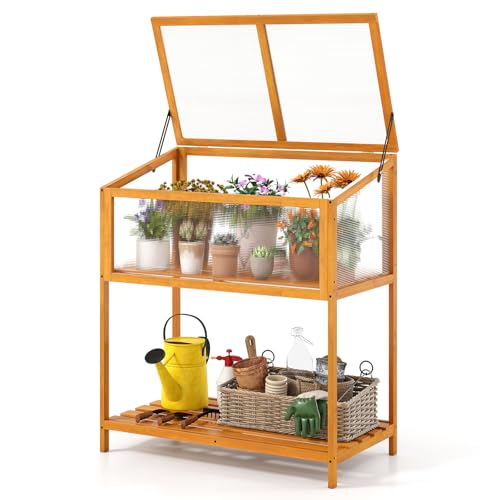
- Built-in slatted shelf for tools or potted plants
- Multi-position hinged roof supports ventilation
- Elevated 42-inch design reduces bending
Best For: Balcony and patio gardeners who want storage and comfortable access
Lightweight Grower

- Lightweight 8-pound design is easy to move
- Adjustable roof manages airflow and sunlight
- 40-by-21-inch growing area fits varied plants
Best For: Gardeners who frequently move a cold frame between growing locations
Ventilation Specialist

- Two adjustable roof vents fine-tune airflow
- Transparent panels diffuse light and provide insulation
- Compact footprint supports varied plant types
Best For: Growers prioritizing humidity and ventilation control
Best Wooden Mini Cold Frame – Outsunny 39-Inch Polycarbonate Greenhouse
This compact Outsunny cold frame combines a solid fir wood structure with transparent polycarbonate panels to shelter seedlings and other plants from light wind and rain. Its slanted, hinged top adds ventilation and makes access straightforward for watering or maintenance.
Best For: Gardeners who want a compact wooden cold frame for patios, balconies, or small outdoor growing areas.
Pros:
- Polycarbonate panels admit light while helping block damaging UV.
- Hinged top with side supports provides ventilation and easy access.
- Slanted roof helps rain and wind slide away.
- Solid fir wood frame offers a stable structure.
Cons:
- The 15.75-inch height limits it to smaller plants and seedlings.
- It is designed for outdoor use rather than indoor placement.
With a footprint of about 39 by 25.5 inches and a weight of 9.7 pounds, this is a practical choice when you want a traditional-looking cold frame without taking up much space.
Best Portable Cold Frame Alternative – Ohuhu Walk-In Mini Greenhouse
The Ohuhu portable greenhouse offers a larger, fabric-covered approach to cold frames, with room for plants, seedlings, and supplies inside its 71-by-36-by-36-inch frame. Its PE cover, iron tubes, stakes, and roll-up doors create a flexible sheltered growing area for changing weather.
Best For: Gardeners who need a lightweight, walk-in-style plant shelter that can be assembled without tools.
Pros:
- Two zippered roll-up doors support access and airflow control.
- Anti-aging PE mesh cloth is described as waterproof and UV protected.
- Iron tube frame and included ground stakes improve stability.
- Tool-free assembly makes setup convenient.
Cons:
- The 36-inch height is still too low for standing inside.
- Its soft PE cover does not provide the rigid panel construction of a traditional cold frame.
- Ground stakes may be needed for better stability in exposed locations.
This is a useful alternative when coverage and portability matter more than a solid wooden box. The roll-up doors also make it easier to balance warmth with ventilation.
Best Compact Fir Wood Cold Frame – GIANTEX Flip-Top Mini Greenhouse
The GIANTEX cold frame uses a natural fir wood frame and transparent panels to create a sheltered space for seedlings, herbs, flowers, and young plants. Its hinged flip-top roof opens for watering, maintenance, airflow, and sunlight adjustment.
Best For: Gardeners seeking a compact wooden cold frame for seed starting and everyday plant protection.
Pros:
- Transparent panels provide plants with natural light.
- Flip-top roof offers convenient access and ventilation.
- Compact 37-by-25-by-16-inch design suits patios and balconies.
- Sloped roof helps reduce leaves and debris collecting on top.
Cons:
- The compact height limits the size of plants it can hold.
- The supplied details list plastic cover panels rather than polycarbonate.
At 6.5 pounds according to the product description, this mini greenhouse is easy to position in smaller spaces. Its straightforward flip-top design makes routine plant care less cumbersome.
Best Raised-Bed Cold Frame – Outsunny 48-Inch Raised Planter Greenhouse
This Outsunny model combines a raised garden bed with a polycarbonate cold frame cover, giving you the option to use the cover with the bed or separately. The 48-by-24-inch growing area accommodates vegetables, fruit, herbs, and flowers, while the openable roof supports ventilation.
Best For: Gardeners who want a cold frame with integrated planting space and more room than a compact tabletop model.
Pros:
- Dual-use design works as a raised bed with or without the cover.
- Polycarbonate boards help protect plants from cold, light wind, and rain.
- Openable roof and two vents support airflow.
- Galvanized steel bed is described as lightweight and outdoor-ready.
Cons:
- At 26 pounds, it is less portable than smaller cold frames.
- Assembly is required.
- The larger footprint may not suit very limited spaces.
This is the most versatile option in the group for gardeners who want both a raised planter and seasonal protection. Its pointed top helps prevent water accumulation, while the wood-and-polycarbonate cover creates a defined sheltered growing area.
Spacious Portable Pick – Gardzen Mini Greenhouse Cold Frame
For gardeners who want more room than a tabletop setup provides, this portable cold frame offers a generous 71.7-by-36.2-inch footprint and 42.5-inch height. Its clear polyethylene cover helps create a warmer, more humid growing environment for seedlings and plants.
Best For: Seed starting and plant protection in backyards, patios, or other outdoor spaces where flexible placement matters.
Pros:
- Generous interior dimensions accommodate seedlings, low-growing plants, and larger potted specimens.
- Clear cover helps trap warmth and humidity to support germination and growth.
- Roll-up zippered door provides convenient access and ventilation.
- Powder-coated steel frame is designed for stability in seasonal weather.
Cons:
- Only one vent is listed.
- Its larger footprint may require more outdoor space than compact cold frames.
The Gardzen is a practical choice when growing capacity and easy access are more important than a traditional rigid-wood design. Quick assembly and portable placement add flexibility for seasonal gardening.
Lightweight Wooden Choice – Giantex Wood Cold Frame Greenhouse
This compact Giantex cold frame combines a natural fir-wood structure with clear panels and an adjustable flip-top roof. Measuring 37 by 25 by 16 inches and weighing 6.5 pounds, it is easy to move between indoor and outdoor locations.
Best For: Protecting emerging seedlings on balconies, patios, porches, yards, or in a sunroom.
Pros:
- Adjustable roof makes plant care, watering, and ventilation straightforward.
- Clear panels allow sunlight in while helping insulate sensitive sprouts.
- Solid fir construction adds natural appearance and stability.
- Lightweight design is convenient to relocate.
Cons:
- Its 16-inch height limits it to smaller plants and seedlings.
- Plastic panels may offer less rigid construction than polycarbonate lids.
The Giantex suits gardeners seeking a portable, furniture-like cold frame for small spaces. Its liftable roof is especially useful when frequent plant access and airflow adjustments are part of the routine.
Automatic Ventilation Pick – Backyard Discovery Aggie Cedar Cold Frame
The Backyard Discovery Aggie is a substantial cedar cold frame with a temperature-activated polycarbonate lid. Its wax-powered hinge opens when temperatures exceed 70°F and closes as the frame cools, providing automatic ventilation without electricity.
Best For: Year-round outdoor gardening and gardeners who want automatic temperature-responsive airflow.
Pros:
- Temperature-activated lid opens above 70°F and closes as temperatures fall.
- Double-wall polycarbonate panels transmit light while retaining heat.
- Cedar construction is naturally resistant to decay.
- Mesh drainage liner and wide bottom slats support healthy root conditions.
Cons:
- At 94.8 pounds, it is substantially heavier than the other listed options.
- The 48-by-28.5-inch footprint may require a dedicated outdoor location.
- Assembly is required, although pieces are pre-cut, pre-drilled, and pre-stained.
The Aggie stands out for low-maintenance ventilation and durable materials. It is a strong fit for permanent or semi-permanent placement, particularly when insulation, drainage, and year-round use are priorities.
Elevated Organizer – Dual-Purpose Fir Cold Frame
If you want cold frames that combine plant protection with useful storage, this elevated Giantex model is a practical choice. Its transparent roof supports earlier starts and longer harvests, while the built-in slatted shelf keeps tools or potted plants organized.
Best For: Gardeners seeking an elevated cold frame for patios, balconies, or indoor growing spaces, especially those who value integrated storage.
Pros:
- Built-in slatted shelf adds organization and usable growing space.
- Hinged roof opens to multiple positions for ventilation and plant access.
- Natural fir construction with a water-based finish.
- Elevated 42-inch profile reduces bending and crouching.
Cons:
- Its 36-by-20-inch footprint may limit how many plants you can grow.
- It has one vent, offering less ventilation control than models with dual vents.
This is the most ergonomic option of the three, with its raised design and shelf making it especially convenient for everyday plant care. Choose it if organization and comfortable access matter as much as compact-season protection.
Lightweight Grower – Portable Fir Cold Frame
For gardeners comparing portable cold frames, this lightweight Giantex model offers a roomy 40-by-21-inch growing area without being difficult to move. Its clear panels diffuse light, and the adjustable roof helps balance airflow, sunlight, and access.
Best For: Gardeners who need a lightweight cold frame that can move between a balcony, porch, garden, or sunny indoor room.
Pros:
- Weighs just 8 pounds for easier relocation.
- Adjustable roof helps manage airflow and sunlight.
- Clear panels provide insulation and gentle light diffusion.
- Roomy dimensions accommodate vegetables, fruits, or flowers.
Cons:
- The 28-inch height provides less elevated access than the taller model.
- Its wood frame may require more care than a fully weather-resistant structure.
This model is a strong fit when portability is the priority. It offers more length than the smallest option while staying light enough to reposition as seasonal light and temperature conditions change.
Ventilation Specialist – Dual-Vent Cold Frame
If ventilation control is your main concern when choosing cold frames, this compact Giantex model stands out with two adjustable roof vents. Transparent panels provide insulation and diffused light, while the 36-by-33-inch footprint offers room for vegetables, flowers, or fruits.
Best For: Gardeners who want fine control over humidity and airflow in a compact sunroom, patio, or garden cold frame.
Pros:
- Dual adjustable roof vents allow more precise ventilation and humidity control.
- Openable roof sections provide convenient access for plant care.
- Natural fir construction includes a water-based finish.
- Compact design is easy to relocate between suitable growing spaces.
Cons:
- At 23 inches high, it requires more bending than the elevated model.
- It weighs 10.5 pounds, so it is less lightweight than the 8-pound alternative.
This is the best choice for growers who want stronger ventilation flexibility in a compact format. Its dual vents make it particularly useful for managing humidity while seedlings and mature plants develop.
How We Picked These Cold Frames
We focused on practical features that affect everyday growing: usable planting space, frame and panel materials, portability, roof access, ventilation, weather protection, and ease of assembly. The selection includes compact wood Cold Frames for patios and raised beds, as well as taller fabric-covered designs that provide more vertical room for seedlings and plants.
Because Cold Frames vary widely in construction, we also considered how well each style suits different climates and routines. A solid wood frame with a transparent hinged roof offers stability and convenient access, while a portable zippered greenhouse is easier to move and can accommodate taller plants.
Quick Comparison
| Cold frame style | Best for | Main advantage | Potential trade-off |
|---|---|---|---|
| Wooden raised bed | Seedlings, herbs, and compact crops | Stable structure and integrated planting space | Heavier and less portable |
| Portable fabric greenhouse | Seasonal protection and seed starting | Lightweight, tall, and easy to relocate | Less rigid in wind |
| Polycarbonate cold frame | Frost protection and early-season growing | Clear panels and stronger weather resistance | May require careful assembly and anchoring |
| Raised planter with shelf | Small-space gardening | Uses vertical space and improves organization | Limited capacity for larger plants |
Key Buying Factors for Cold Frames
Size and Placement
Measure the available area before buying, including clearance for opening the roof or doors. Compact 2-by-3-foot designs work well on patios, decks, and small garden beds. Taller portable models are better when you need room for shelves, trays, or plants that outgrow a traditional low frame.
Materials and Stability
Wood frames blend naturally into garden spaces and generally provide a sturdy base. Polycarbonate panels can offer better insulation and impact resistance than thin plastic film. Fabric covers are lightweight but should be secured with stakes, tie-downs, or a sheltered placement in windy conditions.
Ventilation and Access
Overheating can damage plants even when outdoor temperatures are cool. Look for hinged or adjustable roofs, roll-up openings, or large zippered doors. Easy access also matters for watering, harvesting, and moving trays without disturbing plants.
Drainage and Anchoring
Confirm that the planter or growing area can drain properly, and avoid placing a cold frame where water collects. Lightweight models benefit from ground stakes, while wooden structures may need a level surface and additional anchoring during strong weather.
Who Should Buy Which Cold Frames?
Choose a compact wooden cold frame if you want a neat, durable setup for herbs, lettuce, flowers, or early seedlings. Choose a taller portable mini greenhouse if you prioritize mobility, extra headroom, or seed-starting capacity. Choose a polycarbonate-panel model if transparent, rigid coverage and improved weather protection are more important than minimal weight. Choose a raised planter with shelving if floor space is limited and you want organized access to multiple trays or small plants.
Whichever style you select, place it where it receives suitable sunlight, open it regularly for airflow, and monitor temperatures closely on bright days.