Growing fresh herbs, vegetables, and flowers beyond the usual season is easier with the right greenhouse. The best greenhouse for year-round growing balances insulation, ventilation, usable space, durability, and setup requirements for your climate and garden.
We selected 10 options ranging from portable pop-up shelters and compact polycarbonate kits to large walk-in and tunnel greenhouses. Use the guide below to narrow your choices by growing goals, available space, weather exposure, and budget.
Best 10 Greenhouses for Year Round Growing Picks for 2026
Best for Four-Season Durability

- Four-wall polycarbonate panels improve heat retention
- Rated for substantial snow and wind loads when anchored
- Includes fan, shelves, workstation, and utility hookups
Best For: Permanent year-round gardens needing durability and built-in features
Best Compact All-Season Value
6x4FT Polycarbonate Greenhouse
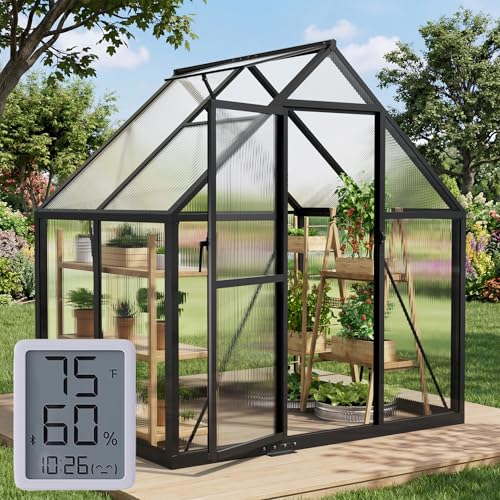
- Compact 6x4-foot walk-in design
- Double-wall UV-resistant polycarbonate panels
- Roof vents and hygrometer support climate monitoring
Best For: Small backyards and gardeners seeking a compact seasonal shelter
Best for Spacious Growing
AMERLIFE 12 x 10 Hybrid Greenhouse

- 435 cubic feet of usable interior space
- Hybrid panels provide light transmission and UV protection
- Dual vents and gutters help manage climate and rainwater
Best For: Serious gardeners needing a large, versatile walk-in space
Best Portable Pop-Up Option
EAGLE PEAK 8x6 Pop-Up Greenhouse

- Pre-assembled frame sets up in seconds
- 8x6-foot walk-in interior accommodates shelving
- Roll-up doors and mesh windows provide ventilation
Best For: Renters, beginners, and temporary or movable plant protection
Best Shelving Capacity
KING BIRD 84x56x77 Walk-In Greenhouse

- 14 reinforced shelves support up to 33 pounds each
- 4.7 mil anti-UV PE cover is waterproof
- Roll-up door and mesh windows aid ventilation
Best For: Container gardeners needing organized vertical storage
Best Rigid-Panel Option
Garvee 6x10 FT Polycarbonate Greenhouse

- 720 g/m² polycarbonate panels with aluminum steel frame
- Adjustable roof vent supports airflow control
- Side gutters aid drainage and rainwater collection
Best For: Backyard gardeners wanting a structured panel greenhouse
Best Large-Scale Growing Space
AMERLIFE 10x44 FT Tunnel Greenhouse
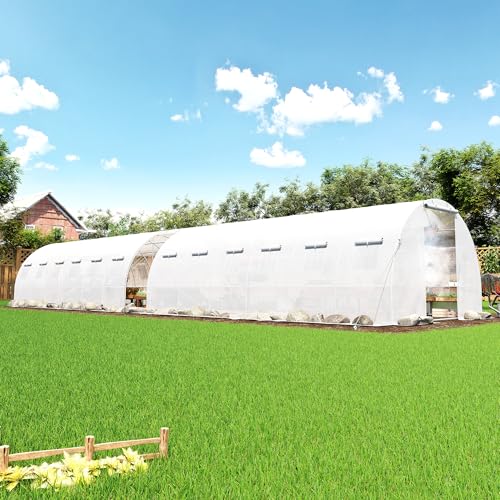
- Spacious 10-by-44-foot walk-in growing area
- Built-in adjustable misting nozzles support watering
- Multiple doors and mesh windows promote cross-ventilation
Best For: Families, schools, and small farms needing a large greenhouse
Spacious Season Extender
8×12 ft Polycarbonate Greenhouse

- Roomy 8×12-foot walk-in design
- Durable polycarbonate and aluminum-steel construction
- Roof vent and rain gutters included
Best For: Larger gardens and extended-season outdoor growing
All-Weather Garden Keeper

- Compact walk-in 6×8-foot footprint
- UV-protected polycarbonate panels and reinforced frame
- Roof vent, lockable door, gutters, and anchors
Best For: Backyard gardeners needing a secure, weather-ready greenhouse
Flexible Tunnel Grower

- Spacious walk-in tunnel layout
- Six windows plus a roll-up zipper door
- Galvanized frame with reinforced PE cover
Best For: Home gardens and small-scale growers wanting flexible ventilation
Best for Four-Season Durability – Backyard Discovery Willow
For gardeners seeking greenhouses for year round growing, the Backyard Discovery Willow combines cedar construction with insulated polycarbonate panels and built-in utility features. Its 54-square-foot interior includes staging shelves and a workstation, making it a substantial, organized option for outdoor gardening.
Best For: Gardeners who want a permanent, well-equipped greenhouse with strong weather resistance and built-in ventilation.
Pros:
- Four-wall polycarbonate panels are designed to improve heat retention by 30% compared with standard double-wall panels.
- Pro-Tect testing supports up to 2,800 pounds of snow load and winds up to 100 mph when properly anchored.
- Includes a temperature-activated exhaust fan, opening window, hose hookups, shelves, workstation, and PowerPort with outlets and USB ports.
- Cedar construction offers natural resistance to decay, while the product includes a five-year warranty.
Cons:
- At 571 pounds, it is substantially heavier and less portable than temporary greenhouse designs.
- Power source for the integrated PowerPort is not included.
- Assembly requires following the provided instructions and anchoring specifications.
The Willow is a premium choice when insulation, capacity, and integrated gardening conveniences matter more than portability. Its cedar frame and robust panel system make it especially suitable for a dedicated year-round growing area.
Best Compact All-Season Value – 6x4FT Polycarbonate Greenhouse
This 6×4-foot model is a compact contender among greenhouses for year round growing, pairing a reinforced aluminum frame with 4mm double-wall polycarbonate panels. Adjustable roof vents, a lockable door, and a supplied hygrometer help support more controlled growing in a backyard footprint.
Best For: Small-space gardeners who want a walk-in greenhouse with weather protection and basic climate-monitoring features.
Pros:
- 4mm, 580g double-wall panels provide light transmission, UV resistance, and impact resistance.
- Reinforced aluminum construction and polycarbonate panels are designed for wind, rain, and snow conditions.
- Adjustable roof vents promote airflow, while the lockable door adds security.
- Clearly labeled parts, instructions, and necessary tools support a simpler setup.
Cons:
- The 6×4-foot size offers less interior room than larger walk-in greenhouse options.
- The product notes suggest adding glass glue to panel gaps for additional sturdiness, which may require extra work.
- Its basic design does not list built-in shelving, watering hookups, or powered ventilation.
For limited yards or gardeners starting with a manageable structure, this greenhouse offers useful insulation and ventilation without the footprint of a full-size growing house. Plan the placement and any panel reinforcement carefully for local weather.
Best for Spacious Growing – AMERLIFE 12 x 10 Hybrid Greenhouse
The AMERLIFE 12 x 10 x 8-foot greenhouse stands out among greenhouses for year round growing when interior capacity is a priority. Its hybrid clear and translucent polycarbonate panels, reinforced aluminum frame, dual roof vents, and integrated gutters support versatile gardening in a spacious walk-in layout.
Best For: Families, serious gardeners, or anyone wanting room for numerous plants, work areas, or relaxing inside the greenhouse.
Pros:
- Provides 435 cubic feet of usable space in a large 12 x 10 x 8-foot footprint.
- Hybrid panels balance light transmission, UV protection, and impact resistance.
- Reinforced aluminum supports are engineered for winds up to 56 mph and snow loads up to 18 psf.
- Two adjustable roof vents and an integrated gutter system help manage airflow, humidity, and rainwater.
Cons:
- The larger footprint requires considerably more yard space than compact models.
- Quick-connect installation is described for approximately three DIYers and about six hours.
- The listed weather ratings are lower than those of some heavier-duty greenhouse designs.
This is a strong fit for gardeners who need flexibility and generous working space rather than a minimal starter structure. Its drainage and ventilation features add practical value for managing a larger growing environment.
Best Portable Pop-Up Option – EAGLE PEAK 8×6 Pop-Up Greenhouse
For gardeners who value convenience and portability, the EAGLE PEAK 8×6 offers a quick alternative among greenhouses for year round growing. Its pre-assembled steel frame sets up in seconds, while roll-up doors and mesh windows provide access and ventilation for plants outdoors.
Best For: Renters, beginners, and gardeners who need a temporary or movable walk-in growing shelter.
Pros:
- One-person pop-up setup requires no tools or assembly.
- Steel-heavy alloy frame and steel-ceiling roof are designed for a sturdy structure.
- Spacious 8×6-foot interior accommodates shelving and provides room to move around.
- Front and rear zipper doors plus two roll-up side windows support access and airflow.
Cons:
- The polyethylene cover is less insulating and permanent than polycarbonate panel construction.
- It is not presented with specific snow-load or wind-speed ratings in the supplied notes.
- A one-year limited warranty is shorter than the five-year coverage listed for some permanent models.
The EAGLE PEAK is best viewed as a flexible shelter for extending the growing season or relocating plants, rather than a heavily insulated permanent greenhouse. Its tool-free setup is the main advantage for low-commitment gardening.
Best Shelving Capacity – KING BIRD 84x56x77 Walk-In Greenhouse
For gardeners comparing greenhouses for year round growing, the KING BIRD combines a walk-in layout with extensive shelving and a thick, water-resistant PE cover. Its adjustable openings also make it easier to manage airflow and temperature across changing seasons.
Best For: Seedlings, flowers, and container gardeners who need organized vertical storage in a compact outdoor greenhouse.
Pros:
- Fourteen reinforced shelves support up to 33 pounds each.
- Thick 4.7 mil PE cover includes anti-UV protection and waterproofing.
- Roll-up screen door and mesh windows support ventilation and climate control.
- Includes one-year KING CARE+ component support and gardening guidance.
Cons:
- Its 84-inch length and 56-inch width provide less floor space than larger tunnel models.
- The PE cover is lighter and less rigid than polycarbonate panels.
This is a practical choice when shelf capacity matters more than expansive walking space. The reinforced shelving and ventilation options make it well suited to keeping many potted plants organized through the seasons.
Best Rigid-Panel Option – Garvee 6×10 FT Polycarbonate Greenhouse
The Garvee is a strong candidate among greenhouses for year round growing when you prefer rigid polycarbonate panels over a fabric-style cover. Its aluminum frame, adjustable roof vent, and water-gutter system add useful structure for backyard gardening.
Best For: Backyard gardeners seeking a 6-by-10-foot greenhouse with polycarbonate panels, roof ventilation, and rainwater-management features.
Pros:
- 720 g/m² polycarbonate panels and an aluminum steel frame are designed for challenging weather.
- Slide-in panels are intended to make assembly faster and more secure.
- Adjustable roof vent helps control airflow.
- Side gutters assist drainage and rainwater collection.
Cons:
- The greenhouse arrives in two separate boxes, so deliveries may not be simultaneous.
- Assembly is more involved than setting up a flexible-cover greenhouse.
- The supplied notes do not specify built-in heating for cold-season growing.
Choose this model if panel durability and a more permanent backyard setup are priorities. The roof vent and gutters improve daily usability, while the 6-by-10-foot footprint offers useful planting room without the scale of a farm tunnel.
Best Large-Scale Growing Space – AMERLIFE 10×44 FT Tunnel Greenhouse
For gardeners who need room to work, the AMERLIFE provides a spacious tunnel format suited to greenhouses for year round growing. Its built-in misting system, multiple doors, mesh windows, and reinforced galvanized frame support efficient plant care across a large growing area.
Best For: Families, schools, and small farms that need a roomy walk-in greenhouse for multiple gardeners or larger plantings.
Pros:
- Large 10-by-44-foot interior provides substantial growing and work space.
- Adjustable misting nozzles provide consistent, gentle watering.
- Front, rear, and side openings create broad cross-ventilation.
- Galvanized steel frame, spiral stakes, ropes, and widened edges support stability.
Cons:
- The 44-foot length requires significant yard space and careful site preparation.
- PE covering is less rigid than polycarbonate construction.
- Its size and anchoring system may make assembly more demanding.
This is the most suitable option here for high-volume or group gardening. The included watering system can reduce routine work, while the multiple openings help manage airflow and humidity in the long tunnel.
Spacious Season Extender – 8×12 ft Polycarbonate Greenhouse
For gardeners seeking greenhouses for year round growing, this 8×12-foot model provides generous walk-in space, durable polycarbonate panels, and an aluminum-steel frame. Its roof vent and side gutters add useful climate and water-management features for an outdoor garden setup.
Best For: Gardeners who want a roomy, sturdy greenhouse for larger plant collections and extended-season growing.
Pros:
- Large 8×12-foot walk-in layout accommodates a variety of plants.
- 720 g/m² polycarbonate panels and an aluminum-steel frame are designed for challenging weather.
- Roof vent supports airflow, while side gutters help manage drainage and collect rainwater.
- Slide-in panels, instructions, and included tools are intended to simplify assembly.
Cons:
- Only one roof vent is listed, so ventilation may be more limited than on models with multiple openings.
- The greenhouse weighs 122.7 pounds and ships in two boxes, which may require extra handling during delivery and setup.
This is a strong option when interior space and rigid panel construction matter most. Before buying, plan for its substantial footprint and confirm that the two-box delivery can be managed.
All-Weather Garden Keeper – Garvee 6×8 ft Greenhouse
The Garvee 6×8-foot greenhouse is built for gardeners comparing greenhouses for year round growing in a manageable backyard footprint. Its polycarbonate panels, reinforced aluminum frame, roof vent, lockable door, and included anchors create a practical setup for protecting plants across changing seasons.
Best For: Backyard gardeners who want compact walk-in access with added weather resistance and security features.
Pros:
- 6×8-foot layout offers walk-in growing space without the footprint of a larger greenhouse.
- Industrial-grade polycarbonate panels and a reinforced aluminum frame are designed for heavy weather and snow loads.
- Adjustable roof vent helps regulate airflow, while the lockable swing door adds security.
- Four ground-anchor kits, mid-post supports, and an integrated rain gutter support stability and water management.
Cons:
- Only one roof vent is listed, which may limit ventilation compared with designs using several vents.
- At 76 pounds, assembly and positioning may still require careful handling, especially when securing the anchors.
With its balance of size, anchoring hardware, and climate-control features, this Garvee model is a practical choice for a backyard grower. The gray frame and lockable door also give it a more finished, utility-focused appearance.
Flexible Tunnel Grower – VEVOR 9.6×6.4 ft Hoop House
For those evaluating greenhouses for year round growing on a budget-conscious tunnel format, this VEVOR hoop house offers a spacious walk-in interior and flexible ventilation. Its galvanized steel frame, reinforced PE cover, roll-up zipper door, and six windows suit home gardens, farms, and small-scale planting projects.
Best For: Gardeners who want a roomy tunnel greenhouse with frequent airflow and a lightweight, adaptable structure.
Pros:
- Approximately 9.6×6.4 feet of walk-in space accommodates plants and shelving.
- Galvanized steel poles, diagonal bars, stakes, and tie-downs add structural support.
- Six windows and a large roll-up zipper door provide substantial ventilation.
- 140 g/m² PE cover has reinforced seams, while extended edges can be weighted or buried for sealing.
Cons:
- PE cover and a 0.02-inch nominal wall thickness may provide a less rigid enclosure than polycarbonate-panel greenhouses.
- The roll-up zipper door may offer less security and insulation than a lockable solid door.
- At 31.3 pounds, the structure is lightweight and should be properly staked and tied down in exposed locations.
This tunnel design stands out for ventilation, usable floor space, and flexible installation options. It is a sensible fit for seasonal protection and extended growing, provided you prioritize anchoring and accept a soft-cover structure.
How We Picked the Best Greenhouses for Year Round Growing
We compared these greenhouses by structure, covering material, ventilation, access, footprint, portability, and suitability for extended-season use. Polycarbonate models generally offer better insulation and impact resistance than thin plastic covers, while tunnel and PVC-cover designs can provide more growing space at a lower cost. We also considered practical features such as roll-up panels, roof vents, exhaust fans, watering systems, lockable doors, hose connections, and included humidity tools.
No greenhouse is automatically suitable for every climate. Year-round growing may require supplemental heating, shade cloth, insulation, grow lights, raised benches, or an anchored foundation. Always verify local wind and snow requirements before buying.
Quick Comparison
| Greenhouse Type | Best For | Main Advantage | Important Consideration |
|---|---|---|---|
| Small polycarbonate kit | Backyards and beginners | Balanced insulation and durability | Limited interior capacity |
| Portable pop-up greenhouse | Temporary or seasonal use | Fast setup and portability | Needs careful anchoring |
| Tunnel greenhouse | Rows of crops and larger harvests | Excellent growing volume | Usually less insulated |
| Large framed greenhouse | Serious year-round growing | More headroom and organization | Requires more space and assembly |
Key Buying Factors for Greenhouses for Year-Round Growing
Climate and Insulation
Choose multiwall polycarbonate when retaining heat and resisting weather are priorities. Film or PVC covers can work well in mild climates, but they typically need replacement sooner and may provide less insulation. In cold regions, plan for a heater, thermostat, and safe electrical setup.
Ventilation and Temperature Control
Ventilation prevents overheating, excess humidity, and fungal problems. Look for roof vents, roll-up sides, screened windows, or an exhaust fan. Automatic vent openers can reduce daily maintenance, while adjustable openings provide better control during changing weather.
Size, Layout, and Access
Measure the site—including clearance for doors, vents, and maintenance—and leave room for paths, shelving, containers, and future expansion. Walk-in models are more convenient for pruning and harvesting; tunnel designs are efficient for long crop rows.
Frame, Cover, and Anchoring
Aluminum frames are lightweight and corrosion resistant, while galvanized steel offers strength for larger structures. Wood can provide an attractive, sturdy appearance but needs more maintenance. Anchor every greenhouse securely, especially portable models and installations exposed to wind.
Who Should Buy Which Greenhouses for Year Round Growing?
- For beginners or small yards: Choose a compact 6-by-4, 6-by-8, or similar polycarbonate walk-in kit with ventilation.
- For temporary growing: A portable pop-up or PVC-cover greenhouse is practical when easy setup and storage matter most.
- For vegetables in long rows: Select a tunnel greenhouse with generous length and roll-up access.
- For colder or windier locations: Prioritize a rigid polycarbonate structure, sturdy frame, reliable anchoring, and room for heating equipment.
- For large-scale home growing: Consider a 10-by-12-foot-or-larger walk-in greenhouse that can accommodate benches, irrigation, and work areas.
Before ordering, confirm the assembled dimensions, panel or cover specifications, included accessories, foundation requirements, and replacement-part availability. The best choice is the structure you can anchor safely, ventilate effectively, and maintain consistently throughout the year.