Compacted soil can limit drainage, airflow, and root growth even when your lawn receives regular water and fertilizer. The right plug lawn aerator removes narrow soil cores so grass roots have more room to develop.
This roundup compares 10 manual and tow-behind models, from foot-powered tools for smaller yards to heavy-duty aerators designed for use behind a lawn tractor or utility vehicle.
Best 10 Plug Lawn Aerators Picks for 2026
Best Tow-Behind Capacity
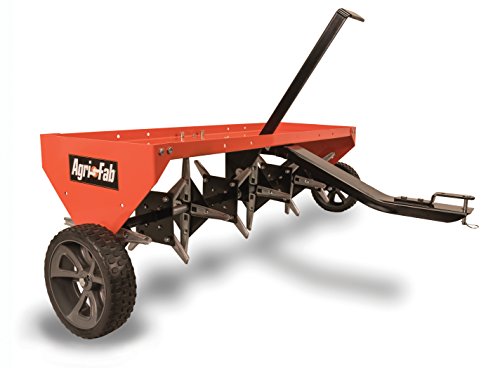
- 32 galvanized knives aerate up to 3 inches deep
- 175-pound tray supports deeper penetration
- Universal hitch fits most lawn tractors
Best For: Large lawns and tractor-based aeration
Best Compact Manual Value
Orange Hollow-Tine Core Aerator
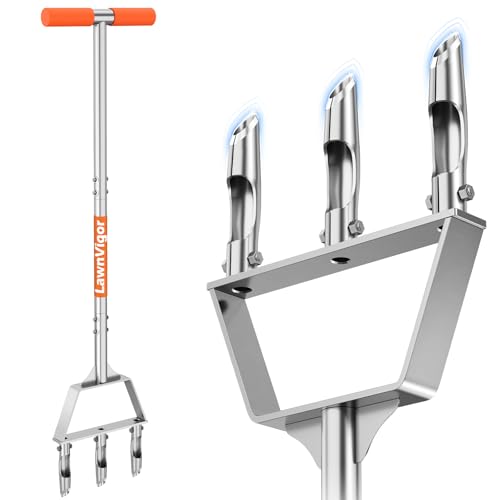
- Three hollow tines remove soil plugs efficiently
- Replaceable tines support long-term maintenance
- Wide foot pedal helps penetrate compacted soil
Best For: Small lawns and targeted manual aeration
Best Wide-Coverage Tow-Behind
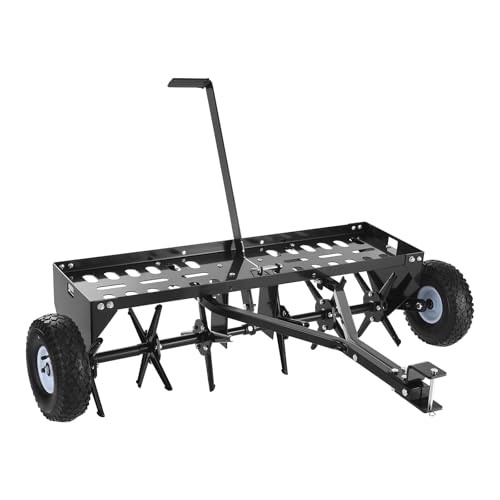
- 40-inch width covers more lawn per pass
- 120-pound tray helps stabilize the tines
- Pneumatic tires roll across grass and slopes
Best For: Large lawns and garden tractors
Best Deep Manual Aeration

- Hollow tines reach up to 4 inches deep
- Replaceable tines are designed to resist clogging
- Upright handle and wide footplate improve leverage
Best For: Compacted or clay soil in smaller lawn areas
Heavy-Duty Manual Pick

- Seven hollow stainless steel tines remove soil plugs
- Rolling design supports easier manual maneuvering
- Replaceable, non-clogging tines and powder-coated steel
Best For: Manual aeration of small to larger lawns
Large-Lawn Tow-Behind

- 48-inch aerating width covers large areas efficiently
- Thirty-two galvanized tines reach about 3 inches
- 330-pound tray boosts penetration in dense soil
Best For: Large lawns with a tractor, ATV, or UTV
Balanced Rolling Corer

- Rotary coring design pulls plugs from compacted soil
- Transport wheels support easier movement
- Balanced manual operation suits small to medium lawns
Best For: Residential lawns needing mobile manual coring
Best Adjustable Manual Pick

- Three hollow tines remove soil plugs
- Adjustable height improves leverage
- Rust-resistant stainless steel construction
Best For: Compacted or clay-heavy lawns needing adjustable manual aeration
Best for Cleaner Aeration

- Built-in tray catches ejected soil plugs
- Four-inch tubes provide deep coring
- Wide non-slip pedal improves leverage
Best For: Deep lawn aeration with less plug cleanup
Best Stainless Steel Tray Design

- Four SUS 304 stainless steel coring plugs
- Tray collects soil cores automatically
- Includes a 12-inch cleaning and garden tool
Best For: Manual lawn care with durable materials and easier cleanup
Best Tow-Behind Capacity – 48-Inch Agri-Fab Plug Aerator
Agri-Fab 48 In Tow Behind Lawn Plug Aerator with 32 Galvanized Knives and Universal Hitch
Check Price On AmazonIf you need to plug lawn aerators for broad lawn maintenance, the Agri-Fab 48-inch model is built for tractor-towed work. Its 32 galvanized knives can pull plugs up to 3 inches deep, while the generous weight tray helps improve penetration in compacted soil.
Best For: Large lawns and homeowners who want a heavy-duty aerator compatible with most lawn and garden tractors.
Pros:
- 32 self-sharpening galvanized knives reach up to 3 inches deep.
- Weight tray supports up to 175 pounds for stronger soil penetration.
- Flat-free tires and a cantilever transport handle simplify operation.
- Universal hitch fits most lawn and garden tractors.
Cons:
- Its 94-pound weight and tow-behind design require a suitable tractor.
- At 48 inches wide, it may be excessive for small yards.
This is a strong choice when coverage, depth, and towing capacity matter most. The large tray and durable knife construction make it particularly suitable for recurring maintenance on expansive lawns.
Best Compact Manual Value – Orange Hollow-Tine Core Aerator
For smaller areas where a tow-behind machine is unnecessary, this manual tool gives plug lawn aerators a straightforward, hands-on approach. Its three hollow tines remove soil plugs, and the replaceable design helps keep the tool useful over time.
Best For: Homeowners aerating compact lawn sections, including tough or clay soil, without using a tractor.
Pros:
- Three hollow tines create deeper holes and are designed to resist clogging.
- Heat-treated tines and a bend-resistant steel frame support demanding use.
- Replaceable tines simplify maintenance.
- Wide foot pedal and ergonomic non-slip handle improve control.
Cons:
- Manual operation is more labor-intensive than a tow-behind aerator.
- Dry soil should be watered before use, and the tool should not be rocked or twisted.
This model makes sense for targeted aeration and smaller yards. Its non-clogging hollow tines and replaceable parts add practical value, provided you are comfortable applying foot pressure across the lawn.
Best Wide-Coverage Tow-Behind – VEVOR 40-Inch Core Aerator
The VEVOR 40-inch model is one of the more efficient plug lawn aerators for covering larger areas in fewer passes. It reaches up to 3 inches deep, accepts up to 120 pounds on its tray, and uses pneumatic tires for smoother towing across grass, mud, and slopes.
Best For: Larger lawns, farmland, and garden tractor owners seeking wide coverage and adjustable towing weight.
Pros:
- Extra-wide 40-inch working width reduces the number of passes.
- High-strength coring tines reach up to 3 inches deep.
- Weight tray supports up to 120 pounds and includes strap slots.
- Welded steel construction and pneumatic tires suit outdoor towing.
Cons:
- Requires a lawn tractor or riding mower for operation.
- Its 40-inch width may be less practical in tight or small spaces.
Choose this aerator when time-saving coverage is more important than a compact footprint. The tray, tires, and pre-assembled tines make it a practical option for regular tractor-assisted lawn care.
Best Deep Manual Aeration – Yellow 4-Inch Core Aerator
When you want plug lawn aerators that can address especially compacted ground, this manual core aerator offers penetration up to 4 inches. Its three hollow tines are designed to eject plugs without clogging, while the upright 37-inch design reduces the need to bend over.
Best For: Homeowners handling compacted or clay soil who want deep, manual aeration with an upright working position.
Pros:
- Reaches up to 4 inches deep for thorough core aeration.
- Replaceable hollow tines automatically eject soil plugs to help prevent clogs.
- Reinforced welded-steel frame and wide footplate support forceful use.
- 37-inch height and rubber-grip T-handle help reduce bending and hand fatigue.
Cons:
- Manual operation can be demanding across a large lawn.
- Dry soil should be watered first, and rocking or twisting is discouraged.
This is the better manual pick when depth and ergonomics are priorities. Its deep reach, sturdy frame, and replaceable tines make it well suited to focused work on hard, compacted sections.
Heavy-Duty Manual Pick – Landzie Rolling Lawn Aerator
If you want plug lawn aerators for routine yard maintenance without using a tractor, the Landzie Rolling Lawn Aerator combines a push-style design with seven hollow tines. It removes soil plugs as it rolls, helping air, water, and nutrients reach grass roots.
Best For: Homeowners who need a durable manual core aerator for small to larger lawns and compacted silt, sandy, or loamy soil.
Pros:
- Seven stainless steel hollow tines remove soil cores.
- Rolling design improves maneuverability and reduces repeated lifting.
- Heavy-duty powder-coated steel resists rust and repeated-use wear.
- Replaceable, chamfered tines are designed to eject cores and resist clogging.
Cons:
- Manual operation still requires pushing effort.
- Its roughly 50.8-pound listed weight may be cumbersome for some users.
The Landzie is a practical choice when you want true core aeration without adding sand or other ballast. Replaceable tines and the lifetime guarantee add useful long-term value.
Large-Lawn Tow-Behind – Garvee 48-Inch Plug Aerator
For large properties, plug lawn aerators with a tow-behind setup can cover more ground than handheld tools. The Garvee provides a 48-inch aerating path, 32 galvanized plug tines, and a weight tray for added penetration behind a lawn tractor, ATV, or UTV.
Best For: Owners of large lawns, farms, or planting areas with a compatible towing vehicle and heavily compacted soil.
Pros:
- Wide 48-inch working path speeds up coverage.
- Thirty-two tines reach up to about 3 inches deep.
- Steel tray supports up to 330 pounds for added ground penetration.
- Universal hitch and pneumatic tires support towing across the lawn.
Cons:
- Requires a lawn tractor, ATV, or UTV for operation.
- Adding the full tray load increases the equipment’s towing demand.
The Garvee is the most efficient option here for broad areas and dense soil, provided you already have a suitable towing vehicle. Its wide path and adjustable weight capacity emphasize productivity over portability.
Balanced Rolling Corer – Patented Manual Lawn Aerator
This rolling manual tool is one of the plug lawn aerators suited to small and medium lawns. Its rotary coring design pulls soil plugs while transport wheels and a reinforced dual push rod help make the tool easier to move across compacted areas.
Best For: Homeowners who want a manually operated coring tool for improving air, water, and nutrient absorption in small to medium lawns.
Pros:
- Rotary coring action extracts plugs to relieve compaction.
- Balanced weight design supports efficient manual operation.
- Transport wheels improve mobility between lawn areas.
- Heavy-duty construction is intended for regular use.
Cons:
- Manual pushing can still be physically demanding.
- Its intended small-to-medium-lawn format is less suited to very large properties.
The Patented Rolling Lawn Aerator offers a straightforward middle ground between a basic handheld tool and a tow-behind machine. Its mobility features and rotary coring design make it a sensible fit for targeted residential aeration.
Best Adjustable Manual Pick – Stainless Steel Core Aerator
If you want plug lawn aerators with adjustable handling and durable construction, this manual core aerator is a practical option. Its three hollow tines remove soil plugs to improve airflow, water penetration, and nutrient access around grass roots.
Best For: Homeowners aerating compacted, clay-heavy lawns who want adjustable height and stainless steel construction.
Pros:
- Three hollow tines provide true core aeration and remove soil plugs.
- Rust-resistant stainless steel construction is designed for repeated seasonal use.
- Adjustable handle and step bar help improve leverage and working posture.
- Recommended pre-watering can make penetration easier in dry soil.
Cons:
- Manual operation requires physical effort across larger lawns.
- The three-tine design may cover ground more slowly than wider models.
- Soil plugs are removed from the lawn but no collection tray is listed.
This is a straightforward choice when adjustability, corrosion resistance, and controlled plug removal matter more than maximum coverage per pass. Preparing the lawn with light watering 12–24 hours beforehand should make the tool easier to use.
Best for Cleaner Aeration – Jardineer Core Aerator
Among plug lawn aerators, the Jardineer stands out for its built-in soil core tray. It creates 4-inch-deep channels while catching ejected plugs, making it a useful manual tool for improving lawn drainage and reducing cleanup.
Best For: Gardeners who want deep coring, collected soil plugs, and a wider step pedal for added leverage.
Pros:
- Built-in tray automatically collects soil plugs as they are ejected.
- Four-inch coring tubes create deeper channels for air, water, and nutrients.
- High-strength carbon steel frame has a corrosion-resistant coating.
- Wide non-slip foot pedal, T-handle, and rubber grips support comfortable use.
Cons:
- At 5.5 pounds, it is heavier than some manual aerators.
- Deep coring can require more effort in very hard or dry soil.
- Assembly is required, although the notes estimate about two minutes.
The collection tray is the key advantage for anyone who dislikes scattered plugs and secondary cleanup. Its deep tubes and reinforced frame make it well suited to seasonal work on compacted lawns, especially when used with suitable soil moisture.
Best Stainless Steel Tray Design – Dolibest Lawn Coring Aerator
If you are comparing plug lawn aerators with built-in cleanup features, the Dolibest combines four stainless steel coring plugs with a storage tray. It is a hand-powered tool designed to loosen compacted soil while collecting the cores during use.
Best For: Home lawn care users seeking a pre-assembled-style coring tool with stainless steel plugs, tray, and a cleaning tool.
Pros:
- SUS 304 stainless steel coring plugs resist rust and deformation.
- Stainless steel storage tray automatically collects removed soil cores.
- Soft rubber grip and elevated crossbar are designed to improve comfort and clearance.
- Includes a 12-inch hand tool for cleaning tines, weeding, or transplanting.
Cons:
- The manual design still requires repeated stepping and lifting.
- Assembly is required, despite the included parts and stated two-minute setup.
- The supplied notes do not specify coring depth or adjustable handle height.
The Dolibest is a practical fit when corrosion resistance and automatic core collection are priorities. Its included hand tool adds utility for routine garden maintenance, while the four-plug layout can make each pass productive.
How We Picked These Plug Lawn Aerators
We focused on core aerators that remove plugs rather than simply poking holes. Our comparison considers tine design, working width, stated aeration depth, construction, maneuverability, capacity for added weight, and compatibility with the way each tool is used.
Manual models were assessed for foot-plate stability, handle or rolling control, tine access, and whether they include features such as soil-core storage trays. Tow-behind models were considered for hitch compatibility, tine count, weight trays, wheel design, and suitability for repeated passes across larger lawns.
Quick Comparison
| Best For | Recommended Type | What to Look For |
|---|---|---|
| Small residential lawns | Manual coring tool | Wide foot plate, comfortable grip, durable hollow tines |
| Compact clay soil | Heavy-duty manual aerator | Strong frame, non-clogging tines, useful working depth |
| Medium to large lawns | Rolling aerator | Stable wheels, easy transport, balanced tine coverage |
| Large properties | Tow-behind aerator | Universal hitch, weight tray, pneumatic or rugged wheels |
Key Buying Factors for Plug Lawn Aerators
Manual or Tow-Behind Operation
Manual aerators are usually more affordable, easier to store, and practical for targeted work around gardens, walkways, and smaller lawns. Rolling designs reduce repeated lifting, while step-on models require more direct effort. Tow-behind units cover more ground quickly but require a compatible riding mower, tractor, or utility vehicle.
Tine Construction and Depth
Hollow steel tines should be strong enough to enter firm soil without bending. A stated depth around 3 to 4 inches is useful for typical lawn aeration, although actual penetration depends on moisture and soil density. Replaceable tines can extend the tool’s service life.
Width, Weight, and Soil Conditions
A wider working path can reduce the number of passes, but it may be harder to maneuver in tight spaces. Weight trays on tow-behind models help the tines penetrate compacted ground; check the rated capacity rather than overloading the frame. Aerate when soil is moist but not saturated for better plug removal.
Maintenance and Storage
Look for rust-resistant finishes, accessible tine assemblies, sturdy wheels, and simple cleaning. Remove packed soil after use and store the aerator under cover. Confirm hitch size, tire type, and replacement-part availability before purchasing a larger model.
Who Should Buy Which Plug Lawn Aerators?
Choose a manual foot-powered model if you have a small lawn or need precise control in confined areas. A rolling manual aerator is a better fit when you want to cover more ground without repeatedly lifting the tool. For expansive lawns, a tow-behind model with a universal hitch and weight tray is typically the most efficient choice.
Homeowners dealing with dense clay should prioritize reinforced frames, hollow non-clogging tines, and sufficient added weight. If convenience matters most, select a pre-assembled or wheeled design; if long-term value matters most, favor replaceable tines and readily available parts.