Rocky ground can turn a simple fence-post project into a slow, exhausting job. The right post hole digger combines enough torque, a suitable bit, and practical control to break through compacted soil, gravel, and smaller stones without unnecessary strain.
This roundup compares 10 options, including manual clamshell diggers, electric augers, and gas-powered machines. Use the buying guide below to match the tool’s power, digging diameter, portability, and safety features to your terrain and workload.
Best 10 Post Hole Diggers for Rocky Soil Picks for 2026
Best Electric Pick
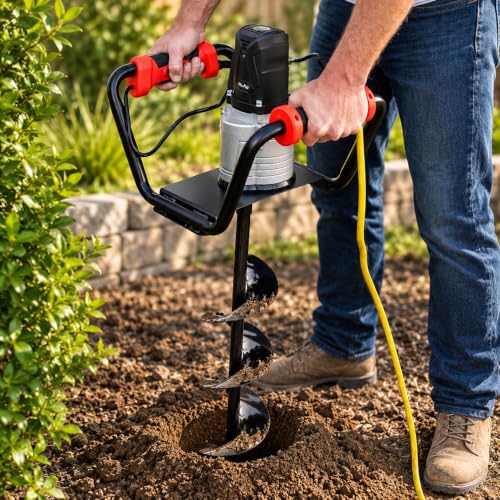
- 90 ft-lb torque and 270 RPM rated speed
- 6-inch manganese-steel auger
- Safety lock and anti-skid handles
Best For: Homeowners handling fence, planting, and general soil projects
Best Gas-Powered Option

- 72CC gasoline engine
- Includes 4-, 6-, and 12-inch bits
- Two extension rods for deeper digging
Best For: Larger fencing and projects needing multiple hole sizes
Best Drill-Compatible Choice
6-Inch Drill-Powered Earth Auger

- 6-inch by 32-inch auger
- Works with many common electric drills
- Ergonomic handle with adjustable strap
Best For: Small projects for owners of compatible electric drills
Best Manual Option
58-Inch Heavy-Duty Post Hole Digger

- Sharp steel blade for hard and rooted soil
- 58-inch fiberglass handle
- Non-slip grip and reinforced joints
Best For: Occasional fencing, mailbox, and gardening projects
High-Torque Choice

- 63CC engine targets hard clay, roots, and frozen ground
- Includes 6-inch and 10-inch bits plus three extensions
- Not CARB compliant; unavailable for shipment to California
Best For: Demanding fence, deck, and landscaping work
Manual Control Pick
Nohovu Heavy-Duty Post Hole Digger
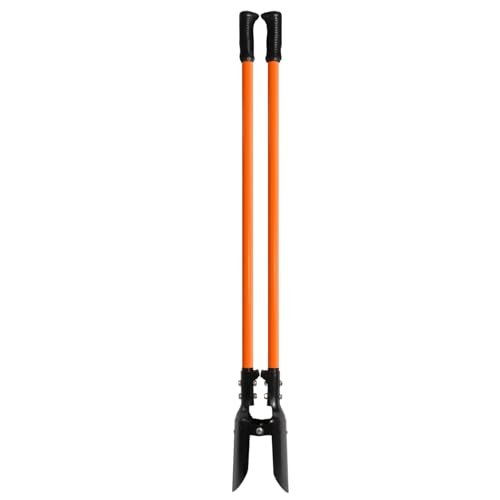
- Sharp carbon-steel blades are designed for hard and clay soil
- 58-inch fiberglass handles help reduce bending
- Manual design suits smaller digging jobs
Best For: Occasional fence, mailbox, planting, and garden holes
Balanced Gas Option

- 43CC engine and 9,350 RPM maximum listed speed
- Includes an 8-inch alloy-steel bit and 30-inch shaft
- 1.2-liter tank supports multiple holes per fill
Best For: Routine powered digging for gardens, farms, and planting
Best Manual Multi-Tool
55-Inch Dual-Blade Post Hole Digger

- Sharp dual blades cut roots and compacted soil
- Long 55-inch handle improves leverage
- Works for digging, weeding, and trenching
Best For: Manual garden and light post-hole work
Best Powered Option
VEVOR 52cc Gas Post Hole Auger
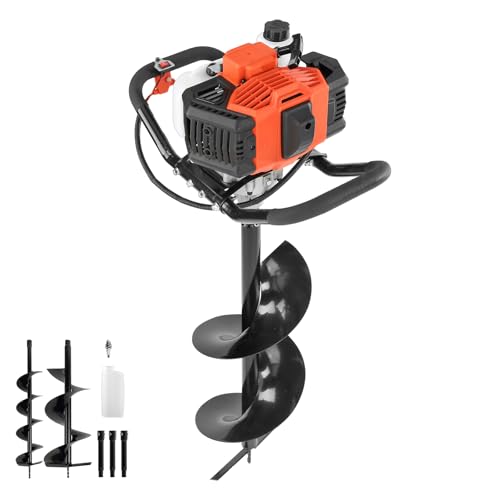
- 52cc engine reaches up to 9350 rpm
- Includes 6- and 10-inch bits and extensions
- Designed for fence, deck, and planting holes
Best For: Multiple post holes and larger projects
Best Electric Pick – 1500W Electric Earth Auger
For homeowners seeking post hole diggers for rocky soil, this electric model offers a balance of high motor output and manageable one-person operation. Its 1500W motor produces 90 ft-lb of torque at a rated 270 RPM, while the 6-inch manganese-steel auger is designed for demanding ground conditions.
Best For: Fence posts, tree planting, deck projects, and other soil-digging tasks where electric power and a 6-inch hole are suitable.
Pros:
- Powerful 1500W motor with 90 ft-lb of torque.
- Durable manganese-steel auger resists impact, wear, rust, and corrosion.
- Safety lock and anti-skid, vibration-resistant handles improve control.
Cons:
- Includes a 6-inch bit only, limiting hole-size flexibility.
- Requires access to suitable electric power.
This is a practical powered option for repeated fence or landscaping work, especially when you value quieter, simpler operation than a gas engine. It is not presented as a dedicated rock auger, so exceptionally rocky ground may still require preparation.
Best Gas-Powered Option – 72CC Gas Post Hole Digger
Among post hole diggers for rocky soil, this 72CC gas-powered model is the choice for shoppers prioritizing engine power and versatility. It includes 4-, 6-, and 12-inch drill bits plus two extension rods, helping accommodate different post and planting requirements.
Best For: Larger fencing, tree and shrub planting, and projects needing multiple hole diameters or extended digging depth.
Pros:
- 72CC gasoline engine is designed for drilling into earth.
- Includes 4-, 6-, and 12-inch bits and two extension rods.
- Ergonomic grips, finger throttle, and manual recoil start support control.
Cons:
- Gas-powered operation requires fuel mixing and maintenance.
- Its larger engine may be more machine than small jobs require.
The broad bit selection makes this the most adaptable package in the group. Its power and extensions suit demanding projects, but the supplied information does not specify a dedicated rock-cutting bit, so ground conditions should still be assessed before drilling.
Best Drill-Compatible Choice – 6-Inch Drill-Powered Earth Auger
Earth Auger - 6" Wide x 32" Deep - Electric Post Hole Digger - Handles - Hole Digger for Fence Posts
Check Price On AmazonThis drill-powered earth auger is a useful middle ground for shoppers comparing post hole diggers for rocky soil. It provides a 6-inch-wide, 32-inch-long auger and connects to a common electric drill, offering more reach than a handheld drill auger without requiring a dedicated gas-powered machine.
Best For: Homeowners who already own a compatible drill and need a straightforward 6-inch auger for fence posts or garden projects.
Pros:
- 6-inch auger reaches 32 inches deep.
- Compatible with drills from DeWalt, Milwaukee, Ryobi, Craftsman, Black + Decker, and others.
- Universal ergonomic handle and adjustable strap help reduce wrist movement.
Cons:
- Drill is not included.
- Offers one 6-inch size rather than multiple bits.
This kit makes sense when you want a compact, lower-commitment setup and already have a suitable drill. Its high-speed, cobalt, or titanium material options are listed in the specifications, but the product is not described as a specialized rock auger.
Best Manual Option – 58-Inch Heavy-Duty Post Hole Digger
VNIMTI Post Hole Digger Tool, Heavy Duty Post Hole Digger with Fiberglass Handle, 58 Inches
Check Price On AmazonFor shoppers wanting a simple manual tool among post hole diggers for rocky soil, this heavy-duty post hole digger uses a sharp steel blade and a 58-inch fiberglass handle. The long shaft helps adult users work with less bending, while the reinforced joints are built for repeated garden and fencing use.
Best For: Mailbox installation, fence work, gardening, and smaller digging jobs where manual control is preferred.
Pros:
- Sharp, impact-resistant steel blade is designed for hard and rooted soil.
- 58-inch fiberglass handle is lightweight and durable.
- Non-slip grip and reinforced joints support comfortable, reliable handling.
Cons:
- Manual operation requires more physical effort than powered augers.
- Not suited to rapidly drilling many holes.
This is the most straightforward choice for occasional work and locations without power or fuel. Its steel blade can help with hard soil and roots, but manual digging remains less efficient when rocky ground or a large number of holes is involved.
High-Torque Choice – NEO-TEC 63CC Gas Auger Kit
For demanding post hole diggers for rocky soil applications, the NEO-TEC stands out with a 63CC two-stroke engine designed for hard clay, compacted soil, roots, and frozen ground. Its two included bits and extension rods make it adaptable for deeper fence, deck, and landscaping holes.
Best For: Property owners tackling demanding digging projects who want a powerful, versatile gas auger with multiple bit sizes and extensions.
Pros:
- 63CC engine provides high torque for hard clay, roots, compacted soil, and frozen ground.
- Includes 6-inch and 10-inch steel auger bits for different hole sizes.
- Three 8-inch extensions support deeper drilling with less bending.
- Anti-vibration handles and balanced 16.3-pound powerhead help reduce fatigue.
Cons:
- Not CARB compliant and cannot be shipped to California.
- Ice auger blades are not included separately.
- Gas-and-oil fuel mixing is required at a 25:1 ratio.
This is the most capable option here for tough ground and deeper holes, especially when you need more than one bit size. Confirm local shipping eligibility and be prepared to mix fuel before choosing it.
Manual Control Pick – Nohovu Heavy-Duty Post Hole Digger
Among post hole diggers for rocky soil, the Nohovu offers a straightforward manual approach for smaller jobs and areas where powered equipment is unnecessary. Its sharp carbon-steel blades and long fiberglass handles are designed to cut into hard and clay soil while keeping the user more upright.
Best For: Homeowners digging occasional fence, mailbox, planting, or garden holes who prefer a simple manual tool.
Pros:
- Curved, sharp carbon-steel blades are intended for hard and clay soil.
- Thickened fiberglass handles resist breaking and include non-slip grips.
- 58-inch length helps reduce bending and back pressure.
- Blade and handle assembly is secured with four screws.
Cons:
- Manual digging requires more physical effort than a gas-powered auger.
- At 9.6 pounds, it may feel heavy during extended work.
- It may be less practical for numerous or especially deep holes.
The Nohovu is a sensible low-complexity choice for a few holes and gives you direct control around roots or obstacles. For large batches of holes or especially resistant ground, a powered model will likely be more efficient.
Balanced Gas Option – VEVOR 43CC Earth Auger
For buyers comparing post hole diggers for rocky soil, the VEVOR 43CC earth auger provides powered digging with an alloy-steel bit, ball-bearing gearbox, and welded steel handle. Its 8-inch bit and 30-inch shaft are suited to standard planting and fencing holes, while the larger fuel tank supports multiple holes between refills.
Best For: Users who want a mid-size gas auger for garden, farmland, planting, or general earth-drilling work.
Pros:
- 43CC engine reaches a listed maximum rotational speed of 9,350 RPM.
- Alloy-steel 8-inch bit has a powder-coated surface for durability and corrosion resistance.
- 1.2-liter fuel tank supports multiple holes without frequent refueling.
- Shock-absorbing foam handle and emergency stop switch improve operating convenience.
Cons:
- Only one 8-inch auger bit is included.
- It weighs 26.2 pounds, making it heavier than the manual option.
- Fuel must be mixed at a 40:1 gasoline-to-oil ratio.
This VEVOR balances engine power, a standard 8-inch hole size, and useful operating features without the larger 63CC engine of the NEO-TEC. It is a practical fit when you want powered digging for routine earthwork and do not need multiple included bits.
Best Manual Multi-Tool – 55-Inch Dual-Blade Post Hole Digger
If you need post hole diggers for rocky soil but prefer a manual tool, this heavy-duty model offers sharp opposing blades for breaking compacted soil, cutting roots, and lifting material. Its long handle adds leverage while avoiding frequent bending.
Best For: Gardeners and homesteaders handling compacted soil, roots, weeds, and smaller manual digging jobs.
Pros:
- Dual pre-sharpened steel spades can cut roots and break compacted soil.
- 55-inch handle provides reach and helps reduce back and knee strain.
- All-metal construction and reinforced connection support demanding garden work.
- Detachable design and hanging hole simplify storage.
Cons:
- Manual operation requires more physical effort than a gas-powered auger.
- The dual-blade design is also intended for weeding, trenching, and cultivation, rather than powered drilling.
This is a versatile choice when occasional digging, root cutting, and garden maintenance matter as much as opening post holes. For extensive fence work or deeper drilling, a powered auger may be more efficient.
Best Powered Option – VEVOR 52cc Gas Post Hole Auger
For larger jobs involving post hole diggers for rocky soil, this gas-powered VEVOR auger provides substantially more drilling power than a manual tool. The 52cc engine, alloy-steel bits, and included extensions are suited to fence, deck, pergola, and planting projects.
Best For: Users drilling multiple holes for fence posts, deck or pergola posts, and trees or plants.
Pros:
- 52cc engine reaches speeds up to 9350 rpm for efficient drilling.
- Includes 6-inch and 10-inch bits plus three extension rods.
- Thickened steel-welded handles, foam grips, and a quick-shutoff switch support controlled operation.
- 0.32-gallon fuel tank helps reduce refueling between holes.
Cons:
- At 34.5 pounds, it is considerably heavier and less portable than a manual digger.
- Requires a 1:40 oil-to-gasoline mixture and gas-engine maintenance.
- Rocky ground may still require care and slower operation despite the powered design.
This is the strongest match for repeated post-hole work in demanding ground among these options. Its bit sizes and extension rods add flexibility, while the gas engine makes it better suited to production-style projects than occasional garden use.
Best Compact Manual Pick – 55-Inch Steel Dual-Blade Digger
This manual model is a practical option for post hole diggers for rocky soil when you need a simple, multipurpose tool for compacted ground and roots. Its alloy-steel blades are pre-sharpened, and the 55-inch handle provides useful reach for garden and landscaping tasks.
Best For: Home gardeners needing one manual tool for hole opening, root cutting, weeding, and trenching.
Pros:
- Opposing sharp blades help break compacted soil and cut through roots.
- Long metal handle supports upright digging and added leverage.
- Can also serve as a bulb planter, weeder, trench digger, and cultivator.
- Contoured grip and detachable construction improve handling and storage.
Cons:
- Manual digging is more labor-intensive for numerous or deep holes.
- Its multipurpose blade design does not provide the drilling speed of a powered auger.
Choose this version for straightforward hand digging and general garden maintenance. It offers useful versatility and a long reach, but a gas-powered model is the better fit when the job involves many post holes.
How We Picked the Best Post Hole Diggers for Rocky Soil
We focused on the factors that matter most when digging in compacted or stony ground: power source, engine or motor output, available auger sizes, shaft and extension options, handle design, build materials, and likely ease of control. We also included manual tools because they can be useful for narrow holes, finishing work, and locations where powered equipment is impractical.
For rocky soil, no auger should be treated as a substitute for removing large stones by hand. The strongest options are better suited to breaking through tough earth and smaller obstructions, while a digging bar, rock bar, or pry tool may still be necessary for buried bedrock.
Quick Comparison
- Manual post hole diggers: Affordable, quiet, and easy to maintain, but physically demanding in hard or rocky soil.
- Electric augers: Convenient for residential work where an outlet or suitable extension setup is available. They generally produce less noise and maintenance than gas models.
- Gas-powered augers: The most practical choice for larger projects, remote locations, and repeated holes, provided the operator can manage vibration, fuel, and kickback.
- Multiple-bit models: More versatile for fence posts, signs, planting, and different diameter requirements.
Key Buying Factors for Post Hole Diggers for Rocky Soil
Power and Torque
Look beyond advertised wattage or engine displacement. Torque delivery, gearing, and the bit’s ability to maintain rotation under load determine how well an auger handles dense ground. Gas models typically offer greater freedom for demanding outdoor work, while electric units can be easier to start and operate.
Bit Size and Digging Depth
Choose a diameter that matches the post and required concrete clearance. Six-inch bits suit many fence installations, while 10- or 12-inch bits create wider holes but demand more power and control. Check maximum depth and whether extension rods are included.
Handling and Safety
Dual handles, balanced weight, and a reliable throttle or trigger help control kickback when the bit encounters a stone. Wear eye, hearing, hand, and foot protection, keep bystanders clear, and stop the machine before attempting to remove jammed material.
Portability and Maintenance
Consider total machine weight, transport, fuel storage, cord access, and cleanup. Manual tools need little maintenance, electric augers simplify upkeep, and gas units require fuel mixing or filling, air-filter care, and routine engine maintenance.
Who Should Buy Which Post Hole Diggers for Rocky Soil?
Choose a manual digger for occasional shallow holes, light soil, or precision work after powered digging. Choose an electric auger for residential projects where lower noise and simple starting matter. Choose a gas-powered auger for multiple fence posts, hard ground, remote sites, or larger diameters. If your property has frequent large rocks, pair any auger with a rock bar and plan to dig in stages rather than forcing the bit through immovable obstructions.