When a full-size reciprocating saw cannot fit between studs, pipes, cabinets, or framing, a compact model can make difficult cuts far more manageable. The right tool balances reach, control, vibration, runtime, and blade access without sacrificing the cutting power your project requires.
This roundup compares 10 compact reciprocating saws and mini alternatives for renovation, plumbing, electrical, automotive, and general repair work. You will find cordless options with different battery platforms, a pneumatic air saw, and lightweight tools suited to occasional cutting.
Best 10 Reciprocating Saws for Tight Spaces Picks for 2026
Best One-Handed Pick
DEWALT ATOMIC 20V MAX Reciprocating Saw

- Compact 12.5-inch front-to-back design
- One-handed, lightweight cordless format
- Brushless motor with LED and pivoting shoe
Best For: Controlled cutting in cramped work areas
Best Manual Option

- Compact frame for narrow work areas
- Includes three flexible 24 TPI blades
- Designed for light-duty metal, PVC, and plastic cuts
Best For: Small repairs and toolbox carry
Best Compact Power Pick
DEWALT 20V MAX XR Reciprocating Saw

- 14.5-inch length fits between studs
- 1-1/8-inch stroke with up to 2,900 SPM
- Four-position clamp and pivoting head
Best For: Demanding cuts in confined construction spaces
Best High-Speed One-Handed Saw
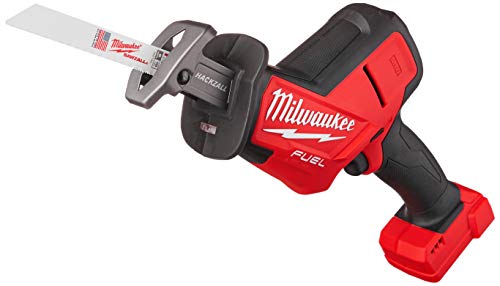
- One-handed design for confined work
- POWERSTATE brushless motor and REDLINK Plus
- Up to 4,500 RPM with pivoting shoe
Best For: Fast, controlled cordless cuts in tight areas
Best Value Cordless Pick
Lightweight Brushless Reciprocating Saw

- 2.0-pound saw body for one-handed use
- LED light and tool-free blade changes
- Two batteries and six blades included
Best For: DIY users cutting wood, plastic, and metal in dim or confined areas
Best Pneumatic Option
Compact Ingersoll Rand 429 Air Saw

- 1.3-pound inline pneumatic design
- Up to 10,000 strokes per minute
- Includes six high-speed steel blades
Best For: Air-equipped garages and shops cutting metal and sheet materials
Best One-Handed Design

- Compact one-handed form for confined cuts
- Anti-vibration handle and built-in LED
- Tool-free QUIK-LOK blade clamp
Best For: M18 owners handling tight, overhead, and metal-cutting tasks
Compact Control Pick

- 20V cordless design includes battery and charger
- Tool-free blade change and pivoting shoe
- Variable-speed trigger for controlled cuts
Best For: DIY wood-cutting and general home projects
Versatile High-Power Pick

- 3500 SPM brushless motor
- Two 4.0Ah batteries included
- Eight blades and multi-material capability
Best For: Renovation, piping, and extended cutting projects
Mini Access Pick
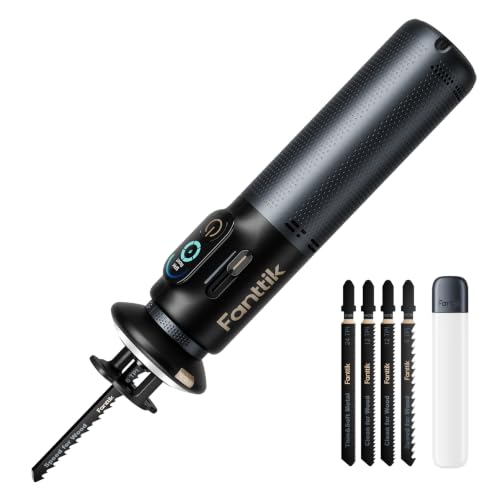
- Compact 8.92-inch body for confined areas
- 0–2200 SPM stepless brushless motor
- Five blades and Type-C fast charging included
Best For: Light-duty wood and PVC DIY cutting
Best One-Handed Pick – DEWALT ATOMIC 20V MAX Reciprocating Saw
DEWALT ATOMIC 20V MAX* Reciprocating Saw, One-Handed, Cordless, Tool Only (DCS369B)
Check Price On AmazonFor reciprocating saws for tight spaces, the DEWALT ATOMIC stands out with its one-handed design and compact 12.5-inch front-to-back profile. Its brushless motor, LED, pivoting shoe, and variable-speed trigger make it well suited to controlled cuts where room is limited.
Best For: One-handed cutting in cramped work areas, especially when portability and maneuverability matter.
Pros:
- Compact 12.5-inch design is easier to position in confined spaces.
- One-handed format and 37% lighter tool-only weight than the DCS367 support maneuverability.
- Brushless motor, LED, variable-speed trigger, and pivoting shoe add practical control.
- Tool-free blade release enables quick blade changes.
Cons:
- Battery and charger are not included.
- The supplied details identify wood as the surface recommendation, so material versatility may depend on blade choice.
This is a particularly appealing option when access is the main challenge. Choose it for compact handling and one-handed control rather than a larger, more aggressive demolition setup.
Best Manual Option – KATA 10 Inch Mini Hacksaw
The KATA Mini Hacksaw is a manual alternative for reciprocating saws for tight spaces when you need a small, controllable tool rather than a powered saw. Its compact aluminum frame and flexible 24 TPI bi-metal blades suit short cuts on tubing, PVC, plastic, rods, bolts, and similar light-duty materials.
Best For: Light household repairs, toolbox use, and precise manual cuts in narrow areas.
Pros:
- Compact 10-inch frame is easy to control and store.
- Includes one installed blade plus two replacement 24 TPI bi-metal blades.
- Ergonomic non-slip grip supports steady cutting.
- Suitable for PVC, plastic, thin tubing, metal rods, and bolts.
Cons:
- Manual operation is slower and more labor-intensive than a cordless reciprocating saw.
- Not intended for heavy-duty demolition, large lumber, or thick hardened steel.
For occasional repair work, this compact hacksaw offers straightforward control without batteries or charging. It is best viewed as a light-duty precision tool, not a replacement for a powered reciprocating saw on demanding jobs.
Best Compact Power Pick – DEWALT 20V MAX XR Reciprocating Saw
Among reciprocating saws for tight spaces, the DEWALT DCS367B balances a compact 14.5-inch length with a 1-1/8-inch stroke and up to 2,900 SPM. Its brushless motor, four-position blade clamp, pivoting head, variable-speed trigger, and LED support efficient work between studs and in other restricted areas.
Best For: Professionals and serious DIY users who need compact reach with stronger cutting performance.
Pros:
- 14.5-inch overall length helps it fit between studs and into tight spots.
- 1-1/8-inch stroke and up to 2,900 SPM support aggressive cutting.
- Four-position keyless blade clamp improves access and versatility.
- Brushless motor, pivoting head, LED, and variable-speed trigger add control.
Cons:
- Tool-only package does not include a battery or charger.
- At 5.4 pounds tool-only, it is heavier than the DEWALT ATOMIC one-handed model.
This model is a strong middle ground for users who want compact dimensions without giving up a full-size reciprocating saw’s more forceful stroke. Its four-position clamp is especially useful when blade access is awkward.
Best High-Speed One-Handed Saw – Milwaukee M18 FUEL Hackzall
Milwaukee 2719-20 M18 FUEL Hackzall (Bare Tool), Red, Black, | Saw (Tool Only) Model 2719-20
Check Price On AmazonThe Milwaukee M18 FUEL Hackzall is a one-handed choice among reciprocating saws for tight spaces, combining a POWERSTATE brushless motor with a 7/8-inch stroke and up to 4,500 RPM. Its pivoting shoe is designed to maintain contact with the workpiece for smoother cutting and less bucking.
Best For: Users who prioritize one-handed control, high operating speed, and cordless cutting performance.
Pros:
- One-handed design offers control and versatility in confined locations.
- POWERSTATE brushless motor is paired with REDLINK Plus overload protection.
- Up to 4,500 RPM supports fast cutting.
- Pivoting shoe and 7/8-inch stroke help maintain contact and remove material efficiently.
Cons:
- Bare-tool package does not include a battery or charger.
- Its 1.8 kg weight may feel less lightweight than some compact alternatives.
- The supplied details list an 8-inch blade, which may offer less reach for certain cuts.
Choose the Hackzall when one-handed handling and fast operation are more important than maximum stroke length. The pivoting shoe and electronic protection make it a capable option for controlled work in restricted spaces.
Best Value Cordless Pick – Lightweight Brushless Reciprocating Saw
For homeowners seeking reciprocating saws for tight spaces, this cordless SEESII model combines a lightweight design with useful visibility and blade-change features. Its 2.0-pound saw body, built-in LED, and one-handed operation are practical for work under furniture, inside cabinets, and in dim areas.
Best For: DIY users who want a cordless saw with batteries, blades, and accessories included for wood, plastic, and metal projects.
Pros:
- Lightweight 2.0-pound design supports one-handed use.
- Built-in LED helps illuminate dark work areas.
- Includes two 4.0Ah batteries, a fast charger, six blades, storage, gloves, and safety glasses.
- Tool-free blade changes and a variable-speed brushless motor rated up to 3,500 RPM add convenience.
Cons:
- It is battery powered, so runtime depends on charging and battery capacity.
- The listed 8-inch blade length may be more than needed for very compact cuts.
- The product details list a 3.48 kg item weight despite describing the saw itself as 2.0 pounds, so buyers should verify handling expectations.
The included batteries and accessories make this a convenient all-in-one option, while the LED and compact operating style suit awkward, poorly lit cutting locations. It is a flexible choice for general home projects rather than a specialized air-powered tool.
Best Pneumatic Option – Compact Ingersoll Rand 429 Air Saw
Among reciprocating saws for tight spaces, the Ingersoll Rand 429 stands out for its compact inline configuration and low 1.3-pound weight. Powered by compressed air, it delivers up to 10,000 strokes per minute for controlled cutting in metal, plastic, fiberglass, and aluminum.
Best For: Garage and professional-shop users who already have an air supply and need a fast, lightweight saw for hard-to-reach cutting.
Pros:
- Compact 10.1-inch length and inline configuration support access in confined areas.
- Up to 10,000 strokes per minute enables fast cutting.
- Positive blade retainer and adjustable blade guide support accurate cuts.
- Includes six high-speed steel blades and two hex wrenches.
Cons:
- Requires a pneumatic air source rather than operating on its own battery.
- Its supplied information primarily recommends metal and similar sheet materials, making it less versatile for general household cutting.
- Warranty information is inconsistent, listing both limited lifetime coverage and a one-year manufacturer warranty.
This is a strong fit when compact access, speed, and low tool weight matter more than cordless convenience. Its air-powered design makes it especially suitable for a garage, shop, or construction environment equipped for pneumatic tools.
Best One-Handed Design – Milwaukee M18 Hackzall
Milwaukee 2625-20 M18 18-Volt Lithium-Ion Cordless Hackzall Reciprocating Saw, Bare Tool
Check Price On AmazonThe Milwaukee M18 Hackzall is designed specifically for control in confined work areas. Its one-handed form, compact size, anti-vibration handle, LED lighting, and 4-inch blade make it a practical choice when standard reciprocating saws feel cumbersome.
Best For: Milwaukee M18 owners who need a compact bare-tool saw for tight cuts, overhead work, and improved one-handed control.
Pros:
- One-handed design improves control in tight conditions.
- Compact body and 4-inch blade support confined and overhead cutting.
- Anti-vibration handle helps reduce fatigue during heavier cutting.
- QUIK-LOK clamp enables tool-free blade changes, while the LED illuminates the work surface.
Cons:
- Sold as a bare tool, so an M18 battery and charger are required separately.
- At 4 pounds, it is heavier than the listed SEESII saw body and Ingersoll Rand air saw.
- The supplied details list metal as the surface recommendation, so buyers should confirm suitability for their intended materials.
For users already invested in Milwaukee’s M18 platform, this Hackzall offers a focused combination of compact access and one-handed control. Its bare-tool format keeps the package simple but adds the cost of batteries and charging equipment if you do not already own them.
Compact Control Pick – BLACK+DECKER BDCR20C
The BLACK+DECKER BDCR20C is a practical cordless option for reciprocating saws for tight spaces, especially when you need portability and straightforward blade changes. Its variable-speed trigger and pivoting shoe help improve control during cuts.
Best For: DIY users who want a familiar 20V cordless saw for wood-cutting and general home projects.
Pros:
- Cordless 20V design with a battery and charger included
- Tool-free blade change simplifies setup
- Pivoting shoe and variable-speed trigger support controlled cutting
- Relatively light 4.5-pound tool weight
Cons:
- Supplied details recommend the included setup for wood rather than listing broad material capability
- Only one battery is included
- The 15.62-inch length may be less convenient in extremely confined areas than a mini saw
The BDCR20C balances useful control features with the convenience of a cordless platform. It is a sensible choice for homeowners who value easy operation, though its full-size design may not be the best fit for the tightest access points.
Versatile High-Power Pick – SOARFLY 21V Brushless Saw
The SOARFLY cordless reciprocating saw combines a brushless motor, two batteries, and a compact cordless format for reciprocating saws for tight spaces. Its included blades and broad material ratings make it useful for renovation, piping, and outdoor cutting tasks.
Best For: Users who want a versatile kit with extended battery capacity for wood, metal, plastic, and pipe work.
Pros:
- Brushless motor delivers up to 3500 strokes per minute
- Two 21V 4.0Ah batteries provide a claimed runtime of up to 60 minutes
- Includes eight blades, safety goggles, gloves, charger, and carrying case
- Supports cutting wood, metal, PVC pipe, plastic, and trees
Cons:
- At 4.27 kg, it is substantially heavier than the BLACK+DECKER option
- The supplied specifications do not state a tool-free blade-change feature
- Maximum cutting depths vary by material and may limit heavier metal work
This kit offers strong versatility and generous accessories, while the two batteries suit longer projects. Its heavier listed weight is worth considering if overhead work or frequent repositioning in tight spaces is a priority.
Mini Access Pick – Fanttik R11 Pro Mini Saw
The Fanttik R11 Pro is specifically shaped for confined work, making it a strong candidate among reciprocating saws for tight spaces. Its 8.92-by-2.4-inch body, low-vibration design, built-in battery, and Type-C charging suit light DIY cutting in wood and PVC.
Best For: DIY users who prioritize a very compact saw for wood and PVC cuts up to the recommended 3/4-inch thickness.
Pros:
- Compact 8.92-inch design is easy to store and maneuver
- Dual counterweights help reduce vibration
- Brushless 160W motor offers stepless speed control from 0 to 2200 SPM
- Includes five four-inch blades and Type-C fast charging
Cons:
- Recommended maximum cutting thickness is 3/4 inch
- Built-in battery cannot be swapped like a removable battery pack
- Blade compatibility is limited to T-shank jigsaw blades up to 1.4 mm thick and 3–4 inches long
The R11 Pro is the most space-conscious choice in this group and adds useful speed and battery-status controls. Its compact format is appealing for precise DIY work, but the limited cutting thickness and blade requirements make it less suitable for demanding demolition.
How We Picked the Best Reciprocating Saws for Tight Spaces
We focused on tools that are easier to maneuver than standard full-size reciprocating saws, especially in confined areas where length, balance, and one-handed control matter. Our comparison considers overall size, handle design, stroke action, variable-speed control, blade-changing convenience, vibration management, illumination, and compatibility with common wood- and metal-cutting blades.
Power source also matters. Cordless models offer the most freedom on job sites, while pneumatic tools can be useful in workshops with a suitable compressor. Kit contents, battery availability, and the likely cost of building into a platform were considered alongside cutting performance.
Quick Comparison
| Type | Best for | Main advantage | Potential trade-off |
|---|---|---|---|
| One-handed compact cordless | Overhead and confined cuts | Excellent maneuverability | Less reach and power than full-size tools |
| Compact two-handed cordless | General renovation and demolition | Better control and versatility | Usually bulkier |
| Mini cordless saw | Light-duty wood, PVC, and trim work | Low weight and easy storage | Limited heavy-duty capability |
| Pneumatic air saw | Automotive and workshop cutting | Consistent operation without battery charging | Requires an air compressor and hose |
Key Buying Factors for Reciprocating Saws for Tight Spaces
Size, Balance, and Grip
Measure the spaces where you will work, not just the tool’s advertised length. A short body and narrow nose help around pipes and framing, while a centered grip can reduce wrist strain. One-handed designs are convenient, but use two hands whenever the cut or material allows for better control.
Power and Stroke Control
Higher speed is not automatically better. Variable-speed triggers help you start accurately, protect delicate materials, and reduce blade wandering. For demolition, look for a brushless motor or a higher-output battery platform; for trim, PVC, and occasional small cuts, a lighter motor may be sufficient.
Blades and Material Compatibility
Check whether the tool accepts standard reciprocating-saw blades and whether the package includes blades for wood, metal, or plastic. A compact saw is only as useful as the blade installed. Fine-tooth blades suit metal, while coarse blades generally cut wood faster.
Runtime, Batteries, and Comfort
Bare tools can be economical if you already own compatible batteries, but a kit may cost less than buying batteries and a charger separately. Consider runtime, recharge time, vibration, LED lighting, and the weight of the tool with its battery attached.
Who Should Buy Which Reciprocating Saws for Tight Spaces?
Choose a one-handed compact model if you regularly cut in cramped framing, overhead, plumbing, or electrical locations and value maneuverability above maximum power. A compact two-handed cordless saw is the better all-around choice for remodeling, pruning, and moderate demolition.
Mini cordless models make sense for homeowners, installers, and DIY users handling trim, PVC, thin wood, and occasional light metal. Select a pneumatic air saw if you work primarily in an automotive or fabrication shop and already have a compressor capable of meeting its airflow needs. Finally, prioritize a complete battery kit when you are starting from scratch; choose a bare tool when you are already invested in the matching battery system.