Starting seeds indoors is easier when trays provide dependable drainage, manageable cell sizes, and enough humidity control for early growth. The right setup can also make watering, labeling, and transplanting far less frustrating.
We compared 10 seed starting trays across capacity, construction, included domes, watering features, and reuse potential to help you choose a practical fit for your growing space.
Best 10 Seed Starting Trays Picks for 2026
Best Adjustable-Ventilation Seed Starting Trays

- 200 total cells in five 40-cell kits
- Adjustable vents and clear humidity domes
- Drainage holes and bases included
Best For: Larger indoor seed-starting batches and cuttings
Best Reusable Seed Starting Trays

- Flexible silicone cells ease transplanting
- Watering channels and drainage slots included
- Labeled cells and dishwasher-safe design
Best For: Repeated indoor use and gentle seedling removal
Best Complete Seed Starting Trays Kit
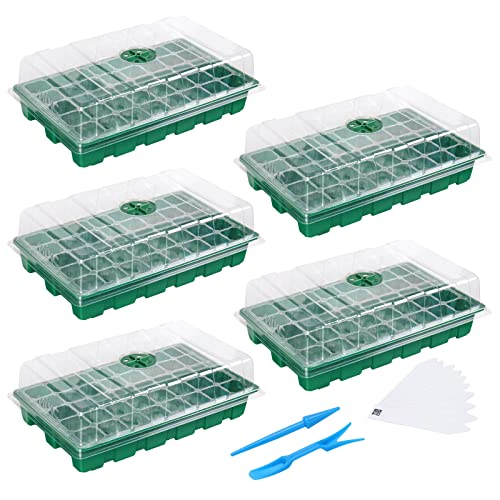
- Five trays provide 200 cells total
- Adjustable vents and transparent domes
- Includes tools, labels, and stackable bases
Best For: Beginners needing an organized multi-tray setup
Best Bulk Seed Starting Trays
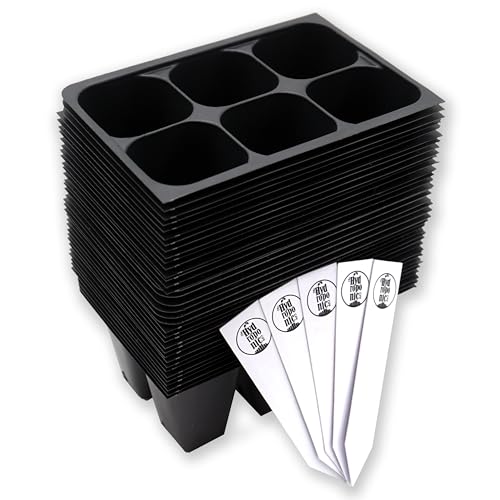
- 36 six-cell trays provide 216 cells
- Deep cells with drainage slits
- Plant stakes included for organization
Best For: High-volume growing with flexible small tray sections
High-Volume Starter

- 400 total cells across 10 trays
- Vented domes and matching bases included
- Dibber and widger support sowing and transplanting
Best For: Large seed-starting projects, classrooms, and greenhouse use
Low-Maintenance Pick

- Six units with 144 total cells
- Reservoirs and capillary mats support watering
- Adjustable vents and 200 labels included
Best For: Indoor gardeners seeking compact, moisture-managed propagation
Heat-Mat Ready
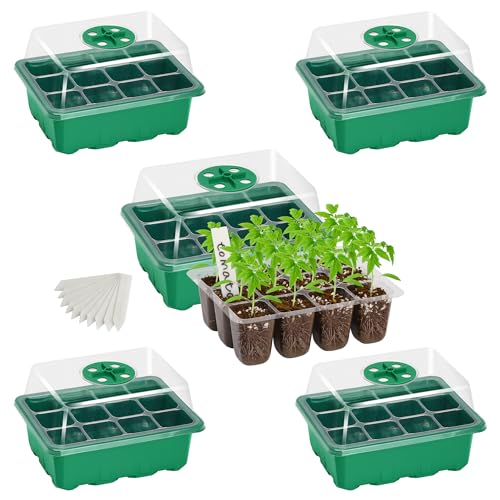
- 60 total cells with 1.5-inch square spaces
- Adjustable vents and clear domes
- Heat-mat compatible with drainage holes
Best For: Larger vegetable seeds and small-to-medium indoor starts
Bulk Hydroponic Workhorse
Large No-Drain Seed Starting Trays

- 10 reusable plastic trays
- Large 20-by-10-inch growing area
- Useful for hydroponics and microgreens
Best For: Bulk seed starting, drip-tray use, and hydroponic growing
Windowsill-Friendly Pick

- Eight flexible extra-large cells
- Built-in drainage and watering channels
- Reusable and dishwasher safe
Best For: Organized indoor windowsill seed starting
High-Count Starter Set
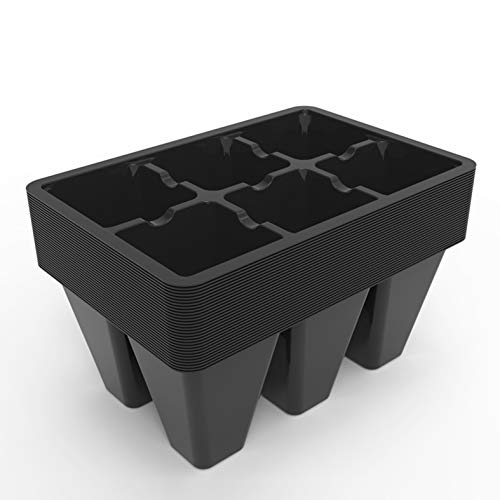
- 30 trays with 180 cells total
- Drainage holes and guide channels
- Reusable plastic construction
Best For: Starting many flower, herb, and vegetable varieties
Best Adjustable-Ventilation Seed Starting Trays – Gardzen 5-Pack
For gardeners who want a controlled setup, these seed starting trays combine five 40-cell inserts with clear humidity domes, bases, drainage holes, and adjustable vents. The transparent covers make it easy to monitor seedlings while the vents help manage airflow and humidity.
Best For: Indoor gardeners and greenhouse growers starting larger batches of seeds or propagating cuttings.
Pros:
- Includes 200 total cells across five 40-cell kits.
- Adjustable dome vents help regulate ventilation.
- Clear domes, drainage holes, and included bases support straightforward seedling care.
- Attached stickers help create a tighter dome-to-base fit.
Cons:
- The 40-cell format may be more capacity than needed for a small planting project.
- Plastic construction is durable but does not offer the flexible silicone cells found in some reusable trays.
Choose the Gardzen set if adjustable humidity control and generous capacity matter most. It is a practical multi-tray system for starting many seedlings in one cycle.
Best Reusable Seed Starting Trays – Burpee SuperSeed 36-Cell
These seed starting trays stand out for their flexible silicone cells, designed to pop seedlings out gently during transplanting. The integrated watering design also includes drainage slots, deep channels, a raised edge, and side handles for managing excess water.
Best For: Gardeners who prioritize easy transplanting, repeat use, and organized indoor seed starting.
Pros:
- Flexible food-grade silicone cells help release seedlings with less root disturbance.
- 36 cells are labeled alphanumerically and include a Plant-o-Gram diagram.
- Drainage and watering channels help manage excess moisture.
- Top-shelf dishwasher safe for easier cleaning and reuse.
Cons:
- This is a single tray rather than a multi-tray kit.
- It does not include a humidity dome.
The Burpee SuperSeed is a strong choice for gardeners who transplant frequently and want a tray that can be cleaned and stored for future seasons. Its flexible cells are the main advantage over rigid plastic inserts.
Best Complete Seed Starting Trays Kit – MIXC 5-Pack
This MIXC kit gives you five 40-cell seed starting trays with matching bottom trays and adjustable-vent humidity domes. Transparent plastic lets you observe growth, while stackable bottom trays help conserve space before germination. Garden tools and plant labels are also included.
Best For: Beginners who want a multi-tray kit with humidity control, labels, and basic accessories.
Pros:
- Provides 200 cells across five 40-cell trays.
- Adjustable dome vents allow temperature and humidity management.
- Stackable bottom trays help save operating space.
- Includes two garden tools and 10 plant labels.
Cons:
- The 1.5-by-1.5-by-2-inch cells are intended for small seeds and may limit larger seedlings.
- The plastic trays do not have the flexible pop-out cells of a silicone design.
For a straightforward starter setup, the MIXC kit offers useful accessories and controlled propagation conditions in one package. Its stackable design is especially helpful where workspace is limited.
Best Bulk Seed Starting Trays – Hydroponic City 216-Cell
For high-volume projects, this set includes 36 compact six-cell seed starting trays for 216 cells overall. Each 1.5-inch-square by 2.25-inch-deep cell includes drainage slits, and the included plant stakes help organize flowers, herbs, succulents, and vegetables.
Best For: Gardeners who need many small batches or want flexible tray portions equivalent to three standard 1020 inserts.
Pros:
- Offers 216 cells in 36 separate six-cell trays.
- Deep cells are designed to support root development.
- Drainage slits help reduce excess water.
- Includes five plant stakes for labeling and organization.
Cons:
- No humidity domes or bottom trays are listed.
- Small six-cell sections may require more individual handling than full-size inserts.
This set is most useful when flexibility and quantity matter more than a complete propagation enclosure. The divided format lets you manage different plant varieties in smaller groups while keeping a large total cell count.
High-Volume Starter – 10-Pack 40-Cell Trays
The Mr. Pen seed starting trays kit is a practical choice when you need to start many seedlings at once. It includes ten 40-cell trays, matching bases, vented humidity domes, and basic planting and transplanting tools.
Best For: Home gardeners, classrooms, and greenhouse projects that need 400 total cells.
Pros:
- Includes 10 trays with 40 cells each for substantial planting capacity.
- Vented transparent domes help create a warm, humid environment while allowing growth monitoring.
- Includes a dibber and widger for accurate sowing and easier transplanting.
- Matching bases provide a complete tabletop setup.
Cons:
- The large 10-pack may be more capacity than needed for a small planting project.
- The listed cell capacity is not designed specifically for larger individual plants.
Choose this kit if quantity and included tools matter most. Its 400-cell capacity makes it especially useful for organized group planting or a busy home garden.
Low-Maintenance Pick – Self-Watering 144-Cell Trays
These SOLIGT seed starting trays are designed for gardeners who want moisture support built into the setup. Six compact units combine reservoirs, capillary mats, adjustable humidity vents, labels, and support stands for starting vegetables, herbs, and flowers.
Best For: Indoor growers who want a compact, reusable tray system with self-watering features.
Pros:
- Self-watering reservoirs and capillary mats help reduce drying out and overwatering.
- Adjustable dome vents provide control over temperature and humidity.
- Includes 200 plant labels, support stands, and a step-by-step manual.
- Compatible with grow lights, heat mats, and plant racks.
Cons:
- The capillary mat must be positioned correctly to contact the reservoir.
- Each cell is relatively compact at 1.5 by 1.5 inches and 2.17 inches deep.
This is a strong option when consistent moisture and an organized indoor footprint are priorities. The self-watering system adds convenience, but it requires following the reservoir setup instructions.
Heat-Mat Ready – 5-Pack 12-Cell Trays
The Bonviee seed starting trays offer a straightforward setup for larger seeds and controlled germination. Each of the five units includes a 12-cell tray, watertight base, clear humidity dome, adjustable vent, and plant labels.
Best For: Gardeners starting larger vegetable seeds such as potatoes, tomatoes, peppers, and eggplants.
Pros:
- 1.5-inch square cells accommodate relatively large seeds.
- Adjustable vents help regulate humidity and temperature.
- Clear trays and domes make it easy to monitor seedlings.
- Designed to withstand use on a heat mat and includes drainage holes.
Cons:
- With 60 total cells, it offers less capacity than larger multi-cell kits.
- The package includes only 10 plant labels for 60 cells.
Consider this set if you prefer roomier cells and plan to use bottom heat. Its five separate trays are easy to organize, while the vented domes provide useful control during germination.
Bulk Hydroponic Workhorse – Large No-Drain Seed Starting Trays
For gardeners who need lots of room or several seed starting trays at once, this 10-pack offers spacious 20-by-10-inch bottom dimensions. The trays have no drain holes, making them useful as drip trays, for hydroponic growing, and for applications where controlled watering is preferred.
Best For: Greenhouse projects, microgreens, wheatgrass, hydroponic growing, and seed starting with a separate watering setup.
Pros:
- Includes 10 reusable plastic trays.
- Large footprint accommodates 20-by-10-inch growing pads and mats.
- No-drain-hole design works well as a drip tray or hydroponic container.
- Suitable for seedlings, microgreens, and wheatgrass.
Cons:
- No drainage holes, so overwatering must be managed manually.
- Does not include individual cells or a built-in humidity cover.
This is a practical bulk option when capacity and versatility matter more than cell-based transplanting. Pair it with a suitable growing medium, pad, or inner cell system for more controlled seedling production.
Windowsill-Friendly Pick – Burpee SuperSeed 8-Cell Tray
This Burpee tray is a compact choice for indoor seed starting trays, with eight extra-large flexible silicone cells sized for a windowsill. Its drainage channels, labeled rows, and pop-out cells make it especially convenient for organized planting and later transplanting.
Best For: Indoor gardeners starting herbs, flowers, vegetables, peppers, or tomatoes in a windowsill garden.
Pros:
- Eight extra-large, flexible cells help simplify transplanting.
- Cell drainage slots and watering-tray channels help manage excess water.
- Alphanumeric row labels and an included Plant-o-Gram support plant identification.
- Reusable and top-shelf dishwasher safe.
Cons:
- Only eight cells, so capacity is limited for larger seed-starting projects.
- Designed for indoor windowsill use rather than a large propagation setup.
Choose this model if easy handling and gentle transplanting are priorities. The compact 11.5-inch length fits a windowsill, while the flexible cells and contained watering tray make everyday indoor care straightforward.
High-Count Starter Set – Gardzen 30-Pack 6-Cell Trays
Gardeners starting many varieties at once may prefer these compact seed starting trays. The 30-pack provides 180 cells total, with drainage holes, guide channels, and cells measuring about 1.5 inches square by 2.2 inches deep for flowers, vegetables, and herbs.
Best For: High-volume seed germination and gardeners who want separate six-cell modules for multiple plant varieties.
Pros:
- 30 trays provide 180 individual cells.
- Drainage holes help reduce excess moisture.
- Deep cells support developing root systems.
- Reusable plastic design can be cleaned for future planting.
Cons:
- Small six-cell trays require more handling than one large tray.
- No humidity dome or watering reservoir is included in the supplied details.
- Cells are compact compared with extra-large indoor starter cells.
This set is a strong fit for gardeners who value quantity and flexibility. The individual modules make it easier to separate plant types, while the drainage design supports routine moisture management during germination.
How We Picked the Best Seed Starting Trays
We evaluated these Seed Starting Trays by looking at the features that most affect germination and day-to-day use: cell count and size, drainage, humidity control, tray rigidity, watering design, labeling options, and cleanup. We also considered whether each kit suits small windowsill projects, larger indoor starts, or repeated seasonal use.
Because gardeners have different priorities, the lineup includes compact windowsill options, high-capacity multi-cell kits, self-watering designs, and simple propagation trays. Reusable construction and dishwasher-safe components can be especially valuable if you start seeds every year.
Quick Comparison
| Best For | Look For |
|---|---|
| Small indoor gardens | Compact trays with larger cells or windowsill-friendly dimensions |
| Many seedlings | High cell counts and multipacks for efficient use of space |
| Beginners | Humidity domes, bases, labels, and straightforward drainage |
| Frequent reuse | Durable plastic, washable parts, and sturdy cell walls |
| Less frequent watering | Self-watering bases or reservoirs |
Key Buying Factors for Seed Starting Trays
Cell Size and Capacity
Smaller cells let you start many plants efficiently, but they dry out faster and may require earlier transplanting. Larger cells hold more growing medium and are better for seedlings that need extra root space or will remain indoors longer.
Drainage and Water Management
Drainage holes help prevent waterlogged roots, while a solid base catches excess moisture and protects shelves. If a tray has no drainage holes, use it as a holding or bottom-watering tray unless you are comfortable carefully controlling moisture.
Humidity Domes
Clear domes retain moisture and create a warmer microclimate during germination. Vents are useful because they let you gradually reduce humidity once seedlings emerge, helping prevent fungal problems and weak growth.
Durability and Cleanup
Thin trays may be inexpensive but can bend when moved. For repeated use, prioritize rigid plastic, reinforced edges, washable components, and designs that separate easily for cleaning between crops.
Watering Design
Self-watering systems can reduce daily monitoring, particularly for busy gardeners, but they still need occasional checks to avoid overly wet conditions. Standard trays offer more direct control and are often simpler to store.
Who Should Buy Which Seed Starting Trays?
Choose a compact windowsill tray if you are growing a few herbs, flowers, or vegetables in limited indoor space. Larger cells can reduce the need for immediate potting up.
Choose a high-capacity multipack if you start several varieties or want to stagger plantings. More cells provide flexibility, though they also require more labels, growing medium, and light.
Choose a domed kit if you are new to indoor propagation or growing seeds that benefit from consistent humidity. Look for adjustable vents so you can transition seedlings gradually.
Choose self-watering Seed Starting Trays if you want a buffer between waterings. They are useful for larger batches, provided the reservoir is monitored and the growing medium drains well.
Before buying, confirm the tray dimensions, cell depth, drainage layout, and compatibility with your grow lights or shelving. A modest kit that fits your available light and transplanting schedule will usually outperform a larger tray that is difficult to monitor.