Watering vegetables at the root zone can help reduce evaporation, leaf wetness, and wasted runoff. The best soaker hoses for vegetable gardens deliver steady moisture along beds without the overspray of a conventional sprinkler.
We selected 10 options in several lengths, materials, and formats—from compact tubing for planters to long, heavy-duty hoses for raised beds and larger plots. Use the guide below to match hose design and coverage to your garden layout.
Best 10 Soaker Hoses for Vegetable Gardens Picks for 2026
Best Overall Coverage
Gilmour 75-Foot Flat Soaker Hose

- 75-foot length for larger beds
- Recycled vinyl with UV resistance
- Flat, flexible design stores easily
Best For: Long vegetable rows, flower beds, and orchards
Best Heavy-Duty Build
MIXC 100-Foot Thickened Soaker Hose

- Thickened 1 mm pipe
- Copper joints with aluminum rings
- Swivel handle helps prevent kinks
Best For: Durability-focused gardeners with multiple garden zones
Best for Compact Beds
Gilmour 50-Foot Flat Soaker Hose

- 50-foot size fits smaller gardens
- Recycled vinyl with clog-resistant cover
- Lightweight and easy to store
Best For: Raised beds, compact vegetable plots, and flower borders
Best Short-Bed Value
4-Pack 10-Foot Flat Soaker Hoses

- Four separate 10-foot sections
- Gradual, even root-zone watering
- Flat design stores compactly
Best For: Small vegetable beds and multiple compact planting areas
Best Drip-System Tubing
Raindrip 50-Foot 1/4-Inch Soaker Tubing
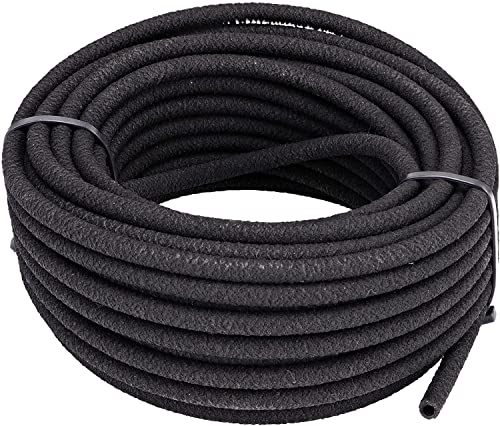
- Cut-to-length 50-foot coil
- Flexible for curved or straight runs
- Designed for compatible drip systems
Best For: Custom drip irrigation in small beds, planters, and borders
Best Lightweight Flat Design
25-Foot Water-Saving Soaker Hose

- Lightweight flat profile is easy to position
- Double-layer construction for seasonal use
- Designed to reduce water use by up to 80%
Best For: Small vegetable patches, flower beds, and compact lawns
Best Expandable Garden-Bed Setup
Two 25-Foot Rubber Soaker Hoses

- Use separately or connect for a 50-foot run
- Rubber hose distributes water through small pores
- Designed to reduce runoff and foliage wetting
Best For: Average-size vegetable beds and flexible watering layouts
Best for Large Beds
100-Foot Flat Hose with Metal Connectors

- 100 feet of coverage from two 50-foot sections
- Rust-resistant, leakproof metal connectors
- Compatible with timers and standard 3/4-inch fittings
Best For: Large vegetable gardens and multi-bed irrigation layouts
Best Overall Coverage – Gilmour 75-Foot Flat Soaker Hose
For gardeners comparing soaker hoses for vegetable gardens, this 75-foot Gilmour model offers broad bed coverage in a lightweight, space-saving design. Its recycled-vinyl construction and clog-resistant fabric cover are designed to deliver water near plant roots while using less water than conventional watering.
Best For: Long vegetable rows, flower beds, orchards, and gardeners who want flexible above- or below-ground installation.
Pros:
- 75-foot length covers larger garden areas.
- Made from 100% recycled vinyl with UV-resistant construction.
- Can be linked with other hoses for a custom drip setup.
- Flat design is lightweight and easy to store.
Cons:
- Flat hoses may need careful positioning for consistent bed coverage.
- A longer hose can be more than needed for compact raised beds.
Choose this model when you want a flexible, durable soaker hose with enough length for multiple planting areas and a lifetime replacement policy.
Best Heavy-Duty Build – MIXC 100-Foot Thickened Soaker Hose
Among soaker hoses for vegetable gardens, the MIXC stands out for its thickened 1 mm pipe and reinforced metal connections. The included washers, swivel handle, and pressure guidance make it a feature-rich option, although proper pressure and section-length limits are important for reliable use.
Best For: Gardeners prioritizing reinforced construction, secure connections, and a flexible setup for beds, patios, or tight corners.
Pros:
- Thickened 1 mm pipe is designed to resist bursting and sun damage.
- Copper joints and aluminum rings help reduce connection leaks.
- 360-degree swivel handle helps limit twisting and knotting.
- Includes guidance for 30–50 psi operation and staged hose connections.
Cons:
- Recommended sections are generally limited to 50 feet at a time.
- Requires pressure management and included washers for best results.
- Connecting the full length may reduce water pressure at the far end.
This is a strong choice for demanding garden layouts, provided you follow the recommended pressure and connection guidelines rather than treating it like a simple unrestricted 100-foot run.
Best for Compact Beds – Gilmour 50-Foot Flat Soaker Hose
If you need soaker hoses for vegetable gardens without excess length, this 50-foot Gilmour model is a practical fit for smaller beds and planting areas. Its recycled-vinyl flat construction is lightweight, flexible, and suitable for installation above or below ground.
Best For: Compact vegetable gardens, raised beds, flower borders, and gardeners who want simple seasonal storage.
Pros:
- 50-foot length suits smaller or more focused watering zones.
- Recycled vinyl and a clog-resistant fabric cover support consistent soaking.
- Can be connected to other hoses for expanded coverage.
- Lightweight flat profile saves storage space.
Cons:
- Shorter length may not cover widely spaced beds on its own.
- Flat construction may require positioning to keep watering aligned with roots.
For a straightforward hose in a modest garden, this Gilmour provides the same basic low-profile approach as the longer version while being easier to size for contained planting areas.
Best Long-Run Rubber Option – AIODE 150-Foot Round Soaker Hose
For gardeners covering extensive planting areas, this AIODE round soaker hose provides 150 feet of reach in a heavy-duty recycled-rubber tube. Solid brass fittings are intended to reinforce the connections, making it a useful option when one hose needs to span multiple beds, trees, or landscape zones.
Best For: Large vegetable gardens, tree watering, flower beds, and landscape layouts that require extended hose coverage.
Pros:
- 150-foot length covers broad garden and landscaping areas.
- Heavy-duty recycled rubber construction is designed for garden use.
- Solid brass fittings support stable, long-lasting connections.
- Designed to save up to 70% water.
Cons:
- Long length and approximately 5 kg weight make handling and storage less convenient.
- Round tubing may take more storage space than a flat hose.
- Its size may be excessive for small raised beds.
Select this AIODE when coverage is the priority and you prefer a round rubber hose with brass fittings over a lightweight flat design.
Best Short-Bed Value – 4-Pack 10-Foot Flat Soaker Hoses
For gardeners comparing soaker hoses for vegetable gardens, this four-pack offers short, manageable lengths for targeted watering. Its flat vinyl design releases water gradually along the hose and rolls up compactly for storage.
Best For: Small vegetable beds, patio gardens, flower beds, and gardeners who need several short hose sections.
Pros:
- Four 10-foot hoses make it easier to cover separate beds.
- Slow, even seepage delivers water near plant roots while helping reduce runoff and evaporation.
- Flat construction is easy to coil, store, and integrate into an existing watering setup.
- Designed for 30–60 psi operating pressure and made from durable vinyl.
Cons:
- Each section is only 10 feet long, so larger gardens may require multiple pieces.
- The supplied information does not list included connectors or stakes.
This is a practical choice when your garden is divided into compact planting areas. The four-piece format provides flexibility, though larger layouts may be better served by a longer single hose.
Best Long-Run Option – AMRITA 75-Foot Rubber Soaker Hose
This 75-foot AMRITA hose is a strong option for gardeners who need broad coverage from one line. Its rubber tubing seeps water along the full length, while aluminum threaded fittings connect with standard outdoor faucets and garden hoses.
Best For: Long vegetable rows, large garden beds, lawns, trees, and layouts that may need buried or mulched irrigation.
Pros:
- 75-foot length covers extended beds and larger planting areas.
- Porous rubber construction delivers water directly to root zones and is advertised to reduce water waste by up to 70% versus spray hoses.
- Aluminum GHT fittings are compatible with most standard American outdoor faucets and garden spigots.
- Can be laid on soil or buried beneath 1–3 inches of mulch or earth.
Cons:
- The longer hose may be more than needed for small beds.
- It is supplied as one 75-foot hose, so separate short sections may require additional hose or cutting.
- Although a maximum pressure of 660 psi is listed, the notes do not specify a recommended operating pressure.
Choose this model when coverage and flexible installation matter more than compact size. The included stakes and sealing tap support setup, and additional hoses can be connected for larger areas.
Best Drip-System Tubing – Raindrip 50-Foot 1/4-Inch Soaker Tubing
For gardeners building a customized drip system, this 50-foot Raindrip tube is a compact alternative to a conventional garden hose. The porous 1/4-inch tubing gently seeps water around plants and can be cut to fit short, curved runs in vegetable gardens and borders.
Best For: Short flat runs, planters, borders, and vegetable beds already using a compatible drip-irrigation supply line.
Pros:
- 50-foot coil can be cut to the length needed for individual planting areas.
- Flexible tubing follows both curved and straight layouts.
- Slow seepage supports complete root-zone hydration and keeps soil moist.
- Connects to 1/2-inch, 5/8-inch, or 0.710-inch supply lines with compatible 1/4-inch micro fittings.
Cons:
- Requires compatible micro fittings and a supply line; it is not a standalone hose setup.
- The small 1/4-inch size is intended for short runs rather than broad, high-volume watering.
- Non-pressure-compensating tubing should be checked periodically for leaks or damage.
This tubing is best for precise, built-in irrigation rather than plug-and-play watering. It offers useful layout flexibility for gardeners comfortable assembling a complete drip system.
Best Lightweight Flat Design – 25-Foot Water-Saving Soaker Hose
If you need soaker hoses for vegetable gardens with a compact layout, this 25-foot flat hose offers targeted watering without the bulk of a traditional round hose. Its double-layer construction is designed for use on the soil surface or beneath it, while the flat profile is easy to move around garden beds.
Best For: Small vegetable patches, flower beds, lawns, and gardeners who want a lightweight hose for flexible layouts.
Pros:
- Flat, lightweight design is easy to position and maneuver.
- Designed to deliver water directly to garden areas and reduce water use by up to 80%.
- Double-layer construction is intended to handle varied weather conditions.
- Can be laid on the ground or buried under soil.
Cons:
- The 25-foot length may be limiting for larger vegetable gardens.
- The supplied details do not list included connectors or accessories.
This is a straightforward choice for smaller beds where easy handling matters. Choose a longer or connectable model if you need to cover several separate planting rows.
Best Expandable Garden-Bed Setup – Two 25-Foot Rubber Soaker Hoses
For gardeners planning soaker hoses for vegetable gardens of different sizes, this two-pack provides two 25-foot rubber hoses that can be used separately or connected into a 50-foot run. The small pores are designed to distribute water along the hose, helping limit runoff and keep moisture near plant roots.
Best For: Average-size vegetable beds, garden rows, and users who want flexibility to water either separate areas or one longer bed.
Pros:
- Two 25-foot hoses can be used individually or connected to make a 50-foot hose.
- Rubber material and evenly spaced pores are designed for consistent water distribution.
- Slow seepage helps reduce runoff, erosion, and foliage wetting.
- Supplied accessories support DIY hose-length configurations.
Cons:
- The initial installation may take some time.
- At 50 feet when connected, it may not cover especially large gardens without additional hose.
- Water pressure must stay within the listed 60 psi maximum.
This pack stands out for adaptable coverage and vegetable-bed use. It is a practical fit when you may want separate watering zones now but could need a longer run later.
Best for Large Beds – 100-Foot Flat Hose with Metal Connectors
For larger planting areas, this 100-foot flat soaker hose provides extended coverage through two 50-foot sections. Its double-layer build, flexible flat design, and anodized metal ends make it a useful option for vegetable beds, lawns, and broader drip-irrigation layouts.
Best For: Large vegetable gardens, multiple beds, and gardeners building a connectable irrigation system with timers or other standard garden equipment.
Pros:
- Provides 100 feet of total hose length for broader coverage.
- Two 50-foot sections can be connected through standard 3/4-inch threaded fittings.
- Anodized aluminum connectors are designed to resist rust and leaks.
- Double-layer construction is flexible, kink-resistant, and intended for seasonal durability.
Cons:
- The listed optimal working pressure is 40–60 psi, so pressure management may be needed.
- The longer length can require more planning for layout and storage.
- The product details list one included rubber mat but do not specify additional stakes or fittings.
This is the strongest match for gardeners who need long, organized coverage and connection flexibility. Pairing it with a pressure-regulating valve may help maintain more uniform watering across the full length.
How We Picked the Best Soaker Hoses for Vegetable Gardens
We compared the selected hoses by length, construction, connector design, installation flexibility, and intended use. The list includes flat and round styles, compact tubing for drip-irrigation layouts, multi-pack options, and longer hoses for broad garden beds. We also considered whether each product appears suited to vegetable rows, borders, trees, lawns, or foundation watering.
Because actual flow depends on water pressure, hose placement, and soil conditions, advertised water savings should be treated as estimates rather than guarantees. A pressure regulator, filter, or end cap may also be useful depending on the system.
Quick Comparison
- Small beds and planters: Choose 10- to 25-foot hoses or 1/4-inch tubing for short runs and tight layouts.
- Standard raised beds: A 50- to 75-foot hose is usually easier to route around several rows.
- Large gardens: Look for 100- to 150-foot round hoses or connect shorter sections with compatible fittings.
- Flexible seasonal storage: Flat soaker hoses are typically easier to coil and store when empty.
- Heavy-duty use: Round rubber or double-layer designs may better tolerate frequent handling and outdoor exposure.
Key Buying Factors for Soaker Hoses for Vegetable Gardens
Length and Layout
Measure the path from the spigot to the farthest bed, then account for turns and spacing between rows. Avoid buying one excessively long hose if it will need to be tightly folded or forced into sharp corners. Several shorter sections can make different beds easier to control.
Flat or Round Construction
Flat hoses are convenient for low-profile placement and storage, while round hoses often feel more substantial and may be easier to position around established plants. Either style can work well when laid on level soil and secured against movement.
Fittings and Water Control
Metal or reinforced couplings can improve connection durability, but verify that the fittings match your existing hose, timer, splitter, and end cap. A shutoff valve or separate zone control helps prevent overwatering smaller beds.
Flow, Pressure, and Placement
Run the hose at low pressure and follow the manufacturer’s instructions. Place it near the root zone, cover it lightly with mulch if appropriate, and test the soil after several minutes. Uneven pressure can cause the far end to receive less water than the section nearest the faucet.
Who Should Buy Which Soaker Hoses for Vegetable Gardens?
Apartment gardeners and small-bed growers should consider short 10- or 25-foot options or narrow drip tubing. Raised-bed gardeners will generally benefit from 50- to 75-foot hoses that can cover multiple rows without excessive connections. Large vegetable plots may prefer 100- to 150-foot round hoses, provided the water supply can maintain consistent flow. Gardeners who frequently rearrange beds may find flat hoses or multi-packs more convenient, while long-term, frequent users should prioritize reinforced construction and sturdy connectors over the lowest initial price.