Choosing the right wood lathe becomes easier when you can set and monitor spindle speed at a glance. Digital speed displays help turners make more consistent adjustments for different woods, blank sizes, and project types.
This roundup compares 10 wood lathes with digital speed displays, from compact benchtop models for pens and small bowls to more capable machines for larger work and frequent shop use.
Best 10 Wood Lathes with Digital Speed Displays Picks for 2026
Versatile Precision Pick
12-Inch Digital Display Wood Lathe

- 250–3,200 RPM variable-speed range
- 24-position indexing for repeatable alignment
- Cast-iron build with 3/4 HP motor
Best For: Precision bowls, pens, cups, and small crafts
Chuck Bundle Value
12 x 18-Inch Digital Display Lathe
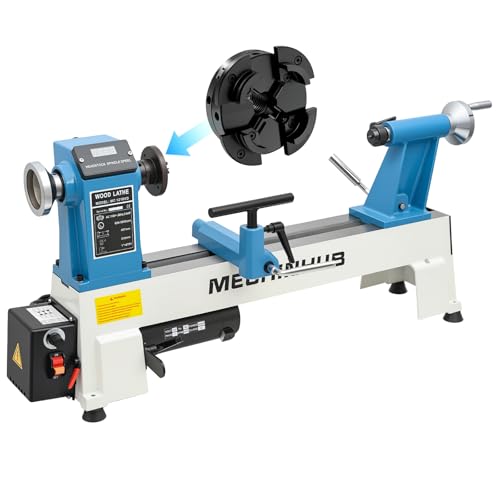
- 650–3,800 RPM variable-speed control
- Includes a 4-inch four-jaw chuck
- 18-inch centers and 12-inch swing
Best For: Flexible benchtop turning with bundled workholding
Professional Compact Pick
Record Power Coronet Herald Lathe
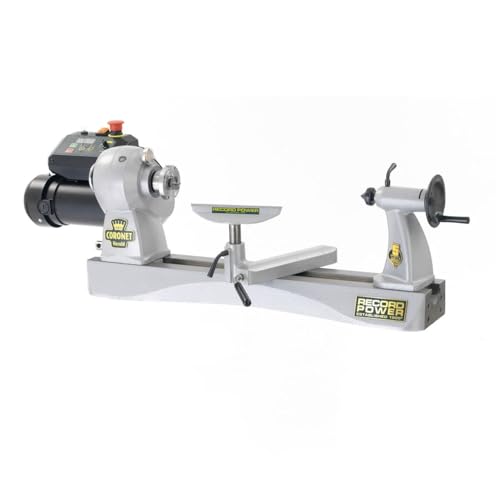
- 95–3,890 RPM electronic variable speed
- 1 HP motor with three pulley ratios
- Swivel headstock supports larger bowl work
Best For: Ambitious beginners and experienced upgrading turners
Heavy-Duty Capacity Pick

- 400–3,000 RPM variable speed with RPM display
- 360-degree headstock with seven locking positions
- Optional extension reaches 60 inches between centers
Best For: Stable workshop turning and expandable spindle work
Best Value Capacity
12" x 18" Digital Benchtop Lathe

- 650–3800 RPM infinitely variable speed
- 18" between centers and 12" swing
- 3/4HP motor with digital RPM display
Best For: Hobbyists needing generous capacity and clear speed monitoring
Best Heavy-Duty Midi
Rockler VS 12-24 Digital Readout Lathe

- 1.2HP motor with 300–3500 RPM control
- Cast-iron construction reduces vibration
- 12" swing and 24" between centers
Best For: Woodworkers wanting rigid construction and longer spindle capacity
Best Beginner-Friendly
12 x 18 Inch Digital RPM Lathe

- 650–3800 RPM variable-speed operation
- Digital display shows RPM in real time
- Steel body with adjustable tailstock
Best For: Beginners and hobbyists learning controlled woodturning
Best Overall Capacity
12" x 18" Digital Display Wood Lathe

- 12-inch swing with 18-inch distance between centers
- 650-3800 RPM variable speed control
- Real-time digital RPM display
Best For: Versatile bowl, pen, vase, and spindle turning
Best for Straightforward Operation
12" x 18" Variable-Speed Wood Lathe

- Infinitely adjustable 650-3800 RPM range
- Digital display shows current spindle speed
- Adjustable tailstock supports varied workpieces
Best For: Accessible home-workshop woodturning
Best Benchtop Stability
12" x 18" Heavy-Duty Digital Wood Lathe

- Approximately 69-pound steel benchtop design
- Compact 37.7-by-8.8-by-15.4-inch footprint
- 650-3800 RPM control with digital display
Best For: Dedicated home workshops and garage workbenches
Versatile Precision Pick – 12-Inch Digital Display Wood Lathe
This 12-inch wood lathe with digital speed displays combines a solid cast-iron build with variable-speed control from 250 to 3,200 RPM. Its indexing system, MT2 accessories, and expandable bed make it a practical choice for detailed turning and small-to-medium projects.
Best For: Turners making bowls, pens, cups, platters, and other precision woodworking projects.
Pros:
- Digital speed readout with three ranges for detail work and heavier cuts
- 24-position indexing supports repeatable alignment
- 3/4 HP motor and cast-iron construction help provide smooth, stable operation
- Includes spur center, live center, faceplate, and tool rest
Cons:
- At 106 pounds, it is not especially easy to move
- Bed extensions and outboard turning capability require additional setup or accessories
Choose this model if you want broad speed coverage and useful indexing in a sturdy benchtop-style package. The included accessories and stated five-year technical support add convenience for DIY woodturners.
Chuck Bundle Value – 12 x 18-Inch Digital Display Lathe
12" x 18" Digital Display Benchtop Wood Lathe Machine and 4 Inch 4 - Jaw Wood Lathe Chuck Set
Check Price On AmazonThis benchtop wood lathe with digital speed displays offers an 18-inch distance between centers, a 12-inch swing, and speed adjustment up to 3,800 RPM. The included four-jaw chuck adds flexibility for projects that need secure workholding and varied clamping options.
Best For: Woodworkers who want a capable benchtop lathe bundled with a four-jaw chuck for bowls, plates, vases, pens, and rings.
Pros:
- Infinitely variable speed from 650 to 3,800 RPM with a high-definition RPM display
- 3/4 HP pure-copper motor supports a range of turning tasks
- Includes a 4-inch four-jaw chuck made from 1045 steel
- 18-inch capacity between centers and 12-inch swing provide useful project room
Cons:
- Its minimum listed speed of 650 RPM is higher than some precision-oriented lathes
- The chuck’s 1-inch x 8 TPI thread should be checked against your accessories
The strongest reason to consider this package is the included chuck. It pairs a clear digital readout and broad upper speed range with workholding hardware designed for multiple woodturning applications.
Professional Compact Pick – Record Power Coronet Herald Lathe
The Record Power Coronet Herald is a compact professional-style lathe with electronic variable speed from 95 to 3,890 RPM. Its 1 HP motor, rotating headstock, and optional outrigger compatibility give experienced turners room to take on larger or more demanding projects.
Best For: Ambitious beginners and upgrading woodturners seeking professional performance in a compact benchtop design.
Pros:
- Very broad 95–3,890 RPM speed range with electronic control
- 1 HP motor and three pulley ratios support large or unbalanced workpieces
- Rotating headstock enables more comfortable positioning and up to 21-inch bowl capacity with the optional outrigger
- Includes quick-action cam locks, indexing, and a self-ejecting tailstock
Cons:
- The compatible tubular leg stand is not included
- Its professional feature set may be more than a casual turner needs
This is the most capability-focused option in the group. Its unusually wide speed range and swivel-head design make it attractive for turners whose projects are growing beyond entry-level work, provided they budget for the optional stand or outrigger as needed.
Heavy-Duty Capacity Pick – JET JWL-1440VS Wood Lathe
The JET JWL-1440VS is a substantial cast-iron wood lathe with a readable RPM display, 1 HP motor, and variable speed from 400 to 3,000 RPM. Its pivoting headstock, positive locking positions, and optional extension bed make it suited to projects ranging from bowls to longer spindle work.
Best For: Woodworkers who prioritize a heavy-duty machine, headstock positioning, and expandable capacity.
Pros:
- Easy-to-read RPM display supports controlled speed selection
- 360-degree sliding headstock with seven positive locking positions
- Cast-iron construction and 220-pound weight support stability
- Optional extension bed increases capacity to 60 inches between centers
Cons:
- At 220 pounds, it is difficult to relocate once installed
- The extension bed is optional rather than included
- Its 400 RPM minimum is less suited to very low-speed turning than some alternatives
Consider this JET when stability and adaptable positioning matter more than compact portability. The digital RPM display, locking headstock positions, and optional long-bed capacity give it a strong fit for a dedicated workshop.
Best Value Capacity – 12" x 18" Digital Benchtop Lathe
For shoppers comparing wood lathes with digital speed displays, this benchtop model combines a 3/4HP motor, a 650–3800 RPM variable-speed range, and an 18-inch distance between centers. Its digital display shows the operating RPM, making it easier to monitor speed while turning bowls, pens, vases, and other projects.
Best For: Beginners and hobbyists who want broad project capacity, straightforward controls, and real-time RPM monitoring.
Pros:
- Infinitely variable speed from 650 to 3800 RPM across three speed ranges.
- 18-inch distance between centers and 12-inch swing over the bed support varied workpieces.
- 3/4HP pure-copper motor and 1-inch by 8 TPI spindle threads provide useful power and compatibility.
- High-definition digital display clearly shows RPM during operation.
Cons:
- The 76.8-pound benchtop design may require a sturdy work surface.
- The notes emphasize wearing goggles for protection from flying woodchips.
This is a practical choice when capacity and simple speed visibility matter more than advanced controls. The adjustable tailstock adds support for longer pieces, while the wide speed range suits turning, sanding, and polishing tasks.
Best Heavy-Duty Midi – Rockler VS 12-24 Digital Readout Lathe
This Rockler midi lathe stands out among wood lathes with digital speed displays for its 1.2HP motor, cast-iron construction, and 12-by-24-inch capacity. Electronic variable-speed control, two speed ranges, and a digital readout help you match RPM to bowls, spindles, furniture parts, and finishing work.
Best For: Woodworkers upgrading to a more rigid midi lathe for larger turning projects and smoother operation.
Pros:
- Two electronic speed ranges cover 300–1100 RPM and 750–3500 RPM.
- Cast-iron bed, headstock, and tailstock help reduce vibration.
- 1.2HP motor supplies consistent torque for demanding woodturning applications.
- Forward/reverse switching supports sanding and finishing, and the included accessories improve readiness.
Cons:
- Its 300–3500 RPM range does not reach the 3800 RPM maximum of some comparable models.
- The product is described as hand-powered in the supplied details, so buyers should verify the power specification before ordering.
Choose this model if stability and included equipment are priorities. Its rigid cast-iron construction and larger 24-inch spindle capacity make it especially appealing for furniture parts, spindles, and shop projects.
Best Beginner-Friendly – 12 x 18 Inch Digital RPM Lathe
Those shopping for wood lathes with digital speed displays may appreciate this steel benchtop model’s straightforward design. It offers a 3/4HP corded motor, infinitely variable speed from 650 to 3800 RPM, an adjustable tailstock, and a digital RPM display for monitoring speed during turning.
Best For: New and experienced hobbyists making bowls, platters, spindles, pens, rings, and decorative wood items.
Pros:
- Three speed ranges provide variable operation from 650 to 3800 RPM.
- 18-inch distance between centers and 12-inch swing accommodate varied projects.
- Digital RPM display helps maintain consistent operating speed.
- Steel construction and a 69-pound listed weight support stable benchtop use.
Cons:
- The 3/4HP motor is less powerful than the 1.2HP motor in the Rockler model.
- The 18-inch center distance may be limiting for especially long spindle projects.
This lathe offers a balanced feature set for routine shop use, with accessible controls and useful capacity. Its digital display is particularly helpful for users learning how speed affects cutting and finishing results.
Best Overall Capacity – 12" x 18" Digital Display Wood Lathe
For shoppers comparing wood lathes with digital speed displays, this benchtop model combines a 12-inch swing, 18-inch distance between centers, and a clearly stated 650-3800 RPM range. Its digital RPM readout helps you monitor speed while roughing, shaping, sanding, or finishing.
Best For: Hobbyists and experienced woodworkers who want broad project capacity and precise speed monitoring.
Pros:
- 12-inch swing and 18-inch distance between centers support bowls, plates, vases, pens, and spindle work.
- Infinitely variable speed control covers 650-3800 RPM across three operating ranges.
- High-definition digital display provides real-time RPM information.
- Adjustable tailstock adds support for different workpieces.
Cons:
- The 12-inch swing and 18-inch center distance may not suit oversized projects.
- Its benchtop format requires a suitable workbench or workshop setup.
This is a versatile choice when project variety and speed visibility matter most. The combination of practical capacity, adjustable control, and beginner-friendly operation makes it a strong all-around option.
Best for Straightforward Operation – 12" x 18" Variable-Speed Wood Lathe
This option is a practical pick among wood lathes with digital speed displays, offering continuously adjustable 650-3800 RPM control and a high-definition readout. The adjustable tailstock and 12-by-18-inch working capacity support a range of common turning projects.
Best For: Beginners and experienced woodworkers seeking simple controls, adjustable speed, and useful workpiece support.
Pros:
- Digital display makes the current spindle speed easy to monitor.
- Three speed ranges accommodate different materials and turning tasks.
- Adjustable tailstock helps position workpieces of different lengths.
- Supports bowls, plates, vases, wine glasses, pens, and rings.
Cons:
- The supplied notes do not specify included accessories or overall weight.
- Its 12-inch swing limits the maximum diameter of workpieces.
Choose this model if you value uncomplicated operation and flexible speed selection. It covers common workshop projects without adding unnecessary complexity to the basic setup.
Best Benchtop Stability – 12" x 18" Heavy-Duty Digital Wood Lathe
For buyers seeking wood lathes with digital speed displays in a substantial benchtop format, this model weighs approximately 69 pounds and uses a compact steel design. Its 650-3800 RPM variable-speed system and digital readout help match spindle speed to each project stage.
Best For: Home workshops and garages where a heavier benchtop platform and compact footprint are useful.
Pros:
- Approximately 69-pound steel construction provides a substantial benchtop platform.
- Compact 37.7-by-8.8-by-15.4-inch footprint suits many workbench setups.
- Continuously variable 650-3800 RPM control supports shaping, sanding, and finishing.
- Digital display allows quick RPM checks during turning.
Cons:
- The heavier design may be less convenient to reposition frequently.
- The supplied notes do not identify included turning accessories.
This model stands out when you want a more substantial benchtop presence without moving to a larger machine. Its footprint, weight, adjustable tailstock, and digital speed monitoring make it well suited to a dedicated home setup.
How We Picked the Best Wood Lathes with Digital Speed Displays
We focused on the specifications that most directly affect woodturning control and value: swing over bed, distance between centers, motor power, speed range, speed-control design, digital readout visibility, headstock flexibility, included accessories, and electrical requirements. The selection includes compact 12-inch benchtop lathes as well as larger machines suited to bigger blanks and more demanding workloads.
Because listed specifications can vary by seller or configuration, confirm the current manual, included chuck and tools, warranty, and power requirements before ordering. A digital display is useful, but it does not replace proper blank mounting, sharp tools, eye protection, and safe operating practices.
Quick Comparison
| Best For | Typical Capacity | Useful Features to Compare |
|---|---|---|
| Beginners and small projects | 12-inch swing, 16.5–18-inch centers | Compact footprint, simple variable speed, included accessories |
| Pens, small bowls, and general hobby work | 12-inch swing, up to 24-inch centers | Digital readout, midi-lathe portability, stronger motor |
| Larger bowls and longer spindle work | 14-inch swing, up to 40-inch centers | Greater capacity, heavier construction, headstock and bed flexibility |
| Frequent or professional use | Wider speed range and robust components | Motor output, low-speed torque, serviceability, stable stand |
Key Buying Factors for Wood Lathes with Digital Speed Displays
Capacity and Workspace
Swing determines the maximum diameter you can turn over the bed, while distance between centers affects spindle length. Select a little more capacity than your current projects require if your shop and budget allow. Remember that usable capacity can be reduced by chucks, tool rests, and irregular blanks.
Speed Range and Control
Low speeds are important for heavy or out-of-round blanks because they improve control during initial shaping. Higher speeds help with smaller, balanced work and finishing. Infinitely variable speed is convenient, but check whether the motor maintains useful torque at the lower end of the range.
Digital Display and Usability
The display should be easy to read from the normal operating position and should show actual spindle speed clearly. Consider control placement, speed-adjustment smoothness, forward and reverse functions, and whether the readout remains visible when the headstock is repositioned.
Motor, Stability, and Construction
Motor horsepower is only one part of performance. A rigid bed, dependable bearings, secure tool rest, and stable base reduce vibration and improve surface quality. Heavier machines generally handle larger blanks more confidently, while benchtop models are easier to move but may need a sturdy workbench or dedicated stand.
Who Should Buy Which Wood Lathes with Digital Speed Displays?
Choose a compact 12-by-16.5-inch or 12-by-18-inch model if you are learning, making pens, turning small bowls, or working in a limited space. A 12-by-24-inch midi lathe is a better middle ground for hobbyists who want more spindle length and stronger performance without moving to a full-size machine. Select a 14-by-40-inch model when larger bowls, longer furniture parts, or frequent production work are priorities.
Before buying, measure your available space, verify outlet voltage, budget for a quality chuck and sharpening equipment, and confirm that the stand or bench can support the machine securely. The best choice is the lathe whose capacity, low-speed control, display readability, and stability match the work you actually plan to turn.