The best wood lathe should match your projects, available space, and experience—not simply offer the highest horsepower or largest swing. This roundup compares 10 variable-speed and multi-speed models ranging from compact benchtop machines to full-size lathes for demanding bowl and spindle work.
Use the buying guide below to compare capacity, motor power, speed control, headstock design, and value before choosing the right machine for your workshop.
Best 10 Wood Lathes Picks for 2026
Premium Capacity Pick
JET JWL-1440VS 14 x 40 Variable-Speed Lathe

- 1 HP motor with 400–3,000 RPM control
- 360-degree pivoting headstock with seven locks
- Optional bed extension reaches 60 inches
Best For: Large projects and flexible workpiece positioning
Compact Power Pick

- 1 HP PWM induction motor
- Cast-iron bed helps dampen vibration
- Digital speed control and display
Best For: Compact shops needing steady motor torque
Control-Focused Pick

- Three speed ranges from 60–3,600 RPM
- 24 integrated spindle-indexing positions
- Includes two tool supports and tool caddies
Best For: Versatile turning with indexing and broad speed coverage
Value Capacity Pick
WEN 34035 14 x 20 Variable-Speed Lathe
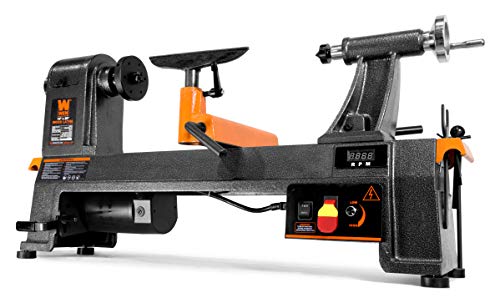
- 6-amp motor with 250–3,550 RPM adjustment
- 14-by-20-inch stated workpiece capacity
- Includes faceplate and MT2 centers
Best For: Hobby turning, bowls, cups, and general projects
Best Budget Pick

- Four speeds from 885 to 2425 RPM
- 0.5 HP motor with aluminum-and-steel construction
- Includes chisels, faceplate, centers, and wrenches
Best For: DIY users turning pens, bowls, cups, and other small items
Best All-Around Benchtop
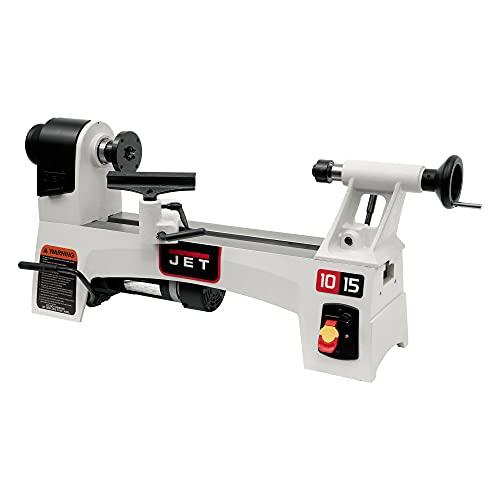
- Variable speed from 200 to 3600 RPM
- Rigid cast-iron construction
- 24-position indexing and MT2 taper
Best For: Turners needing a versatile compact machine for pens, bowls, and spindles
Best Upgrade Pick
Record Power Coronet Herald Wood Lathe
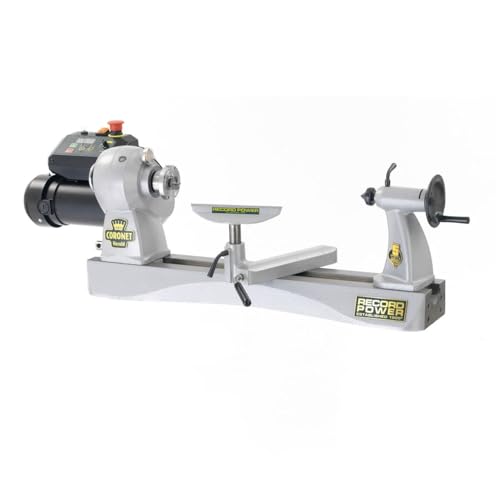
- 1 HP motor with 95 to 3890 RPM control
- Rotating headstock supports flexible positioning
- Up to 21-inch bowl capacity with optional outrigger
Best For: Serious turners handling larger, unbalanced, or evolving projects
Premium Variable-Speed Pick
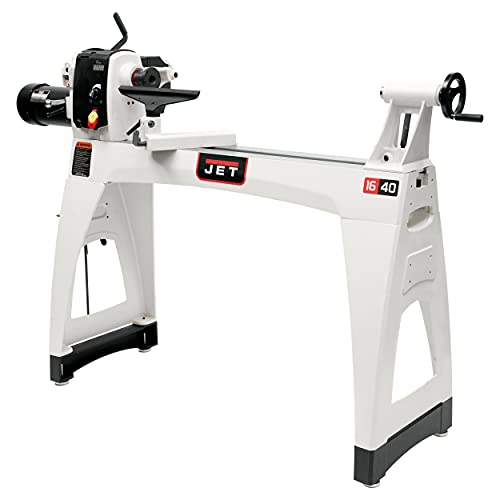
- 40–3,200 RPM electronic variable speed
- Large 16 x 40-inch turning capacity
- 36 indexing positions and spindle lock
Best For: Experienced woodworkers needing a full-size, feature-rich lathe
Large-Capacity Value Pick

- 2 HP brushless DC motor
- 18 x 40-inch work area
- 150–3,200 RPM variable speed
Best For: Medium to large projects in professional or small-shop settings
Beginner Benchtop Pick

- Compact 12 x 18-inch work area
- 150–3,800 RPM variable speed
- Brushless motor and starter accessory kit
Best For: Beginners and hobbyists turning pens, cups, bowls, and small carvings
Premium Capacity Pick – JET JWL-1440VS 14 x 40 Variable-Speed Lathe
For demanding wood lathes projects, the JET JWL-1440VS combines a 1 HP motor with variable speeds from 400 to 3,000 RPM. Its pivoting headstock and optional extension bed make it a flexible choice for larger or unusually positioned work.
Best For: Turners who want substantial capacity, headstock positioning flexibility, and a cast-iron benchtop machine.
Pros:
- Sliding headstock pivots 360 degrees with seven positive locking positions.
- Variable speed from 400 to 3,000 RPM with an easy-to-read display.
- Optional extension bed increases capacity to 60 inches between centers.
Cons:
- At 220 pounds, it is considerably heavier than the other listed benchtop options.
- The extension bed is optional rather than included.
The JWL-1440VS is a strong choice when capacity and adjustability matter more than portability. Its five-year warranty for noncommercial use adds useful ownership reassurance.
Compact Power Pick – REVO 10|14 Benchtop Lathe
Laguna 10" x 14" Benchtop Wood Lathe, Variable Speed, Reversible, 110-120V (Revo 10|14)
Check Price On AmazonThe REVO 10|14 is a compact option among wood lathes, pairing a 1 HP PWM induction motor with electronic variable-speed control. Its cast-iron bed and projected bearing cone are designed to support stable, durable operation in a smaller footprint.
Best For: Woodworkers seeking a compact benchtop lathe with consistent motor torque and straightforward digital controls.
Pros:
- PWM induction motor maintains consistent torque across speeds.
- Cast-iron bed adds mass and helps dampen vibration.
- Digital speed display and ergonomic control panel simplify adjustments.
Cons:
- The supplied notes do not specify the machine’s speed range or workpiece capacity.
- Its 103-pound weight may still require a sturdy bench.
With its compact dimensions and 1 HP motor, the REVO 10|14 balances shop space with useful power. The bearing-cone design also provides added tool clearance around larger workpieces.
Control-Focused Pick – JET JWL-1221VS 12 x 21 Lathe
The JET JWL-1221VS gives wood lathes shoppers three selectable speed ranges, covering 60 to 3,600 RPM. Its redesigned controls, indexing positions, and included tool supports make it a practical choice for varied turning work.
Best For: Turners who value broad speed selection, indexing capability, and a well-equipped 1 HP machine.
Pros:
- Three speed ranges cover 60–900, 110–1,800, and 220–3,600 RPM.
- Includes 24 integrated spindle-indexing positions.
- Comes with six- and 10-inch tool supports, tool caddies, and hardware.
Cons:
- Its 21-inch stated capacity is shorter than the JET JWL-1440VS.
- The three-range belt setup is less continuously adjustable than a fully electronic speed range.
This JET is a balanced mid-capacity option with useful included accessories and a wide operating range. The smooth forward-to-reverse transition and larger DRO further improve day-to-day control.
Value Capacity Pick – WEN 34035 14 x 20 Variable-Speed Lathe
The WEN 34035 is a practical entry point for wood lathes, offering a 6-amp motor and variable speed from 250 to 3,550 RPM. Its 14-by-20-inch capacity and included faceplate support bowls, cups, and other workpieces.
Best For: Hobbyists who want broad speed adjustment, bowl-turning capability, and compatibility with common lathe accessories.
Pros:
- Variable speed adjusts from 250 to 3,550 RPM.
- Handles workpieces up to 20 inches long and 14 inches wide.
- Includes a four-inch faceplate, MT2 centers, tool rest, and accessory holder.
Cons:
- The 6-amp motor is less powerful than the 1 HP motors in the listed JET and REVO machines.
- The supplied notes do not specify a warranty.
For general shaping and turning, the WEN combines useful capacity with a wide speed range and a helpful starter accessory package. Its MT2 tapers and one-inch spindle thread also support a variety of accessories.
Best Budget Pick – VEVOR 14 x 40-Inch Wood Lathe
For shoppers comparing wood lathes for small turning projects, the VEVOR MCS1000 offers a practical benchtop format, four selectable speeds, and a 0.5 HP motor. Its 40-inch workbench and included chisels make it a useful starting point for pens, bowls, cups, and other compact wooden items.
Best For: DIY woodworkers who want an affordable, compact lathe with basic accessories included.
Pros:
- Four speeds from 885 to 2425 RPM support different woodturning tasks.
- Aluminum alloy and steel construction is designed to reduce vibration.
- Includes three chisels, a faceplate, centers, wrenches, and other accessories.
Cons:
- The 0.5 HP motor and benchtop design are better suited to smaller projects than heavy-duty turning.
- The 14-inch capacity may limit larger workpieces.
This VEVOR model is a sensible entry-level option when accessory value and a straightforward benchtop setup matter more than advanced capacity or controls.
Best All-Around Benchtop – JET JWL-1015VS Wood Lathe
The JET JWL-1015VS is a strong choice among benchtop wood lathes for users who want fine speed control in a compact machine. Its cast-iron construction, 10-inch swing, and variable-speed ranges suit both spindle work and smaller bowl projects.
Best For: Beginners and experienced turners seeking a stable, versatile benchtop lathe with a long warranty.
Pros:
- Electronic speed adjustment covers 200 to 3600 RPM across three belt ranges.
- Cast-iron bed, headstock, and tailstock help provide rigidity and vibration damping.
- Includes a live center, spur center, tool support, faceplate, and knockout rod.
- 24-position indexing and an MT2 taper expand setup options.
Cons:
- The 15-1/2-inch distance between centers limits longer stock without the optional extension.
- Its 10-inch swing is intended for benchtop-scale work rather than large production pieces.
With useful indexing, standard-compatible features, and included essentials, the JET is a balanced pick for woodworkers who want one compact lathe that can support varied projects.
Best Upgrade Pick – Record Power Coronet Herald Wood Lathe
For demanding wood lathes buyers, the Record Power Coronet Herald combines a 1 HP motor, electronic variable speed, and a rotating headstock in a compact benchtop design. It is built to grow with a turner, from ambitious beginner work to larger bowls and professional-style projects.
Best For: Experienced hobbyists and serious woodturners who need more power, capacity, and positioning flexibility.
Pros:
- 1 HP motor and high-torque pulley system support large or unbalanced workpieces.
- Variable speed from 95 to 3890 RPM provides broad control for different projects.
- Swivel headstock enables comfortable positioning and up to 21-inch bowl capacity with the optional outrigger.
- Includes convenient features such as cam locks, indexing, and a self-ejecting tailstock.
Cons:
- The compatible tubular leg stand is sold separately.
- Its advanced capacity and features may be more than casual users need.
- The supplied notes do not list additional accessories beyond the lathe itself.
The Coronet Herald stands out as the premium, growth-oriented option here, especially for users who value high torque, very low speed control, and a rotating headstock for larger or awkward work.
Premium Variable-Speed Pick – JET 16 x 40 EVS Wood Lathe
For demanding wood lathes work, the JET JWL-1640EVS combines a 1.5 HP motor, a large 16 x 40-inch capacity, and electronic variable speed from 40 to 3,200 RPM. Its cast-iron and steel construction, indexing positions, and upgraded holding features make it suited to detailed turning and larger projects.
Best For: Experienced woodworkers who want a robust, full-size lathe with broad speed control.
Pros:
- Infinitely variable electronic speed from 40 to 3,200 RPM
- 16 x 40-inch capacity accommodates substantial workpieces
- Spindle lock, 36 indexing positions, and a positive-locking banjo improve control
- Includes legs, riser blocks, tool rest, and tool shelf
Cons:
- At 377 pounds, it is difficult to move after setup
- Its full-size design may be more machine than casual users need
- Commercial or industrial use has a two-year warranty rather than five years
The JET is the strongest choice here for buyers prioritizing capacity, stability, and refined controls. It is a substantial investment, but the included stand components and five-year residential warranty add practical value.
Large-Capacity Value Pick – VEVOR 2 HP 18 x 40 Wood Lathe
This VEVOR wood lathe is designed for medium to large projects, pairing a 2 HP brushless DC motor with an 18 x 40-inch work area. Variable speed from 150 to 3,200 RPM, adjustable legs, and a cast-iron body support steady operation for furniture components, tall vases, table legs, and canes.
Best For: Professionals and small-shop users turning medium to large projects.
Pros:
- 2 HP motor provides substantial power for larger work
- 18 x 40-inch work area handles long and sizable pieces
- Brushless motor offers low-noise operation without carbon-brush replacement
- Adjustable legs and heavy-duty vertical construction help reduce vibration
Cons:
- Requires a 220-volt power supply
- Its 272-pound weight makes relocation challenging
- Speed starts at 150 RPM, higher than the JET’s minimum setting
Choose this VEVOR when project size and motor power matter most. It offers a generous capacity and shop-oriented stability, but buyers should confirm that their workspace supports 220-volt operation.
Beginner Benchtop Pick – VEVOR 1 HP 12 x 18 Wood Lathe
For approachable wood lathes work, this compact VEVOR model offers a 1 HP brushless motor, 150 to 3,800 RPM variable speed, and a 12 x 18-inch work area. Its 62.7-pound cast-iron construction is suited to smaller projects such as pens, cups, bowls, and carvings.
Best For: Beginners, DIY enthusiasts, hobbyists, and classroom users making smaller pieces.
Pros:
- Compact 12 x 18-inch capacity fits smaller turning projects
- High-speed range reaches 3,800 RPM for detailed work
- Brushless motor provides low-noise operation without carbon-brush replacement
- Includes an accessory kit for getting started
Cons:
- 1 HP motor and smaller capacity limit large workpieces
- At 62.7 pounds, it may provide less mass than full-size lathes
- Speed control begins at 150 RPM rather than offering very low-speed turning
This is the most accessible option for learning and small-scale turning. Its benchtop format and included accessories simplify setup, while the limited capacity makes it less suitable for furniture parts or tall vessels.
How We Picked the Best Wood Lathes
We focused on the specifications that most directly affect real-world woodturning: maximum swing, distance between centers, motor output, speed range, control type, construction, and workshop footprint. The selection includes compact benchtop lathes for beginners and smaller projects, mid-size machines for general-purpose turning, and larger models suited to bowls, platters, table legs, and other substantial work.
We also considered practical features such as variable-speed adjustment, swiveling or reversible headstocks, included workholding compatibility, voltage requirements, and the level of stability provided by cast-iron construction. Because accessories and exact packages can vary, verify the current manufacturer specifications before ordering.
Quick Comparison
| Lathe type | Best suited to | Main advantage | Potential limitation |
|---|---|---|---|
| Compact benchtop | Pens, small spindles, practice projects | Lower cost and smaller footprint | Limited capacity and stability |
| Mid-size benchtop | Bowls, handles, general turning | Good balance of capacity and portability | May need a sturdy stand |
| Full-size floor lathe | Large bowls, platters, furniture parts | Greater swing, capacity, and rigidity | Requires more space and budget |
Key Buying Factors for Wood Lathes
Capacity and Project Size
Swing over the bed determines the maximum diameter you can turn, while distance between centers limits spindle length. Remember that usable capacity can be reduced by chucks, tool rests, faceplates, and the shape of the blank. If bowls are your priority, prioritize swing and headstock flexibility; for table legs and spindles, bed length matters more.
Motor Power and Stability
More horsepower helps maintain speed in larger or denser blanks, but power is useful only when the machine is rigid enough to control vibration. Cast-iron beds and substantial stands generally improve stability. A smaller lathe can still perform well when securely mounted and used within its rated capacity.
Speed Control and Range
Variable speed makes it easier to start an unbalanced blank slowly, then increase speed as the work becomes truer. A broad range is valuable for both roughing and fine finishing. Mechanical speed changes may be adequate, while electronic variable-speed systems offer faster adjustment and convenient control during a cut.
Headstock, Controls, and Compatibility
Check spindle-thread size, taper, quill travel, and included drive centers before buying accessories. Swiveling or reversible headstocks can improve access to large bowls. Confirm voltage and outlet requirements, and look for accessible controls, emergency stops, and a tool rest that locks securely.
Who Should Buy Which Wood Lathes?
Beginners and space-conscious makers: Choose a compact benchtop model with variable speed and mount it to a rigid stand. These machines are well suited to pens, handles, small bowls, and learning fundamental cuts.
General-purpose hobbyists: A 12- to 14-inch mid-size lathe offers a useful compromise between capacity, power, and price. This category is the best fit for makers who expect to turn a mix of bowls, spindles, and small furniture components.
Experienced turners and large-project users: Select a full-size machine with a larger swing, longer bed, stronger motor, and sturdy cast-iron construction. It is the better choice for frequent production work, large bowls, platters, and heavy blanks.
Whichever model you choose, budget for quality turning tools, a suitable chuck or faceplate, sharpening equipment, dust collection, eye and hearing protection, and a stable installation.