Choosing the right moisture meter can help prevent warped boards, failed finishes, mold, and costly callbacks. The best model depends on the lumber you test, the depth you need to measure, and whether you want pin-based accuracy or noninvasive scanning.
We compare 10 wood moisture meters for lumber, from compact firewood testers to multifunction pinless meters for jobsite inspections and woodworking projects.
Best 10 Wood Moisture Meters for Lumber Picks for 2026
Best Mold-Prevention Pick
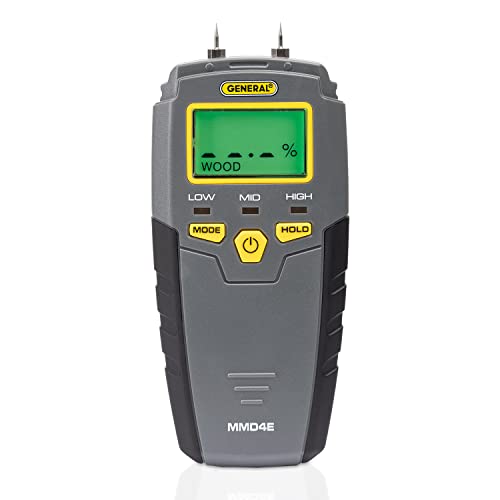
- 5–50% wood measurement range
- Audible alerts and backlit display
- Includes extra pins and 9V battery
Best For: Home moisture checks and DIY mold-prevention testing
Best Pinless Option

- Nondestructive testing up to 3/4 inch
- Works on hardwood and softwood
- Nine LED bars show moisture range
Best For: Fast, surface-friendly moisture screening
Best Display

- Large 2.25-inch LCD with bar graph
- Tri-color dry, moist, and wet alerts
- Seven scales covering 0.0%–57%
Best For: Easy-to-read woodworking and renovation checks
Best for Wood Type Switching
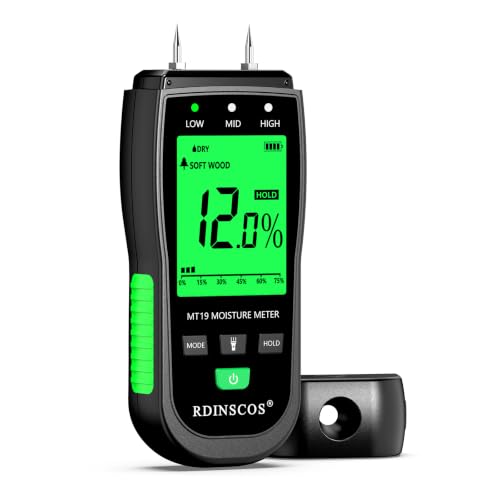
- Separate hardwood and softwood modes
- Backlit LCD with audio alert
- Listed ±0.5% measurement accuracy
Best For: Firewood and mixed-wood moisture checks
Best Non-Invasive Pick

- Pinless design protects finished surfaces
- Reads up to 3/4 inch deep
- Backlit display with visual and audible alerts
Best For: Non-marking checks on lumber, walls, and finished surfaces
Best Budget Pin Meter

- Six calibrated wood scales
- Wide stated wood measurement range
- Includes hold, max/min, and auto shutoff
Best For: Routine lumber and building-material moisture checks
Best for Wood-Type Calibration

- Eight calibrated wood scales
- Separate wood and building-material modes
- Color indicators and backlit display
Best For: Testing varied lumber species in workshops or the field
Surface-Safe Pick

- Pinless scanning protects wood surfaces
- Four modes for wood, walls, and masonry
- Color display with HOLD and moisture alerts
Best For: Non-destructive checks of lumber and building materials
Rechargeable Upgrade
AWT-380 Pinless Moisture Meter

- Fast readings with scanning up to 20 mm deep
- USB-C rechargeable lithium-ion battery
- Data storage and adjustable moisture alarms
Best For: Frequent non-destructive home and lumber inspections
Best Mold-Prevention Pick – General Tools MMD4E
For shoppers comparing wood moisture meters for lumber, the General Tools MMD4E is a practical pin-type option for checking wood, drywall, and other building materials. It offers a broad 5–50% wood range, audible low/medium/high alerts, and a backlit display for quick readings around suspected leaks.
Best For: Homeowners and DIYers checking lumber, walls, and water-stained areas for dampness or potential mold conditions.
Pros:
- Measures wood from 5–50% and building materials from 1.5–33%.
- Provides audible moisture-level tones, icons, and a reading-hold function.
- Includes extra stainless-steel pins, a protective cap/calibration checker, and a 9V battery.
Cons:
- Pin testing requires inserting the probes into the material.
- The listed upper operating temperature is 60°C, so it is intended for routine indoor testing rather than extreme conditions.
The MMD4E stands out when you want one meter for both lumber and household moisture checks. Its pin design and broad ranges make it useful for locating damp spots, though testing leaves probe marks.
Best Pinless Option – Klein Tools ET140
The Klein Tools ET140 is a strong choice among wood moisture meters for lumber when nondestructive testing matters. Its electromagnetic-field technology detects relative moisture up to 3/4 inch deep without requiring pins to contact the surface.
Best For: Woodworkers, contractors, and homeowners who need quick, surface-friendly checks on hardwood, softwood, drywall, or masonry.
Pros:
- Pinless detection helps avoid probe holes in finished wood.
- Measures up to 3/4 inch deep using electromagnetic-field technology.
- Has a reverse-contrast display, nine LED moisture bars, hold, low-battery, and auto-power-off functions.
Cons:
- It reports relative moisture content rather than a stated percentage range.
- It is calibrated only for drywall, masonry, hardwood, and softwood.
Choose the ET140 if preserving the tested surface is more important than getting a pin-based percentage reading. Its specified material modes and depth make it particularly convenient for screening lumber and building materials for hidden dampness.
Best Display – TopTes TS-630
The TopTes TS-630 combines a large 2.25-inch LCD with a color-coded backlight, making it easy to interpret readings when comparing wood moisture meters for lumber. Its pin sensor supports wood and building-material modes, with seven calibration scales ranging from 0.0% to 57%.
Best For: Woodworkers, renovators, and restoration users who want clear visual alerts while checking lumber, firewood, drywall, or possible leaks.
Pros:
- Large display shows moisture percentage and a bar graph.
- Green, orange, and red backlighting indicate low, middle, and high moisture.
- Offers seven calibration scales, two material modes, hold, and maximum/minimum functions.
- Includes three AAA batteries, replacement pins, a pouch, and a three-year warranty.
Cons:
- Pin testing requires contact with and insertion into the material.
- The supplied notes do not specify a separate accuracy tolerance.
The TS-630 is a convenient pick when readability is a priority. Its broad stated range and multiple material scales add flexibility, while the tri-color display makes quick pass/fail-style checks easier in workshops or renovation areas.
Best for Wood Type Switching – RDINSCOS MT19B
The RDINSCOS MT19B is a straightforward pin meter for shoppers seeking wood moisture meters for lumber, firewood, and woodworking projects. It lets you switch between hardwood and softwood settings, displays readings on a backlit LCD, and provides an audio alert when moisture exceeds the selected threshold.
Best For: Firewood users and woodworkers who need a compact meter for hardwood, softwood, lumber, logs, and related materials.
Pros:
- Supports separate hardwood and softwood measurement modes.
- Supplied notes list ±0.5% measurement accuracy.
- Backlit display and high-moisture audio alert aid use in low light.
- Includes three AAA batteries, a storage bag, guide, and spanner.
Cons:
- Pin insertion can leave marks in the tested surface.
- Extremely dry wood may display 0%, according to the supplied guidance.
- The notes do not provide a specific measurement range.
The MT19B is a focused choice for users who regularly move between hardwood and softwood. Its compact design and included accessories make it useful for checking burnability and spotting moisture concerns, although the unspecified range gives less context than some competing meters.
Best Non-Invasive Pick – General Tools MMD7NP
General Tools Digital Moisture Meter MMD7NP - Humidity Sensor- Pinless and Non-Invasive
Check Price On AmazonFor wood moisture meters for lumber that avoid surface damage, the General Tools MMD7NP uses pinless, non-invasive sensing. It reads up to 3/4 inch deep and provides separate softwood and hardwood ranges, making it useful for checking lumber as well as walls and other materials.
Best For: Woodworkers, DIYers, and homeowners who want non-marking moisture checks.
Pros:
- Pinless design will not mar or scratch the tested surface.
- Reads up to 3/4 inch deep, with ranges up to 53% for softwood and 35% for hardwood.
- Backlit display, three-color LED bar graph, hold function, audible alert, and out-of-range alarm.
Cons:
- Provides relative readings for wallboard, drywall, and masonry rather than the same wood percentages.
- Requires a 9V alkaline battery.
The MMD7NP is a strong choice when preserving the lumber surface matters. Its pinless measurement and deep-reading capability make it especially practical for screening finished wood, though users who need pinpoint readings may prefer a pin-style meter.
Best Budget Pin Meter – COCZOW PM6811A
Among wood moisture meters for lumber, the COCZOW PM6811A offers a straightforward pin-based way to check moisture in wood products. Its selectable wood scales, broad stated measurement range, and clear LCD indicators suit routine checks of lumber, flooring, plywood, and other building materials.
Best For: Carpenters, flooring installers, inspectors, and DIY users needing quick percentage readings.
Pros:
- Six calibrated scales help accommodate different wood types.
- Measures wood from 2.0% to 75.0% and building materials from 1.5% to 30%.
- Includes backlight, three-color indication, hold, maximum/minimum readings, and five-minute auto shutoff.
Cons:
- Pin-based testing penetrates the surface and can leave small marks.
- Users must select a wood-type scale; the manual recommends an approximate setting when the species is not listed.
The PM6811A is a practical general-purpose meter with useful monitoring features and a wide stated range. It is a good fit for everyday lumber checks when small probe marks are acceptable.
Best for Wood-Type Calibration – Mecurate WMM
The Mecurate WMM is a pin-type option for shoppers comparing wood moisture meters for lumber across different species. It includes eight calibrated wood scales, a separate building-material mode, and a quick-search index to help users select an appropriate setting before testing.
Best For: Woodworkers and inspectors who want multiple wood scales and easy visual moisture cues.
Pros:
- Eight calibrated wood scales and a separate building-material mode.
- Three colored indicators and on-screen icons quickly identify low, medium, and high moisture.
- Backlit display, temperature readings in Celsius or Fahrenheit, hold function, and self-testing aid.
- Includes a water-resistant carry pouch, replacement pins, and a wood-type index on the device.
Cons:
- Pin-style measurement can leave marks in lumber.
- Correct scale selection is important for the stated 0.1% resolution and calibrated readings.
With its extensive scale selection and built-in setup aids, the WMM is well suited to users who test varied wood types. Its temperature function and portable pouch add convenience for field or workshop use.
Surface-Safe Pick – Pinless Wood & Drywall Meter
If you need wood moisture meters for lumber that will not leave pinholes, this pinless Povlen model is a practical choice. It uses high-frequency scanning, offers separate softwood and hardwood modes, and also checks walls and masonry. The color LCD, HOLD function, and visual and audible alerts make readings easy to monitor during inspections.
Best For: Homeowners, carpenters, and inspectors checking lumber, drywall, walls, concrete, cement, and other building materials without surface damage.
Pros:
- Pinless, non-invasive design helps prevent scratches and probe holes.
- Four scanning modes cover softwood, hardwood, wall, and masonry applications.
- Color LCD, analog bar, HOLD function, and high-moisture alerts support quick readings.
- Includes three AAA batteries and features auto power-off and a low-battery indicator.
Cons:
- Specified measurement accuracy is ±4%.
- Uses replaceable AAA batteries rather than a rechargeable battery.
This is a versatile option when protecting finished wood matters as much as detecting moisture. Its multiple material modes make it more useful than a lumber-only meter, although users needing probe-based readings may prefer a pin-type design.
Calibration Choice – PREXISO 7-in-1 Pin-Type Meter
For buyers comparing wood moisture meters for lumber, the PREXISO stands out for its pin-based measurement and seven calibration scales. Its stainless-steel probes penetrate the material for readings from 0% to 57%, while temperature and humidity functions add useful environmental context. The meter also supports single-point, average, maximum, and minimum measurements.
Best For: Lumber suppliers, flooring installers, manufacturers, inspectors, and woodworkers testing hardwood, softwood, plywood, flooring, cabinets, and building materials.
Pros:
- Pin-type probes provide direct readings through the test surface.
- Seven calibration scales accommodate multiple wood and building-material types.
- Measures moisture, ambient temperature, and humidity.
- Color backlit display, HOLD function, rubber grips, and automatic power-off improve usability.
Cons:
- Probes can leave small penetration points in the material.
- Pin-type testing requires physical contact and insertion into the surface.
The PREXISO is a strong fit when material-specific calibration and direct probe contact are more important than a non-destructive scan. Its added temperature and humidity readings are useful for evaluating lumber conditions before installation or purchase.
Rechargeable Upgrade – AWT-380 Pinless Moisture Meter
The AWT-380 is a convenient option among wood moisture meters for lumber when you want fast, non-destructive checks and rechargeable power. It delivers readings within one second, scans to a stated depth of up to 0.79 inches, and stores data for comparing damp areas or insufficiently dried wood. Adjustable visual and audible alarms make it useful for repeat inspections.
Best For: Home moisture inspections, firewood checks, furniture and floor testing, and routine checks of wood, drywall, and masonry.
Pros:
- Pinless scanning avoids holes and surface damage.
- Built-in lithium-ion battery recharges through USB-C.
- Color display shows readings, battery status, and alarm indicators.
- Max hold, data storage, and adjustable visual and audible thresholds support repeated inspections.
Cons:
- Requires charging rather than using readily replaceable batteries.
- Its 9.9-ounce weight is higher than the lighter Povlen model supplied here.
This model makes the most sense for users who perform regular inspections and value rechargeable convenience, stored readings, and customizable alarms. Its pinless design is especially helpful for checking finished floors, furniture, walls, and lumber without creating probe marks.
How We Picked the Best Wood Moisture Meters for Lumber
We focused on meters suited to common lumber-testing tasks, including checking boards before installation, evaluating firewood, inspecting drywall or masonry, and screening for hidden moisture. Our criteria included measurement style, usable depth, wood-species support, display readability, calibration options, alarm features, portability, and overall practicality.
Pin meters are judged for direct contact and targeted readings, while pinless models are considered for fast scanning without puncturing finished surfaces. Multifunction models earn consideration when their extra modes are useful rather than merely decorative.
Quick Comparison
| Meter Type | Best For | Main Advantage | Potential Limitation |
|---|---|---|---|
| Pin | Targeted lumber checks | Direct readings at probe points | Leaves small holes |
| Pinless | Finished boards and broad scans | Noninvasive testing | May be affected by density and surface conditions |
| Multifunction | Construction inspections | Tests several materials or conditions | More settings to learn |
| Firewood-focused | Logs and fuel wood | Simple, quick operation | Fewer professional inspection features |
Key Buying Factors for Wood Moisture Meters for Lumber
Pin or Pinless Design
Choose a pin meter when you need a reading at a specific depth or want to test the center of an accessible board. Select a pinless meter when preserving the surface matters or when you need to scan a large area quickly. Some meters combine both approaches for greater flexibility.
Measurement Depth and Material Settings
Thicker lumber may require deeper sensing than thin trim or paneling. Check the advertised depth before buying, and look for species settings or calibration options if you work with hardwoods, softwoods, engineered wood, or multiple materials. Readings are most useful when the meter is configured for the material being tested.
Accuracy and Consistency
A clear reading is not automatically an accurate one. Use the meter consistently, test several points, avoid obvious knots or metal fasteners, and compare readings across the board. Calibration checks and adjustable settings can improve confidence, especially for professional work.
Display, Alarms, and Usability
A backlit display helps in basements, workshops, and unfinished buildings. Color indicators and adjustable alarms make it easier to identify wet areas quickly, while hold functions and memory features can simplify documentation. Rechargeable batteries may be convenient for frequent jobsite use.
Moisture Targets
The acceptable reading depends on the lumber’s intended use, species, environment, and local standards. For interior woodworking, lumber often needs to be close to the conditions of the room where it will be installed. Follow project specifications rather than relying on one universal cutoff.
Who Should Buy Which Wood Moisture Meters for Lumber?
Woodworkers and finish carpenters: Choose a meter with dependable wood settings, repeatable readings, and either pins for targeted checks or pinless scanning for finished surfaces.
Contractors and inspectors: A pinless or multifunction model is usually the most efficient choice for surveying walls, floors, lumber, and other materials without creating visible damage.
Firewood users: A straightforward wood meter with a readable display is typically enough. Look for simple operation and support for the type of logs you burn.
Occasional DIY users: Prioritize ease of use, a clear display, and useful automatic alerts over advanced features you may rarely need.