Choosing among rain gauges for weather stations can be challenging because accuracy, wireless range, maintenance, and data access vary widely between models.
This roundup compares 10 popular options, from standalone self-emptying gauges to complete weather stations with rainfall, wind, temperature, humidity, and barometric readings.
Best 10 Rain Gauges for Weather Stations Picks for 2026
Best All-Around Station
AcuRite Iris HD Weather Station
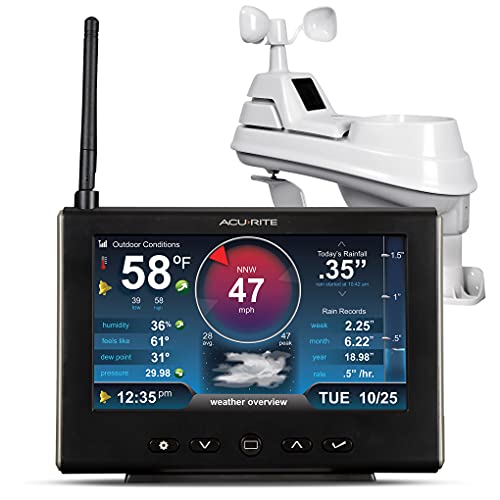
- Tracks rainfall, wind, temperature, humidity, and pressure
- Offers rainfall history and customizable weather alerts
- HD display shows more than 25 data points
Best For: Home users wanting comprehensive local weather monitoring
Best for Wi-Fi Monitoring
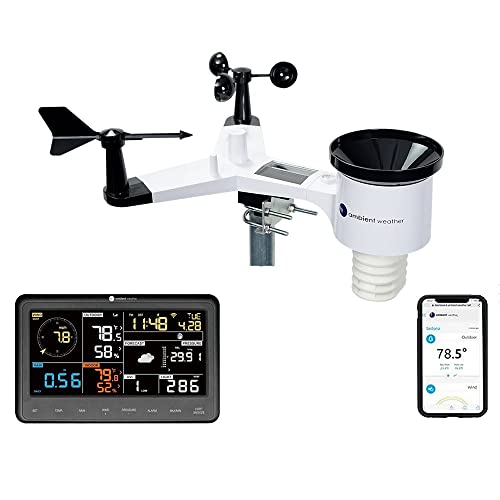
- Measures rainfall and a broad range of weather conditions
- Supports Wi-Fi access, alerts, and remote monitoring
- Integrates with Alexa, Google Home, and IFTTT
Best For: Connected homes and gardeners needing remote weather data
Best Rainfall-Focused Pick
AcuRite Self-Emptying Rain Gauge
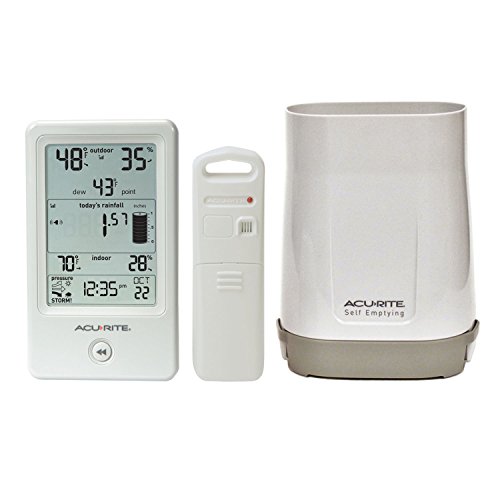
- Self-emptying collector sends rainfall readings indoors
- Tracks daily, weekly, monthly, and yearly totals
- Includes storm and programmable rain alerts
Best For: Straightforward home rainfall monitoring
Best for Detailed Color Data
AcuRite Iris Color Weather Station
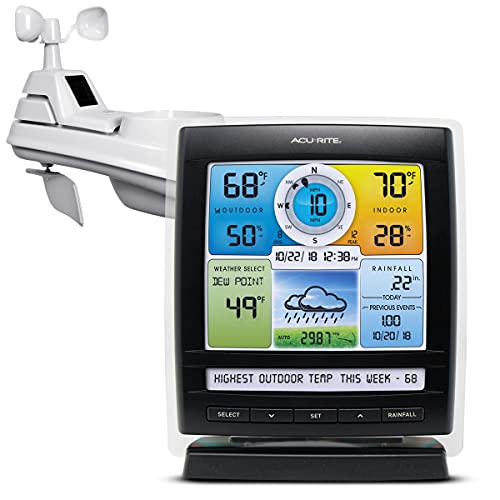
- Displays rainfall and core indoor/outdoor weather readings
- Provides more than 55 data points and historical information
- Large color LCD includes adjustable brightness
Best For: Users wanting detailed weather data on a color display
Best Full-Feature Station
Wireless Weather Station with Rain Gauge

- 8.5-inch color display with adjustable brightness
- Tracks rain, wind, pressure, dew point, and more
- 328-foot wireless range with two-year warranty
Best For: Detailed home monitoring and environmental research
Best Rainfall Data Tracking
12-in-1 Wireless Weather Station

- Records hourly through cumulative rainfall totals
- Rain gauge accuracy specified across a wide range
- 6.5-inch display with large, adjustable-backlight text
Best For: Gardens, farms, and rainfall-focused monitoring
Best Easy-Read Display
Digital Wireless Rain Gauge Station

- Self-emptying, maintenance-free wireless rain gauge
- 7.5-inch color screen with five brightness levels
- Adds atomic clock, alerts, forecasts, and multiple channels
Best For: Everyday home weather and rainfall monitoring
Best for Readability
Sainlogic 12-in-1 Wireless Weather Station

- Large, senior-friendly display with adjustable backlight
- Calibratable rain gauge with stated accuracy specifications
- Wireless dashboard tracks rain, wind, temperature, and more
Best For: Gardens, farms, ranches, and users who want clear readings
Best Large Color Display
Wireless Weather Station with Rain Gauge

- 7.5-inch color screen for quick at-a-glance checks
- Measures rainfall with stated light- and heavy-rain accuracy
- Suitable for homes, gardens, greenhouses, and small farms
Best For: First-time users who want a large color console
Best for Extended Wireless Range
Wireless Weather Station with Atomic Clock

- Wireless transmission rated up to 328 feet
- Tracks rainfall, wind, temperature, humidity, and pressure
- Includes mounting hardware and two-year after-sales service
Best For: Large properties, education, and environmental monitoring
Best All-Around Station – AcuRite Iris HD Weather Station
If you want rain gauges for weather stations alongside broad indoor and outdoor monitoring, the AcuRite Iris 01535M is a well-rounded choice. Its wireless sensor reports rainfall, temperature, humidity, wind, and barometric pressure to an HD display, while customizable alerts help you track changing conditions.
Best For: Home users who want rainfall tracking plus a detailed local weather dashboard.
Pros:
- Displays rainfall, wind speed and direction, temperature, humidity, and barometric pressure.
- Provides rainfall history along with weekly, monthly, and all-time highs and lows.
- Offers customizable rainfall, wind, temperature, and humidity alerts plus a storm alarm.
- Displays more than 25 weather data points on an HD screen.
Cons:
- The optional lightning sensor is sold separately.
- It requires four AA batteries in addition to corded power for the display setup.
This is a strong general-purpose option when you want a rain gauge integrated with a full-featured weather station rather than a rainfall-only monitor.
Best for Wi-Fi Monitoring – Ambient Weather WS-2902
Ambient Weather WS-2902 Wi-Fi Smart Weather Station | With Wi-Fi Remote Monitoring and Alerts
Check Price On AmazonThe Ambient Weather WS-2902 combines rain gauges for weather stations with remote access and smart-home features. Its Osprey sensor array measures rainfall, wind, temperature, humidity, UV intensity, and solar radiation, while Wi-Fi connectivity supports alerts and remote monitoring.
Best For: Gardeners and connected-home users who want to view weather data remotely.
Pros:
- Measures rainfall, wind speed and direction, temperature, humidity, UV intensity, and solar radiation.
- Supports Wi-Fi remote monitoring, alerts, and access through the Ambient Weather Network.
- Works with IFTTT, Google Home, Alexa, and other smart-home tools.
- Includes a sensor array with rain cup and a color LCD display.
Cons:
- Its connected features depend on Wi-Fi setup and configuration.
- The weather station has a one-year warranty.
Choose this model if remote access and smart-home integration matter as much as measuring rainfall. It is especially practical for monitoring garden or backyard conditions away from home.
Best Rainfall-Focused Pick – AcuRite Self-Emptying Rain Gauge
For shoppers primarily interested in rainfall readings, the AcuRite 01089MCB keeps the setup focused. Its self-emptying rain collector wirelessly sends measurements to an indoor display and records totals for multiple time periods, while storm and programmable rain alerts add practical convenience.
Best For: Homeowners who want straightforward rainfall totals and storm alerts without a full wind station.
Pros:
- Self-emptying collector measures backyard rainfall and transmits readings wirelessly.
- Tracks rainfall for the current and previous day, week, month, and year.
- Provides an oncoming storm alert and programmable rain alarm.
- Also reports outdoor temperature and humidity with indoor readings on the display.
Cons:
- It does not provide wind speed, wind direction, or barometric pressure readings.
- The indoor display uses a monochrome LCD rather than a color screen.
This is the most targeted choice in the group for rainfall monitoring. Its self-emptying design and multiple accumulation periods make it useful for sprinkler decisions, storm awareness, and routine backyard tracking.
Best for Detailed Color Data – AcuRite Iris Color Weather Station
The AcuRite Iris 01512MCB is a useful option for buyers comparing rain gauges for weather stations with richer on-screen information. It wirelessly reports rainfall, temperature, humidity, wind, and pressure, and its color display presents more than 55 data points, including historical trends and comfort metrics.
Best For: Users who prefer a large color screen and extensive weather history for home, garden, or office monitoring.
Pros:
- Reports rainfall, temperature, humidity, wind speed and direction, and barometric pressure.
- Provides more than 55 data points, including heat index, dew point, and historical information.
- Uses a large color LCD with adjustable brightness for easier viewing.
- Combines elevation and pressure data to provide a personalized 12-hour forecast.
Cons:
- Its listed temperature range starts at 32°F.
- The system requires multiple batteries, with 10 AA batteries listed in the specifications.
If detailed displays and historical weather information are priorities, this Iris model offers more data than a basic rain gauge. It is a good fit for users who want rainfall readings as part of a broader, visually accessible station.
Best Full-Feature Station – Wireless Weather Station with Rain Gauge
For shoppers comparing rain gauges for weather stations, this model combines rainfall tracking with wind, temperature, humidity, barometric pressure, dew point, and wind-chill readings. Its 8.5-inch color display and 328-foot wireless transmission range make it practical for detailed home or outdoor monitoring.
Best For: Home weather monitoring, environmental research, and meteorological education.
Pros:
- Tracks rainfall alongside wind speed and direction, pressure, moon phase, UV index, dew point, and wind chill.
- Large 8.5-inch adjustable-brightness color LCD provides broad at-a-glance data.
- Wireless outdoor sensor offers transmission up to 328 feet and includes mounting hardware.
- Includes a two-year warranty and U.S.-based Florida support center.
Cons:
- No Wi-Fi connectivity for remote app-based monitoring.
- Temperature accuracy is listed as ±2°F/1°C, which may be less precise than the most temperature-focused stations.
This is a strong choice when rainfall data is only one part of a broader weather-monitoring setup. Choose it for its extensive sensor coverage, long wireless range, and generous display rather than for smart-home integration.
Best Rainfall Data Tracking – 12-in-1 Wireless Weather Station
This 12-in-1 station is a compelling option among rain gauges for weather stations if you want rainfall totals organized over multiple time periods. It records hourly, daily, weekly, monthly, and cumulative precipitation while also displaying wind, temperature, humidity, pressure, and related weather information.
Best For: Gardens, farms, orchards, and homeowners who want detailed rainfall history.
Pros:
- Rain gauge accuracy is specified as ±1 mm below 15 mm and ±7% across the 15–9,999 mm range.
- Stores rainfall data by hourly, daily, weekly, monthly, and cumulative intervals.
- 6.5-inch HD color LCD has oversized fonts and adjustable backlighting.
- Displays temperature, humidity, pressure trends, wind, dew point, feels-like temperature, and moon phase.
Cons:
- Battery-powered operation may require more frequent battery attention than corded displays.
- The supplied notes do not specify a numerical wireless transmission distance.
Its strongest advantage is precipitation recordkeeping, making it especially useful for watering decisions and seasonal comparisons. The broad measurement range and readable display add versatility for both residential and agricultural settings.
Best Easy-Read Display – Digital Wireless Rain Gauge Station
If you want rain gauges for weather stations with a large, straightforward console, this model pairs a self-emptying wireless rain gauge with a 7.5-inch color LCD. It also covers indoor and outdoor temperature, humidity, pressure history, forecasts, alerts, and clock functions for everyday household use.
Best For: Homeowners who prioritize readable rainfall and weather information with low-maintenance rain collection.
Pros:
- Self-emptying, maintenance-free wireless rain gauge is designed for ongoing outdoor measurement.
- 7.5-inch color display offers wide viewing angles and five backlight brightness levels when powered by the adapter.
- Includes temperature, humidity, barometer, forecast, trend tracking, moon phase, alarms, and calendar functions.
- Supports three remote channels for multiple locations, although only one sensor is included.
Cons:
- Only one sensor is included despite support for three remote channels.
- The supplied notes do not provide a numerical rainfall-accuracy specification.
- The display uses corded electric power, which may limit placement flexibility.
This station is best suited to users who want a convenient, highly visible indoor console and a rain gauge that does not require manual emptying. Its atomic clock and household features make it as useful for daily routines as for precipitation monitoring.
Best for Readability – Sainlogic 12-in-1 Wireless Weather Station
If you want rain gauges for weather stations with an easy-to-read console, this Sainlogic model combines rainfall tracking with temperature, humidity, wind, pressure, dew point, heat index, and moon-phase data. Its large display and calibration control make it practical for home gardens, farms, and larger properties.
Best For: Seniors, gardeners, farmers, and users who prioritize a readable display and adjustable rainfall measurements.
Pros:
- 6.5-inch display with large fonts, high contrast, and three brightness levels.
- Rain gauge offers manual calibration, with stated accuracy of ±1 mm for light rain and ±7% for heavier rainfall.
- Wireless sensor is designed for expansive outdoor areas, including orchards, farms, and ranches.
- Displays a broad range of weather data, including wind, pressure, dew point, and heat index.
Cons:
- No Wi-Fi connectivity for app-based or remote monitoring.
- Three AA batteries are required, and batteries are not included.
- Setup requires mounting and syncing the outdoor sensor.
Choose this station when console readability and rainfall calibration matter more than smart-home connectivity. Its broad dashboard and wireless design make it a capable all-around option for property-level weather monitoring.
Best Large Color Display – Wireless Weather Station with Rain Gauge
For shoppers comparing rain gauges for weather stations, this wireless model stands out with a 7.5-inch color screen that brings rainfall, wind, temperature, humidity, pressure, and forecast information together. It is designed for straightforward installation around homes, gardens, greenhouses, barns, and other outdoor spaces.
Best For: Homeowners, growers, small farms, and first-time weather-station users who want a large at-a-glance display.
Pros:
- Large 7.5-inch color display with three adjustable backlight levels.
- Rainfall measurement is rated at ±1 mm below 15 mm and ±7% from 15–9999 mm.
- Tracks indoor and outdoor temperature, humidity, wind, pressure, dew point, and feels-like temperature.
- Outdoor sensor can be mounted on fences, greenhouse frames, barn posts, sheds, or in open yards.
Cons:
- No Wi-Fi connectivity or app support.
- Requires three AA batteries.
- The supplied notes identify the display console and outdoor sensor, but do not specify a calibration feature for the rain gauge.
This is a practical choice if quick visual access is your priority. The large color console and simple wireless installation suit everyday planning, while the stated rainfall specifications provide useful data for watering and garden decisions.
Best for Extended Wireless Range – Wireless Weather Station with Atomic Clock
This wireless station is a strong candidate for rain gauges for weather stations when sensor range and broader environmental monitoring are important. It combines rainfall, wind, temperature, humidity, barometric pressure, forecast, moon phase, and atomic-clock functions, with wireless transmission rated up to 328 feet.
Best For: Users with larger properties, educational projects, and personal or environmental weather monitoring.
Pros:
- Wireless transmission range is rated up to 328 feet or 100 meters.
- Provides rainfall, wind speed and direction, temperature, humidity, pressure, forecast, and moon-phase data.
- Includes an adjustable 6.5-inch color LCD with brightness control.
- Package includes mounting hardware, an outdoor sensor, power adapter, and a two-year after-sales service claim.
Cons:
- No Wi-Fi connectivity for online access or smartphone monitoring.
- Temperature accuracy is stated as up to ±2°F/1°C, which is less precise than some specialized instruments.
- The supplied notes do not provide specific rainfall accuracy or calibration figures.
Consider this model if you need a wireless setup that can cover a sizable yard or property. Its included mounting components and broad sensor package also make it useful for teaching, weather observation, and general environmental tracking.
How We Picked the Best Rain Gauges for Weather Stations
We focused on the features that matter most for dependable rainfall monitoring: measurement design, wireless communication, display quality, weather data coverage, installation practicality, and ease of maintenance. The selection includes standalone rain gauges as well as complete wireless weather stations, because the right choice depends on whether you need rainfall totals alone or a broader view of outdoor conditions.
We also considered useful extras such as storm alerts, self-emptying collection mechanisms, atomic clocks, color displays, Wi-Fi connectivity, and support for readings such as wind speed, humidity, dew point, and barometric pressure. Product specifications can vary by seller and package, so confirm sensor range, power requirements, and included accessories before ordering.
Quick Comparison
| Type | Best For | Features to Look For |
|---|---|---|
| Standalone wireless gauge | Rainfall tracking without a full station | Self-emptying design, storm alerts, clear display |
| Basic wireless weather station | Everyday home monitoring | Rain, temperature, humidity, wind, and reliable sensor range |
| Wi-Fi weather station | Remote viewing and historical data | App or dashboard access, network compatibility, data export |
| Advanced multivariable station | Detailed outdoor analysis | Wind direction, pressure, dew point, moon phase, and trend graphs |
Key Buying Factors for Rain Gauges for Weather Stations
Accuracy and Measurement Design
A tipping-bucket rain gauge is common for automated measurements and can record rainfall without manual emptying. Look for stated resolution and calibration guidance, particularly if you plan to compare readings with local forecasts or use the data for gardening and drainage decisions.
Wireless Range and Placement
Sensor range is measured under open conditions and may decrease through walls, metal structures, trees, or other obstructions. Place the collector level and in an open area away from roof edges, trees, fences, and splashback. Check whether the sensor uses replaceable batteries and whether the outdoor housing is designed for year-round exposure.
Display, Alerts, and Connectivity
A large color console is useful for at-a-glance readings indoors, while Wi-Fi models are better for checking conditions remotely or reviewing history. Storm alerts can be valuable when rainfall changes quickly, but confirm which alerts are configurable and how they are delivered.
Maintenance and Installation
Leaves, insects, dirt, and ice can obstruct a collection funnel. Choose a design that is easy to clean and periodically verify its readings against a manual gauge. Also check mounting hardware, power adapters, battery life, and whether the unit requires a stable indoor location for its console.
Who Should Buy Which Rain Gauges for Weather Stations?
Choose a standalone self-emptying model if rainfall is your main concern and you want a simpler setup. A basic wireless station suits homeowners who want rain, temperature, and humidity readings on one screen. Pick a Wi-Fi-enabled system if you need remote access, alerts, or long-term data tracking. For gardening, weather hobbyists, and property monitoring, a multivariable station with wind, pressure, dew point, and trend information provides more useful context. No matter which model you choose, prioritize proper placement and routine cleaning—the installation often affects real-world performance as much as the sensor itself.