Self-emptying rain gauges make it easier to monitor rainfall without manually clearing the collector after every storm. The best models combine dependable precipitation readings with wireless displays, temperature data, rainfall history, and alerts.
This roundup compares 10 options for gardens, lawns, homes, and personal weather stations, with attention to accuracy, freeze resistance, placement, and everyday convenience.
Best 10 Self Emptying Rain Gauges Picks for 2026
Best Overall

- Self-emptying collector
- Rainfall history through year
- Customizable rainfall alert
Best For: Backyard monitoring with an indoor LCD display
Best for Long-Range Monitoring
Wireless Rain Gauge with Thermometer

- 300-foot wireless range
- Nine days of rainfall records
- Includes outdoor temperature
Best For: Larger yards, gardens, and greenhouses
Best Smart-Home Add-On
AcuRite Wireless Rain Collector

- Automatic self-emptying cup
- Optional smartHUB connectivity
- Up to 100-foot wireless range
Best For: Existing AcuRite monitoring systems
Best Display Features
Wireless Rain Gauge with Thermometer

- Eight rainfall measurement views
- Indoor and outdoor temperature
- 15-second blue backlight
Best For: Detailed console-based rainfall tracking
Best All-Around Choice
AcuRite Wireless Storm-Alert Rain Gauge
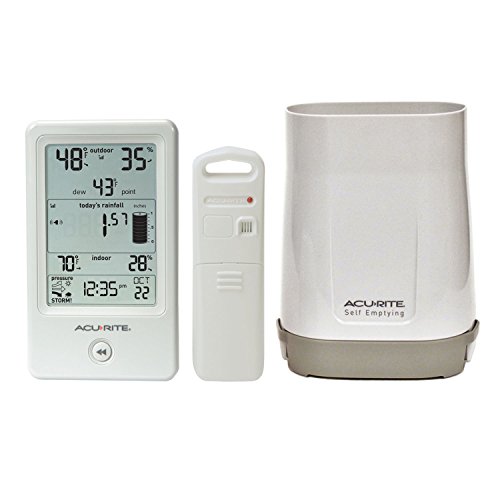
- Self-emptying wireless collector with indoor display
- Tracks rainfall across multiple time periods
- Adds temperature, humidity, and storm alerts
Best For: Home weather monitoring and garden watering decisions
Best for Detailed Readouts
Digital Wireless Rain Gauge with Thermometer

- Eight rainfall measurement periods plus total
- Self-emptying, wireless, and easy to install
- Includes temperatures, alarms, graph, and backlight
Best For: Detailed precipitation history and multifunction indoor display
Best Simple Rainfall Monitor
AcuRite Wireless Rain Gauge 00899

- Self-emptying collector needs little maintenance
- Updates indoor display every 60 seconds
- Includes rain-rate and flood-watch alerts
Best For: Straightforward rainfall tracking for lawns and gardens
Best Overall Self-Emptying Rain Gauge

- Self-emptying wireless outdoor sensor
- Eight rainfall tracking periods
- Programmable rain alarm and temperature readings
Best For: Gardeners and households wanting detailed rainfall history
Most Versatile Self-Emptying Rain Gauge

- Self-emptying wireless rainfall sensor
- Weather, humidity, pressure, and forecast data
- Supports up to three sensors
Best For: Households wanting a complete indoor weather display
Best for Rainfall History
High-Precision Wireless Rain Gauge

- Self-emptying and freeze-proof design
- Eight rainfall measurement periods
- Indoor display with temperature and rain graph
Best For: Users prioritizing rainfall records and alerts
Best Overall – AcuRite Wireless Rain Gauge
For straightforward backyard monitoring, this AcuRite model is one of the more complete self emptying rain gauges. It wirelessly sends outdoor rainfall readings to a vertical indoor LCD display and keeps useful daily, weekly, monthly, and yearly totals.
Best For: Gardeners and casual weather-watchers who want rainfall history and customizable alerts in a compact indoor display.
Pros:
- Self-emptying collector requires no daily emptying.
- Displays rainfall totals for several time periods, including current day, yesterday, week, month, and year.
- Customizable audible alarm can signal when a selected rainfall total is reached.
- Wireless backyard monitoring with a dedicated LCD display.
Cons:
- Battery powered, so batteries require periodic replacement.
- The included display is intended for rainfall monitoring rather than broader weather-station features.
This is a practical pick if you want a ready-to-use rain gauge with historical tracking and alerts without the added complexity of smartphone connectivity.
Best for Long-Range Monitoring – Wireless Rain Gauge with Thermometer
This wireless model combines self-emptying rainfall measurement with outdoor temperature tracking. Its stated 300-foot transmission range, selectable units, and indoor console make it useful when the rain collector is positioned well away from the house.
Best For: Homes, gardens, greenhouses, or farms that need remote rainfall and temperature readings across a larger outdoor area.
Pros:
- Self-emptying tipping-bucket sensor automatically records and transmits rainfall.
- Claimed wireless transmission range reaches 300 feet or 100 meters.
- Offers nine days of rainfall records and selectable millimeter/inch units.
- Indoor console also displays outdoor temperature, time, and calendar information.
Cons:
- The notes do not specify a battery life or warranty.
- Its feature set may be more than needed for users who only want a simple rainfall total.
Choose this option when wireless range and temperature information matter as much as precipitation tracking. The historical records add useful context for watering decisions.
Best Smart-Home Add-On – AcuRite Wireless Rain Collector
If you already use compatible AcuRite equipment, this collector provides a focused way to add rainfall data. It automatically empties itself and transmits readings wirelessly, while a smartHUB can make the information available on a smartphone, computer, or tablet.
Best For: Users building an AcuRite monitoring setup who want remote access to rainfall data rather than a standalone display.
Pros:
- Automatic self-emptying rain collection cup reduces maintenance.
- Sensor data transmits at intervals as short as 16 seconds.
- Can connect to a compatible in-home display or smartHUB.
- Uses two AA alkaline batteries and has a stated 100-foot wireless range.
Cons:
- No display is included.
- A smartHUB is sold separately for smartphone, computer, or tablet monitoring.
- It is designed as a collector component rather than a complete weather station.
This is a specialized choice, not the simplest standalone purchase. Its value is highest for buyers who already have compatible AcuRite hardware or specifically want smart-device access.
Best Display Features – Wireless Rain Gauge with Thermometer
This model stands out among self emptying rain gauges for the breadth of its on-screen rainfall views. The indoor console can show current, hourly, daily, weekly, monthly, yearly, and total accumulation, along with temperature and additional clock functions.
Best For: Users who want detailed rainfall breakdowns, historical comparisons, and a console that remains useful for everyday time and temperature information.
Pros:
- Self-emptying design supports low-maintenance operation.
- Provides eight rainfall measurements, including current, one-hour, 24-hour, seven-day, monthly, yearly, and total accumulation.
- Includes indoor and outdoor temperature readings plus a graphical rainfall representation.
- Blue backlight stays on for 15 seconds for nighttime viewing.
Cons:
- The notes do not provide a specific wireless transmission range.
- Its alarm-clock, calendar, and backlight features may be unnecessary for buyers seeking only a basic rain total.
Consider this gauge when detailed console reporting is your priority. It offers a broad set of rainfall periods while also functioning as a temperature, clock, and calendar display.
Best All-Around Choice – AcuRite Wireless Storm-Alert Rain Gauge
If you want self emptying rain gauges with more than basic rainfall totals, this AcuRite model combines a wireless rain collector with outdoor temperature and humidity readings. Its indoor display tracks multiple time periods and adds storm-related alerts for everyday yard and garden monitoring.
Best For: Homeowners who want rainfall history, weather readings, and programmable storm alerts in one indoor display.
Pros:
- Self-emptying collector wirelessly sends rainfall readings to the indoor display from up to 100 feet.
- Tracks rainfall for the current day, previous day, week, month, year, and previous year.
- Includes an oncoming-storm alert and programmable rain alarm for potential flood conditions.
- Also measures outdoor temperature and humidity, with indoor high and low records.
Cons:
- Uses a monochrome display rather than a color screen.
- Requires three AAA batteries.
- The rainfall display range is shorter than the outdoor temperature and humidity sensor range.
This is a versatile pick for buyers who want a self-emptying rain gauge that also functions as a compact indoor weather station. Its historical totals and alerts make it particularly useful for watering decisions and watching changing conditions.
Best for Detailed Readouts – Digital Wireless Rain Gauge with Thermometer
For shoppers comparing self emptying rain gauges with detailed measurement options, this wireless model records rainfall across eight time periods. It also provides indoor and outdoor temperature readings, a calendar, alarms, and a blue backlight for viewing the console at night.
Best For: Buyers who want broad rainfall history, a visible digital console, and extra clock and calendar functions.
Pros:
- Self-emptying design is intended for low-maintenance operation.
- Displays rainfall for now, one hour, 24 hours, today, seven days, month, year, and total.
- Includes indoor and outdoor temperature readings, a rainfall graph, and programmable rain alarms.
- Blue backlight stays on for 15 seconds for nighttime viewing.
Cons:
- The supplied notes do not specify the wireless transmission range.
- The notes do not provide a stated temperature accuracy or operating temperature range.
- Requires batteries in both the outdoor sensor and indoor host.
Its strongest advantage is the breadth of its rainfall readouts, making it a practical choice when a single daily total is not enough. The added clock, calendar, and dual alarms make the indoor console useful beyond precipitation tracking.
Best Simple Rainfall Monitor – AcuRite Wireless Rain Gauge 00899
This AcuRite is a straightforward option among self emptying rain gauges, focusing on rainfall history, alerts, and an easy-to-read indoor LCD. The collector empties automatically, while the wireless sensor sends updated rain totals to the display every 60 seconds.
Best For: Buyers who want a simple indoor rainfall monitor with history and programmable rain-rate or flood-watch alerts.
Pros:
- Self-emptying collector is designed for easy installation and little maintenance.
- Transmits outdoor rain totals to the indoor display every 60 seconds.
- Programmable alerts can indicate high rain rates or possible flooding.
- Large digital display shows rainfall information along with the current date and time.
Cons:
- Its stated lower temperature rating is 32°F, so cold-weather coverage is limited by the supplied specifications.
- It focuses on rainfall monitoring and does not list outdoor temperature or humidity readings.
- Requires five AA batteries, though they are included.
If your priority is dependable rainfall tracking without a larger set of weather-station features, this model keeps the setup focused. Its frequent updates, self-emptying collector, and rain alerts suit lawns, gardens, and basic flood awareness.
Best Overall Self-Emptying Rain Gauge – Wireless Digital Rain Gauge
If you want straightforward rainfall tracking without regularly emptying a collection cup, this wireless model is a practical choice among self emptying rain gauges. It reports precipitation indoors, adds indoor and outdoor temperature readings, and provides multiple accumulation periods for garden and household planning.
Best For: Home gardeners and households wanting detailed rainfall history, programmable alerts, and a useful indoor display.
Pros:
- Self-emptying design supports low-maintenance operation.
- Tracks rainfall for current, hourly, daily, weekly, monthly, yearly, and total periods.
- Includes programmable rain alarms to help monitor possible flooding.
- Blue backlight, calendar, radio-controlled time, and dual alarm add everyday usefulness.
Cons:
- The display backlight remains on for only 15 seconds.
- Its broad weather-station features may be more than needed for simple rainfall measurement.
The indoor console and cylindrical rainfall graph make trends easy to review, while the self-emptying sensor reduces routine maintenance. Choose it if rainfall history and household convenience matter more than a bare-bones gauge.
Most Versatile Self-Emptying Rain Gauge – Full-Color Weather Station
This model is one of the more comprehensive self emptying rain gauges for buyers who also want broader home-weather information. Its wireless sensor sends rainfall data to a full-color indoor console that also displays temperature, humidity, barometric pressure history, moon phase, forecasts, and alerts.
Best For: Families and home users who want rainfall monitoring combined with a multifunction weather station and support for additional sensors.
Pros:
- Self-emptying wireless rain gauge lets you monitor precipitation indoors.
- Full-color LCD offers adjustable backlight levels and wide viewing angles.
- Combines rainfall data with temperature, humidity, pressure history, forecasts, and moon phase.
- Can connect with up to three sensors, although only one sensor is included.
Cons:
- Only one outdoor sensor is included in the package.
- The extensive feature set may feel excessive if you only need rainfall totals.
- Additional sensors are needed to monitor multiple locations simultaneously.
Its strongest advantage is breadth: the self-emptying gauge is part of a complete weather station rather than a standalone rain monitor. The adjustable, senior-friendly display is particularly useful when several people need to check conditions from indoors.
Best for Rainfall History – High-Precision Wireless Rain Gauge
For shoppers focused on rainfall records and convenient indoor monitoring, this high-precision model offers a useful combination of self-emptying operation and detailed reporting. It displays eight rainfall periods, includes temperature readings, and uses a wireless outdoor sensor for easy setup.
Best For: Gardeners and weather-conscious homeowners who want historical rainfall data, alerts, and a compact indoor console.
Pros:
- Self-emptying, freeze-proof design is intended for maintenance-free operation.
- Reports current, hourly, 24-hour, daily, 7-day, monthly, yearly, and total rainfall.
- Programmable rain alarm can help flag potential flooding conditions.
- Shows indoor and outdoor temperatures with a graphical rainfall display.
Cons:
- Blue backlight operates for only 15 seconds after activation.
- It includes practical clock and calendar features that may not matter to buyers seeking only rainfall data.
This is a good fit when rainfall history is the priority. Its automatic emptying reduces upkeep, while the indoor console and multiple time ranges make it easier to compare recent precipitation and plan watering.
How We Picked the Best Self Emptying Rain Gauges
We focused on the features that matter most for practical outdoor rainfall monitoring: automatic emptying, wireless communication, readable indoor displays, measurement history, weather alerts, temperature readings, and resistance to changing conditions. We also considered whether each gauge appears suited to basic garden use or more complete home weather tracking.
Because product specifications and included accessories can vary, verify the listed measurement range, transmission distance, power requirements, and warranty before ordering. A self-emptying mechanism is especially useful in rainy climates, but it does not eliminate the need for occasional cleaning and calibration checks.
Quick Comparison
| Feature | Why It Matters |
|---|---|
| Self-emptying collector | Reduces manual emptying between storms and helps maintain ongoing measurements. |
| Wireless indoor display | Lets you check rainfall without walking outside to the collector. |
| Rainfall history | Helps compare recent showers, daily totals, and longer-term patterns. |
| Alerts | Useful for tracking heavy rain or weather changes while away from the gauge. |
| Thermometer or barometer | Adds broader local weather information beyond precipitation totals. |
Key Buying Factors for Self-Emptying Rain Gauges
Accuracy and Resolution
Look for clear information about measurement increments, calibration, and how the gauge handles light rain. A larger collector may provide more consistent readings, while a fine display resolution helps with small amounts of precipitation.
Wireless Range and Display
Check the stated outdoor transmission range and account for walls, trees, and other obstructions. Choose a display with large numbers and a layout that makes current rainfall, totals, and temperature easy to read.
Weather Resistance and Installation
The outdoor sensor should be designed for prolonged exposure to rain and temperature changes. Mount it on a stable, level surface away from roof runoff, sprinklers, trees, and tall structures that can distort readings.
Power and Maintenance
Review battery type, expected battery life, low-battery indicators, and whether the collector can be opened for cleaning. Even automatic models should be checked periodically for leaves, insects, mineral buildup, and debris.
Who Should Buy Which Self Emptying Rain Gauges?
Choose a straightforward wireless model if you mainly want rainfall totals for watering decisions and garden maintenance. Models with rainfall history are better for gardeners, homeowners, and anyone comparing storm patterns over time. If you want broader weather awareness, consider a unit that adds temperature, barometric pressure, or storm alerts.
For cold or highly variable climates, prioritize freeze-proof construction and clear operating-temperature guidance. If you need the most dependable readings, prioritize placement and calibration information over extra features. The best self-emptying rain gauges are the ones that match your monitoring habits, have a readable display, and can remain unobstructed and maintained throughout the season.