Overwatering and underwatering are two of the most common causes of stressed plants, but judging soil by appearance alone can be unreliable. The best analog soil moisture meters provide a simple, battery-free way to check moisture below the surface before you water.
This roundup compares 10 options for indoor plants, outdoor beds, lawns, farms, and large pots, including single-probe moisture testers, long-reach models, two-packs, and multifunction meters that also measure light or soil pH.
Best 10 Analog Soil Moisture Meters Picks for 2026
Best Overall
XLUX Battery-Free Soil Moisture Meter

- 10-point color-coded dial
- Slim single probe for root-zone checks
- No batteries or charging required
Best For: Clear, durable moisture readings for indoor and outdoor plants
Best Giftable Pick
UNIWA Ladybug Moisture Meter 2-Pack
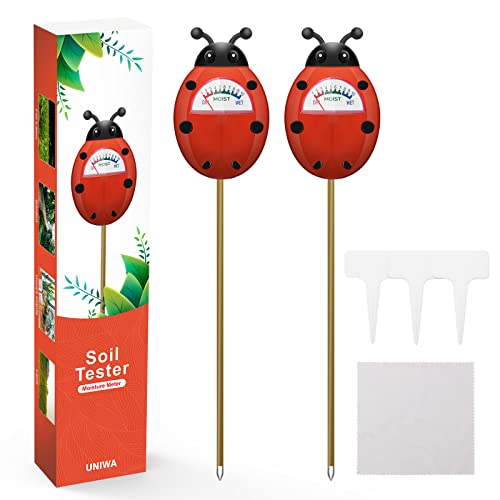
- Two compact meters included
- Readable arrow dial with large numbers
- Fun ladybug design for gardening activities
Best For: Families, children, and shared plant-care tasks
Best for Beginners
Analog Single-Pin Moisture Tester

- Simple 1–10 color-coded scale
- Single probe checks root-level moisture
- Works without batteries or apps
Best For: New plant owners learning when to water
Best for Larger Pots
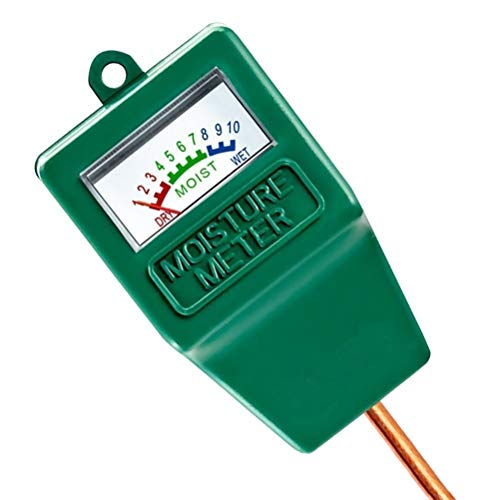
- 7.6-inch probe for deeper containers
- Quick-reading analog pointer
- Lightweight, battery-free design
Best For: Larger potted plants and varied indoor or outdoor checks
Deep-Pot Duo

- 5.5-inch longer probe for deep pots
- Large dial with three moisture zones
- Two-pack, single-probe design
Best For: Deep containers and multi-plant checks
Simple-Read Pick
Battery-Free Plant Moisture Meter
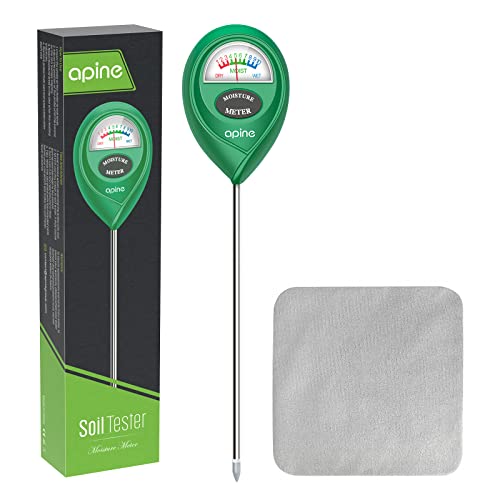
- Reads soil at two to four inches
- Clear, color-divided dial
- Includes a probe-wiping cloth
Best For: Routine checks in suitable potting soil
Deep-Soil Specialist

- Extended probe reaches deep containers
- Immediate reading on a large dial
- Works best in standard potting soil
Best For: Large pots with dense, standard potting mix
Best All-Around 3-in-1

- Tests moisture, pH, and sunlight
- Battery-free analog operation
- Suitable for indoor and outdoor use
Best For: Gardeners wanting three basic soil and light checks in one tool
Best Two-Pack Value
Thlevel Analog Moisture Meters

- Two meters included
- Large color-coded moisture dial
- No batteries required
Best For: Checking multiple houseplants, pots, and garden areas
Best Analog Detail
3-in-1 Stainless Steel Soil Tester

- Measures moisture, pH, and light
- 3.5–8 pH and 0–2000 LUX ranges
- Battery-free stainless steel probe
Best For: Gardeners wanting broader analog plant-care measurements
Best Overall – XLUX Battery-Free Soil Moisture Meter
For dependable, no-battery plant care, the XLUX is one of the most polished analog soil moisture meters in this roundup. Its 10-point, color-coded dial and slim stainless-steel probe make it easy to check moisture at the root level in indoor pots or outdoor soil.
Best For: Plant owners who want a clear, durable, battery-free meter for a wide range of houseplants and garden plants.
Pros:
- Large, easy-to-read Dry-Moist-Wet scale with 10 levels
- Slim single probe helps minimize root disturbance
- Requires no batteries or charging
- 304 stainless-steel probe is designed to resist rust
Cons:
- Designed for temporary soil readings rather than continuous insertion
- Must be wiped clean and stored in its protective sleeve after use
- Cannot be used in water or other liquids
The XLUX combines straightforward operation with thoughtful probe design. If you want a reusable analog meter with an especially readable display and minimal impact on delicate roots, it is a strong all-around choice.
Best Giftable Pick – UNIWA Ladybug Moisture Meter 2-Pack
UNIWA Soil Moisture Meter, Plant Moisture Meter, Gardening Tool Kits for Plant Care
Check Price On AmazonThe UNIWA stands out among analog soil moisture meters for its compact two-pack and playful ladybug design. Its arrow dial provides a quick visual reading, while the battery-free operation keeps plant checks simple for indoor containers and outdoor gardening.
Best For: Families, children’s gardening activities, and plant owners who want two compact meters with a fun design.
Pros:
- Includes two meters for checking multiple plants
- Large numbers and a wide scale interval support quick reading
- Battery-free design is ready to use immediately
- Portable size works well for container plants
Cons:
- Probe should not be used in stones, hard objects, water, or other liquids
- Requires cleaning after each use
- Should not remain inserted in soil for a long time
With its practical two-pack and approachable ladybug styling, the UNIWA is more fun than many basic meters. It is a useful option when sharing gardening with kids or keeping a spare meter available.
Best for Beginners – Analog Single-Pin Moisture Tester
This single-pin analog tester keeps plant care uncomplicated: insert the probe into the soil and read the 1–10 color-coded scale. As one of the more straightforward analog soil moisture meters, it is designed to help beginners identify dry, moist, or overwatered conditions without batteries or an app.
Best For: New plant owners who want an uncomplicated moisture check for houseplants, herbs, flowers, lawns, and garden beds.
Pros:
- Clear 1–10 color-coded scale is beginner-friendly
- Single metal probe measures moisture at root level
- No batteries, apps, or electricity required
- Suitable for indoor and outdoor plants
Cons:
- Provides moisture readings only, not pH or other measurements
- Single-pin design may require checking plants individually
- The supplied notes do not specify a protective storage sleeve
The SM-SINGLE-01 focuses on the essential task of deciding when to water. Its simple display and broad plant-use guidance make it a sensible starting point for anyone learning a consistent watering routine.
Best for Larger Pots – Long-Probe Plant Hygrometer
The FD-EP-230201-1767 is a lightweight analog option with a 7.6-inch probe, giving it useful reach for larger potted plants. Among these analog soil moisture meters, it is a practical choice for quick indoor or outdoor checks when you want a portable, battery-free tool.
Best For: Gardeners checking larger containers, lawns, gardens, farms, or potted plants where extra probe reach is useful.
Pros:
- 7.6-inch probe reaches deeper into larger pots
- Pointer responds quickly during soil testing
- No batteries or electricity needed
- Lightweight and portable for indoor or outdoor use
Cons:
- For soil only; it cannot test water or other liquids directly
- Probe should avoid stones during insertion
- Needs to be wiped after each use
This meter emphasizes reach and portability rather than extra features. If your plant collection includes deeper containers or you want a lightweight tool for varied garden locations, its longer probe is the main advantage.
Deep-Pot Duo – Long-Probe Battery-Free Meter
For gardeners comparing analog soil moisture meters, this two-pack stands out for its extra-long probe and battery-free operation. The 5.5-inch extension reaches deeper into large pots, while the large dial provides an immediate reading across three clear moisture zones.
Best For: Checking moisture at the bottom of larger or deeper indoor and outdoor pots.
Pros:
- Extra-long probe reaches deep soil in larger containers.
- Large, easy-to-read dial displays dry, moist, or wet conditions.
- Battery-free design provides immediate readings.
- Single-probe construction helps limit root and soil disturbance.
Cons:
- Should not remain in soil for more than five minutes because the metal tip may corrode.
- Not suitable for very hard soil, water, or other liquids.
- Probe should be wiped clean after each test.
The two-pack is practical for checking multiple plants, especially when ordinary probes cannot reach the lower soil layers. Use it in standard potting soil and remove it promptly after reading.
Simple-Read Pick – Battery-Free Plant Moisture Meter
This analog soil moisture meter is designed for straightforward plant checks without batteries or charging. Insert the probe two to four inches into the soil, wait a few seconds, and use the clearly divided dial to judge the moisture level.
Best For: Indoor and outdoor gardeners who want a simple meter that is easy to read.
Pros:
- Battery-free design is ready to use without charging.
- Color-coded dial can be read easily, including by older gardeners.
- Single needle helps reduce root damage and excess soil disturbance.
- Included wiping cloth helps keep the probe clean and sensitive.
Cons:
- Requires a few seconds before displaying the reading.
- Not intended for water, other liquids, or fluffy soil.
- Probe should be wiped before use and after testing.
Its uncomplicated dial and no-battery format make it a convenient everyday option. Follow the recommended insertion depth and use it in suitable soil for more consistent readings.
Deep-Soil Specialist – Long-Probe Moisture Indicator
Among analog soil moisture meters, this long-probe model is suited to large pots and deeper planting areas where surface checks can be misleading. Its immediate-reading dial shows dry, moist, or wet conditions, but the probe must make firm contact with standard potting soil for dependable results.
Best For: Large containers and garden plants using standard potting soil.
Pros:
- Probe extends 5.5 inches farther than regular styles for deep measurements.
- Large dial has three zones and ten scales for quick interpretation.
- Single probe limits root disturbance and removes less soil.
- No waiting is required for the moisture reading.
Cons:
- Loose media such as pure perlite, pumice, pine bark, or orchid mix may produce inconsistent readings.
- Do not leave the meter in soil longer than five minutes because the tip can corrode.
- Not designed for very hard soil, water, or other liquids.
This is a strong fit when depth matters, provided the growing medium is dense enough around the probe. In airy media, firm the soil around the sensor to improve contact with moisture-holding particles.
Best All-Around 3-in-1 – SONKIR MS02 Soil Tester
If you want more than moisture readings, the SONKIR MS02 is a practical choice among analog soil moisture meters. Its selector lets you check soil moisture, pH, or sunlight with one battery-free handheld tool.
Best For: Gardeners who want one compact tester for houseplants, lawns, farms, and outdoor gardens.
Pros:
- Measures soil moisture, pH, and sunlight.
- Requires no batteries; insert it into the soil and wait for the reading.
- Compact design works for indoor and outdoor plant care.
- Sturdy construction is intended for long-term use.
Cons:
- It cannot test the pH of liquids.
- Very dry soil may prevent the indicator from moving until watered.
The MS02 is a versatile analog option when you want basic moisture testing alongside pH and light checks. Its three-function design adds useful plant-care information without batteries.
Best Two-Pack Value – Thlevel Analog Moisture Meters
For monitoring several plants, this two-pack offers a straightforward analog approach to soil moisture testing. The large, color-coded dial helps you distinguish dry, moist, and wet soil without batteries.
Best For: Houseplant owners and gardeners who want to check multiple pots or keep one meter in different growing areas.
Pros:
- Includes two green moisture meters.
- Large dial uses red, green, and blue zones for quick reading.
- Stainless steel sensing probe is designed for stable, durable performance.
- Works in houseplants, lawns, gardens, farms, and large pots.
Cons:
- It is designed to measure soil moisture only.
- Do not use it to test water or other liquids.
- Very hard soil and stones can interfere with use.
This is a practical pick when quantity and simple readings matter most. The two-meter format is particularly convenient for people caring for multiple plants at once.
Best Analog Detail – 3-in-1 Stainless Steel Soil Tester
This battery-free tester combines moisture, pH, and light readings in an analog format. It suits gardeners who want broader plant-care information, including a stated 3.5–8 pH range and 0–2000 LUX light measurement.
Best For: Indoor and outdoor gardeners seeking moisture readings plus basic pH and light information.
Pros:
- Measures moisture, pH, and light with one tool.
- Provides a 3.5–8 pH range and 0–2000 LUX light measurement.
- Stainless steel probe is corrosion-resistant and designed for repeated soil use.
- Requires no batteries, apps, or setup delays.
Cons:
- It is an analog tool rather than a digital display.
- Its three functions may be more than needed if you only want moisture readings.
The SM3IN1 is a strong fit for gardeners who prefer an always-ready analog meter with more than one diagnostic function. Its stainless steel probe and broad testing scope make it useful across plants, lawns, and gardens.
How We Picked the Best Analog Soil Moisture Meters
We focused on practical features that matter during everyday plant care: readable analog scales, battery-free operation, probe length, stated use for indoor or outdoor soil, and the ability to test containers, garden beds, lawns, or larger pots. We also included both basic moisture-only meters and 3-in-1 testers for shoppers who want light or pH readings from the same tool.
Because these meters are simple instruments, we prioritized ease of use and useful coverage over unnecessary complexity. A good model should be quick to insert, easy to read, and suitable for the type of soil and containers you maintain.
Quick Comparison
| Type | Best For | Main Advantage |
|---|---|---|
| Basic single-probe meter | Houseplants and routine checks | Simple, affordable moisture readings |
| Long-probe meter | Large pots and deep soil | Reaches moisture below the surface |
| Two-pack | Multiple rooms or garden areas | Checks more than one location at a time |
| 3-in-1 tester | Detailed plant care | Combines moisture with light and/or pH readings |
Key Buying Factors for Analog Soil Moisture Meters
Probe Length and Construction
Short probes work well for small pots, seed trays, and shallow planters. Choose a long-probe model for large containers, raised beds, lawns, or plants with soil that dries unevenly. Stainless-steel probes can offer useful durability, but any probe should be inserted carefully to avoid roots and compacted soil.
Moisture Scale and Readability
Look for a clearly marked scale that is easy to read at a glance. Analog meters generally provide a relative moisture indication rather than a laboratory-grade measurement, so use the reading as a consistent guide alongside the plant’s soil type, pot size, and care instructions.
Battery-Free Operation
Most basic Analog Soil Moisture Meters require no batteries, which keeps operation simple and reduces ongoing maintenance. They are ready to use whenever needed, making them convenient for occasional checks and larger plant collections.
Extra Measurements
A 3-in-1 meter may be worthwhile if you also want approximate soil pH or light readings. However, choose a moisture-only model when watering guidance is your main goal; fewer functions can mean a simpler tool and easier interpretation.
Who Should Buy Which Analog Soil Moisture Meters?
For houseplant owners, a compact moisture-only meter is usually the most practical choice. Shoppers caring for large pots, outdoor planters, or deep garden soil should consider a long-probe design. A two-pack makes sense when plants are spread across several rooms or growing areas.
Choose a 3-in-1 tester if you are troubleshooting inconsistent growth, managing a garden, or want extra information about light and soil conditions. Beginners may prefer the clearest basic scale, while experienced gardeners can benefit from a combination tool used alongside visual inspection and established watering routines.