The best rotary tools give you precise control for sanding, cutting, grinding, polishing, engraving, and small repairs without requiring a full-size power tool.
This roundup compares 10 options ranging from compact cordless models and beginner-friendly kits to high-powered corded tools with extensive accessory collections.
Best 10 Rotary Tools Picks for 2026
Premium Pick
Dremel 4300-5/40 Rotary Tool Kit
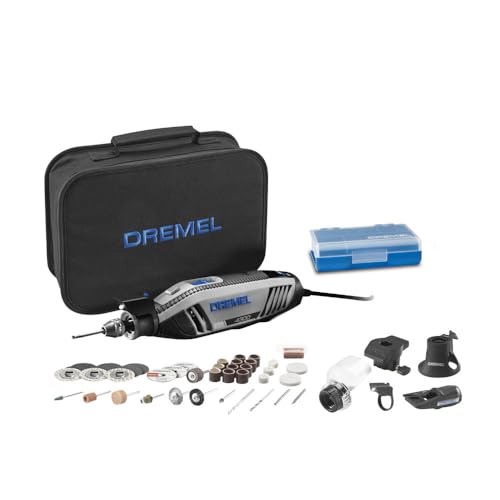
- 1.8-amp motor with 5,000–35,000 RPM range
- Includes five attachments and 40 accessories
- Pivot light and universal three-jaw chuck
Best For: Versatile workshop projects and extended use
Best Cordless Option
Milwaukee 12V Cordless Rotary Tool

- Cordless 12-volt operation with battery included
- 5,000–32,000 RPM variable-speed control
- Compact 1.3-pound design with 1/8-inch collet
Best For: Portable cutting, grinding, sanding, and polishing
Best Everyday Dremel
Dremel 4000-2/32 Rotary Tool Kit

- 1.6-amp motor with 5,000–35,000 RPM range
- Includes two attachments and 32 accessories
- 360-degree grip zone for comfort and control
Best For: Routine home, craft, and workshop projects
Best Accessory Bundle
WEN 23190 Steady-Grip Rotary Tool
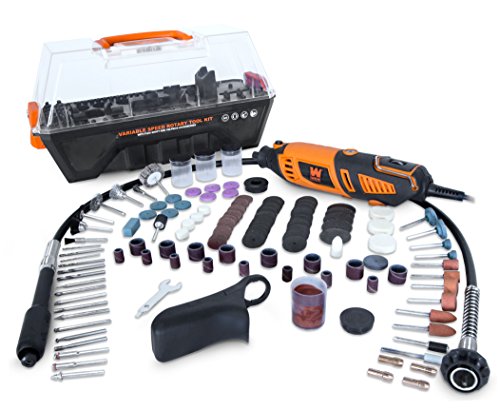
- 190-piece accessory kit with flex shaft
- Removable steady-grip handle for precision
- 8,000–35,000 RPM variable-speed motor
Best For: Detail work and broad accessory variety
Best Performance Pick

- 1.2-amp motor with 5,000–35,000 RPM range
- Cooler-running design with optimized airflow
- Corded power for continuous operation
Best For: DIYers needing versatile, sustained rotary-tool performance
Best Accessory Value
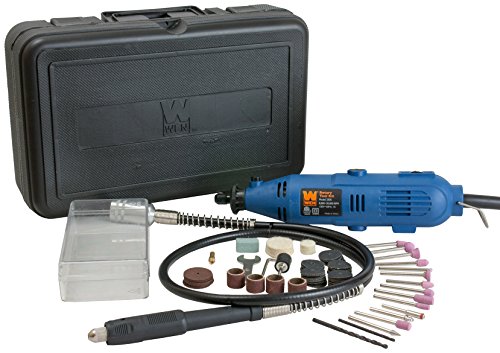
- 80-piece accessory set included
- Flex shaft for intricate detail work
- Variable speed from 8,000 to 30,000 RPM
Best For: Beginners wanting a broad, ready-to-use corded kit
Best Cordless Craft Pick

- Cordless 3.7-volt tool with up to 200 minutes of use
- 69 accessories and five speed settings
- LED light and lightweight design for precision
Best For: Portable resin, model, and light DIY craft projects
Versatile DIY Pick

- 180W motor with six speeds
- Flex shaft for detailed work
- 139 accessories and four collets
Best For: DIYers and crafters needing a broad corded kit
High-Speed Upgrade
200W Rotary Tool with Keyless Chuck
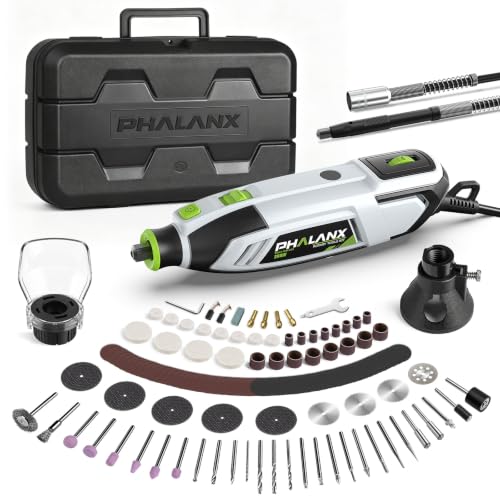
- 200W motor reaches 38,000 RPM
- Keyless chuck speeds bit changes
- 132-piece accessory kit included
Best For: DIYers who switch accessories often
Precision-Friendly Choice

- 42-inch flex shaft for control
- Six speeds up to 35,000 RPM
- 129 accessories with storage box
Best For: Beginners and detail-oriented DIY hobbyists
Premium Pick – Dremel 4300-5/40 Rotary Tool Kit
If you want one of the most capable rotary tools for varied workshop tasks, the Dremel 4300-5/40 combines a powerful corded motor, broad accessory compatibility, and useful attachments. Its electronic speed control runs from 5,000 to 35,000 RPM, while the universal three-jaw chuck accepts all Dremel accessory shank sizes.
Best For: Extensive cutting, sanding, polishing, sharpening, and detail work where accessory range and power matter.
Pros:
- Includes five attachments, 40 accessories, and a storage case.
- Powerful 1.8-amp motor with electronic feedback for consistent speed.
- Pivot light helps illuminate hard-to-reach work areas.
- Ergonomic body, replaceable brushes, and airflow design support extended use.
Cons:
- Corded operation requires access to a 120-volt outlet.
- The larger kit may be more than occasional users need.
The 4300-5/40 is a strong all-purpose choice for users who want a complete rotary tool system rather than a bare tool. Its attachment set and universal chuck make it especially flexible for demanding projects.
Best Cordless Option – Milwaukee 12V Cordless Rotary Tool
For portable rotary tool work, the Milwaukee 12V model delivers cordless convenience without giving up variable-speed control. Its 5,000–32,000 RPM range, compact 1.3-pound design, and 1/8-inch collet suit cutting, grinding, sanding, and polishing tasks away from an outlet.
Best For: Portable repairs, finishing work, and users who prioritize a compact cordless tool.
Pros:
- Cordless 12-volt design improves mobility.
- Variable speed operates from 5,000 to 32,000 RPM.
- Compact 9.5-inch body weighs 1.3 pounds.
- Protected front bearing and grinder-style exhaust ports are designed for durability.
Cons:
- Includes fewer accessories than the larger kit options.
- Uses a 1/8-inch collet, limiting compatibility to appropriately sized accessories.
This Milwaukee is a practical pick when portability is more important than a large included accessory collection. The included battery and compact form make it convenient for mobile work, while the five-year tool warranty adds reassurance.
Best Everyday Dremel – Dremel 4000-2/32 Rotary Tool Kit
The Dremel 4000-2/32 is a balanced corded option for everyday rotary tool projects. Its 1.6-amp motor maintains speed electronically from 5,000 to 35,000 RPM, and the ergonomic 360-degree grip zone is designed to improve comfort and control during longer sessions.
Best For: General-purpose cutting, sanding, engraving, carving, polishing, and sharpening.
Pros:
- 1.6-amp motor provides high power across the speed range.
- Electronic speed control helps maintain consistent performance.
- Includes two attachments and 32 accessories.
- Housing uses more than 55% recycled plastic and comes in recyclable, polybag-free packaging.
Cons:
- Corded design limits use near outlets.
- Includes fewer accessories and attachments than the Dremel 4300 kit.
Choose the 4000-2/32 if you want Dremel versatility in a more focused kit. It covers a broad set of common tasks and adds comfort-oriented design features without emphasizing an oversized accessory collection.
Best Accessory Bundle – WEN 23190 Steady-Grip Rotary Tool
The WEN 23190 is an accessible choice for buyers who want a large accessory assortment with their rotary tool. Its 1.3-amp variable-speed motor reaches 8,000–35,000 RPM, while the removable steady-grip handle and included flex shaft support more controlled and detailed work.
Best For: Detail work, carving, polishing, and users who want many accessories in one organized kit.
Pros:
- Includes 190 accessories, a flex shaft, and a carrying case.
- Removable steady-grip handle supports comfort and precision.
- Variable-speed motor reaches up to 35,000 RPM.
- Collets accommodate bits from 1/32 to 1/8 inch.
Cons:
- Its minimum speed of 8,000 RPM is higher than the Dremel alternatives.
- The 1.3-amp motor is less powerful than the 1.6- and 1.8-amp Dremel models.
The WEN stands out for value-focused versatility: its 190-piece kit and flex shaft give beginners plenty to explore. It is especially appealing for intricate projects where the steady grip and flexible shaft can improve handling.
Best Performance Pick – Dremel 3100 Rotary Tool Kit
For shoppers comparing rotary tools, the Dremel 3100 stands out as a corded option with a 1.2-amp motor, five speed settings, and a 6-foot flexible cord. Its 5,000–35,000 RPM range supports detailed work as well as cutting, sanding, polishing, carving, and grinding.
Best For: DIYers who want strong, continuous performance for a wide range of workshop and craft tasks.
Pros:
- Powerful 1.2-amp motor is rated 33% more powerful than the Dremel 200.
- Optimized airflow and upgraded ventilation help deliver cooler operation.
- Five speed settings provide control from 5,000 to 35,000 RPM.
- Housing uses more than 65% recycled plastic, and the carton is recyclable.
Cons:
- Corded design requires access to a power outlet.
- Includes 15 accessories, fewer than some larger kits.
The Dremel 3100 is a practical choice when power, endurance, and broad accessory compatibility matter more than cordless portability. Its included attachment and accessories cover common tasks, while the variable-speed motor helps with precision work.
Best Accessory Value – WEN 2305 Rotary Tool Kit
The WEN 2305 is one of the more accessory-rich rotary tools for shoppers who want to start with a broad selection of bits and attachments. It offers variable speeds from 8,000 to 30,000 RPM, two collets, and an included flex shaft for more detailed work.
Best For: Beginners and hobbyists who want a versatile corded kit with many accessories included.
Pros:
- Includes an 80-piece accessory set for cutting, sanding, polishing, drilling, and more.
- Variable-speed control ranges from 8,000 to 30,000 RPM.
- Included flex shaft supports intricate detail and precision work.
- Onboard spindle lock makes bit changes quicker and easier.
Cons:
- Corded design limits portability.
- Maximum speed is lower than the Dremel 3100’s 35,000 RPM.
- At 3.6 pounds, it is heavier than the listed Dremel and HARDELL tools.
The WEN 2305 makes a strong case for value by pairing basic variable-speed control with an 80-piece accessory collection and a flex shaft. It is a sensible starter kit for general DIY work, especially when accessory variety is a priority.
Best Cordless Craft Pick – HARDELL Mini Rotary Tool Kit
Among compact rotary tools, the HARDELL mini kit is designed for portable, fine-detail work rather than heavy-duty projects. Its cordless 3.7-volt design offers five speeds, 69 accessories, an LED indicator light, and up to 200 minutes of continuous use on a charge.
Best For: Resin crafts, 3D-printed model finishing, light sanding, engraving, and other portable DIY projects.
Pros:
- Cordless, lightweight design is easy to hold and maneuver like a pen.
- Five speed settings range from 5,000 to 18,000 RPM.
- Includes 69 accessories and three collets for varied craft applications.
- LED lighting helps reduce shadows in darker work areas.
Cons:
- Not suitable for heavy-duty projects.
- 18,000 RPM maximum is below the two corded tools in this roundup.
- Battery-powered operation requires recharging.
The HARDELL is a convenient choice for detailed craft work where low weight, quiet operation, and cordless mobility are more useful than maximum power. Its accessory selection and staged speed control also make it approachable for beginners.
Versatile DIY Pick – PHALANX 180W Rotary Tool Kit
This PHALANX kit is one of the more versatile rotary tools for makers who want variable speed control and a broad accessory selection. Its 8,000–32,000 RPM range supports tasks from cutting and grinding to polishing and engraving, while the flex shaft is suited to detailed work and hard-to-reach areas.
Best For: DIYers, crafters, and hobbyists who want a comprehensive corded kit for varied small projects.
Pros:
- 180W motor with six speed settings from 8,000 to 32,000 RPM.
- Flex shaft helps with pen-like control for detail work and corner polishing.
- Includes 139 accessories and four collet sizes for broad compatibility.
- Ventilation and a gear-protection blocker support comfortable operation.
Cons:
- The chuck must be tightened with a spanner before use.
- It is corded, so work depends on access to an AC outlet.
With its large accessory kit and flexible shaft, this rotary tool is a practical starter or gift set for general DIY work. Be prepared to use the included spanner when securing the chuck.
High-Speed Upgrade – 200W Rotary Tool with Keyless Chuck
This 200W kit is designed for rotary tools users who want a higher top speed and convenient accessory changes. Its six settings cover 10,000–38,000 RPM, and the keyless chuck is intended to reduce the need for wrench adjustments between tasks.
Best For: DIY enthusiasts who frequently switch between cutting, engraving, sanding, polishing, and drilling accessories.
Pros:
- 200W motor with six speed settings and a maximum speed of 38,000 RPM.
- Keyless chuck enables quick accessory changes.
- Four included collets support several common shank sizes.
- Includes a 132-piece accessory kit, comfort-grip handle, and ventilation slots.
Cons:
- The kit is corded and powered by AC.
- The higher minimum speed of 10,000 RPM may offer less low-speed range for delicate work.
The combination of a 200W motor, high top speed, and keyless chuck makes this a convenient all-purpose rotary tool kit. It is especially appealing if fast accessory changes matter as much as accessory variety.
Precision-Friendly Choice – DEKOPRO Rotary Tool Kit
The DEKOPRO kit is a practical option among rotary tools for users who value control during detailed projects. It combines six variable speeds from 8,000 to 35,000 RPM with a 42-inch flex shaft, assist handle, and accessories for cutting, sanding, grinding, carving, and polishing.
Best For: Beginners and hobbyists working on crafts, woodworking details, small repairs, and other precision-focused DIY projects.
Pros:
- Six speed settings cover 8,000–35,000 RPM.
- 42-inch flex shaft and assist handle support controlled, detailed work.
- 129-piece accessory set includes a cover shield, drill locator, and storage box.
- Soft rubber body and ventilation openings are designed for comfort and heat dissipation.
Cons:
- The tool is corded, limiting portability away from an outlet.
- The listed voltage is 220 volts, so buyers should confirm electrical compatibility.
- The kit includes two 1/16-inch collets, which may be less varied than some kits.
For users prioritizing handling and project versatility, the DEKOPRO stands out with its long flex shaft, two-handed grip option, and useful attachments. Check the voltage requirement before buying.
How We Picked the Best Rotary Tools
We focused on the features that most affect everyday usability: motor power, speed range, control, power source, included accessories, attachment compatibility, and handling comfort. We also considered whether each kit suits detailed craft work, routine repairs, workshop tasks, or heavier-duty DIY use.
Accessory counts can be useful, but they are not the only measure of value. A smaller kit with better speed control and a comfortable grip may be more practical than a large collection containing duplicate or low-use pieces.
Quick Comparison
| Best For | Look For | Recommended Type |
|---|---|---|
| Detailed crafts and engraving | Compact body, low-speed control | Mini cordless or lightweight rotary tool |
| General home repairs | Variable speed and broad accessory range | Midrange corded kit |
| Extended workshop sessions | Consistent power and ergonomic handling | Corded tool with flex shaft |
| Portability | Rechargeable battery and compact case | Cordless rotary tool |
| Heavy material removal | Higher wattage, cooling, and speed control | High-powered corded model |
Key Buying Factors for Rotary Tools
Power and Speed Range
Higher wattage helps with demanding cutting and grinding, while a wide variable-speed range is essential for delicate materials, plastics, polishing, and engraving. Choose controllability over maximum speed alone when you expect to switch between materials.
Corded Versus Cordless Operation
Corded models provide uninterrupted power and are usually the better choice for long sessions. Cordless tools are easier to carry and maneuver, especially for quick repairs or work away from an outlet, but battery runtime and charging time matter.
Grip, Vibration, and Attachments
A comfortable, balanced housing reduces fatigue during precision work. A flex shaft can improve access to small areas, while a pivot light or steady-grip design may help with visibility and control. Confirm that the collet size supports the bits and accessories you already own.
Accessory Quality and Storage
Look for kits that include the accessories you actually need, such as cutting wheels, sanding drums, grinding stones, polishing compounds, and drill bits. A labeled case makes a large kit more useful and easier to maintain.
Who Should Buy Which Rotary Tools?
Beginners should choose a straightforward variable-speed kit with a useful accessory selection and a comfortable grip. Crafters, model makers, and 3D-printing hobbyists may prefer a compact cordless tool that offers low-speed control and easy handling. Homeowners who want one versatile tool for repairs should consider a midrange corded kit with a flex shaft and mixed accessories.
For frequent workshop use or tougher cutting and grinding, choose a more powerful corded model with reliable speed adjustment and good heat management. If portability is the priority, a cordless option is worth the trade-off in runtime. Whichever model you choose, use the correct accessory, wear eye protection, secure the workpiece, and let the tool do the work instead of applying excessive pressure.