The best belt sanders with tracking adjustment make aggressive material removal easier to control. A reliable tracking system helps keep the abrasive belt centered, reducing interruptions and improving consistency across wood, metal, and other projects.
This roundup compares 10 options ranging from compact detail sanders and cordless tools to full-size 3-by-21-inch and 4-by-24-inch models. Consider belt size, speed control, dust collection, power source, and intended workload before choosing.
Best 10 Belt Sanders with Tracking Adjustment Picks for 2026
Balanced Control
Makita 9903 3" x 21" Belt Sander

- 8.8-amp motor with variable speed
- Auto-tracking belt needs no adjustment
- Flush-sanding nose and side design
Best For: Controlled workshop sanding and flush-to-wall work
Cordless Jobsite Power
DEWALT DCW220B 20V MAX Belt Sander

- Brushless 20V MAX cordless design
- 25-speed dial plus variable trigger
- Tool-free belt changes and dust options
Best For: Large sanding jobs away from power outlets
High-Capacity Removal
Makita 9404 4" x 24" Belt Sander

- Wide 4-by-24-inch sanding format
- 8.8-amp motor for faster removal
- Auto-tracking and 16.4-foot cord
Best For: Broad surfaces and demanding corded stock removal
Detail-Access Specialist
DEWALT DCM200B 20V MAX XR Bandfile

- 700 MWO brushless cordless motor
- 104-degree rotating arm for access
- Tool-free belt changes and contact arm
Best For: Targeted sanding in narrow or hard-to-reach areas
Best Variable-Speed Pick
WEN HB321V 3-by-21-Inch Belt Sander

- 7.5-amp motor with 620–1,200 FPM variable speed
- Quick-release lever for fast belt changes
- Compact 6.4-pound design with dust-collection options
Best For: General wood sanding with adjustable speed
Best Tracking-Focused Pick
SKIL 7510-01 3-by-18-Inch Belt Sander

- Auto-track alignment keeps the belt centered
- Pressure control warns against excessive force
- Supports flush-edge sanding and vacuum hoses
Best For: Wood sanding with automatic belt centering
Best Detail-Sanding Pick
WEN 6307 Variable-Speed File Sander
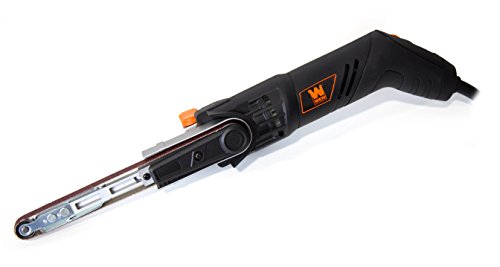
- Auto-tracking system needs no tensioning adjustments
- Pivoting 1/2-inch belt moves up to 55 degrees
- Includes three belts and variable-speed control
Best For: Narrow surfaces and detailed sanding
Versatile Workshop Pick
Jellas 7-Amp Variable-Speed Belt Sander

- Six-dial variable-speed control
- Includes 10 sanding belts
- Bench-sanding and vacuum-adapter options
Best For: Flexible woodworking and general sanding projects
Precision Metalworking Choice
1x30 Variable-Speed Bevel Sander

- VFD speed control for grinding and finishing
- Forward/reverse belt direction
- KSAG-5 angle guide included
Best For: Knife making, bevel grinding, and metal fabrication
Lightweight Budget Option
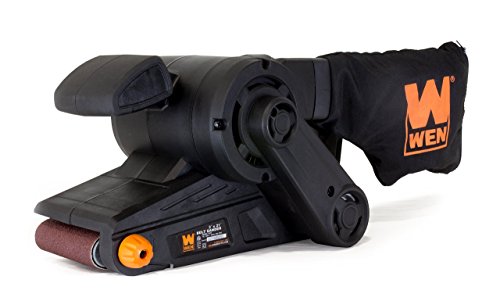
- 6.2-pound compact design
- 7-amp motor over 13 feet per second
- Detachable dust bag and lock-in safety feature
Best For: Simple DIY wood sanding and surface preparation
Balanced Control – Makita 9903 3" x 21" Belt Sander
Makita 9903 3" x 21" Belt Sander | Corded heavy-duty sander, abrasive belt, rear and side handle
Check Price On AmazonThe Makita 9903 is a practical corded choice among belt sanders with tracking adjustment. Its auto-tracking belt system keeps the belt aligned without manual adjustment, while variable speed lets you match the sanding rate to the application.
Best For: Workshop users who want controlled stock removal, flush sanding capability, and consistent belt tracking.
Pros:
- 8.8-amp motor supports demanding sanding work.
- Variable speed dial adjusts from 690 to 1,440 ft./min.
- Auto-tracking belt system requires no adjustment.
- Design supports sanding flush to a wall with the sander’s nose and side.
Cons:
- Corded 110-volt design requires access to an outlet.
- At 9.5 pounds, it may feel substantial during extended use.
With its front grip, dust bag, and relatively quiet 85dB operation, the 9903 combines useful control features with the dependable output of a corded motor.
Cordless Jobsite Power – DEWALT DCW220B 20V MAX Belt Sander
The DEWALT DCW220B brings cordless convenience to belt sanders with tracking adjustment for larger sanding jobs. Its brushless 20V MAX motor, variable-speed trigger, and 25-speed selection dial help tailor performance to different materials and applications.
Best For: Cordless users handling large sanding projects who already own compatible DEWALT 20V MAX batteries.
Pros:
- Brushless motor is designed for power and runtime.
- Variable-speed trigger and 25-speed dial support precise control.
- Quick-release system enables tool-free belt changes.
- Compatible with a DEWALT AirLock dust-collection system sold separately.
Cons:
- Battery and charger are not included.
- AirLock dust-collection equipment is sold separately.
- The cordless platform adds battery-management considerations for extended jobs.
The overmolded auxiliary handle supports two-handed operation, while the included dust bag and swivel dust port make the tool adaptable for demanding, mobile work.
High-Capacity Removal – Makita 9404 4" x 24" Belt Sander
The Makita 9404 is built for faster material removal and broad sanding coverage. As one of the belt sanders with tracking adjustment, it uses an auto-tracking system to keep the belt aligned without adjustment, while its 4-by-24-inch format suits larger surfaces.
Best For: Users sanding broad workpieces who prioritize material removal, low noise, and a long power cord.
Pros:
- 8.8-amp motor is designed for faster material removal.
- Auto-tracking belt system tracks without adjustment.
- 84dB operation helps limit operating noise.
- 16.4-foot power cord improves maneuverability around the workspace.
Cons:
- Corded operation limits use to areas with a suitable power source.
- The 4-by-24-inch format may be more tool than needed for small workpieces.
Its flush-sanding nose and side add versatility, making the 9404 a strong option when wide belt coverage and steady corded performance matter more than portability.
Detail-Access Specialist – DEWALT DCM200B 20V MAX XR Bandfile
DEWALT 20V MAX XR Cordless Bandfile Power Tool Belt Sander, Bare Tool Only (DCM200B)
Check Price On AmazonThe DEWALT DCM200B is a cordless bandfile-style belt sander for targeted sanding and hard-to-reach applications. Its brushless motor reaches up to 5,600 ft./min., while the rotating arm, changeable contact arm, and variable-speed controls provide application flexibility.
Best For: Detail sanding, narrow work areas, and users who need a lightweight cordless bandfile tool.
Pros:
- Brushless motor delivers 700 MWO of power.
- 104-degree rotating arm improves access and stores in a convenient position.
- Tool-free belt changes simplify maintenance.
- Changeable contact arm supports multiple applications.
Cons:
- Bare-tool package does not include a battery or charger.
- Its bandfile format is intended for more targeted work than broad surface sanding.
- Maximum speed may be excessive for delicate materials without careful adjustment.
With a 3.7-pound tool weight, variable-speed dial and trigger, and cordless 20V MAX operation, the DCM200B favors maneuverability and access over conventional wide-belt coverage.
Best Variable-Speed Pick – WEN HB321V 3-by-21-Inch Belt Sander
WEN 7.5-Amp 3-by-21-Inch Variable Speed Handheld Portable Belt Sander (HB321V)
Check Price On AmazonThe WEN HB321V is a practical choice among belt sanders with tracking adjustment for users who want variable speed and a full-size 3-by-21-inch sanding belt. Its 7.5-amp motor delivers adjustable belt speeds from 620 to 1,200 feet per minute for different sanding tasks.
Best For: General wood sanding where variable speed, a larger sanding surface, and reduced hand fatigue are priorities.
Pros:
- Variable-speed motor adjusts from 620 to 1,200 feet per minute.
- Quick-release tension lever simplifies belt installation and grit changes.
- At 6.4 pounds, the compact design helps limit user fatigue.
- Includes a detachable dust bag, 1-1/4-inch dust port, 80-grit belt, and two-year warranty.
Cons:
- The supplied notes do not specify an automatic belt-tracking system.
- Only one 80-grit sanding belt is included.
Choose this model if adjustable speed and a broad 3-by-21-inch belt matter more than built-in tracking details. The lock-on switch and dust-collection options also support longer sanding sessions.
Best Tracking-Focused Pick – SKIL 7510-01 3-by-18-Inch Belt Sander
The SKIL 7510-01 stands out for shoppers comparing belt sanders with tracking adjustment because its auto-track belt alignment keeps the belt centered. It also adds pressure-control technology, making it easier to avoid applying excessive force while sanding wood.
Best For: Woodworkers who want automatic belt centering, pressure feedback, and flush-edge sanding capability.
Pros:
- Auto-track belt alignment keeps the belt centered.
- Pressure-control technology warns when excessive pressure is applied.
- 6-amp motor is designed to sand wood surfaces.
- Micro-filtration and vacuum compatibility support dust management.
Cons:
- Its 3-by-18-inch belt is shorter than the 3-by-21-inch format used by some alternatives.
- The supplied notes do not list variable-speed control.
This is the most direct fit for buyers prioritizing automatic tracking adjustment. Its flush-edge sanding feature and standard 1-1/4-inch vacuum-hose compatibility add useful workshop flexibility.
Best Detail-Sanding Pick – WEN 6307 Variable-Speed File Sander
The WEN 6307 is a compact detailing option for projects that need access to narrow areas. Its 1/2-by-18-inch belt uses an auto-tracking system with no tensioning or adjustments, while the pivoting belt can move up to 55 degrees for more flexible positioning.
Best For: Detail work, narrow surfaces, and projects requiring an easily repositioned sanding belt.
Pros:
- Auto-tracking belt system requires no tensioning or adjustments.
- Variable-speed dial ranges from 1,080 to 1,800 feet per minute.
- 1/2-by-18-inch belt pivots up to 55 degrees.
- Includes three abrasive belts, a dust-port attachment, and a two-year warranty.
Cons:
- The narrow 1/2-inch belt is intended for detailing rather than broad surface sanding.
- The supplied notes do not specify the included belts’ grit ratings.
For precise or hard-to-reach sanding, the 6307 offers a useful combination of automatic tracking, variable speed, and pivoting movement. It is less suitable when you need to cover large flat surfaces quickly.
Versatile Workshop Pick – Jellas 7-Amp Variable-Speed Belt Sander
For shoppers comparing belt sanders with tracking adjustment, the Jellas is a flexible woodworking option with a 7-amp motor, six-dial variable-speed control, and a 3 x 21-inch sanding format. Its included belts, dust collection options, and bench-sanding capability make it suited to varied projects.
Best For: Woodworkers who want adjustable speed, included abrasives, and the option to use the tool handheld or secured to a bench.
Pros:
- 7-amp motor and variable-speed control for different sanding applications
- Includes 10 aluminum oxide belts ranging from 40 to 180 grit
- Detachable dust bag plus 32mm and 35mm vacuum adapters
- Can be secured to a table with the included metal clamps
Cons:
- The supplied notes do not specify a dedicated belt-tracking adjustment mechanism
- Its 7-amp corded design requires access to an outlet
The Jellas stands out for general wood sanding where speed flexibility and dust-management options matter. Follow the belt-direction arrows during installation to help prevent scratches and extend belt life.
Precision Metalworking Choice – 1×30 Variable-Speed Bevel Sander
Among belt sanders with tracking adjustment, this 1×30 model is aimed at knife making and metalworking rather than routine woodworking. Its VFD speed control, forward/reverse operation, KSAG-5 angle guide, and steel construction support controlled bevel grinding and finishing.
Best For: Knife makers and metalworkers who need repeatable bevels, adjustable belt speed, and horizontal or vertical grinding setups.
Pros:
- Variable Frequency Drive enables smooth speed adjustment
- Forward and reverse belt direction can suit different grinding operations
- Includes KSAG-5 angle guide for repeatable bevel grinding
- Supports horizontal and vertical operation with interchangeable attachments
Cons:
- Its specialized 1×30-inch format is less suited to broad wood-sanding tasks
- The supplied notes do not list a separate belt-tracking adjustment control
- At 5,000 rpm maximum, it is designed for precision grinding rather than low-speed household sanding
This is the most specialized choice in the group, prioritizing bevel control, attachment versatility, and metalworking stability. The all-steel frame is intended to reduce vibration while maintaining a rigid working platform.
Lightweight Budget Option – WEN 6321 7-Amp Belt Sander
For buyers seeking belt sanders with tracking adjustment, the WEN 6321 is a straightforward corded model for everyday wood sanding. Its 7-amp motor drives a 3 x 21-inch belt at over 13 feet per second, while the six-pound design helps limit fatigue.
Best For: DIY users who want a compact, uncomplicated belt sander for general sanding and surface preparation.
Pros:
- 7-amp motor delivers belt speeds over 13 feet per second
- Lightweight 6.2-pound design can reduce user fatigue
- Detachable dust bag helps minimize cleanup
- Lock-in safety feature supports continuous sanding
Cons:
- The supplied notes do not specify variable-speed control or a dedicated tracking adjustment
- Only the bare tool is listed among the included components
- It is a corded model and does not include stated vacuum-adapter compatibility
The WEN 6321 favors simplicity and low weight over advanced controls. Its two-year warranty and nationwide technician network add support for buyers choosing a basic belt sander for routine projects.
How We Picked the Best Belt Sanders with Tracking Adjustment
We selected these belt sanders based on the features that matter most during real workshop use: belt-tracking adjustment, motor power, speed control, sanding capacity, ergonomics, dust management, and portability. The lineup includes corded and cordless models, standard handheld sanders, detail file sanders, and a benchtop-style 1-by-30-inch option for users who need more specialized control.
Because product designs vary, tracking adjustment may be manual or integrated into the tool’s belt-guidance system. Users should confirm the manufacturer’s instructions and compatibility with replacement belts before buying.
Quick Comparison
- Best general-purpose size: 3-by-21-inch sanders balance coverage, maneuverability, and widely available belts.
- For large surfaces: A 4-by-24-inch model removes material quickly but is heavier and less nimble.
- For detail work: File sanders use narrow belts for edges, curves, and confined areas.
- For cordless convenience: Battery-powered models eliminate cords but require compatible batteries and chargers.
- For controlled finishing: Variable-speed tools offer better control over stock removal and heat.
Key Buying Factors for Belt Sanders with Tracking Adjustment
Belt Size and Tracking Control
Wider belts cover more area and are productive on tabletops, doors, and boards. Narrow belts are easier to guide around edges and smaller workpieces. Look for a tracking adjustment that responds smoothly and keeps the belt centered without constant correction.
Power, Speed, and Workload
Amperage and motor design indicate how well a corded tool may handle extended sanding, but they are not the only considerations. Variable speed is especially useful when working with softer wood, veneer, paint, or heat-sensitive materials. Cordless tools are convenient for installation and remote work, while corded models are better suited to long sessions.
Dust Collection and Handling
A dust bag or vacuum adapter can reduce airborne debris, though no belt sander captures everything. Check the port size and your shop-vac compatibility. Also consider grip comfort, trigger or switch placement, tool balance, vibration, and whether the sander can be operated securely with two hands.
Who Should Buy Which Belt Sanders with Tracking Adjustment?
Choose a 3-by-21-inch model if you want the most versatile format for routine woodworking and home renovation. Choose a 4-by-24-inch sander for faster coverage on broad, demanding surfaces and if extra weight is acceptable. Choose a cordless model when mobility matters more than maximum runtime. Choose a file sander for narrow edges, rails, tubing, and detail shaping rather than large panels. Choose a 1-by-30-inch setup if you need stationary-style grinding, bevel control, or greater belt-orientation flexibility.