Starting seedlings outdoors can be challenging when temperatures fluctuate, wind picks up, or late frosts threaten young plants. The right cold frame creates a more stable growing environment without the cost and complexity of a full greenhouse.
We’ve gathered 10 cold frames for seedlings in several sizes and styles, from compact wooden boxes for patios to walk-in-style covered frames for larger batches. Use the guide below to match construction, ventilation, capacity, and placement to your growing plans.
Best 10 Cold Frames for Seedlings Picks for 2026
Best Compact Wooden Pick

- Solid fir frame with polycarbonate panels
- Sloped, ventilated opening top
- Compact footprint for small spaces
Best For: Small gardens, patios, and early seedlings
Best Adjustable-Roof Option

- Adjustable roof for airflow and sunlight
- Light-diffusing transparent panels
- Lightweight fir design for flexible placement
Best For: Balconies, patios, and portable seedling care
Best Raised-Bed Combination
Outsunny Raised Bed Greenhouse

- Greenhouse cover and raised bed in one
- Polycarbonate protection with openable roof
- Two vents and pointed top for airflow and drainage
Best For: Protected seedlings, herbs, vegetables, and flowers
Best Walk-In Space
Portable Steel-Frame Cold Frame Greenhouse

- Generous space for trays and potted plants
- Clear PE cover traps warmth and humidity
- Roll-up zippered door aids care and ventilation
Best For: Multiple seedlings and larger outdoor growing areas
Elevated Wooden Pick
Giantex Wood Cold Frame Greenhouse
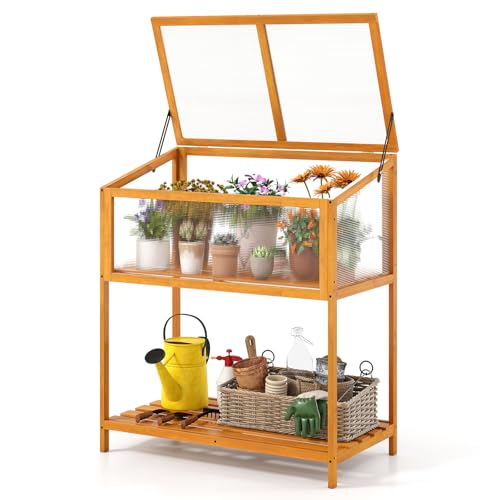
- Elevated fir-wood design reduces bending
- Hinged roof supports ventilation and access
- Built-in slatted shelf adds storage
Best For: Balcony and patio gardeners wanting an elevated planter
Compact Aluminum Pick
Polycarbonate Mini Greenhouse Cold Frame

- Polycarbonate panels help shield young plants
- Openable roof simplifies daily care
- Compact aluminum design suits small spaces
Best For: Patios, balconies, and small backyard growing areas
Portable Low-Profile Pick
Giantex Wooden Cold Frame Greenhouse

- Lightweight design is easy to move
- Flip-top roof improves access and airflow
- Fir-wood frame protects low-growing plants
Best For: Portable seedling protection for patios, balconies, and sunrooms
Compact Cloche

- Clear waterproof cover helps retain warmth
- Roll-up zipper provides access and ventilation
- Compact rust-resistant steel frame
Best For: Patios, balconies, raised beds, and small gardens
Wooden Grow Box

- Polycarbonate roof provides light and insulation
- Hinged lid supports access and ventilation
- Treated fir construction with drainage hole
Best For: Seedlings, herbs, vegetables, and flowers in compact spaces
Automatic Cedar Planter
Temperature-Activated Cold Frame

- Wax-powered lid opens above 70°F
- Double-wall polycarbonate panels retain heat
- Cedar build with integrated drainage
Best For: Year-round outdoor seed starting with automatic ventilation
Best Compact Wooden Pick – Outsunny Wooden Cold Frame
For gardeners comparing cold frames for seedlings, this compact wooden model combines a solid fir frame with transparent polycarbonate panels. Its sloped, hinged top helps shed rain while the opening provides access, sunlight, and ventilation.
Best For: Small outdoor gardens, patios, and gardeners who want a traditional wooden cold frame for seedlings and young plants.
Pros:
- Polycarbonate panels admit light while helping shield plants from light wind, rain, and damaging UV.
- Opening top with side supports provides ventilation and convenient plant access.
- Slanted cover helps prevent water accumulation.
- Compact 39.25-by-25.5-inch footprint and 9.7-pound weight make it relatively portable.
Cons:
- The 15.75-inch height limits it to smaller plants and seedlings.
- It is listed for outdoor use only.
This is a practical choice when appearance and compact dimensions matter. The low profile suits early-season seedlings, though taller plants will need another setup as they grow.
Best Adjustable-Roof Option – Giantex Wood Cold Frame
This Giantex cold frame gives seedlings a more elevated growing space than many compact models, with transparent panels and an adjustable roof. The roof angle can be changed to manage airflow, sunlight, and access for routine care.
Best For: Gardeners needing a lightweight cold frame for seedlings on a balcony, porch, patio, or in a small garden.
Pros:
- Adjustable roof supports flexible airflow and sunlight control.
- Transparent panels provide insulation and gentle light diffusion.
- Natural fir construction is designed to resist deformation.
- At 8 pounds, it is relatively easy to move between suitable locations.
Cons:
- The PVC cover material may not offer the same rigidity as polycarbonate panels.
- Its single vent may provide less ventilation flexibility than models with multiple vents.
With a 28-inch height and 40-by-21-inch footprint, this model offers useful room for seedlings while remaining portable. Its strongest feature is the adjustable roof, which makes daily care and climate control simpler.
Best Raised-Bed Combination – Outsunny Raised Bed Greenhouse
For cold frames for seedlings that also provide a planting bed, this Outsunny model combines a wooden polycarbonate cover with a galvanized-steel raised bed. The cover can be used with the bed or separately, giving you more flexibility as plants develop.
Best For: Gardeners who want one setup for protected seedlings, herbs, flowers, vegetables, and fruit.
Pros:
- Dual-use design lets you use the greenhouse cover with or without the raised bed.
- Polycarbonate boards help admit sunlight while protecting against cold, light wind, and rain.
- Openable roof supports ventilation and access.
- Two vents and a pointed top help with airflow and water management.
Cons:
- At 26 pounds, it is less convenient to move than the smaller models.
- Assembly is required.
- The larger 48-by-24-inch footprint needs more ground space.
This is the most versatile option for gardeners who want both protected propagation and a permanent raised planting area. Its dual-use construction adds utility, but the larger, heavier design is best suited to a dedicated outdoor location.
Best Walk-In Space – Portable Steel-Frame Cold Frame Greenhouse
This steel-frame greenhouse offers substantially more room than tabletop-style cold frames for seedlings. Its clear PE cover creates a warm, humid growing environment, while the roll-up zippered door makes watering and ventilation straightforward.
Best For: Gardeners who need space for multiple seedling trays, low-growing plants, or larger potted specimens.
Pros:
- 72.8-by-37.4-by-47.2-inch dimensions provide generous growing space and headroom.
- Clear PE cover helps trap warmth and humidity for germination and growth.
- Roll-up zippered access door supports ventilation and easy plant care.
- Powder-coated steel frame is designed for stability in seasonal weather.
Cons:
- Its larger footprint is less suitable for very small patios or indoor use.
- The polyethylene cover is flexible rather than rigid panel construction.
- The notes specify one vent.
This is the strongest fit when capacity matters more than a compact wooden design. At 9.5 pounds, it remains relatively light for its size, but its outdoor greenhouse format requires enough room for proper placement.
Elevated Wooden Pick – Giantex Wood Cold Frame Greenhouse
For gardeners comparing cold frames for seedlings, this elevated fir-wood model combines protected growing space with a built-in slatted shelf. Its clear hinged roof supports early starts while allowing ventilation and convenient access for watering and care.
Best For: Patio, balcony, indoor, or small-space gardeners who want an elevated planter with storage.
Pros:
- Openable roof adjusts for ventilation and plant access.
- Built-in slatted shelf adds organization and usable storage.
- Elevated 42-inch profile reduces bending and crouching.
- Fir construction and water-based finish provide a natural appearance.
Cons:
- At 36 x 20 inches, growing space is limited compared with larger greenhouse structures.
- Plastic cover panels may offer less rigidity than polycarbonate panels.
- The elevated design may not suit gardeners who prefer a low planter bed.
Choose this model when comfort, organization, and a furniture-like wooden design matter as much as seedling protection. The adjustable roof and elevated layout make routine care especially approachable.
Compact Aluminum Pick – Polycarbonate Mini Greenhouse Cold Frame
This compact option is a practical choice among cold frames for seedlings, herbs, and young vegetables. Polycarbonate panels admit light while helping shield plants from wind, rain, and chilly weather, and the openable roof simplifies daily care.
Best For: Small-space gardeners needing a lightweight plant shelter for a patio, balcony, terrace, or backyard corner.
Pros:
- Polycarbonate panels provide light transmission and seasonal protection.
- Openable roof makes watering, ventilation, and plant checks easier.
- Aluminum frame offers everyday support for outdoor use.
- Compact 38.5 x 22.4 x 24-inch format fits smaller spaces.
Cons:
- The 24-inch height limits room for taller plants.
- Its compact footprint provides less growing capacity than a full-size greenhouse.
- Only one vent is listed, so ventilation options are relatively limited.
This is a sensible pick for straightforward seedling protection without taking over a small outdoor area. Its polycarbonate-and-aluminum construction emphasizes practical seasonal coverage and easy access.
Portable Low-Profile Pick – Giantex Wooden Cold Frame Greenhouse
Gardeners seeking cold frames for seedlings may prefer this low-profile wooden model for its portability and simple flip-top access. Clear panels help protect emerging plants from chilly temperatures and excessive sunlight while allowing regular care and airflow.
Best For: Gardeners who need a lightweight cold frame that can move between a balcony, patio, yard, porch, or sunroom.
Pros:
- Lightweight 6.5-pound design is easy to reposition.
- Adjustable flip-top roof supports access, airflow, and light exposure.
- Solid fir construction adds natural appeal and stability.
- 37 x 25 x 16-inch footprint works well for low-growing seedlings.
Cons:
- The 16-inch height is restrictive for taller plants.
- Plastic panels may be less robust than polycarbonate alternatives.
- Its low profile requires more bending during plant care.
This model suits gardeners who value mobility and a traditional wooden look over height or large capacity. The flip-top roof keeps essential maintenance accessible, while the compact dimensions make placement flexible.
Compact Cloche – Portable Cold Frame
This compact cloche is a practical option when you need cold frames for seedlings but have limited room. Its clear waterproof cover helps retain warmth while allowing light, air, and moisture through, and the roll-up zippered panel provides convenient access for watering and maintenance.
Best For: Patio gardeners, balcony growers, raised beds, and small outdoor spaces starting seedlings or protecting young plants.
Pros:
- Space-efficient 47-by-23.63-inch footprint for small gardens and patios.
- Clear cover supports light transmission and protection from cooler temperatures and light frost.
- Roll-up zipper opening provides access and adjustable ventilation.
- Tubular alloy-steel frame is rust resistant and portable.
Cons:
- The plastic cover may provide less rigidity than a polycarbonate-lid cold frame.
- Its 23.63-inch height may limit room for taller plants.
- Additional insulation may be needed during colder months.
This is a flexible, lightweight choice for seed propagation and transplant protection. Choose it when portability and quick access matter more than a solid wooden structure.
Wooden Grow Box – Hinged-Lid Cold Frame
This wooden grow box is a straightforward choice among cold frames for seedlings, combining a treated fir frame with a polycarbonate roof. The hinged lid lets you reach plants easily and adjust ventilation while the compact footprint fits neatly into smaller outdoor growing areas.
Best For: Gardeners starting herbs, vegetables, or flowers who want a compact, raised wooden cold frame with a manually adjustable lid.
Pros:
- Polycarbonate roof panels admit light while helping insulate seedlings.
- Hinged roof provides convenient access and ventilation.
- Treated fir wood is rot resistant and suited to outdoor use.
- Built-in drainage hole helps manage excess water.
Cons:
- The wood requires annual treatment for extra durability.
- Manual lid adjustment requires more attention than an automatic opener.
- The 15.4-inch height is best suited to seedlings and shorter plants.
With its solid wood construction and hinged polycarbonate cover, this model offers a traditional cold-frame setup in a relatively compact package. It is a good fit if you value accessible planting space and do not mind periodic wood care.
Automatic Cedar Planter – Temperature-Activated Cold Frame
This cedar mini greenhouse stands out among cold frames for seedlings with a temperature-activated polycarbonate lid. The wax-powered hinge opens above 70°F and closes as temperatures fall, while the double-wall panels help retain heat without electricity.
Best For: Gardeners seeking a sturdier year-round outdoor cold frame with automatic ventilation and integrated drainage.
Pros:
- Temperature-activated lid opens above 70°F and closes as conditions cool.
- Double-wall polycarbonate panels transmit light and retain heat.
- Cedar construction offers natural decay resistance.
- Mesh liner and wide bottom slats support drainage and root health.
Cons:
- At 94.8 pounds, it is substantially heavier than a portable fabric cloche.
- The automatic lid provides less direct manual control over opening.
- Assembly is required, despite the pre-cut and pre-drilled parts.
This is the most feature-rich option of the three, especially for gardeners who want automatic ventilation and a durable cedar structure. Its heavier build makes it better suited to a dedicated outdoor location than frequent repositioning.
How We Picked the Best Cold Frames for Seedlings
We focused on the features that matter most for protecting young plants: sturdy construction, clear light-transmitting panels or covers, usable ventilation, practical dimensions, and ease of access. The selection includes raised wooden frames, aluminum-and-polycarbonate designs, portable PE-covered models, and compact cloches so different gardeners can find a suitable option.
We also considered how each format fits common uses, including hardening off seedlings, starting cool-season crops, protecting transplants from wind, and extending the growing season on patios, balconies, or small garden beds.
Quick Comparison
- Best for compact spaces: Small wooden or polycarbonate frames with hinged or adjustable lids.
- Best for raised planting: Cold frames built over a planter bed, often with added storage or shelf space.
- Best for larger batches: A taller steel-frame model with a PE cover and walk-in-style access.
- Best for durability: Cedar or treated-fir construction paired with rigid panels.
- Best for portability: Lightweight frames that can be moved to follow sunlight or shelter seedlings from bad weather.
Key Buying Factors for Cold Frames for Seedlings
Size and Growing Capacity
Measure the available space before buying, then account for clearance around the frame so you can open the lid and tend plants comfortably. A compact cold frame suits a few trays, while a raised-bed model offers more room for direct sowing and larger transplants.
Materials and Weather Resistance
Wooden frames blend into gardens and can provide a solid base, but treated or naturally durable wood is preferable outdoors. Polycarbonate panels are generally more secure than thin film in windy conditions. PE covers are lightweight and affordable, but they may need more careful anchoring and eventual replacement.
Ventilation and Temperature Control
Seedlings need protection from cold, but enclosed frames can overheat quickly in direct sun. Look for hinged, flip-top, adjustable, or temperature-activated ventilation. A model with several opening positions gives you more control during changing weather.
Access and Maintenance
Openable roofs make watering, thinning, and transplanting easier. Check whether the design allows access to the entire planting area and whether the panels, hinges, and cover can be cleaned or replaced. Secure the frame against wind, especially on exposed patios and decks.
Who Should Buy Which Cold Frames for Seedlings?
Apartment and balcony gardeners should prioritize a narrow, lightweight frame with a clear lid and modest footprint. Home gardeners starting several trays may prefer a raised wooden frame or taller covered structure for easier access and greater capacity. Gardeners in windy climates should lean toward rigid polycarbonate panels, solid framing, and dependable anchoring. Those extending the season on a permanent bed should choose a durable cedar or treated-wood model that fits the bed dimensions. For flexible, low-cost protection, a portable PE-covered frame can work well when properly secured and ventilated.