The best cordless dust extractors make it easier to control fine dust when you are moving between rooms, workstations, or jobsites without relying on a nearby outlet. The right model balances suction, filtration, runtime, portability, and compatibility with your power tools.
We compare 10 notable options across cordless and corded categories, including compact extractors for quick cleanup and higher-capacity systems for extended cutting, grinding, and renovation work.
Best 10 Cordless Dust Extractors Picks for 2026
Compact HEPA Pick

- 57 CFM brushless suction
- HEPA filtration for fine particles
- Up to 60 minutes with 5.0Ah battery
Best For: Makita LXT users needing portable wet/dry cleanup
High-Output Jobsite Choice

- 125 CFM airflow
- Automatic filter cleaning with HEPA filter
- Wireless control and T-Stak compatibility
Best For: Contractors needing high-output dust extraction
Versatile Workshop Value
Bosch GAS18V-3N 18V Wet/Dry Vacuum
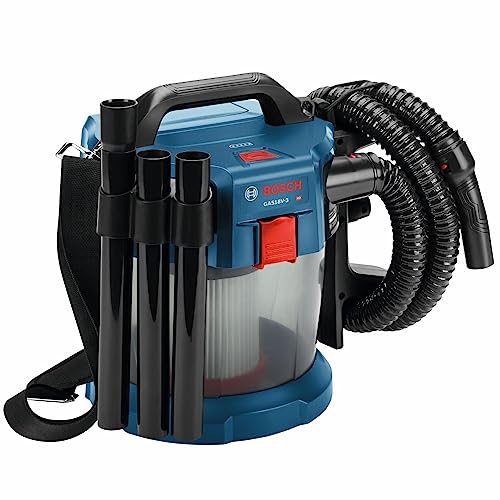
- 2.6-gallon wet/dry capacity
- Washable HEPA filtration
- Includes hose, tubes, and floor tools
Best For: Workshops, vehicles, and mobile jobsite cleanup
Premium Cordless Extractor
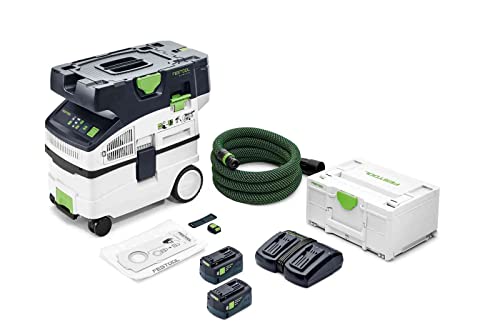
- 36V turbine from two 18V packs
- Three adjustable extraction levels
- Designed for Festool cordless tools
Best For: Professional sanding, sawing, and drilling workflows
Jobsite Control Pick

- 150 CFM airflow with 97-inch static water lift
- Automatic filter cleaning every 15 seconds
- HEPA filtration and power-tool activation
Best For: Professional power-tool dust extraction
Portable Finish-Work Pick

- Compact Systainer format with shoulder strap
- HEPA filtration and 1000W turbine
- Automatic tool activation with 67 dB operation
Best For: Mobile installation and finish work
Heavy-Duty Wet/Dry Pick

- 151 CFM airflow from a 1,100W motor
- 19-foot cord and 13-foot hose
- Autostart outlet and anti-static system
Best For: Large-area workshop and construction cleanup
Best Compact Cordless Option
DEWALT DWH161B Universal Dust Extractor

- 3.7-pound compact design with HEPA filtration
- 45% more capacity than the DWH302DH dust box
- Wireless Tool Control-ready for remote activation
Best For: Mobile SDS-plus drilling and chipping
Best Large-Capacity Wet/Dry Model
Makita VC4210L 11-Gallon HEPA Extractor

- 11-gallon wet/dry capacity
- 148 CFM suction with automatic filter cleaning
- Tool-activated outlet with 10-second off delay
Best For: Large shop and jobsite cleanup
Best Automatic-Cleaning Jobsite Extractor
DEWALT DWV010 8-Gallon HEPA Dust Extractor
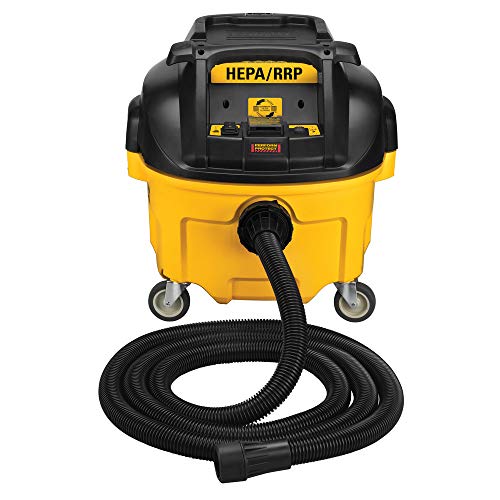
- Automatic filter cleaning every 30 seconds
- 150 CFM airflow from a 15-amp motor
- 8-gallon tank with tool actuation and 15-foot hose
Best For: Continuous renovation and power-tool dust collection
Compact HEPA Pick – Makita XCV11Z 18V LXT
The Makita XCV11Z is a compact option for buyers comparing cordless dust extractors for home, garage, vehicle, and light jobsite cleanup. Its brushless 18V motor delivers 57 CFM, while the HEPA filter captures 99.97% of particles 3 microns and larger. The bare-tool format means the battery and charger must be purchased separately.
Best For: Makita 18V LXT users who want a portable wet/dry extractor for fine dust and general cleanup.
Pros:
- HEPA filtration captures 99.97% of particles 3 microns and larger.
- Brushless motor provides 57 CFM and up to 27 inches of water lift.
- Compact 2-gallon design weighs about 10.1 pounds with a 5.0Ah battery.
- Up to 60 minutes of runtime with a compatible 18V 5.0Ah battery.
Cons:
- Battery and charger are not included.
- Its 2-gallon capacity is smaller than larger jobsite extractors.
- Operating noise is rated at 76 dB(A).
This Makita is a practical match for users already invested in the LXT platform. Its light, portable design and HEPA filtration are useful for fine dust, but high-volume cleanup may call for a larger extractor.
High-Output Jobsite Choice – DEWALT FLEXVOLT DCV585B
The DEWALT FLEXVOLT DCV585B stands out among cordless dust extractors for demanding jobsite applications. It supplies 125 CFM, includes dual filters with a HEPA filter, and supports wet or dry use. The bare unit requires a compatible battery, while its wireless controls and T-Stak compatibility add convenience on the jobsite.
Best For: Contractors handling high-output dust extraction, tuckpointing, surfacing, and renovation work.
Pros:
- 125 CFM supports OSHA Table 1 compliant solutions for specified applications when paired with an appropriate dust shroud.
- Automatic filter cleaning and dual filters help maintain extraction performance.
- Includes an 8-foot antistatic hose with DEWALT AIRLOCK connection.
- Wireless Tool Control enables remote or tool-based on/off operation.
Cons:
- Battery is not included with this bare-tool model.
- At 20 pounds, it is heavier than compact cordless extractors.
- Noise is rated at 80 dB.
For serious renovation and concrete-related work, the DCV585B offers the strongest stated airflow in this roundup. Its size and battery requirements are trade-offs, but automatic filter cleaning, HEPA filtration, and wireless control make it well suited to professional workflows.
Versatile Workshop Value – Bosch GAS18V-3N 18V Wet/Dry Vacuum
The Bosch GAS18V-3N is a flexible choice among cordless dust extractors for workshops, vehicles, and jobsite cleanup. This 2.6-gallon wet/dry vacuum uses Rotational Airflow Technology to help maintain suction and includes a washable HEPA filter that captures 99.97% of harmful particles. It is supplied as a bare tool, so the battery and charger are separate.
Best For: Bosch or AMPShare users wanting a lightweight wet/dry vacuum with included hose, tubes, and floor tools.
Pros:
- Washable HEPA filter captures 99.97% of harmful particles.
- Rotational Airflow Technology helps reduce filter-clogging and suction loss.
- Includes a 5.25-foot hose, three extension tubes, floor nozzle, and crevice nozzle.
- Compact 10.2-pound design includes onboard hose and nozzle storage.
Cons:
- Battery and charger are sold separately.
- Runtime is up to 24 minutes of high-power cleaning with a 6.0Ah battery.
- Noise is rated at 80 dB.
The Bosch balances portability and useful accessories, making it a strong general-purpose option for mobile cleanup. Its shorter high-power runtime means it is better suited to targeted jobs than uninterrupted heavy-duty extraction.
Premium Cordless Extractor – Festool CLEANTEC CTC MIDI I
Festool Cordless Mobile Dust Extractor CLEANTEC CTC MIDI I HEPA-Plus 577069+577079
Check Price On AmazonThe Festool CLEANTEC CTC MIDI I HEPA-Plus is designed for buyers seeking premium cordless dust extractors that pair with professional cordless tools. Its 36V turbine uses two 18V battery packs for cord-free operation, and three extraction-power levels let users adjust performance. The included remote, HEPA filter, filter bag, and smooth suction hose support a mobile workshop setup.
Best For: Festool users sanding, sawing, or drilling who prioritize coordinated cordless extraction and adjustable power.
Pros:
- 36V turbine is designed to provide power comparable to a corded extractor.
- Uses two 18V battery packs for cordless operation.
- Three extraction-power levels allow performance adjustment.
- Includes a remote control, HEPA filter, filter bag, and smooth suction hose.
Cons:
- Requires two compatible 18V battery packs.
- Listed runtime is 16 minutes.
- Its approximately 30-pound transport weight is higher than compact handheld models.
The CTC MIDI I is a specialized choice for professional cordless workflows rather than occasional cleanup. Its dual-battery design and three power levels offer a capable, integrated setup, but the short listed runtime and heavier form factor should be considered before buying.
Jobsite Control Pick – Bosch VAC090AH
The Bosch VAC090AH is a strong option for users comparing cordless dust extractors for power-tool dust control, although this model uses a 120-volt corded power source. Its 150 CFM airflow, 97-inch static water lift, automatic filter cleaning, and HEPA filtration make it suited to demanding workshop and jobsite cleanup.
Best For: Power-tool users who want automatic filter cleaning, tool activation, and a wet/dry dust extraction system.
Pros:
- Delivers up to 150 CFM airflow and 97 inches of static water lift.
- Automatic filter cleaning runs every 15 seconds to help maintain suction.
- Power-tool activation and a Power Broker dial help match extraction to the application.
- HEPA filtration captures 99.97% of particles at 0.3 microns or larger.
Cons:
- It is corded rather than cordless.
- The 9-gallon canister and 28-pound weight may be less convenient for highly mobile tasks.
Choose this Bosch when consistent suction and automated filter maintenance matter more than battery-powered portability. Its OSHA-oriented dust-control design and tool activation are particularly useful for professional power-tool work.
Portable Finish-Work Pick – Festool CT SYS
The Festool CT SYS stands out among cordless dust extractors for compact portability, though it operates from a 120-volt corded connection. Its Systainer format, shoulder strap, onboard storage, HEPA filtration, and automatic tool activation make it practical for installation, remodeling, and finish work.
Best For: Mobile indoor work where compact storage, easy carrying, and compatibility with the Festool Systainer System are priorities.
Pros:
- Compact Systainer design supports transport and organized storage.
- Shoulder strap, hose storage, and accessory storage simplify setup.
- HEPA filtration and a 1000W turbine support fine-dust extraction.
- Automatic tool activation and relatively quiet 67 dB operation improve workflow.
Cons:
- The 0.92-gallon capacity is smaller than that of full-size extractors.
- It is corded and designed for indoor use rather than unrestricted cordless mobility.
The CT SYS is a sensible choice when portability and compact organization outweigh collection capacity. It is especially well matched to finish work and installation tasks where carrying the extractor between locations is common.
Heavy-Duty Wet/Dry Pick – Fein Turbo II
The Fein Turbo II is a capable alternative for shoppers evaluating cordless dust extractors, but it is powered by a cord. Its 1,100-watt motor, 151 CFM airflow, 98 PSI static water lift, long reach, and wet/dry capability suit workshops, garages, and construction sites.
Best For: Heavy-duty cleanup and tool-connected extraction across larger work areas.
Pros:
- Provides 151 CFM airflow from a 1,100-watt motor.
- 19-foot power cord and 13-foot hose extend the working range.
- Autostart outlet synchronizes operation with connected power tools.
- Anti-static functionality and 66 dB operation support safer, quieter use.
Cons:
- It is corded rather than battery powered.
- The supplied details list only one speed and one power level.
Consider the Fein Turbo II when airflow, reach, and wet/dry versatility are more important than cordless convenience. Its autostart outlet and anti-static system make it a practical fit for demanding workshop and construction applications.
Best Compact Cordless Option – DEWALT DWH161B Universal Dust Extractor
If mobility is your priority, the DEWALT DWH161B is a practical choice among cordless dust extractors. Its compact, 3.7-pound design includes a HEPA filter, shoulder strap, and belt hook, making it easier to carry while drilling or chipping with compatible SDS-plus rotary hammers.
Best For: Mobile drilling and chipping applications where a compact OSHA Table 1-compliant dust-control solution is useful.
Pros:
- Compact and lightweight for improved jobsite mobility.
- Includes a HEPA filter and offers 45% more capacity than the DWH302DH dust box.
- Multiple strap points and a belt hook support flexible positioning.
- WIRELESS TOOL CONTROL can link the extractor and tool for remote activation when paired with the separately sold key fob.
Cons:
- Tool-only configuration does not include a battery or charger.
- Optimized for SDS-plus rotary hammers rather than general wet/dry cleanup.
- Listed runtime is only 3 minutes.
The DWH161B stands out for portability and tool-integrated dust collection. Choose it when carrying comfort and cordless convenience matter more than large debris capacity or wet pickup.
Best Large-Capacity Wet/Dry Model – Makita VC4210L 11-Gallon HEPA Extractor
The Makita VC4210L is a high-capacity wet/dry extractor for users who need extended cleanup between emptying cycles. Although corded rather than cordless, it brings an 11-gallon tank, 148 CFM of suction, automatic filter cleaning, wheels, and HEPA filtration to demanding shop and jobsite cleanup.
Best For: Large cleanup tasks on concrete, garages, and hard floors where wet/dry capability and capacity are more important than cordless operation.
Pros:
- Large 11-gallon capacity reduces the need for frequent emptying.
- Powerful 12-amp motor delivers 148 CFM of suction and 92 inches of water lift.
- Automatic filter cleaning helps extend filter life.
- Tool-activated outlet starts and stops the vacuum with a 10-second off delay.
Cons:
- Corded design is less mobile than cordless dust extractors.
- At 35.3 pounds, it is considerably heavier than compact portable models.
- No manufacturer warranty is listed in the supplied details.
With its substantial capacity and wet/dry functionality, the VC4210L is better suited to stationary or wheeled cleanup than handheld dust extraction. It is a strong fit when airflow, filtration, and fewer interruptions are the deciding factors.
Best Automatic-Cleaning Jobsite Extractor – DEWALT DWV010 8-Gallon HEPA Dust Extractor
The DEWALT DWV010 is a corded jobsite dust extractor designed for continuous operation and power-tool connection. Its automatic filter-cleaning cycle pulses every 30 seconds, while the 15-amp motor provides 150 CFM of airflow and the 8-gallon tank balances capacity with portability.
Best For: Workshop and renovation users who want automatic filter cleaning, tool actuation, and a wheeled 8-gallon extractor.
Pros:
- Automatic filter cleaning runs every 30 seconds to reduce stoppages.
- 15-amp motor delivers 150 CFM of airflow.
- Power-tool actuation controls vacuum start and stop.
- Includes heavy-duty wheels, casters, and a 15-foot anti-static hose.
Cons:
- Corded operation limits mobility compared with cordless dust extractors.
- EPA RRP compliance for HEPA vacuums requires DWV9330 filters.
- At 80 dB, it may be relatively loud during operation.
The DWV010 is a practical middle ground for powered jobsite dust collection: it has more capacity than a compact handheld extractor while remaining lighter than the Makita VC4210L. Its automatic cleaning and tool actuation are especially useful for repeated power-tool work.
How We Picked These Cordless Dust Extractors
We evaluated the selected models against the features that matter most in real workshop and jobsite use: power source, suction performance, HEPA or high-efficiency filtration, container capacity, portability, tool activation, filter-cleaning systems, noise, and accessory compatibility. Because “cordless” can describe both battery-powered extractors and compact systems used alongside cordless tools, the roundup also includes corded benchmarks that may suit users who prioritize capacity or continuous runtime.
We also considered whether each extractor is sold as a bare tool, a set, or a more complete system. Battery platform compatibility can significantly affect total cost, especially for users already invested in Makita, DEWALT, Bosch, or Festool tools.
Quick Comparison
Compact battery-powered models are generally easiest to carry and are well suited to drilling, fastening, trim work, and short cleanup tasks. Larger extractors offer bigger containers, stronger sustained airflow, and more practical dust collection for saws, grinders, sanders, and renovation work. Corded models eliminate battery-runtime limits and are often the better choice for stationary or full-day applications.
Look closely at what is included. “Tool only” listings typically exclude batteries and chargers, while some kits include specialized hoses, filters, Systainers, or other accessories. Verify the exact package before comparing prices.
Key Buying Factors for Cordless Dust Extractors
Battery Platform and Runtime
Choose a platform that matches your existing batteries whenever possible. Runtime depends on battery capacity, hose restriction, material being collected, and whether the extractor runs continuously through a tool outlet. For demanding work, carrying a spare battery may be more practical than choosing the largest nominal voltage.
Filtration and Dust Control
HEPA filtration is important when collecting fine particles from concrete, drywall, wood, or other materials. Check whether the extractor has a sealed filtration path, automatic filter cleaning, and suitable filters for wet or dry debris. Never assume a standard shop vacuum offers the same protection as a certified dust extractor.
Capacity, Suction, and Airflow
A small container keeps the machine portable but requires more frequent emptying. Larger capacities reduce interruptions and are preferable for grinding, cutting, and renovation. Airflow and suction should be considered together: a high suction rating does not automatically guarantee effective dust capture if the hose, fittings, or filter become restrictive.
Tool Activation and Accessories
Automatic tool activation can start the extractor when a connected saw, sander, or grinder runs. Confirm outlet ratings and compatibility with your tools. Antistatic hoses, tapered adapters, crevice tools, and storage systems can make a major difference in daily use.
Who Should Buy Which Cordless Dust Extractors?
Choose a compact cordless model if portability and fast spot cleanup matter most. It is a strong fit for installers, service technicians, punch-list work, and users already committed to the matching battery system. Choose a larger cordless extractor when you need more capacity but still move frequently between locations.
For long cutting or grinding sessions, a corded HEPA extractor is usually the more dependable choice because it provides continuous operation and often supports larger containers or automatic filter cleaning. Professionals using a coordinated tool-and-extractor ecosystem should prioritize hose connections, tool control, storage, and service support over headline suction numbers alone.