Sanding dust can quickly overwhelm a workshop, reduce visibility, and expose you to fine particles that ordinary shop vacuums may not capture effectively. The right extractor pairs strong airflow with reliable filtration, tool activation, and convenient filter maintenance.
We compared 10 dust extractors for sanding across portability, suction, HEPA filtration, capacity, noise, and compatibility with power tools. Use the guide below to narrow the options for your shop, jobsite, or professional finishing work.
Best 10 Dust Extractors for Sanding Picks for 2026
Best Compact Bluetooth Extractor
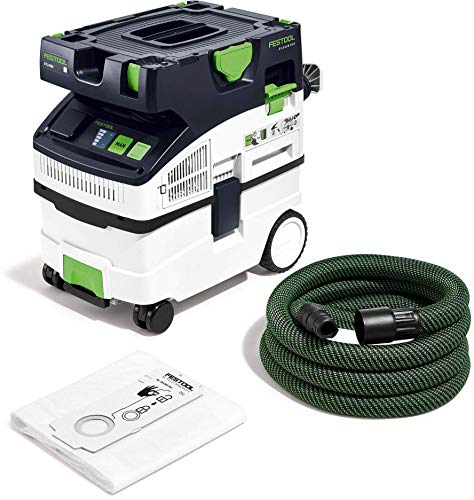
- 130 CFM suction with HEPA filtration
- Bluetooth start control and SYS-Dock
- 3.9-gallon capacity with hose storage
Best For: Mobile sanding and organized indoor workshops
Best High-Capacity Jobsite Extractor

- 150 CFM airflow and 97-inch water lift
- Automatic filter cleaning every 15 seconds
- HEPA wet/dry design with tool activation
Best For: Extended sanding and demanding jobsite use
Best Ultra-Portable Extractor

- Compact Systainer format with shoulder strap
- HEPA filtration and 1000W motor
- Automatic tool activation and onboard storage
Best For: Portable finish work and space-limited sanding
Best Large-Tank Workshop Extractor
DYNAVEX 12-Gallon Dust Extractor

- 12-gallon tank for fewer emptying breaks
- 142 CFM airflow with 0.5-micron HEPA filter
- Linked switch and multiple hose adapters
Best For: Garage and workshop sanding setups
Best Overall
DEWALT DWV010 HEPA Dust Extractor
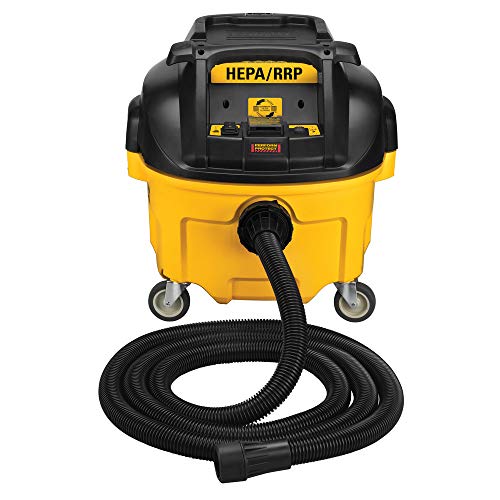
- Automatic filter cleaning every 30 seconds
- Power Tool Actuation for connected tools
- 8-gallon capacity with 15-foot anti-static hose
Best For: Extended sanding and jobsite use
Best Versatility
ECOMAX 8-Gallon HEPA Dust Extractor

- Switches between vacuum and extractor modes
- Power-tool activation for hands-free starts
- Includes HEPA filter and extensive accessory kit
Best For: Mixed workshop and garage cleanup
Best Quiet Operation

- Quiet 66 dB operation for indoor work
- 151 CFM suction with HEPA filtration
- 19-foot cord and 13-foot anti-static hose
Best For: Noise-sensitive sanding and remodeling
Compact HEPA Choice

- HEPA filtration with high-performance suction
- Automatic tool start and AutoClean system
- 15-liter capacity with onboard accessories
Best For: Mobile sanding and compact workshop cleanup
Industrial Capacity Pick

- 35-liter capacity for extended sanding work
- Automatic filter cleaning without flow stoppage
- Works with pneumatic and electric sanders
Best For: Professional industrial sanding applications
Connected Workshop Option

- Bluetooth remote start and stop
- HEPA filter with automatic tool start
- Compact chassis and tool-free filter changes
Best For: Mobile woodworking and construction projects
Best Compact Bluetooth Extractor – Festool CT MIDI I HEPA
For sanding projects that demand portability without giving up HEPA filtration, the Festool CT MIDI I combines 130 CFM suction with convenient Bluetooth control. Its 3.9-gallon container, smooth conical hose, and Systainer-compatible SYS-Dock make it well suited to organized indoor workspaces.
Best For: Mobile sanding, finish work, and indoor workshops where automatic tool activation and compact storage are priorities.
Pros:
- HEPA filtration and 130 CFM airflow support fine-dust extraction.
- Bluetooth activation can start the extractor from compatible battery packs or a remote control.
- SYS-Dock and integrated hose storage simplify transport and setup.
- Includes a smooth hose designed for consistent suction and fewer snags.
Cons:
- The 3.9-gallon capacity is smaller than larger jobsite extractors.
- Its corded 120-volt design requires access to an outlet.
The CT MIDI I is a refined choice for sanding dust control when mobility, quiet organization, and connected operation matter more than maximum tank capacity.
Best High-Capacity Jobsite Extractor – Bosch VAC090AH Dust Extractor
The Bosch VAC090AH is a strong option for dust extractors for sanding when you need substantial capacity and sustained filtration. It provides up to 150 CFM, 97 inches of static water lift, automatic filter cleaning, and power-tool activation in a portable wet/dry design.
Best For: Extended sanding, grinding, and jobsite dust collection where high airflow, a large container, and automatic filter maintenance are useful.
Pros:
- Delivers up to 150 CFM and 97 inches of static water lift.
- Automatic filter cleaning runs every 15 seconds to help maintain suction.
- HEPA filtration captures 99.97% of particles at 0.3 microns or larger.
- Power-tool activation and a Power Broker dial help match suction to the application.
Cons:
- Its 9-gallon format is larger and heavier than compact extractors.
- The included warranty is limited to one year.
With high airflow, automatic cleaning, and wet/dry capability, the VAC090AH is the most practical pick here for demanding, longer sanding sessions.
Best Ultra-Portable Extractor – Festool CT SYS HEPA
For detail sanding, installation work, and quick cleanup, the Festool CT SYS packs HEPA dust extraction into a compact Systainer-style format. Its shoulder strap, onboard hose storage, and automatic tool activation make it especially convenient when carrying space is limited.
Best For: Portable finish work, remodeling, and sanding in locations where low weight, compact storage, and easy transport are essential.
Pros:
- Compact Systainer design is easy to transport and store.
- HEPA filtration and a 1000-watt turbine support fine-dust collection.
- Automatic tool activation starts and stops the extractor with connected Festool tools.
- Shoulder strap, hose storage, and accessory storage improve mobility.
Cons:
- The 0.92-gallon capacity requires more frequent emptying.
- Its compact format is better suited to lighter-duty work than large-volume extraction.
The CT SYS stands out when portability is the deciding factor. It offers a tidy, low-footprint solution for sanding and finish work, provided its small container suits your workflow.
Best Large-Tank Workshop Extractor – DYNAVEX 12-Gallon Dust Extractor
The DYNAVEX woodworking dust extractor is built for sanding, sawing, and routing where a large collection tank and straightforward mobility are valuable. Its 1.5 HP motor produces 142 CFM, while the HEPA filter and linked switch support cleaner, more convenient workshop operation.
Best For: Home workshops and garage sanding setups that need a large tank, rolling mobility, and compatibility with multiple workshop tools.
Pros:
- 12-gallon tank reduces the need for frequent emptying.
- 142 CFM airflow from a 1.5 HP motor supports sanding and woodworking tasks.
- 0.5-micron HEPA filtration helps capture fine particles.
- Includes a hose, clamps, replacement filters, wheels, and multiple hose adapters.
Cons:
- The linked power-tool socket is limited to tools up to 550 watts.
- Continuous linked-switch use is limited to one hour.
- Wheel installation is optional rather than fully installed.
The DYNAVEX offers useful capacity and included accessories for workshop sanding. Check your tool wattage before relying on its linked-start function.
Best Overall – DEWALT DWV010 HEPA Dust Extractor
The DEWALT DWV010 is a practical choice among dust extractors for sanding when you want automatic filter cleaning and power-tool control. Its 15-amp motor provides 150 CFM of airflow, while the HEPA filter helps capture fine dust when the specified DWV9330 filters are used.
Best For: Workshop and jobsite sanding where continuous operation, tool activation, and a durable wheeled design are priorities.
Pros:
- Automatic filter cleaning pulses every 30 seconds to help maintain operation.
- Power Tool Actuation controls the vacuum with a connected tool.
- Includes a 15-foot anti-static hose and universal swivel hose connector.
- Heavy-duty wheels and casters support jobsite portability.
Cons:
- Its listed 80 dB noise level may be noticeable in indoor workspaces.
- EPA RRP compliance applies only when DWV9330 filters are used.
Choose this model if dependable filter maintenance and tool-triggered operation matter more than low noise. The 8-gallon capacity and four-wheel base make it suitable for extended sanding sessions and general cleanup.
Best Versatility – ECOMAX 8-Gallon HEPA Dust Extractor
The ECOMAX shop vac combines everyday vacuuming with dust-extractor operation, making it a flexible option among dust extractors for sanding. It includes power-tool activation, semi-automatic filter cleaning, and a dust-full indicator to support cleaner, more convenient work.
Best For: Woodworkers and garage users who want one machine for power-tool dust collection, floor cleanup, and general workshop tasks.
Pros:
- Dual-mode operation supports standard vacuuming and power-tool extraction.
- Power-tool activation starts the vacuum when the connected tool runs.
- HEPA filtration, semi-automatic cleaning, and a dust-full indicator help manage fine dust.
- Includes a broad accessory kit, three disposable filter bags, and a 10-foot anti-static hose.
Cons:
- The hose is shorter than the 15-foot hose supplied with the DEWALT model.
- Filter cleaning is semi-automatic rather than fully automatic.
With an 8-gallon polymer tank, built-in drain port, and 75 dB operating level, the ECOMAX is a well-rounded workshop option. Its accessory package adds flexibility, though users seeking fully automatic cleaning may prefer another design.
Best Quiet Operation – FEIN Turbo I HEPA Pro Set
The FEIN Turbo I HEPA Pro Set stands out among dust extractors for sanding with its low 66 dB operating level. It delivers 151 CFM suction, includes HEPA filtration and a filter bag, and connects directly to power tools through an autostart outlet with soft-start.
Best For: Indoor sanding, remodeling, and woodworking where quieter operation and synchronized power-tool extraction are important.
Pros:
- Quiet 66 dB operation suits noise-sensitive work areas.
- 151 CFM suction and 98 inches of water lift support demanding cleanup.
- HEPA filter and filter bag are designed to capture fine dust.
- Includes a 19-foot cord, 13-foot anti-static hose, swivel wheels, and onboard storage.
Cons:
- The listed 5.8-gallon capacity is smaller than the 8-gallon DEWALT and ECOMAX models.
- The supplied notes identify an autostart outlet but do not mention automatic filter cleaning.
The FEIN is a strong fit when quiet performance and long reach are more valuable than maximum tank capacity. Its wet/dry capability, tool connection, and included accessories make it versatile for sanding and broader workshop cleanup.
Compact HEPA Choice – Festool CT 15
The Festool CT 15 is a compact option for dust extractors for sanding when you want HEPA filtration, automatic tool start, and strong suction in a portable canister. Its 15-liter container, onboard cleaning accessories, and robust chassis suit mobile workshop and jobsite use.
Best For: Mobile sanding, woodworking, furniture, upholstery, and general indoor or outdoor cleanup where compact size matters.
Pros:
- HEPA filter and adjustable high-performance turbine help capture sanding dust.
- Automatic tool start and AutoClean system support convenient operation.
- 15-liter capacity, compact footprint, and steel-axle chassis balance capacity with portability.
- Crevice and upholstery cleaning tools are included and stored onboard.
Cons:
- Its 15-liter capacity is smaller than the 3M model in this comparison.
- It has one listed power level rather than multiple suction settings.
The CT 15 is a practical fit when portability and integrated features are more important than maximum container capacity. Its HEPA filtration and automatic tool start make it a well-rounded choice for sanding-related cleanup.
Industrial Capacity Pick – 3M Xtract 64256
The 3M Xtract 64256 is designed for demanding sanding environments and stands out among dust extractors for sanding with its 35-liter capacity, automatic filter cleaning, and compatibility with pneumatic and electric sanders. It is intended for industrial and occupational use.
Best For: Metal fabrication, primer sanding, gelcoat and composite sanding, woodworking, and industrial maintenance applications.
Pros:
- Large 9-gallon/35-liter capacity reduces the frequency of emptying.
- Automatic filter cleaning operates without stopping airflow.
- Automatic on/off compatibility supports pneumatic and electric sanders.
- Includes a conductive hose, poly filter bag, push handle, and two HEPA filter cartridges.
Cons:
- It is specified for industrial or occupational use, not consumer sale or use.
- Its listed noise level is 75 dB.
- The unit is less focused on compact household cleanup than the Festool options.
Choose the 3M Xtract when sanding volume, filter-maintenance convenience, and sander compatibility take priority. Its larger container and industrial build are particularly useful for continuous professional work.
Connected Workshop Option – Festool CT MIDI I
The Festool CT MIDI I combines HEPA filtration and automatic tool start with Bluetooth control, making it a flexible choice among dust extractors for sanding. Its compact chassis, smooth hose, and tool-free filter changes are suited to mobile woodworking and construction tasks.
Best For: Woodworking, construction, hardwood, tile, and hard-floor projects where remote control and easy maintenance are useful.
Pros:
- Integrated Bluetooth allows the extractor to be started and stopped remotely.
- HEPA filtration, automatic tool start, and a SELFCLEAN filter bag support cleaner work.
- Manual filter cleaning helps maintain filtration performance and suction.
- Compact, lightweight design includes four wheels, an internal hose garage, and tool-free filter changes.
Cons:
- The supplied notes do not specify a container capacity.
- It has one listed power level.
- The listed runtime is 30 minutes, which may limit uninterrupted use for some tasks.
The CT MIDI I is a strong choice for users who value mobility and connected controls alongside dust extraction. Its Bluetooth operation and straightforward filter maintenance give it an advantage in changing jobsite conditions.
How We Picked the Best Dust Extractors for Sanding
We focused on features that directly affect sanding performance: HEPA filtration, airflow and suction, automatic or semi-automatic filter cleaning, tool-triggered startup, hose and accessory compatibility, container size, portability, and noise. We also considered whether each extractor is best suited to occasional DIY work, mobile woodworking, renovation, or continuous professional use.
Specifications can vary by configuration and market, so confirm the included hose, adapters, filters, and power requirements before ordering. For the finest sanding dust, use the extractor with a properly fitted tool shroud and compatible abrasive system rather than relying on the vacuum alone.
Quick Comparison
| What to Compare | Why It Matters | Best For |
|---|---|---|
| Capacity | Larger tanks require less emptying | Extended jobs and busy workshops |
| HEPA filtration | Helps capture fine particulate | Indoor work and finish sanding |
| Automatic tool start | Turns extraction on with the connected tool | Cleaner, more convenient power-tool use |
| Filter cleaning | Helps maintain airflow as the filter loads | Heavy dust production |
| Size and wheels | Determines how easily the unit moves | Mobile jobsites and compact shops |
Key Buying Factors for Dust Extractors for Sanding
Filtration and Dust Containment
Choose a genuine HEPA-equipped model when fine particulate control is a priority, especially for indoor sanding or materials that produce very small particles. Check how filters are removed and whether bags or disposal liners are available to reduce mess during emptying.
Airflow, Suction, and Hose Fit
Suction alone does not determine sanding performance. The extractor must maintain useful airflow through the hose, tool port, and sanding shroud. A hose that is too narrow, long, or poorly matched can reduce collection efficiency. Anti-static hoses and grounded systems are useful when working with dry dust.
Filter Cleaning and Capacity
Automatic or semi-automatic cleaning is valuable during prolonged sanding because a loaded filter restricts airflow. Larger containers reduce interruptions, while compact extractors are easier to carry and store. Balance capacity against the amount of dust your tools typically produce.
Controls, Noise, and Mobility
Automatic tool activation improves convenience, while variable suction can help prevent a sander from sticking to the workpiece. Consider operating noise, wheel quality, cord storage, and whether the unit fits beneath a bench or inside a vehicle.
Who Should Buy Which Dust Extractors for Sanding?
Choose a compact Festool CT SYS or similar small extractor if portability and tight storage are most important. A CT MIDI, CT 15, Bosch, DEWALT, or comparable mid-size model is a practical fit for general woodworking, renovation, and frequent power-tool use. Larger-capacity options such as the 3M, DYNAVEX, ECOMAX, or Fein models make more sense when you need longer run times, stronger jobsite flexibility, or wet/dry capability.
For professional finish work, prioritize dependable HEPA filtration, automatic filter cleaning, tool activation, and a complete accessory ecosystem over peak horsepower claims. For occasional DIY sanding, a simpler portable extractor may provide the best value, provided it has adequate filtration and a properly matched connection to your sander.