Preparing a small garden should not require bulky equipment or hours of backbreaking digging. The right compact tiller can loosen compacted soil, mix in compost, and prepare beds more efficiently while remaining easy to store.
These 10 picks include corded and cordless cultivators for powered performance, plus manual tools for tight spaces and light-duty maintenance. Use the guide below to match tiller size, power source, tine design, and working depth to your garden.
Best 10 Garden Tillers for Small Gardens Picks for 2026
Best Corded Value

- 12-inch cutting width and 8-inch depth
- 10-amp motor with 430 RPM
- No gas or oil maintenance
Best For: Small beds, lawns, and routine soil preparation
Best Manual Option
Fiskars Ergo Garden Cultivator

- Sharp cast-aluminum tines
- Ergonomic, lightweight hand tool
- Lifetime warranty included
Best For: Containers, narrow beds, and targeted weeding
Best Cordless Flexibility
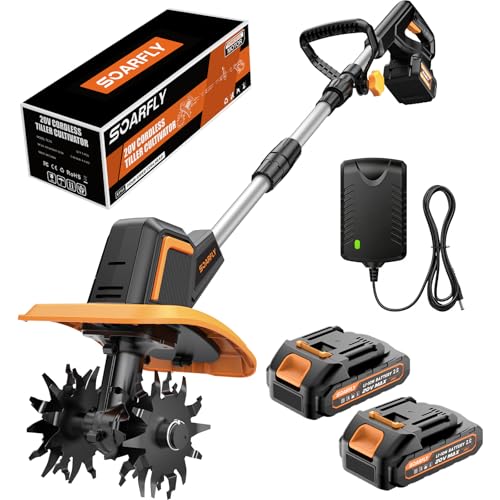
- Two 2.0Ah batteries included
- Up to 60 minutes of stated runtime
- Adjustable handles and cordless mobility
Best For: Raised beds and gardens without convenient outlets
Best Wide-Coverage Design
BILT HARD 14-Inch Electric Tiller

- 14-inch width and 8.7-inch depth
- 10-amp motor with steel tines
- Foldable handle and adjustable wheels
Best For: Small to medium beds needing broader coverage
Best Lightweight Pick

- 8.5-inch cultivating width
- 24 steel tines and 360 RPM
- Lightweight cordless design
Best For: Small beds and light soil cultivation
Best Runtime Flexibility
Brushless 9-Inch Cordless Tiller

- 9-inch width and 7-inch stated depth
- Brushless motor up to 360 RPM
- Two removable batteries included
Best For: Longer cordless sessions in beds and borders
Best Tine Coverage

- 48 heavy-duty steel tines
- 9-inch width and 360 RPM
- Two 2.0Ah batteries included
Best For: Thorough cultivation of small vegetable and flower plots
Best with Extra Features
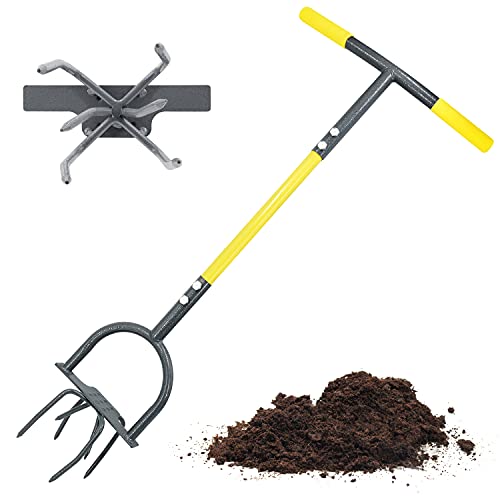
- Foot plate improves soil penetration
- Steel tines loosen and aerate beds
- Long handle helps reduce bending
Best For: Raised beds and small patches of compacted soil
Best Power and Coverage

- 360 RPM motor breaks compact soil
- Includes two 20V 4.0Ah batteries
- 9-inch width and 48 steel tines
Best For: Raised beds and small gardens needing faster powered tilling
Best Lightweight Cordless Pick

- Two 20V batteries and charger included
- 240 RPM steel tines loosen 4-inch soil
- Cordless design suits tight spaces
Best For: Small gardens and light soil cultivation
Best Corded Value – MZK 12-Inch Electric Tiller
For gardeners comparing garden tillers for small gardens, the MZK offers a useful balance of bed coverage and straightforward electric operation. Its 12-inch cutting width and 8-inch digging depth suit soil preparation, seed sowing, and routine cultivation without gas or oil.
Best For: Vegetable beds, small orchards, lawns, and gardeners who prefer a low-maintenance corded tool.
Pros:
- 12-inch width and 8-inch depth cover garden beds efficiently.
- 10-amp copper motor and 430 RPM support fast soil preparation.
- Rust-resistant steel blades and plug-in operation reduce maintenance.
Cons:
- The corded design requires access to an AC outlet and cord management.
- Its digging width may be more than needed for very narrow beds.
The MZK is a practical choice when consistent plug-in power matters more than cordless mobility. It is especially appealing for gardeners preparing several beds in one session.
Best Manual Option – Fiskars Ergo Garden Cultivator
For very small plots, pots, and targeted garden work, the Fiskars Ergo Cultivator is a compact manual alternative to powered garden tillers for small gardens. Its sharp aluminum tines are designed for loosening soil, aerating beds, and removing weeds with direct hand control.
Best For: Small garden beds, containers, detailed weeding, and gardeners who want a lightweight tool without batteries, fuel, or cords.
Pros:
- Cast-aluminum tines provide strength and rust resistance.
- Ergonomic handle improves control and helps reduce fatigue.
- At 8 ounces, it is easy to carry and store.
- Includes a lifetime warranty.
Cons:
- Manual operation requires more hands-on effort than a powered tiller.
- The narrow hand-tool format is not intended for preparing large areas.
The Fiskars is best viewed as a precision cultivator rather than a replacement for a motorized rototiller. It excels where careful work around individual plants matters most.
Best Cordless Flexibility – SOARFLY Battery Tiller
The SOARFLY is a convenient pick among garden tillers for small gardens when working freedom is a priority. Its cordless design includes two 2.0Ah batteries, while the adjustable handle and auxiliary grip help make cultivation more comfortable in raised beds, flower beds, and areas without nearby outlets.
Best For: Small gardens, raised beds, flower beds, and users who want portable operation without an extension cord.
Pros:
- Two batteries provide up to 60 minutes of stated continuous operation.
- Cordless design improves mobility around tight or outlet-free spaces.
- Adjustable handle height and auxiliary handle support user comfort.
- Dual safety system requires both an unlock button and start switch.
Cons:
- Runtime is limited by battery capacity and charging needs.
- Its 9-inch width covers less ground per pass than wider corded models.
Choose the SOARFLY when portability and maneuverability matter more than maximum coverage. The included spare battery can help maintain workflow during longer small-garden tasks.
Best Wide-Coverage Design – BILT HARD 14-Inch Electric Tiller
For gardeners who want to cover more soil in each pass, the BILT HARD combines a 14-inch cultivation width with an 8.7-inch depth. This corded electric model is still positioned for small to medium gardens, lawns, and flowerbeds, while its foldable handle and adjustable wheels make storage and transport easier.
Best For: Small to medium garden beds, lawn cultivation, and users who value wider coverage with portable storage features.
Pros:
- 14-inch width and 8.7-inch depth provide broad soil coverage.
- 10-amp motor and four rust-resistant steel tines support cultivation.
- Foldable handles simplify storage and transport.
- Two-position wheel adjustment helps with tilling and moving the unit.
Cons:
- The corded design limits use to areas within reach of a power source.
- Its wider body may be less convenient in exceptionally narrow beds.
The BILT HARD makes sense for users who want powered performance and fewer passes across the garden. Its folding handle and wheels add practical convenience for storage between seasons.
Best Lightweight Pick – MZK 20V Cordless Tiller
For gardeners comparing garden tillers for small gardens, the MZK 20V Cordless Tiller is a compact option for maintaining pre-tilled beds, loosening clumps, and aerating soil. Its 8.5-inch cultivating width and cordless design make it practical for maneuvering around smaller planting areas.
Best For: Small garden beds, light soil cultivation, lawn aeration, and gardeners who prioritize easy handling.
Pros:
- Cordless, battery-powered operation allows flexible movement without an extension cord.
- Twenty-four steel tines and an 8.5-inch width support efficient cultivation in compact spaces.
- Lightweight construction and an ergonomic handle can help reduce fatigue.
- A safety lock adds an extra measure of operating protection.
Cons:
- Designed for pre-tilled beds and cultivation rather than clearly stated heavy-duty ground breaking.
- Battery runtime and charging time are not specified in the supplied details.
The MZK is a sensible choice when maneuverability matters more than maximum digging capacity. Its narrow working width suits small beds, while the steel tines and 360 RPM operation provide useful support for routine soil preparation.
Best Runtime Flexibility – Brushless 9-Inch Cordless Tiller
Among garden tillers for small gardens, this brushless cordless model stands out for its 9-inch working width, 7-inch stated depth, and two removable batteries. It is built for routine bed preparation, aeration, weeding, and soil turning without the limits of a power cord.
Best For: Homeowners and urban gardeners who want cordless mobility, a brushless motor, and flexible battery use.
Pros:
- Brushless motor is described as offering higher power and longer motor life than conventional designs.
- Works up to 9 inches wide and 6 inches deep at speeds of up to 360 RPM.
- Two removable batteries support a work-and-charge rotation, with each rated for 50–100 minutes of use.
- Lightweight, balanced construction and an ergonomic handle are intended to reduce fatigue.
Cons:
- The supplied notes do not identify the battery voltage or provide a total combined runtime.
- Its stated digging capacity may be more suited to garden maintenance than major ground-breaking work.
This model offers a useful balance of reach and convenience for small beds and borders. The dual-battery setup is particularly appealing for longer sessions, while the compact form keeps it manageable in a residential garden.
Best Tine Coverage – TH4000 Cordless Garden Tiller
For gardeners seeking garden tillers for small gardens, the TH4000 combines a 9-inch tilling width with 48 steel tines and a 360 RPM motor. Its cordless format is intended for breaking up compact soil, mixing compost, aerating beds, and maintaining vegetable or flower plots.
Best For: Small planting areas where thorough tine coverage, cordless operation, and straightforward maintenance are priorities.
Pros:
- Forty-eight heavy-duty steel tines are designed for thorough soil turning and aeration.
- Two 2.0Ah lithium-ion batteries provide a stated total capacity of 4000mAh.
- Compact, lightweight construction is intended to simplify maneuvering, storage, and transport.
- A three-year manufacturer warranty is listed in the supplied details.
Cons:
- The supplied notes do not specify battery runtime or charging time.
- At 12.8 pounds, it may feel less effortless than lighter mini cultivators.
- The listed 9-inch width is suited to smaller areas but may require more passes across larger beds.
The TH4000 is a strong fit for gardeners who value dense tine coverage and a clearly stated warranty. Its 9-inch width keeps it appropriate for compact plots, while the 48-tine setup is designed to help with more thorough cultivation.
Best with Extra Features – Jardineer Hand Tiller
For gardeners comparing garden tillers for small gardens, the Jardineer Hand Tiller is a practical manual choice for loosening soil without batteries, fuel, or engine maintenance. Its foot plate and twist-style operation help apply body weight to compacted soil, while the long handle can reduce bending and twisting.
Best For: Raised beds, flower boxes, flower beds, and small patches of compacted or clay soil.
Pros:
- Anti-slip foot plate helps drive the tines into soil.
- Razor-sharp, powder-coated steel tines support loosening, weeding, mixing, and aeration.
- Long, curved handle is designed to reduce back strain.
- No fuel, charging, or motor maintenance required.
Cons:
- Manual operation requires physical effort.
- Dry clay or rocky soil should be softened or watered before use.
- Less suitable for preparing large areas quickly.
This is a focused tool for targeted soil work rather than broad-area tilling. Choose it if you value simple operation and control in small beds, especially where powered equipment would be excessive.
Best Power and Coverage – Cordless Tiller Cultivator
Among garden tillers for small gardens, this cordless cultivator stands out for powered soil preparation and a 9-inch tilling width. Its 360 RPM motor, 48 steel tines, and included batteries are suited to breaking up compact soil, mixing compost, and preparing planting beds with less manual labor.
Best For: Vegetable gardens, raised beds, narrow rows, and gardeners who want cordless power with no gas or oil.
Pros:
- 360 RPM high-torque motor tackles hard and compact soil.
- Two 20V 4.0Ah batteries support extended runtime.
- 48 rust-resistant steel tines provide deep soil loosening and aeration.
- Adjustable handle and front auxiliary handle improve control.
Cons:
- Battery-powered operation requires charging.
- Powered equipment may be more than needed for very small hand-tilling tasks.
- The supplied dimensions and weight details are inconsistent, so verify fit and handling before purchase.
With a 9-inch working width and stated 7-inch depth, this model offers useful reach while remaining cordless and relatively lightweight at 10.6 pounds. It is a strong fit when speed and reduced effort matter more than the simplicity of a manual tool.
Best Lightweight Cordless Pick – 20V Cordless Tiller
This 20V cordless model is a compact option for gardeners comparing garden tillers for small gardens. Its steel tines rotate at up to 240 RPM and loosen soil to a stated 4-inch depth, while the cordless design makes it easier to work around tight spots without managing a power cord.
Best For: Small gardens, lawn aeration, compacted patches, and gardeners seeking a lightweight cordless cultivator.
Pros:
- Two 20V batteries and a charger are included.
- Cordless operation allows movement through tight areas.
- Lightweight design and ergonomic grip help reduce handling strain.
- Steel tines rotate at up to 240 RPM and loosen soil to 4 inches.
Cons:
- Its stated 4-inch depth may be less suitable for deeper tilling.
- Includes smaller 2.0Ah batteries than some competing cordless models.
- The notes do not specify a tilling width.
This cultivator balances portability with basic powered soil preparation. It makes sense for routine work in confined garden areas, especially if you want swappable batteries and a simpler alternative to larger rototillers.
How We Picked the Best Garden Tillers for Small Gardens
We focused on tools suited to raised beds, narrow borders, small vegetable plots, and other spaces where maneuverability and storage matter more than maximum coverage. The lineup includes electric and battery-powered cultivators for faster soil preparation, along with manual tillers for precision work and areas where noise, cords, or charging are concerns.
We compared stated tine width, working depth, motor or battery configuration, handle design, portability, and the type of work each tool is best equipped to handle. Because soil conditions vary, specifications should be treated as a starting point: hard, root-filled, or clay-heavy ground may require several passes or preliminary loosening.
Quick Comparison
| Type | Best for | Main advantage | Trade-off |
|---|---|---|---|
| Corded electric | Established beds near an outlet | Consistent power without recharging | Requires cord management |
| Cordless electric | Flexible work across small gardens | Portable and easy to maneuver | Runtime depends on the battery |
| Manual cultivator | Small patches and spot work | Quiet, simple, and low maintenance | Requires more physical effort |
Key Buying Factors for Garden Tillers for Small Gardens
Width and Working Depth
A narrower tine span is easier to guide between plants and through raised beds. Wider models cover more ground per pass, but they may be less convenient in tight borders. A deeper setting helps break up compacted soil, while shallow cultivation is safer around established roots.
Power Source and Runtime
Corded models provide uninterrupted operation but need a suitable outdoor extension cord and a nearby outlet. Cordless models are easier to carry around the yard; check battery capacity, charging time, included batteries, and whether replacement packs are readily available. Manual options eliminate charging and maintenance concerns altogether.
Tines, Controls, and Handling
Steel tines are useful for routine cultivation and soil mixing, but no small tiller should be forced through buried rocks, thick roots, or extremely hard ground. Look for comfortable handles, a manageable weight, a safety switch, and a design that stores without taking up excessive space. Foldable handles can be especially useful in sheds or small garages.
Garden Conditions
Match the tool to the job. Loose soil, compost incorporation, and seasonal bed preparation are generally easier than breaking new ground. Remove large stones and weeds first, keep the machine level, and follow the manufacturer’s guidance for operating depth and protective equipment.
Who Should Buy Which Garden Tillers for Small Gardens?
Choose a corded electric tiller if your garden is close to power and you want steady performance for repeated bed preparation. A cordless tiller is the better fit for gardeners who value freedom of movement, work in multiple areas, or do not have a convenient outlet. Select a manual hand tiller for small raised beds, targeted aeration, light weeding, and quiet maintenance.
If you cultivate several beds each season, prioritize tine width, depth, and battery capacity. If you mainly refresh soil around existing plants, favor a lighter, narrower model that offers better control. In every case, the best Garden Tillers for Small Gardens are those that provide enough power for your soil without becoming difficult to transport, operate, or store.