Splitting firewood is faster and less physically demanding with the right machine. This roundup compares 10 log splitters across electric and gas-powered designs, from compact home-use models to towable high-tonnage machines.
Use the buying guide below to match splitting force, log capacity, power source, portability, and operating convenience to your workload.
Best 10 Log Splitters Picks for 2026
Heavy-Duty Towable Pick
BILT HARD 27-Ton Gas Log Splitter

- 27-ton force with a 209cc OHV engine
- Horizontal and vertical splitting positions
- Towable design with 16-inch DOT tires
Best For: Large rounds, demanding jobs, and mobile firewood processing
Compact Electric Choice
YARDMAX YS0650 6.5-Ton Electric Log Splitter

- 6.5 tons of ram force
- Handles logs up to 20.5 inches long
- Designed for logs up to 10 inches in diameter
Best For: Routine residential splitting with moderate-size logs
Maximum Power Option
BILT HARD 40-Ton Gas Log Splitter

- 40-ton force from a 389cc, 13 HP engine
- Horizontal and vertical full-beam operation
- Towable with 16-inch DOT-certified tires
Best For: Tough hardwoods, large rounds, and high-volume splitting
Ergonomic Electric Pick
7-Ton Electric Log Splitter with Foot Pedal
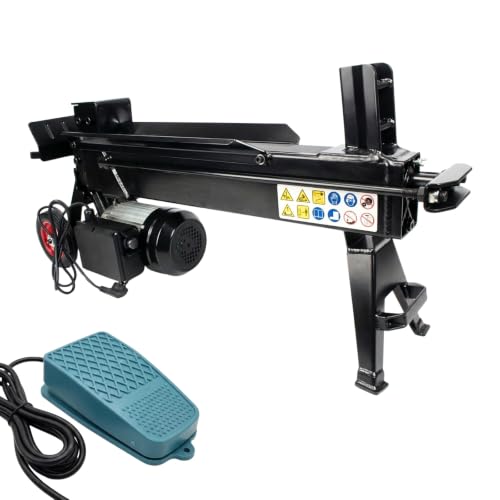
- 7-ton force with a 3HP motor
- Includes standard and four-way cross wedges
- 22-inch bed with automatic ram return
Best For: Comfort-focused home splitting and quick kindling production
High-Capacity Choice

- 33 tons of force with a 223cc OHV engine
- 14.3-second cycle and adjustable auto-return valve
- Heavy-duty H-beam design with protected oil filter
Best For: Large firewood workloads and buyers who prioritize maximum splitting force
Clean-Power Pick
BILT HARD 14-Ton Electric Splitter

- 14 tons of force for logs up to 20 inches long
- 15-amp, 1800W motor uses 120V household power
- Two-stage pump, wheels, and safety features support home use
Best For: Residential firewood preparation near a standard electrical outlet
Portable Gas Option
SuperHandy 25-Ton Portable Splitter

- 25 tons of force from a 7HP AlphaWorks engine
- 12-second cycle handles logs up to 24 inches in diameter
- Folding handle and 10-inch wheels improve portability
Best For: Portable firewood splitting and property or forestry work
Best Electric Pick

- 7-ton hydraulic force and 2,900 PSI pressure
- 17-second cycle with automatic ram return
- Compact, clean electric operation for home use
Best For: Residential firewood preparation near an electrical outlet
Best Mid-Range Gas Option

- 20-ton force from an EPA-certified 209cc engine
- 8.5-second cycle with automatic return
- Wide-angle wedge and flat-free tires
Best For: Frequent firewood splitting with portable gas-powered performance
Best High-Throughput Choice

- 18-ton force from a 7HP 209cc OHV engine
- Fast 7.5-second automatic-return cycle
- Handles logs up to 16 inches in diameter
Best For: High-volume outdoor splitting of larger, tougher firewood
Heavy-Duty Towable Pick – BILT HARD 27-Ton Gas Log Splitter
For demanding firewood work, this gas-powered log splitter combines substantial hydraulic force with towable mobility. Its horizontal and vertical positions, 24-inch log capacity, and 13-second cycle make it suited to processing large rounds efficiently.
Best For: Homeowners and landowners who need a portable splitter for large, heavy logs and recurring firewood production.
Pros:
- 27-ton-rated force from a 209cc OHV engine and two-stage pump.
- Horizontal or vertical operation helps reduce lifting for oversized rounds.
- 16-inch DOT tires, a 2-inch ball coupler, and safety chains support towing.
- Handles logs up to 24 inches long with a 13-second cycle.
Cons:
- Gas-powered operation requires fuel and routine engine maintenance.
- At 494 pounds, it is a substantial machine to move when not towing.
This is a strong all-around choice among log splitters when portability and high output matter more than compact storage. The vertical mode is particularly useful for heavy rounds that are difficult to lift.
Compact Electric Choice – YARDMAX YS0650 6.5-Ton Electric Log Splitter
The YARDMAX YS0650 is a straightforward electric option for lighter residential firewood work. Its 6.5-ton ram force is matched with a 20.5-inch length and 10-inch diameter capacity, making it appropriate for standard-sized logs.
Best For: Home users who want an electric log splitter for manageable logs up to 20.5 inches long and 10 inches in diameter.
Pros:
- Electric power avoids gasoline and engine-related maintenance.
- 6.5 tons of ram force for routine firewood splitting.
- Accepts logs up to 20.5 inches long and 10 inches in diameter.
- At 104.7 pounds, it is considerably lighter than the supplied gas models.
Cons:
- Lower splitting force than the gas-powered alternatives in this roundup.
- Its stated capacity is limited to 10-inch-diameter logs.
This YARDMAX keeps the setup relatively simple for typical home use. Choose it when your woodpile consists mainly of moderate-size logs and convenient electric operation is a priority.
Maximum Power Option – BILT HARD 40-Ton Gas Log Splitter
This 40-ton BILT HARD is built for high-volume, difficult splitting jobs. Its 389cc engine, full-beam design, horizontal/vertical operation, and 24-inch log capacity give it the capability to tackle large rounds while remaining towable to the worksite.
Best For: High-volume firewood production and users who regularly split tough hardwoods or extra-large rounds.
Pros:
- 40 tons of force from a 389cc, 13 HP OHV engine.
- Vertical mode helps handle heavy logs without lifting them onto the beam.
- Two-stage pump and 7-gallon hydraulic system support demanding use.
- 16-second cycle, 8-inch wedge, and capacity for logs up to 24 inches long.
Cons:
- Gas-powered operation involves fuel use and engine maintenance.
- Its full-beam, heavy-duty design is better suited to substantial work areas than compact storage.
Among these log splitters, this is the power-focused pick. It makes the most sense when 27 tons would not provide enough margin for your wood supply and towing equipment is already available.
Ergonomic Electric Pick – 7-Ton Electric Log Splitter with Foot Pedal
This 7-ton electric log splitter adds convenience features aimed at reducing bending and speeding up kindling work. It accepts logs up to 22 inches, includes standard and four-way wedges, and uses a foot pedal so one hand can operate the hydraulic lever.
Best For: Home users who want electric operation, an ergonomic control setup, and flexible firewood sizing.
Pros:
- 7-ton force from a 3HP motor and 28MPa hydraulic system.
- Foot-pedal activation is designed to reduce awkward bending.
- Includes a standard wedge and bonus four-way cross wedge.
- 22-inch bed, 18-second cycle, and automatic ram return support efficient work.
Cons:
- Its 7-ton output is intended for smaller-scale work than the 27- and 40-ton gas models.
- The supplied notes do not specify a log diameter limit or towing rating.
This is a practical choice when operator comfort and firewood versatility matter. The interchangeable wedges are useful for switching between regular splitting and faster kindling production without changing machines.
High-Capacity Choice – 33-Ton Full Boar Log Splitter
For demanding firewood work, this 33-ton log splitter combines a 223cc FULL BOAR OHV engine with a 14.3-second cycle time. Its heavy-duty H-beam frame and auto-return control valve are designed to keep large splitting jobs moving efficiently.
Best For: Homeowners and property owners processing substantial amounts of firewood who want high splitting force and a durable structural design.
Pros:
- 33 tons of splitting force from a 223cc OHV engine
- Fast 14.3-second cycle time
- Auto-return valve with adjustable detent saves time and effort
- Hydraulic oil filter is protected inside the reservoir
Cons:
- Heavy 473-pound build can be difficult to move
- Large 89.5-inch overall length requires substantial storage space
- Gas-powered operation requires engine maintenance
This is the strongest option in the group, prioritizing force, cycle speed, and heavy-duty construction over compact storage or lightweight handling.
Clean-Power Pick – BILT HARD 14-Ton Electric Splitter
This 14-ton electric log splitter is a practical choice for home firewood preparation, handling logs up to 20 inches long and 16 inches in diameter. Its 15-amp, 1800W motor and two-stage hydraulic pump run on standard 120V household power without gasoline or exhaust emissions.
Best For: Homeowners preparing seasonal firewood for fireplaces, wood stoves, cabins, garages, or backyard wood piles.
Pros:
- 14 tons of hydraulic splitting force
- Electric operation avoids gasoline, engine maintenance, and exhaust
- Two-stage pump provides smooth, consistent operation
- Two-hand operation, overload protection, and support leg add practical safety features
Cons:
- Requires access to 120V household power
- Limited to logs up to 20 inches long and 16 inches in diameter
- Less suitable for remote areas without convenient electrical access
With its compact 133.3-pound design and 10-inch transport wheels, this model favors convenient residential use and low-maintenance operation rather than maximum tonnage.
Portable Gas Option – SuperHandy 25-Ton Portable Splitter
The SuperHandy 25-ton log splitter pairs a 7HP AlphaWorks engine with a two-stage Bucher hydraulic gear pump. Its half-beam design, folding handle, and 10-inch polyurethane wheels make it easier to transport while providing a 12-second cycle for logs up to 20 inches long and 24 inches in diameter.
Best For: Users who need a portable gas-powered splitter for firewood splitting, property maintenance, or forestry-related work.
Pros:
- 25 tons of splitting force with a 7HP engine
- 12-second cycle time supports efficient operation
- Handles logs up to 24 inches in diameter
- Portable half-beam design with folding handle and polyurethane wheels
Cons:
- Hydraulic fluid is not included
- Gas-powered operation requires fuel and engine maintenance
- Half-beam construction may offer less substantial support than a full-beam design
This model strikes a middle ground between power and portability, making it appealing when you need more capability than a compact electric unit but easier transport than a heavier full-size splitter.
Best Electric Pick – 7-Ton Electric Log Splitter
For homeowners who want convenient log splitters without gasoline or exhaust, this 7-ton electric model offers a practical setup for routine firewood preparation. Its 15-amp motor, 17-second cycle, and two-hand safety control suit fireplaces, wood stoves, and backyard fire pits.
Best For: Residential users with access to an electrical outlet who need a compact splitter for logs up to 20.5 inches long and 10 inches in diameter.
Pros:
- 7-ton hydraulic force with 2,900 PSI splitting pressure
- Automatic ram return and 17-second cycle time
- No gasoline, fuel mixing, or exhaust fumes
- Compact design with transport wheels and a two-year warranty
Cons:
- Requires access to electrical power
- Limited to logs up to 20.5 inches long and 10 inches in diameter
- At 97 pounds, it may still require effort to reposition
This is a sensible choice for smaller residential workloads where quiet, clean electric operation and easy storage matter more than maximum splitting capacity.
Best Mid-Range Gas Option – 20-Ton Gas Log Splitter
This 20-ton gas log splitter is designed for users who want faster, more capable log splitters for regular firewood work. Its EPA-certified 209cc engine, two-stage pump, and 8.5-second cycle support efficient splitting, while the wide-angle wedge is designed to reduce lifting effort.
Best For: Homeowners handling larger or tougher firewood loads who need gas-powered operation and portable transport with flat-free tires.
Pros:
- 20 tons of splitting force from a 209cc EPA-certified engine
- 8.5-second cycle with automatic return control valve
- 10.5 GPM two-stage pump supports speed and fuel efficiency
- Wide-angle wedge and 10-inch flat-free tires improve usability
Cons:
- Hydraulic oil is not included
- Not towable
- Gas-powered operation requires outdoor use and engine maintenance
With its strong force and relatively quick cycle, this model fits users who need more throughput than a typical electric splitter while still valuing a compact integrated beam-and-tank design.
Best High-Throughput Choice – BILT HARD 18-Ton Gas Splitter
For high-volume firewood work, this BILT HARD model combines an 18-ton hydraulic system with a 7HP 209cc OHV engine and a fast 7.5-second cycle. These log splitters are intended for outdoor use and can handle logs up to 20 inches long and 16 inches in diameter.
Best For: Users who need portable, gas-powered splitting for tougher or larger logs and want operation without dependence on a power outlet.
Pros:
- 18 tons of force with a 7HP, 209cc OHV engine
- Fast 7.5-second cycle supports high-volume work
- Handles logs up to 20 inches long and 16 inches in diameter
- 10-inch heavy-duty tires and full-beam steel wedge aid portability
Cons:
- Engine oil and hydraulic fluid are not included
- Must be used outdoors in a well-ventilated area
- Gas-powered equipment requires fuel and engine maintenance
This is the strongest fit of the three for larger logs and demanding workloads, especially when the faster cycle and off-grid gas operation justify the added maintenance.
How We Picked These Log Splitters
We selected these models by comparing the specifications that most affect real-world firewood preparation: splitting force, engine or motor output, log capacity, cycle and return features, operating orientation, portability, and power requirements. The list includes electric splitters for home users and gas-powered options for larger rounds, frequent use, and locations without convenient access to an outlet.
Advertised tonnage is useful for comparison, but it is not the only measure of performance. Pump design, hydraulic flow, wedge shape, frame strength, and the size and species of wood being split all influence results.
Quick Comparison
| Best For | Recommended Type | Typical Strength | What to Prioritize |
|---|---|---|---|
| Occasional home firewood | 6.5- to 14-ton electric | Quiet, low-maintenance operation | Motor amperage, log capacity, portability |
| Regular residential use | 18- to 25-ton gas or stronger electric | More force and outdoor flexibility | Cycle time, auto-return, wheel design |
| Large or knotty rounds | 27- to 40-ton gas | High hydraulic force | Engine size, two-stage pump, vertical mode |
| High-volume processing | 30-ton-plus gas | Best suited to demanding workloads | Frame durability, towability, service access |
Key Buying Factors for Log Splitters
Power and Splitting Force
Electric models are convenient for typical residential logs and produce less noise, exhaust, and maintenance. Gas models generally deliver more force and work where extension cords are impractical. Choose additional tonnage if you regularly split hardwood, oversized rounds, or twisted and knotty pieces.
Log Size and Orientation
Check both maximum log length and diameter before buying. Horizontal operation is comfortable for manageable pieces, while vertical mode lets you roll heavy rounds into position instead of lifting them onto the beam.
Cycle Time and Auto-Return
A fast cycle matters when processing a large pile. An automatic return valve reduces repetitive lever movement and helps maintain a steady rhythm, although actual speed varies with load and hydraulic design.
Portability and Setup
Look for sturdy wheels, a practical handle, and a towable chassis if the splitter must move around a property. Confirm whether towing equipment, a vehicle-rated hitch, or assembly is required. Gas machines also need fuel, oil, ventilation, and seasonal storage.
Safety and Maintenance
Use level ground, keep hands away from the wedge and ram, and wear eye and hearing protection. Electric units need a correctly rated outlet and extension cord; gas units require routine engine and hydraulic maintenance. Always follow the manufacturer’s operating and towing instructions.
Who Should Buy Which Log Splitters?
Choose a compact electric splitter if you prepare modest amounts of firewood near a suitable outlet and value quiet, simple operation. A 14-ton electric model is a sensible middle ground for homeowners who want more capability without moving to a gas engine.
Choose an 18- to 25-ton gas splitter for regular outdoor use, larger rounds, or properties where cord placement is inconvenient. For demanding hardwood, heavy rounds, or high-volume work, a 27- to 40-ton gas model with horizontal and vertical operation offers the greatest flexibility and reserve power.