The best reciprocating saws for car repair help you cut exhaust components, sheet metal, brackets, body panels, and other difficult automotive materials with less effort than a hacksaw or grinder. The right model depends on where you work, how much clearance you have, and whether portability or sustained cutting power matters most.
Our roundup includes compact cordless saws, pneumatic air saws, and corded models so you can match the tool to your garage setup and repair workload.
Best 10 Reciprocating Saws for Car Repair Picks for 2026
Best Compact Pick
DEWALT ATOMIC One-Handed Reciprocating Saw

- Compact 12.5-inch design
- Brushless motor with variable speed
- LED, pivoting shoe, and tool-free blade release
Best For: One-handed cutting in tight automotive spaces
Best Pneumatic Pick

- 10,000 strokes per minute
- Cuts sheet metal, aluminum, plastic, and fiberglass
- Includes six blades and two hex wrenches
Best For: Shop-based automotive panel cutting with compressed air
Best Versatile Cordless Pick

- 1-1/8-inch stroke and up to 2,900 SPM
- Four-position keyless blade clamp
- Brushless motor, LED, and pivoting head
Best For: Versatile cordless automotive cutting
Best Kit Value
SEESII Cordless Reciprocating Saw Kit

- Two 4.0Ah batteries and fast charger included
- Six blades plus gloves and safety glasses
- Brushless motor with up to 3,500 RPM
Best For: A complete cordless starter kit for mixed cutting tasks
Heavy-Duty Corded Pick
DEWALT DWE305 12-Amp Reciprocating Saw

- 12-amp motor for heavy-duty cutting
- Four-position clamp supports flush cuts
- Variable speed up to 2,900 SPM
Best For: Extended garage cutting with outlet access
Best Compact Cordless Pick
Milwaukee M18 Hackzall 2625-20

- One-handed design for tight spaces
- Compact 4-pound cordless tool
- LED light and tool-free blade clamp
Best For: Confined automotive work and overhead cutting
Value Corded Pick
SKIL 9206-02 Variable-Speed Reciprocating Saw
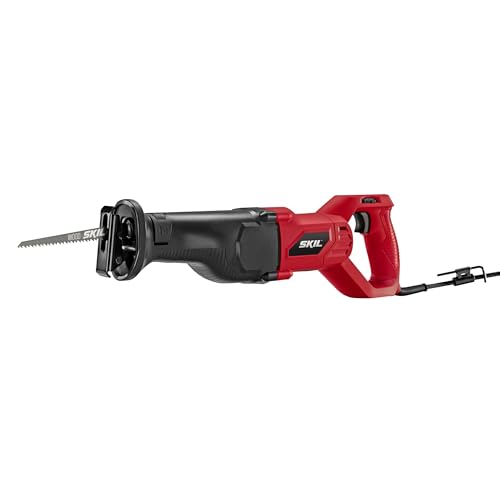
- 7.5-amp motor for general cutting
- Tool-less blade changes
- Pivoting foot and counterbalance improve control
Best For: Occasional garage work on a budget
Best Cordless Starter
BLACK+DECKER 20V MAX Reciprocating Saw

- Battery, charger, and blade included
- Tool-free blade change
- Variable-speed trigger and pivoting shoe
Best For: DIY users wanting a ready-to-use cordless kit
Best Pneumatic Auto-Body Pick

- 9,000 strokes per minute
- Six blades included
- Aluminum body for metal and exhaust work
Best For: Auto-body and exhaust work with an air compressor
Best DeWalt-Battery-Compatible Option
Cordless Reciprocating Saw for DeWalt 20V

- Compatible with listed DeWalt 20V batteries
- Up to 3,500 SPM
- LED light and tool-free blade changes
Best For: DeWalt 20V battery owners doing DIY repairs
Best Compact Pick – DEWALT ATOMIC One-Handed Reciprocating Saw
DEWALT ATOMIC 20V MAX* Reciprocating Saw, One-Handed, Cordless, Tool Only (DCS369B)
Check Price On AmazonFor car repair jobs where access is tight, the DEWALT ATOMIC is a compact cordless option among reciprocating saws for car repair. Its one-handed design, brushless motor, pivoting shoe, and built-in LED help with controlled cutting in cramped or poorly lit work areas.
Best For: One-handed cutting and tight automotive workspaces.
Pros:
- Compact 12.5-inch front-to-back design
- Brushless motor and variable-speed trigger
- Tool-free blade release and pivoting shoe
- LED work light for dark areas
Cons:
- Tool-only package does not include a battery or charger
- Supplied notes list wood as the surface recommendation
This is a practical choice when maneuverability matters more than maximum size or reach. Pair it with an appropriate metal-cutting blade for automotive applications.
Best Pneumatic Pick – Ingersoll Rand 429 Air Saw
The Ingersoll Rand 429 is a pneumatic choice for reciprocating saws for car repair, particularly when a shop already has an air supply. It is designed for flat and curved plastic, fiberglass, aluminum, sheet metal, and other surfaces, with a straight inline configuration for access.
Best For: Air-powered sheet-metal and panel cutting in a garage or professional shop.
Pros:
- Up to 10,000 strokes per minute
- Designed for metal, aluminum, fiberglass, and plastic
- Includes six high-speed steel blades and two hex wrenches
- Lock-out lever helps prevent accidental throttle operation
Cons:
- Requires a pneumatic air supply
- Limited to the included straight-edge air-saw format
With its metal-focused design, adjustable blade guide, and positive blade retainer, this model suits controlled panel work where compressed air is readily available.
Best Versatile Cordless Pick – DEWALT 20V MAX XR Compact Saw
The DEWALT 20V MAX XR is a capable cordless option for reciprocating saws for car repair when you need reach, control, and cutting power. Its 14.5-inch compact body, 1-1/8-inch stroke length, variable-speed trigger, pivoting head, and four-position blade clamp support varied repair tasks.
Best For: Frequent automotive cutting where cordless versatility and a longer stroke are useful.
Pros:
- Brushless motor with claimed extended runtime
- 1-1/8-inch stroke length and up to 2,900 SPM
- Four-position keyless blade clamp
- LED light and pivoting head improve access and visibility
Cons:
- Tool-only package does not include a battery or charger
- Heavier than the ATOMIC model at 5.4 pounds
This is the stronger all-around DEWALT choice for users who want a compact platform without giving up a full-size stroke length. Its metal surface recommendation also aligns well with automotive cutting tasks.
Best Kit Value – SEESII Cordless Reciprocating Saw Kit
The SEESII kit offers a ready-to-use cordless package for occasional reciprocating saws for car repair and general cutting. It includes two 4.0Ah batteries, a fast charger, six blades, and accessories, while its brushless motor, variable speed, LED, and tool-free blade change support practical workshop use.
Best For: Buyers who want batteries, blades, and basic safety accessories included.
Pros:
- Includes two 4.0Ah batteries and a fast charger
- Six blades cover wood, plastic, and metal applications
- Brushless motor delivers up to 3,500 RPM
- LED, safety lock, and tool-free blade changes
Cons:
- Supplied details list a 3.48 kg item weight, so it may not feel as light as advertised
- Blade and kit specifications are less established than the DEWALT options
The complete kit makes this an accessible choice for occasional repairs and mixed-material cutting. Confirm the included blade type is suitable for the specific automotive metal before starting work.
Heavy-Duty Corded Pick – DEWALT DWE305 12-Amp Reciprocating Saw
For demanding automotive cutting tasks, the DEWALT DWE305 is a powerful corded option among reciprocating saws for car repair. Its 12-amp motor, variable-speed trigger, and 1-1/8-inch stroke are suited to fast cutting when you have dependable access to a 120-volt outlet.
Best For: Heavy-duty garage work and extended cutting where corded power is practical.
Pros:
- 12-amp motor is designed for heavy-duty applications.
- Four-position blade clamp supports flush cutting and added versatility.
- Keyless lever-action clamp enables quick blade changes.
- Variable-speed trigger and up to 2,900 SPM provide cutting-speed control.
Cons:
- Corded design requires access to a power outlet.
- At 8 pounds, it may be less convenient for overhead or extended handheld work.
The DWE305 is a strong choice when cutting power and blade-position flexibility matter more than cordless convenience. Its four-position clamp is especially useful for flush-cutting situations around a vehicle.
Best Compact Cordless Pick – Milwaukee M18 Hackzall 2625-20
Milwaukee 2625-20 M18 18-Volt Lithium-Ion Cordless Hackzall Reciprocating Saw, Bare Tool
Check Price On AmazonThe Milwaukee 2625-20 Hackzall is a practical cordless choice among reciprocating saws for car repair, particularly when access and maneuverability are priorities. Its one-handed design, compact size, LED light, and M18 battery compatibility suit tight automotive work areas.
Best For: Tight spaces, overhead cuts, and mechanics who already use Milwaukee M18 batteries.
Pros:
- One-handed design provides control in confined conditions.
- Compact 4-pound body is easier to handle overhead.
- QUIK-LOK clamp allows tool-free blade changes.
- Built-in LED illuminates the work surface.
Cons:
- Bare-tool package does not include a battery or charger.
- Its 4-inch blade length may be less suitable for larger, deeper cuts.
Choose the Hackzall when portability and control are more important than maximum corded output. The M18 platform can be a major convenience, but new users should budget for the required battery and charger.
Value Corded Pick – SKIL 9206-02 Variable-Speed Reciprocating Saw
The SKIL 9206-02 offers a straightforward corded setup for shoppers comparing reciprocating saws for car repair. Its 7.5-amp motor, variable-speed operation, pivoting foot, and counterbalance provide useful control for general garage cutting tasks.
Best For: Budget-conscious DIYers who want a durable corded saw for occasional garage projects.
Pros:
- 7.5-amp motor provides substantial corded cutting power.
- Tool-less blade change simplifies blade replacement.
- Pivoting foot adds stability against tough materials.
- Counterbalance helps control vibration.
Cons:
- Corded operation limits mobility away from an outlet.
- At 7.1 pounds, it is not a particularly lightweight option.
The SKIL is a sensible general-purpose pick when you want useful stability features without moving to a cordless platform. Its metal gear housing and included wood-cutting blade add practicality, though automotive users should select a blade appropriate for the material being cut.
Best Cordless Starter – BLACK+DECKER 20V MAX Reciprocating Saw
For shoppers comparing reciprocating saws for car repair, the BLACK+DECKER BDCR20C offers a portable battery-powered setup with a 20V battery and charger included. Its variable-speed trigger, pivoting shoe, and tool-free blade change support controlled cutting and quick blade swaps, although the listed surface recommendation is wood.
Best For: DIY users who want a cordless saw kit for general cutting and occasional repair tasks.
Pros:
- Includes a 20V lithium-ion battery, charger, and reciprocating blade.
- Tool-free blade changes simplify setup.
- Pivoting shoe and variable-speed trigger provide added control.
- Backed by a two-year limited warranty.
Cons:
- Only one battery is included.
- The supplied specifications list wood as the surface recommendation.
- At 4.5 pounds, it may feel less nimble than lighter options.
This is a practical all-in-one choice when cordless convenience matters more than a specialized automotive cutting setup. Verify that the included or selected blade suits the material you plan to cut.
Best Pneumatic Auto-Body Pick – SDRTOP Air Reciprocating Saw
Among reciprocating saws for car repair, this pneumatic model is purpose-built for sheet metal, exhaust work, and auto-body applications. It reaches up to 9,000 strokes per minute, includes multiple 24T and 32T blades, and uses a compact aluminum-alloy body, but it requires an air compressor.
Best For: Auto-body and exhaust work where compressed air and compact metal-cutting performance are available.
Pros:
- Designed for automobile repair, installation, exhaust work, and sheet metal.
- Includes six blades, two hex keys, and two stainless-steel air nipples.
- Lightweight 1.5-pound aluminum-alloy body.
- Advertised low vibration and noise below 96 dB.
Cons:
- Requires a compressor and air connection.
- Its stated suitability is for sheet metal up to 1.5 mm thick.
- Blade changes require the included Allen wrench.
This is the most directly automotive-focused option in the group, especially for metal panels and exhaust tasks. It makes the most sense in a workshop already equipped with compressed air.
Best DeWalt-Battery-Compatible Option – Cordless Reciprocating Saw for DeWalt 20V
For reciprocating saws for car repair, this cordless tool offers up to 3,500 strokes per minute and compatibility with listed DeWalt 20V lithium-ion batteries. It includes four saw blades, a tool-free blade clamp, LED light, heat dissipation, and a safety lock, but the battery and charger are not included.
Best For: Existing DeWalt 20V battery owners who need a compact saw for wood, metal, PVC, and DIY repairs.
Pros:
- Compatible with several listed DeWalt 20V lithium-ion batteries.
- Tool-free blade changes are designed to take about five seconds.
- Includes LED lighting, safety lock, and heat-dissipation features.
- Rubberized ergonomic handle supports a secure grip.
Cons:
- Battery and charger are not included.
- Compatibility should be checked against the specific battery model.
- The supplied details identify the tool as a 150-watt model with a 3,500-SPM maximum.
This option can be a convenient way to expand an existing DeWalt 20V battery collection. Its included blades and multi-material capability make it flexible, while the tool-only format adds an upfront battery consideration.
How We Picked the Best Reciprocating Saws for Car Repair
We focused on features that matter during automotive repair rather than general demolition alone. The selection includes cordless models for mobility, corded saws for consistent shop power, and pneumatic air saws for bodywork and sheet-metal cutting. We also considered stroke control, tool size, blade-change convenience, vibration management, battery or air requirements, and compatibility with metal-cutting blades.
Because these tools serve different jobs, the list includes both full-size reciprocating saws and compact one-handed or Hackzall-style designs. Product specifications, intended use, included accessories, and overall practicality for home garages and professional shops informed the comparison.
Quick Comparison
- Best for compact access: DEWALT ATOMIC DCS369B and Milwaukee M18 Hackzall.
- Best for sustained cutting: DEWALT DWE305 and SKIL 9206-02 corded models.
- Best for professional air-tool setups: Ingersoll Rand 429 and the pneumatic auto-repair saw.
- Best for cordless value: BLACK+DECKER BDCR20C and SEESII kit.
- Best for DEWALT battery owners: DEWALT DCS367B or the compatible aftermarket cordless kit.
Key Buying Factors for Reciprocating Saws for Car Repair
Power Source and Runtime
Cordless saws are easiest to position under a vehicle or around a crowded engine bay, but batteries add weight and limit continuous runtime. Choose a bare tool only if you already own compatible batteries. Corded models are better for long cutting sessions near an outlet, while pneumatic tools require a compressor with sufficient airflow and hose capacity.
Size, Stroke, and Speed Control
A compact body and short nose help when cutting inside wheel wells, under dashboards, or near exhaust components. Higher strokes per minute can speed up thin metal and plastic cutting, but variable speed is more important for controlled starts and delicate materials. A longer stroke may remove material faster, although it can increase vibration and clearance requirements.
Blade and Handling Features
Use blades rated for the material: fine-tooth bi-metal blades for sheet metal and exhaust tubing, and more aggressive blades for thicker brackets or mixed materials. Tool-free blade clamps, pivoting shoes, LED lights, and adjustable heads can improve control. Because automotive cutting creates sharp edges and vibration, a comfortable grip and secure shoe are essential.
Who Should Buy Which Reciprocating Saws for Car Repair?
Home mechanics should generally choose a cordless model for flexibility or a corded saw for occasional driveway or garage projects. DIYers with an existing battery platform can save money and simplify charging by staying within that system. Bodywork specialists and professional shops may prefer pneumatic air saws for controlled sheet-metal cuts and frequent use. Users tackling heavy, continuous cuts should prioritize a full-size corded or high-output cordless saw, along with quality metal-cutting blades and appropriate protective equipment.