Starting seeds indoors does not require a greenhouse or a dedicated grow room. The right tray can turn a sunny windowsill, shelf, or countertop into a productive growing space while keeping seedlings organized and easy to monitor.
We compared 10 seed-starting kits and trays based on footprint, cell design, ventilation, transplanting convenience, reusability, and overall capacity. Use the guide below to match the format to your available space and growing plans.
Best 10 Seed Starting Trays for Small Spaces Picks for 2026
Best Versatile Set
Gardzen 40-Cell Seed Starter Trays

- Five trays with 40 cells each
- Adjustable vents and clear domes
- Drainage holes for easier watering
Best For: Starting large batches of seedlings in an organized setup
Best for Easy Transplanting
Lift-Out 9-Cell Seed Starter Tray

- Nine removable cells with handles
- Bottom tray enables bottom watering
- Compact design for small batches
Best For: Careful transplanting of a limited number of seedlings
Best Reusable Tray

- Flexible silicone cells pop out seedlings
- Drainage and watering channels are built in
- Rows are labeled for plant identification
Best For: Reusable indoor seed starting with simpler transplanting
Best with Grow Light

- Six trays with humidity domes and bases
- Full-spectrum LED grow light included
- Elevated design with drainage holes
Best For: Indoor seed starting where natural light is limited
Compact Bulk Starter
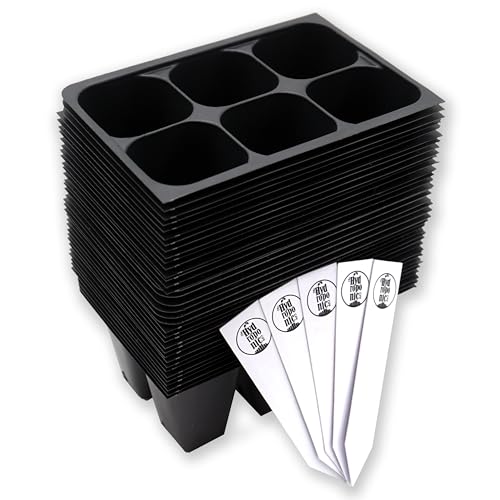
- 216 cells in 36 compact trays
- Deep cells support root development
- Includes plant stakes and drainage slits
Best For: Large-volume seed starting in small batches
Stackable Greenhouse Kit
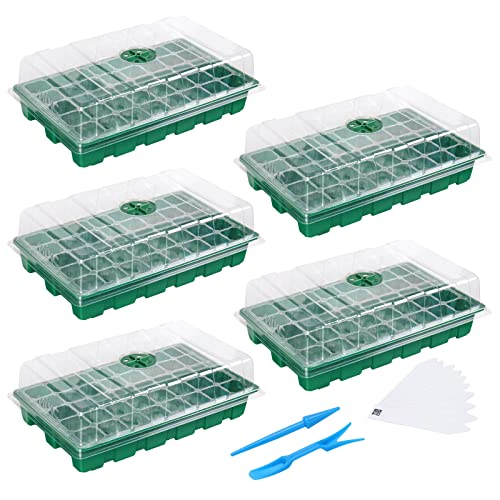
- Five trays provide 200 cells
- Adjustable vents control humidity
- Bottom trays stack to save space
Best For: Small-seed propagation with humidity management
Ventilated Large-Seed Kit

- Five 12-cell trays with bases
- Adjustable vents and clear domes
- Cells suit larger seeds
Best For: Compact indoor starts for tomatoes, peppers, and similar seeds
Best No-Drain Tray Set
Reusable 20 x 10-Inch Growing Trays

- Ten reusable plastic trays
- No-drain design for drip trays or hydroponics
- Fits 20 x 10-inch growing pads
Best For: Indoor growers using soil, hydroponic pads, microgreens, or wheatgrass
Best Complete Mini Greenhouse Kit

- Ten trays with domes and watertight bases
- Adjustable vents for humidity control
- Drainage holes and plant labels included
Best For: Gardeners starting many seedlings indoors or outdoors
Best Simple Pick
Separate-Cell Starter Tray Kit

- Seven trays with 84 separate cells
- Heightened lids with adjustable vents
- Clear, reusable design with drainage holes
Best For: Growers who want easy individual seedling inspection and transplanting
Best Versatile Set – Gardzen 40-Cell Seed Starter Trays
For gardeners comparing seed starting trays for small spaces, this five-pack offers substantial capacity without requiring a collection of separate containers. Each tray has 40 cells, a clear humidity dome, drainage, and adjustable vents for managing growing conditions indoors or in a greenhouse.
Best For: Starting many seedlings, propagating cuttings, and gardeners who want reusable kits with humidity control.
Pros:
- Five 40-cell trays provide room for up to 200 seedlings.
- Adjustable dome vents help regulate airflow.
- Drainage holes and clear domes support easier watering and monitoring.
- Attached stickers help create a tighter dome-and-base fit.
Cons:
- The five-pack may provide more capacity than needed for very small batches.
- Each tray measures 14.5 inches wide, so shelf space should be checked first.
This is a strong high-capacity option when small-space gardening still calls for many cells. Its ventilation and visibility features make daily seedling care straightforward.
Best for Easy Transplanting – Lift-Out 9-Cell Seed Starter Tray
Among seed starting trays for small spaces, this compact nine-cell design stands out for its lift-out system. Individual handles raise each soil plug, while the bottom tray supports bottom watering and keeps the modular cells together on a tabletop.
Best For: Small-batch herbs, flowers, vegetables, and gardeners who prioritize gentle, controlled transplanting.
Pros:
- Lift-out handles help remove seedlings without squeezing the full tray.
- Individual cells can be removed for filling, cleaning, or separate care.
- Five drainage openings per cell support bottom watering and excess-water return.
- Compact tabletop footprint suits limited growing areas.
Cons:
- Nine cells offer less starting capacity than multi-tray kits.
- It does not include a humidity dome or grow light.
The modular layout is particularly practical when each seedling needs individual attention. It is a focused choice for gardeners starting a few varieties rather than a full season’s worth of plants.
Best Reusable Tray – Burpee SuperSeed 36-Cell Tray
This reusable 36-cell tray is a practical pick for seed starting trays for small spaces when easy transplanting matters. Its flexible silicone cells pop out around seedlings, while molded drainage features and a contained watering tray simplify routine indoor care.
Best For: Indoor gardeners growing vegetables, herbs, and flowers who want a reusable tray with flexible transplanting cells.
Pros:
- Flexible food-grade silicone cells are designed to pop seedlings out gently.
- Corner slots improve drainage and soil aeration.
- Deep watering channels help direct excess water away from cells.
- Alphanumeric rows and the included Plant-o-Gram support seedling identification.
Cons:
- A humidity dome and grow light are not listed among the included components.
- The 36-cell tray may need more room than a compact nine-cell system.
For repeated indoor growing, the reusable silicone construction and flexible cells offer useful long-term convenience. The watering tray and labeling system also reduce some of the organizational work of starting multiple varieties.
Best with Grow Light – MIXC Elevated 12-Cell Kit
For seed starting trays for small spaces in low-light rooms, this six-pack combines compact trays with elevated humidity domes and full-spectrum LED grow lights. Side grips make the inner trays easier to lift, while cell drainage helps manage moisture during indoor growing.
Best For: Indoor gardeners who need supplemental light, humidity control, and several compact 12-cell kits.
Pros:
- Includes six trays, six domes, six watertight bases, and a full-spectrum LED grow light setup.
- Elevated domes provide added room for developing seedlings.
- Side grips help with lifting and transplanting.
- Drainage holes help reduce overwatering risk.
Cons:
- Each tray holds 12 cells, so it is less suited to very large batches.
- The supplied dimensions and component details should be checked to confirm available shelf space and lighting arrangement.
This kit is the most complete choice in the group for indoor setups where natural light is limited. Its combination of lighting, domes, and watertight bases reduces the need to assemble a separate propagation system.
Compact Bulk Starter – 216-Cell Seedling Trays
For gardeners seeking seed starting trays for small spaces, this set uses 36 compact six-cell trays instead of full-size flats. The 1.5-inch-wide, 2.25-inch-deep cells support root development while drainage slits help manage excess moisture.
Best For: Growing a large variety of flowers, herbs, succulents, and vegetables in small batches.
Pros:
- Includes 216 cells across 36 small trays.
- Deep cells are designed to encourage healthy root development.
- Drainage slits help prevent overwatering.
- Reusable trays include five plant stakes for labeling.
Cons:
- Does not include humidity domes or bottom trays.
- Six-cell sections may require more individual handling than a larger flat.
This is a practical choice when planting capacity matters but storage and tabletop space are limited. Its modular six-cell format also makes it convenient to separate smaller groups of seedlings.
Stackable Greenhouse Kit – 200-Cell Mini Propagator
This MIXC kit is a strong option for seed starting trays for small spaces because its bottom trays can be stacked before germination. Transparent cells and adjustable humidity vents make it easier to monitor seedlings while controlling their growing environment.
Best For: Indoor or outdoor gardeners starting small seeds who want humidity control and space-saving storage.
Pros:
- Five trays provide 200 cells total.
- Clear domes allow observation without disturbing plants.
- Adjustable vents help regulate temperature and humidity.
- Includes bottom trays, garden tools, and plant labels.
Cons:
- The 1.5-by-1.5-by-2-inch cells are intended for small seeds.
- The complete assembled kit is about 14.6 by 9.84 by 5.1 inches, so it still needs a suitable growing surface.
With reusable stacking capability and included humidity domes, this kit prioritizes organized propagation in constrained areas. Check the cell dimensions before buying if you plan to start larger seeds.
Ventilated Large-Seed Kit – 60-Cell Humidity Trays
For seed starting trays for small spaces that can handle larger seeds, this five-pack combines 12-cell trays, bases, and humidity domes. Clear plastic supports plant monitoring, while adjustable vents help manage the germination environment.
Best For: Starting tomatoes, peppers, potatoes, and eggplants in compact, humidity-controlled trays.
Pros:
- Provides 60 cells across five 12-cell trays.
- 1.5-inch-square cells accommodate larger seeds.
- Includes bases, clear domes, adjustable vents, and labels.
- Designed for use with a heat mat and resistant to high and low temperatures.
Cons:
- Offers fewer total cells than the other multi-tray options.
- The kit is intended for indoor use according to the supplied details.
This kit is suited to gardeners who prefer fewer, roomier cells and closer control over humidity. Its complete dome-and-base setup makes it a convenient choice for compact indoor propagation.
Best No-Drain Tray Set – Reusable 20 x 10-Inch Growing Trays
These 10 lightweight plastic trays are a practical option for seed starting trays for small spaces when you need a simple, reusable container for seedlings, microgreens, wheatgrass, or hydroponic setups. Their no-drain design also lets them function as drip trays, though you will need to manage watering carefully.
Best For: Indoor growers who want a multipurpose tray set for hydroponic growing, microgreens, wheatgrass, or seed starting.
Pros:
- Ten reusable trays provide a substantial supply for succession planting or multiple growing projects.
- No-drain-hole design works as a drip tray and suits hydroponic applications.
- Accommodates 20 x 10-inch growing pads and mats.
- Lightweight plastic construction is easy to move and reuse.
Cons:
- No drainage holes can increase the risk of overwatering in soil-based seed starting.
- The approximately 21 x 11-inch top footprint may require more shelf or counter space than compact cell trays.
This set is best viewed as a flexible growing surface rather than a complete propagation kit. Choose it if you already have a preferred growing medium or hydroponic pad and want several reusable trays.
Best Complete Mini Greenhouse Kit – 120-Cell Seed Starter Trays
The MIXC kit is a convenient choice for seed starting trays for small spaces because each tray combines cells, a watertight base, a humidity dome, and labels. Adjustable vents let you regulate the covered environment, while drainage holes help excess water escape.
Best For: Indoor or outdoor gardeners who want an all-in-one, reusable setup for starting many seedlings in a controlled mini-greenhouse environment.
Pros:
- Includes 10 trays, 10 watertight base trays, 10 humidity domes, and 10 plant labels.
- Adjustable vents provide control over humidity and temperature.
- Bottom drainage holes help reduce standing water and root-rot risk.
- Lightweight plastic trays are reusable and portable.
Cons:
- The included cells are small, so seedlings may need timely transplanting as they grow.
- Using all 10 covered trays may require more room than a single compact propagation unit.
For gardeners who want organized, covered propagation without assembling separate components, this is the most complete option in the group. Its combination of ventilation, drainage, and watertight bases makes it versatile for repeated seed-starting cycles.
Best Simple Pick – Separate-Cell Starter Tray Kit
This seven-pack is a strong choice for seed starting trays for small spaces when easy transplanting matters. Its 84 separate cells can be moved individually, and the clear construction, drainage holes, heightened lids, and adjustable circular vents support convenient seedling monitoring.
Best For: Indoor gardeners who want to separate, inspect, classify, and transplant individual seedlings with less disturbance to neighboring plants.
Pros:
- Separate cells make it easier to remove or move individual seedlings.
- Seven trays provide 84 cells in total for organized propagation.
- Clear material helps you observe soil and root conditions.
- Heightened humidity lids and adjustable circular vents accommodate different growth stages.
Cons:
- Seven trays may occupy more total space than a single small starter tray.
- The kit includes tools and tags, but the supplied notes do not specify the tool types or cell dimensions.
The standout feature is the individual-cell design, which is useful when seedlings mature at different rates or need to be moved selectively. It is a practical, reusable kit for growers who prioritize visibility and transplant flexibility.
How We Picked the Best Seed Starting Trays for Small Spaces
We focused on the features that matter most when every inch counts: compact dimensions, stackable or modular designs, useful cell counts, drainage, humidity control, and ease of transplanting. We also considered whether a kit includes practical extras such as bases, vented domes, plant labels, lift-out handles, or integrated lighting.
Because indoor growing conditions vary, the selection includes both small-capacity trays for a few varieties and larger multi-pack options for gardeners starting many seedlings. Reusable construction and easy cleanup were also prioritized over flimsy, single-season materials.
Quick Comparison
| Best For | Recommended Format | Why It Helps in Small Spaces |
|---|---|---|
| Beginners | Multi-cell kit with dome and base | Provides a simple, contained setup |
| Limited countertop room | Small 12- or 36-cell tray | Uses less surface area and soil |
| Many seedlings | Multi-pack or high-capacity kit | Maximizes output across shelves or windowsills |
| Delicate germination | Vented humidity dome | Helps retain moisture while allowing airflow |
| Frequent transplanting | Lift-out or reusable cell design | Reduces root disturbance and cleanup time |
Key Buying Factors for Seed Starting Trays for Small Spaces
Footprint and Cell Count
Measure the shelf, windowsill, or grow-light area before choosing a tray. More cells are not always better: tightly packed seedlings can become difficult to water and thin. Smaller trays are often easier to rotate toward the light and move away from drafts.
Cell Size and Transplant Timing
Small cells conserve mix and work well for crops that move outdoors quickly. Larger cells hold more moisture and support seedlings longer, but they occupy more room. Choose a cell size that matches how long you expect plants to remain indoors.
Drainage, Bases, and Domes
Drain holes are essential for preventing waterlogged roots, while a fitted base catches runoff and protects furniture. A vented dome can improve germination consistency, but seedlings need gradual ventilation as they grow to reduce excess humidity and disease risk.
Durability and Handling
Reusable trays are worthwhile if they resist cracking during washing and transplanting. Lift-out handles, flexible cells, and sturdy bases are especially useful when trays must be moved frequently in a compact growing area.
Lighting and Airflow
A tray with a grow light can simplify setup, but check its height adjustment and coverage before buying. Any tray placed under a separate light should leave enough clearance for seedlings and allow airflow around the dome.
Who Should Buy Which Seed Starting Trays for Small Spaces?
Choose a compact 12- or 36-cell kit if you are starting a modest number of herbs, flowers, or vegetables on a windowsill. Gardeners who want a self-contained setup should look for a base, vented dome, and clear cell layout. If transplanting is your main concern, select a design with lift-out handles or flexible reusable cells.
For serious spring planting, multi-pack kits provide better value and let you stagger sowing dates without crowding one tray. High-capacity sets suit growers with shelving or multiple lighted levels, while a kit that includes a grow light is most useful when natural window light is unreliable. Whichever format you choose, prioritize drainage, manageable dimensions, and enough vertical clearance for healthy seedlings.