The right spade makes transplanting faster and gentler on plant roots. A narrow, sharp blade can open precise planting holes, cut through compact soil, and work around established plants without disturbing the entire bed.
These 10 transplanting garden spades include compact hand trowels, perennial spades, drain spades, and longer-handled digging tools. Use the guide below to match blade shape, handle length, materials, and comfort to your soil and planting tasks.
Best 10 Transplanting Garden Spades Picks for 2026
Precision Multi-Use Pick

- Six-inch blade with depth gauge
- Serrated edges cut roots and weeds
- Ergonomic grip with lifetime guarantee
Best For: Precise transplanting and detailed bed maintenance
Edging and Trenching Power

- 43-inch full-size digging design
- Sawtooth steel head tackles hard soil
- Wide foot platforms improve leverage
Best For: Edging, trenching, and larger transplanting jobs
Lightweight Everyday Choice

- Rust-resistant cast-aluminum head
- Ergonomic grip for control and comfort
- Full lifetime warranty included
Best For: Pots, herb gardens, and routine planting
Durable Full-Size Border Spade
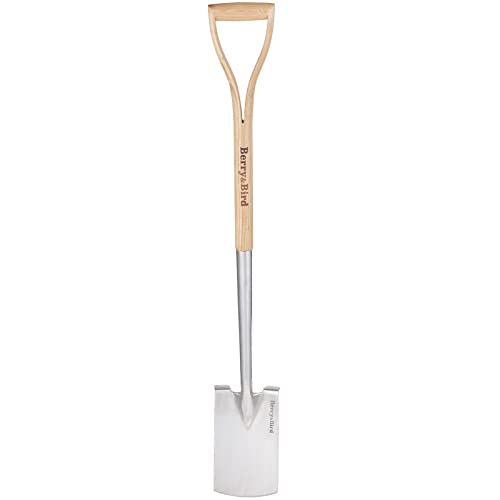
- 41-inch stainless steel digging spade
- Sharp blade for hard soil and edging
- Ash handle with ergonomic D-grip
Best For: Deep transplanting and demanding garden work
Heavy-Duty Precision Pick

- Sharp 2.5 mm V-shaped carbon steel blade
- Seamless welded build for demanding use
- Designed for precise digging and weeding
Best For: Hand transplanting, planting, and tough weeding
Deep-Root Transplanting Choice

- Long narrow blade for tight, deep digging
- Fiberglass handle resists weather-related damage
- Footrest and sharp blade tackle tough soil
Best For: Shrub transplanting, trenching, and deep planting
Best for Comfort

- Rust-resistant polished stainless steel blade
- Lightweight 11-inch size for easy handling
- Wooden handle helps reduce hand fatigue
Best For: Seedlings, containers, raised beds, and everyday planting
Best Measured Hand Trowel

- Built-in depth markings up to 4 inches
- Sturdy aluminum alloy blade
- Lightweight ergonomic hand tool
Best For: Bulbs, seedlings, containers, and precise small-space planting
Best Heavy-Duty Trenching Spade
Berry&Bird Stainless Steel Shovel

- 42.5-inch handle for standing work
- Sharp stainless steel blade cuts roots and turf
- Suitable for trenching, edging, and transplanting
Best For: Large beds, hard soil, root cutting, and demanding garden work
Best Perennial Plant Spade
Berry&Bird Root-Cutting Trowel

- Pointed blade for perennial root cutting
- 21.6-inch length suits raised beds
- Stainless steel blade with ash wood handle
Best For: Controlled perennial transplanting, border plants, and raised beds
Precision Multi-Use Pick – Garden Weasel Transplanter
For gardeners comparing transplanting garden spades for detailed planting work, the Garden Weasel Multi-Use Transplanter combines a six-inch blade with a depth gauge and serrated edges. It is suited to creating planting holes, cutting roots, cultivating soil, and removing weeds in beds and containers.
Best For: Precise transplanting, bulb planting, root cutting, and weeding.
Pros:
- Depth gauge supports consistent planting depth.
- Serrated edges help cut roots and loosen compacted soil.
- Ergonomic comfort-grip handle with hang hole.
- Backed by a lifetime guarantee against defects in materials and workmanship.
Cons:
- Its hand-tool format is less suitable for deep digging or large areas.
- The product details list the blade material as aluminIron, which is less specific than the material descriptions for some competing tools.
This is a focused transplanting tool rather than a full-size spade. Choose it when precision and multi-use bed maintenance matter more than leverage for heavy excavation.
Edging and Trenching Power – Sharp Blade Garden Spade
Among transplanting garden spades, this 43-inch flat spade is the better fit for gardeners who want full-length leverage. Its sawtooth steel head is designed to penetrate hard soil, while the wide foot platforms help transfer force when digging, edging, transplanting, and cutting turf.
Best For: Edging, trenches, hard soil, transplanting, and larger garden jobs.
Pros:
- Sawtooth blade helps break hardened soil and clods.
- Wide foot platforms provide secure footing and added digging force.
- Fiberglass handle and PP grip offer a full-size ergonomic design.
- Useful for trenches, holes, compost, thick turf, and furrows.
Cons:
- At 4.5 pounds, it is substantially heavier than hand trowels.
- The long shaft is less convenient for container work and close planting.
This spade makes sense when transplanting is part of broader digging and edging work. Its length and sawtooth blade favor leverage and penetration over lightweight precision.
Lightweight Everyday Choice – Fiskars Ergo Trowel
For smaller planting tasks, the Fiskars Ergo Trowel is a compact alternative to full-size transplanting garden spades. Its cast-aluminum head is designed for digging in tough soil, turning soil, and making planting holes, while the ergonomic handle helps improve control and reduce fatigue.
Best For: Herb gardens, pots, garden beds, and routine planting.
Pros:
- Heavy-duty cast-aluminum head resists rust.
- Polished head is designed to stay sharp through heavy use.
- Ergonomic grip supports control and comfort.
- Includes a hang hole and full lifetime warranty.
Cons:
- The short hand-trowel format offers less leverage than a long-handled spade.
- It is better suited to individual holes and light excavation than large-scale digging.
This is a practical choice for gardeners who want a durable, lightweight hand tool. It handles everyday planting efficiently but is not intended to replace a full-size border or digging spade.
Durable Full-Size Border Spade – Berry&Bird Stainless Spade
Gardeners seeking transplanting garden spades for deeper digging may prefer this 41-inch stainless steel border spade. The sharp blade is built for slicing into difficult soil, while the ash wood handle and D-shaped grip support a comfortable, controlled stance for transplanting, edging, trenching, and turf cutting.
Best For: Deep transplanting, hard soil, edging, trenches, and multipurpose outdoor work.
Pros:
- Stainless steel blade is designed for strength, durability, and easier cleaning.
- Sharp edge supports digging, cutting, lifting, and edging.
- FSC-certified ash handle is described as strong and lightweight.
- Includes a two-year warranty and 30-day free replacement.
Cons:
- Its full-size construction is less precise for small pots and delicate seedlings.
- It is a heavier-duty tool than needed for simple hand planting.
This border spade is a strong all-around option when transplanting is combined with demanding soil work. Its full-length design provides reach and leverage, while the stainless steel construction supports repeated outdoor use.
Heavy-Duty Precision Pick – Carbon Steel Hand Trowel
For gardeners who need transplanting garden spades in a compact format, the Kemaier hand trowel combines a sharp V-shaped carbon steel blade with a reinforced welded construction. Its 6.3-inch blade is suited to precise digging, planting, and weeding, including tougher clay and rocky soil.
Best For: Serious home gardeners and landscapers who want a durable hand tool for precision transplanting, digging, and weeding.
Pros:
- 2.5 mm carbon steel blade is designed to retain its sharp edge and can be resharpened.
- V-shaped blade supports precise digging and root-area work.
- Seamless hand-welded construction helps resist snapping or cracking under pressure.
- Ergonomic grip and carbon steel construction are suited to demanding regular use.
Cons:
- Its hand-trowel size is less suitable for deep or large-scale transplanting.
- The heavy-duty steel construction may feel more substantial than a lightweight plastic tool.
This is a focused choice when transplanting calls for control and durability rather than a full-length shovel. The sharp blade and solid welded build make it especially practical for working around established plants and compacted soil.
Deep-Root Transplanting Choice – 45-Inch Drain Spade
Among transplanting garden spades, the KOLEIYA drain spade stands out for deep, narrow digging. Its 45-inch fiberglass-handled design and long sharp blade are made for transplanting shrubs, digging around roots, and working in tight spaces or challenging soil.
Best For: Gardeners who need extended reach for deep transplanting, trenching, planting, and cutting through compact soil or roots.
Pros:
- Long, narrow blade supports precise digging in confined areas.
- 45-inch fiberglass shaft resists rust, rot, and breakage.
- High-carbon steel blade and footrest help apply pressure in clay, rocky soil, and dense roots.
- D-grip and balanced design support controlled handling during extended jobs.
Cons:
- The full-size design is less convenient for container work or small indoor planting.
- Its narrow blade is optimized for precision digging rather than moving large amounts of soil.
This shovel is the more capable option for deep-rooted plants and outdoor transplanting where reach matters. The narrow profile helps limit unnecessary soil disruption while the reinforced construction handles demanding ground conditions.
Best for Comfort – Stainless Steel Hand Trowel
For routine transplanting garden spades work, the WORKPRO 11-inch hand trowel offers a compact and easy-to-store design. Its polished stainless steel blade is built to resist rust and bending, while the wooden handle supports comfortable digging, weeding, and soil mixing.
Best For: Home gardeners who want a lightweight hand trowel for transplanting seedlings, container gardening, and everyday soil tasks.
Pros:
- Polished stainless steel resists rust and corrosion.
- Lightweight 11-inch format is easy to handle and store.
- Wooden handle provides a comfortable grip and supports wrist movement.
- Suitable for digging, weeding, composting, soil mixing, and transplanting.
Cons:
- The compact hand-tool format is not intended for deep or heavy-duty digging.
- It offers less reach than a full-length transplanting spade.
This WORKPRO is a practical choice for smaller planting jobs where low weight and easy storage are priorities. It is particularly convenient for containers, raised beds, and routine seedling transplanting.
Best Measured Hand Trowel – Aluminum Planting Shovel
For small planting jobs, this compact option is one of the more convenient transplanting garden spades because its blade includes depth markings. The aluminum alloy construction, ergonomic grip, and lightweight design make it practical for bulbs, seedlings, container work, and general bed maintenance.
Best For: Gardeners who want a lightweight hand trowel with built-in inch and centimeter depth measurements.
Pros:
- Depth markings measure planting holes up to 4 inches without a separate tool.
- Thickened aluminum alloy is designed to resist bending and cut through hard turf.
- Ergonomic TPR handle helps reduce hand and wrist fatigue.
- Compact design and hanging hole make storage and transport easy.
Cons:
- Its hand-trowel size is better suited to bulbs, seedlings, and small areas than large transplanting jobs.
- The supplied details do not indicate a full-length handle for standing work.
This is a sensible pick when planting depth matters and you prefer a small, portable tool. Choose a longer spade instead for deep digging or moving larger plants.
Best Heavy-Duty Trenching Spade – Berry&Bird Stainless Steel Shovel
This full-size Berry&Bird model is built for demanding transplanting garden spades work, particularly when roots, turf, or compacted soil are involved. Its 42.5-inch length, pointed stainless steel blade, and hardwood handle provide reach and leverage for digging, edging, trenching, and moving plants.
Best For: Gardeners who need a durable long-handled spade for deep digging, root cutting, edging, and larger transplanting tasks.
Pros:
- Pointed stainless steel blade is designed to cut into hard soil and thick roots.
- Long 42.5-inch design provides reach and leverage for standing work.
- Ergonomic ash hardwood handle is intended to reduce hand fatigue and maintain grip.
- Polished stainless steel helps reduce dirt adhesion and simplifies cleaning.
Cons:
- At 1.6 kg, it is considerably heavier than a hand trowel.
- The full-size design may be less convenient for containers, raised beds, or close-up work.
For challenging soil and larger plants, this is the strongest all-purpose option in the group. Its extra weight is a reasonable trade-off for reach, leverage, and a robust stainless steel blade.
Best Perennial Plant Spade – Berry&Bird Root-Cutting Trowel
This 21.6-inch perennial spade fills the gap between a small trowel and a full-size shovel. Its pointed stainless steel blade is made for slicing through roots, while the shorter handle offers control when transplanting, weeding, or working around border plants and raised beds.
Best For: Gardeners transplanting perennials or working in raised beds who want added reach without using a full-length shovel.
Pros:
- Pointed blade is designed to cut perennial roots while helping preserve the plant.
- Polished stainless steel resists rust, corrosion, bending, and deformation.
- 21.6-inch length supports controlled digging while kneeling or working in raised beds.
- T-shaped ash wood handle promotes wrist movement and helps reduce fatigue.
Cons:
- Its 1.23-pound weight and shorter length provide less leverage than a full-size spade.
- The specialized shape may be less suitable for moving large plants or digging very deep holes.
This is a well-balanced choice for precise perennial work and tight planting areas. It offers more reach than a hand trowel while remaining easier to control than a long trenching shovel.
How We Picked the Best Transplanting Garden Spades
We focused on tools suited to transplanting rather than general-purpose shoveling alone. The selection covers narrow hand trowels for seedlings and containers, perennial spades for root division, and full-length drain or border spades for deeper planting and bed preparation. We also considered blade sharpness, working length, construction materials, handle design, grip comfort, and the control needed around existing plants.
Because gardens vary widely, no single spade is ideal for every job. Compact tools favor precision and portability, while long-handled models provide more leverage and reduce bending during repeated digging.
Quick Comparison
| Tool type | Best suited to | Main advantage |
|---|---|---|
| Hand trowel | Containers, seedlings, shallow planting | Close control and easy handling |
| Perennial spade | Root cutting and dividing plants | Narrow, sharp blade for precision |
| Border spade | Raised beds and tight planting areas | Longer reach with controlled digging |
| Drain spade | Deep holes, trenches, and heavy soil | Extra leverage and depth |
Key Buying Factors for Transplanting Garden Spades
Blade Shape and Size
Choose a narrow blade when working between established plants or setting individual transplants. A pointed or sharpened edge helps penetrate firm soil, while a flatter blade is useful for edging and clean-sided holes. Check the blade width against the size of your root balls and planting spaces.
Length and Leverage
Hand tools offer the best precision but require kneeling or bending. A 20- to 25-inch perennial or border spade gives additional reach without feeling unwieldy. Full-length models are better for deep holes and hard ground, especially when leverage matters more than delicate control.
Materials and Durability
Stainless steel resists rust and is easy to clean, while carbon steel can provide a tough, rigid working edge when maintained properly. Inspect the connection between blade and shaft, since this joint receives substantial force in compact soil.
Grip and Ergonomics
Look for a comfortable handle, secure grip, and a shaft length that fits your height and planting style. D-grips can improve control on long-handled shovels, while cushioned handles are helpful during extended hand-tool use.
Who Should Buy Which Transplanting Garden Spades?
Choose a hand trowel for balcony containers, vegetable seedlings, and routine shallow planting. Choose a perennial spade if you frequently divide mature plants or cut through dense roots. Choose a border spade for raised beds, edging, and transplanting where a full shovel feels too large. Choose a drain spade for deep planting, narrow trenches, clay soil, or jobs requiring extra leverage.
Before buying, consider how often you transplant, how hard your soil is, and whether you prioritize precision or reduced bending. Keeping one compact tool and one longer-handled spade can cover most planting and bed-maintenance tasks.