Weeds growing through gravel paths can be difficult to remove without disturbing the surrounding stones. The right tool helps you target roots, cracks, and shallow runners while reducing bending and hand strain.
We compared 10 weed pullers for gravel paths, including stand-up claw weeders, narrow crack tools, and versatile hoe-and-rake designs. Use the guide below to match the tool style to your path, weed types, and preferred working position.
Best 10 Weed Pullers for Gravel Paths Picks for 2026
Best Overall
Adjustable 2-in-1 Hoe and Weed Puller

- Rake-and-hoe head for loosening and pulling
- Adjusts up to 61 inches
- Tempered spring steel construction
Best For: Gravel driveways and larger weeding areas
Best Handheld Tine Tool

- Six tines grip weeds in cracks and edges
- Stainless steel resists rust
- Includes a front scraper
Best For: Targeted handheld weeding around path gaps
Best for Tight Cracks

- L-shaped blade reaches narrow spaces
- Serrated edge lifts weeds and grass
- Lightweight stainless steel construction
Best For: Cracks, seams, and borders beside gravel paths
Best Adjustable Alternative
NICOFPHY 2-in-1 Long-Handle Weeder

- Six-tine rake plus sharp hoe edge
- Adjusts from 16 to 60 inches
- Cast steel head for daily garden use
Best For: Mixed path, lawn, patio, and garden maintenance
Best for Easy Setup
Fiskars Deluxe Stand-Up Weed Puller

- Four serrated claws grip roots
- 39-inch upright design reduces bending
- Best in moist to moderately firm soil
Best For: Targeted root removal with less kneeling
Most Versatile

- Dual-sided rake and hoe head
- 60-inch handle supports upright use
- Also loosens soil and shapes beds
Best For: Multipurpose garden maintenance
Best Portable Pick
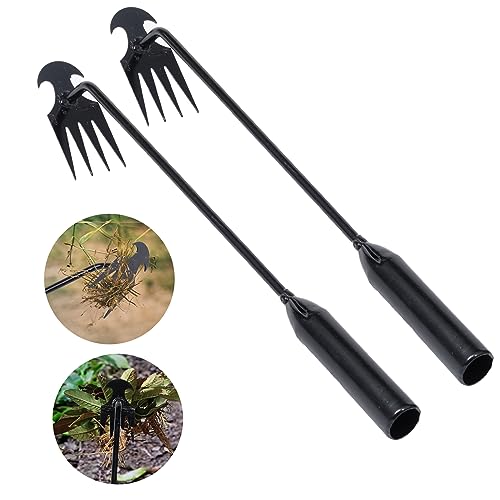
- Lightweight 16-inch portable design
- Four manganese-steel tines loosen soil
- Two tools included per package
Best For: Targeted close-up weeding and light garden work
Classic Root Puller
Grampa's Stand-Up Bamboo Weeder

- 45-inch handle reduces bending and kneeling
- Four-claw head removes taproot weeds
- Best in softened, non-rocky soil
Best For: Targeted weeding in softened soil beside gravel paths
Pathway Specialist
Adjustable 2-in-1 Crack Weeder

- Rake and serrated blade in one tool
- Adjusts from 33 to 61 inches
- Designed for gaps, cracks, and soil
Best For: Gravel-path edges, paver gaps, and driveway cracks
Lightweight Stand-Up Pick

- 39-inch handle enables upright work
- Foot pedal adds pushing leverage
- Not recommended for gravelly soil
Best For: Moist soil along gravel-path borders
Best Overall – Adjustable 2-in-1 Hoe and Weed Puller
For shoppers comparing weed pullers for gravel paths, this 2-in-1 tool offers both a narrow rake and a trapezoid hoe for loosening soil, grabbing weeds, and working along driveways. Its adjustable handle also supports upright weeding or shorter, more controlled use.
Best For: Gravel driveways, larger areas, and gardeners who want an adjustable stand-up tool.
Pros:
- Dual head combines a 3.75-inch rake with a sharp hoe.
- Tempered spring steel is designed to resist bending and snapping.
- Four-section handle adjusts up to 61 inches for different tasks.
- Sand-textured finish and 304 stainless steel hardware support outdoor use.
Cons:
- At 3.08 pounds, it is heavier than compact hand tools.
- The broad hoe-and-rake design may be less precise in very narrow gaps.
This is the most versatile option of the group, especially when gravel paths include both open stretches and compacted, weedy edges. Choose it if standing operation and multiple head functions matter more than minimal weight.
Best Handheld Tine Tool – WORKPRO 6-Tine Weed Puller
Among weed pullers for gravel paths, the WORKPRO 6-tine model is a compact choice for targeting weeds in cracks, edges, and dense patches. Its tines grip plants while the scraper helps clear moss and buildup from hard surfaces.
Best For: Precise handheld work around path edges, cracks, patios, and small gravel sections.
Pros:
- Six tines provide broad coverage and a firm grip.
- Stainless steel construction resists rust and impact damage.
- Front scraper adds functionality for moss and hard-surface buildup.
- Soft PP+TPR handle is designed to reduce hand fatigue.
Cons:
- The 15-inch length requires kneeling or bending for ground-level work.
- Handheld coverage is slower for long paths than a long-handle tool.
This tool is a practical pick when weeds are concentrated in individual gaps rather than spread across a large path. Its small size provides better control than stand-up models, while the scraper expands its usefulness around hard surfaces.
Best for Tight Cracks – WORKPRO 12-Inch Crack Weeder
For narrow gravel-path edges and adjoining hard surfaces, this crack weeder uses an L-shaped blade to reach tight spaces from multiple angles. The serrated section and sharp edge are suited to lifting weeds, grass, and organic buildup from cracks.
Best For: Sidewalk cracks, driveway joints, patio edges, and narrow spaces beside gravel paths.
Pros:
- L-shaped blade penetrates compacted soil in confined areas.
- Serrated and sharp sections help cut and lift weeds.
- Polished stainless steel resists rust and corrosion.
- Lightweight 12-inch design includes a soft grip and hanging hole.
Cons:
- Its narrow, handheld design is not intended for broad path coverage.
- Working at ground level may require bending or kneeling.
This is the most specialized option for weeds rooted in seams and crevices. It complements a larger weeding tool well, particularly where gravel meets concrete, paving, or garden borders.
Best Adjustable Alternative – NICOFPHY 2-in-1 Long-Handle Weeder
This NICOFPHY tool combines six sharp tines with a hoe edge, making it a useful option for weed pullers for gravel paths where you need both root removal and surface loosening. The handle adjusts from 16 to 60 inches for upright or close-range work.
Best For: Gardeners who want a long-handled rake-and-hoe tool for paths, lawns, patios, and garden areas.
Pros:
- Six tines are designed to penetrate soil and pull weeds.
- Hoe edge can remove wider weed areas and level soil.
- Adjustable screw-lock handle spans 16 to 60 inches.
- Cast steel head is described as durable, rust-resistant, and easy to rinse.
Cons:
- The sharp hoe requires careful handling around children and pets.
- Metal grip details may provide less cushioning than a soft-grip handheld tool.
- Assembly is required using the included pole sections.
This model offers strong flexibility for mixed maintenance jobs, from gravel-path weeds to small soil-loosening tasks. It is a good fit if you value adjustable reach and a larger dual-purpose head, but it is less specialized for very narrow cracks.
Best for Easy Setup – Fiskars Deluxe Stand-Up Weed Puller
For gardeners comparing weed pullers for gravel paths, the Fiskars Deluxe Stand-Up Weed Puller offers a comfortable upright design and four serrated stainless steel claws that grip weeds and roots. It works best in moist or recently watered ground, so lightly water compacted soil 30–60 minutes before use.
Best For: Removing rooted weeds while standing, especially in soft to moderately firm soil.
Pros:
- Long 39-inch handle helps reduce bending and kneeling.
- Four serrated stainless steel claws grip roots for permanent removal.
- Offset handle, viewing window, foot pedal, and easy-eject design support comfortable use.
- Steel construction and a full lifetime warranty add durability.
Cons:
- Performance is limited in hard, compacted, or clay-heavy soil without pre-watering.
- Designed primarily for individual weed extraction rather than broad-area clearing.
This is the strongest fit when you want a purpose-built, back-friendly puller for targeted weeds. Its claw mechanism and easy-eject feature make repeated removal more convenient than kneeling and hand-pulling.
Most Versatile – Long-Handle Hoe and Weed Rake
Among weed pullers for gravel paths, this long-handle tool is a flexible option for loosening soil and cutting weeds around garden areas. Its dual-sided head combines a six-tine rake with a triangular hoe, although the supplied instructions recommend removing rocks and other obstacles before use.
Best For: Gardeners who want one upright tool for weeding, cultivating, loosening soil, and shaping beds.
Pros:
- 60-inch stainless steel handle supports upright work.
- Six-tine rake helps pierce and loosen soil around weeds.
- Triangular hoe can cut stubborn roots, break up soil, and dig small ditches.
- Small head is useful around flowers and in tighter garden spaces.
Cons:
- It loosens or cuts weeds rather than using dedicated claws for guaranteed full-root extraction.
- Rocks, roots, and unstable ground can interfere with safe, effective operation.
- Requires cleaning and proper storage after use.
This is a practical multipurpose choice for beds and cultivated areas where you need more than simple weed pulling. For gravel paths, clear obstructions first and use it cautiously because the head is designed for soil contact and cultivation tasks.
Best Portable Pick – Four-Tine Garden Weed Puller
For smaller jobs involving weed pullers for gravel paths, this lightweight four-tine weeder is easy to carry and suited to targeted digging and prying. Its 16-inch length provides more reach than hand pulling, while the manganese-steel tines are designed to loosen soil around common weeds.
Best For: Portable, close-up weed removal and light garden work around flowers, vegetables, and containers.
Pros:
- Lightweight 16-inch design is easy to handle and transport.
- Four tines can loosen soil and pry weeds such as thistles and dandelions.
- Anti-rust manganese steel offers hardness and impact resistance.
- Package includes two weed puller tools.
Cons:
- At 16 inches, it does not provide the same upright, back-saving reach as a long-handle tool.
- Its four-tine design may be less suitable for very compacted ground.
- It is intended for targeted work rather than clearing large areas quickly.
This two-piece set makes sense when portability and close control matter more than maximum reach. It can help loosen and pry individual weeds, but expect to bend or work closer to the ground than with a stand-up puller.
Classic Root Puller – Grampa's Stand-Up Bamboo Weeder
For weed pullers for gravel paths, Grampa’s Weeder is a simple, back-saving option for targeted root removal. Its four-claw head is designed for softer soil, especially after watering or rain, rather than hard, rocky ground.
Best For: Removing taproot weeds from softened soil beside paths, lawns, and garden areas without bending or kneeling.
Pros:
- 45-inch bamboo handle helps reduce bending and kneeling.
- Four-claw alloy-steel head pulls weeds and roots such as dandelions and crabgrass.
- Lifetime guarantee and durable, chemical-free design.
Cons:
- May not perform well on hard clay or rocky surfaces.
- Works best when soil is softened by watering or rainfall.
This is a straightforward choice when weeds are rooted in soil bordering a gravel path, but it is not the strongest match for weeds growing directly in compacted gravel.
Pathway Specialist – Adjustable 2-in-1 Crack Weeder
Among weed pullers for gravel paths, this adjustable tool is especially practical for edges, paver gaps, and sidewalk-style joints. It combines a six-pronged rake for soil with a narrow serrated blade for slicing and scraping surface weeds from cracks.
Best For: Maintaining gravel-path edges, driveway cracks, patio gaps, and standard-width joints while working at a comfortable height.
Pros:
- Two-in-one head handles soil weeding plus crack and joint cleanup.
- Handle adjusts to 33, 47, or 61 inches to reduce bending.
- Stainless-steel handle and hardened carbon-steel head are designed for repeated outdoor use.
- Detachable design simplifies storage.
Cons:
- Very narrow or compacted joints may need moistening or a separate crack weeder.
- Deep-rooted crevice weeds may require loosening before pulling.
The combination of a rake and serrated blade makes this the most versatile option here for mixed path maintenance, particularly where weeds appear in both soil and narrow gaps.
Lightweight Stand-Up Pick – Walensee Three-Claw Weeder
The Walensee is a lightweight stand-up puller for weeds rooted in garden soil and landscaped areas near gravel paths. Its three pointed claws and foot pedal help grip roots, but the manufacturer advises against using it in gravelly soil.
Best For: Pulling rooted weeds from moist soil along path borders, lawns, and garden beds without kneeling.
Pros:
- 39-inch handle supports upright weeding.
- Foot pedal helps drive the three steel claws into soil.
- Stainless-steel construction weighs only 16 ounces.
- Designed to remove entire roots of weeds such as dandelion, thistle, and plantain.
Cons:
- Not recommended for gravelly soil.
- Requires moistening the ground before use.
- Less suited to weeds in narrow path cracks because it lacks a dedicated blade.
This is a convenient border-weeding tool when the gravel path is adjacent to workable soil, but choose a crack-focused design for weeds embedded directly between stones or joints.
How We Picked the Best Weed Pullers for Gravel Paths
We focused on practical features that matter when clearing weeds from loose stone and hard-packed walkways: reach, root-gripping ability, head shape, handle adjustability, construction materials, and ease of use. The selection includes both upright tools for larger areas and compact hand tools for cracks, edges, and precise removal.
Because gravel can shift under pressure, we favored designs that let you pull or scrape weeds without requiring excessive digging. Stainless steel heads, serrated claws, narrow blades, and spring-steel rakes can each be useful, depending on whether the weeds are rooted deeply or growing in tight joints.
Quick Comparison
- Best for deep taproots: Stand-up weed pullers with multiple serrated claws.
- Best for cracks: Narrow stainless steel crevice weeders.
- Best for mixed cleanup: Two-in-one hoe and rake tools.
- Best for portability: Compact handheld weed pullers.
- Best for less bending: Long-handle and stand-up designs.
Key Buying Factors for Weed Pullers for Gravel Paths
Tool Style
Stand-up claw weeders are useful for isolated weeds with substantial roots, especially when you want to work while standing. Crack weeders use a slim blade or hook to reach between stones and along edging. Rake and hoe combinations are more versatile for loosening shallow weeds and gathering debris, but they may disturb loose gravel more than a targeted puller.
Head Design and Durability
Look for serrated claws or pointed tines when weeds have firm, deep roots. Stainless steel resists corrosion and is easy to clean after use. Spring-steel heads can provide useful flexibility for scraping and raking, while a heavier fixed head may feel more controlled in compacted soil.
Handle Length and Comfort
A long handle reduces bending and is especially helpful for paths, driveways, and larger borders. Check whether the handle is adjustable, detachable, or securely joined to the head. For small repairs or detailed work, a handheld tool offers better control and easier storage.
Gravel Disturbance
Choose a narrow, targeted head when preserving the existing gravel surface is important. Use broad rakes only when you also need to redistribute stones or clear loose plant material. Pull weeds after rain or light watering when the ground is softer, but avoid working when the path is muddy.
Who Should Buy Which Weed Pullers for Gravel Paths?
Choose a stand-up claw model if you regularly remove dandelions or other deep-rooted weeds and want to minimize kneeling. Select a crack weeder for narrow gaps between pavers, gravel edges, and driveway joints. A two-in-one hoe and rake is better for buyers who want one tool for loosening, pulling, and light surface cleanup.
For occasional spot treatment, a compact handheld weeder is inexpensive, easy to store, and precise. If several people will use the tool, prioritize an adjustable long handle and a comfortable grip. Whichever design you choose, remove weeds before they seed and clean the head after use to maintain performance.