Deep-rooted weeds such as dandelions and clump-forming grasses are difficult to remove with a basic hoe or shallow hand rake. The right weed puller grips below the crown and helps extract more of the taproot with less bending and digging.
This roundup compares 10 manual weed pullers, from stand-up claw tools with foot platforms to compact knives and lever-style hand weeders. Use the guide below to match the tool’s design, reach, and construction to your soil and garden layout.
Best 10 Weed Pullers for Taproots Picks for 2026
Classic Stand-Up Pick
Grampa's Original Bamboo Weeder

- 45-inch handle avoids bending and kneeling
- Four-claw steel head targets roots
- Works best in soft, watered soil
Best For: Upright removal of taproot weeds in lawns and gardens
Precision Crack Weeder
Keyfit Stainless Steel Root Knife

- 8-inch serrated blade reaches deep roots
- Designed for cracks and edging
- 13-inch hand tool with rubber grip
Best For: Targeted taproot removal in sidewalks, driveways, and tight spaces
Lever-Action Hand Tool

- Forked tip targets complete roots
- Lever base assists with prying
- Stainless steel and wood construction
Best For: Controlled garden-bed weeding where a handheld tool is preferred
Ergonomic Stand-Up Choice

- Four serrated claws grip roots
- Foot pedal and 39-inch handle reduce bending
- Easy-eject and viewing-window features
Best For: Frequent upright lawn weeding in moist or moderately firm soil
Versatile Hoe-Rake Puller
2-in-1 Garden Hoe and Weed Puller

- Combines a sharp hoe with a root-gripping rake
- Adjusts up to 61 inches for upright weeding
- Tempered spring steel head resists bending
Best For: Mixed garden tasks and compacted soil
Compact Claw Puller
39-Inch Stand-Up 3-Claw Weeder
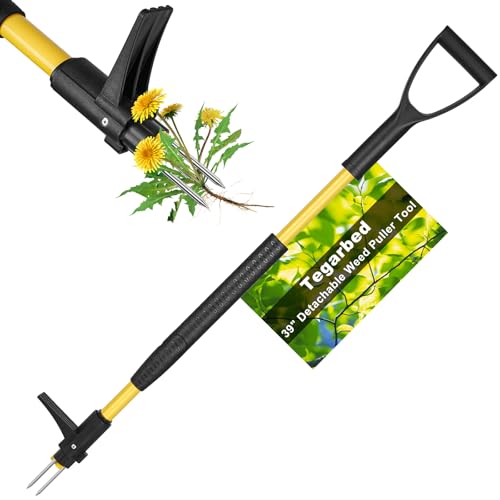
- Three 65Mn steel claws grip deep-rooted weeds
- Twist-to-pull action targets complete root removal
- Detachable design stores compactly
Best For: Damp-soil removal of dandelions and thistles
Proven Root Grabber
Walensee Stand-Up 3-Claw Weed Puller

- Pointed 2.75-inch claws target taproots
- Foot pedal helps drive claws into soil
- Lightweight stainless steel stand-up design
Best For: Routine lawn and garden weed removal
Classic Root Removal
Grampa's Steel Stand-Up Weeder

- Heavy-duty all-steel, four-claw design
- 45-inch handle supports standing weeding
- Best in softer soil for common taproot weeds
Best For: Durable, chemical-free lawn weeding without bending or kneeling
Comfort-Focused Pick
Bamboo-Handle Stand-Up Weed Puller

- 44-inch stick supports upright weeding
- Real bamboo handle for a natural grip
- Designed with seniors and comfort in mind
Best For: Low-strain weeding for seniors and casual gardeners
Adjustable Heavy-Duty Pick

- Adjusts from 32 to 46 inches
- Reinforced steel for difficult soil
- Serrated claws target deep taproots
Best For: Versatile root removal across lawns, gravel, and compacted soil
Classic Stand-Up Pick – Grampa's Original Bamboo Weeder
For gardeners comparing weed pullers for taproots, Grampa’s Weeder offers a simple stand-up approach that removes weeds without bending, kneeling, or pulling by hand. Its four-claw steel head is designed to grip roots in softer soil, particularly after watering or rainfall.
Best For: Removing dandelions, crabgrass, and other taproot weeds from soft or recently watered soil while protecting your back and knees.
Pros:
- 45-inch bamboo handle enables upright weeding.
- Four-claw steel head pulls weeds and roots without chemicals.
- Lifetime guarantee from a family-owned American company.
Cons:
- May be less effective in hard clay or rocky soil.
- Proper technique and soil preparation are important.
This is a straightforward choice for routine lawn and garden weeding when the ground is soft. Watering first can improve claw penetration and root extraction.
Precision Crack Weeder – Keyfit Stainless Steel Root Knife
Among weed pullers for taproots, the Keyfit Tools weeding knife is a compact option for digging into deep-rooted weeds and narrow spaces. Its 8-inch double-sided serrated stainless steel blade is suited to driveway, sidewalk, and garden-edge work.
Best For: Removing dandelions, crabgrass, and clump-forming weeds from sidewalk cracks, driveway edges, and other tight areas.
Pros:
- Long, serrated stainless steel blade reaches deep roots.
- Compact 13-inch design provides close control.
- Rubber handle resists rotting and offers an ergonomic grip.
- Supports chemical-free weeding.
Cons:
- Requires bending or kneeling because it is a hand tool.
- Does not provide the leverage of a long-handled weeder.
Choose this tool when precision matters more than standing comfort. The narrow blade makes it practical for cracks and edging where larger claw weeders may not fit.
Lever-Action Hand Tool – Grampa's Hand Weeder
For gardeners who want weed pullers for taproots in a handheld format, Grampa’s Hand Weeder uses a lever base and forked tip to pry out deep-rooted weeds. The tool is intended for thistles, dandelions, crabgrass, chickweed, and similar garden weeds.
Best For: Hand weeding around garden beds when you want lever-assisted root removal and a compact tool that is easy to carry.
Pros:
- Lever design helps reduce effort while prying weeds.
- V-shaped forked tip is designed to reach the whole root.
- Polished stainless steel is durable and rust-resistant.
- Wood handle provides a natural, shock-absorbing grip.
Cons:
- Requires bending or kneeling during use.
- Works especially well after rain or watering, so dry soil may be less convenient.
This is a practical middle ground between a basic hand fork and a stand-up puller. Its lever action makes it useful for focused garden-bed work, especially when the soil has been softened.
Ergonomic Stand-Up Choice – Fiskars Deluxe Weed Puller
Fiskars’ Deluxe Weed Puller is a strong option among weed pullers for taproots when you want upright operation with added ergonomic features. Its four serrated stainless steel claws grip roots, while the foot pedal, viewing window, offset handle, and easy-eject design support quicker removal.
Best For: Removing dandelions, thistles, and similar invasive weeds from lawns and gardens without repeated bending or kneeling.
Pros:
- 39-inch handle and foot pedal support stand-up use.
- Four serrated stainless steel claws grip roots for permanent removal.
- Viewing window helps you see the weed during placement.
- Easy-eject design and offset handle improve convenience and comfort.
Cons:
- Performs best in soft to moderately firm, moist soil.
- Hard, compacted, or clay-heavy soil should be watered before use.
This model suits frequent lawn maintenance when comfort and efficient root extraction are priorities. Preparing hard soil 30–60 minutes before use can help the claws penetrate cleanly.
Versatile Hoe-Rake Puller – 2-in-1 Garden Hoe and Weed Puller
For gardeners comparing weed pullers for taproots, this 2-in-1 tool combines a sharp trapezoid hoe with a 3.75-inch rake. Its teeth can loosen soil and grip stubborn weeds, while the adjustable handle supports upright weeding or more precise work in beds and containers.
Best For: Gardeners who want one adaptable tool for taproots, compacted soil, flower beds, lawns, and gravel driveways.
Pros:
- Dual hoe-and-rake head helps loosen soil and pull weeds from the roots.
- Tempered spring steel is designed to resist bending and snapping during levering.
- Four-section handle adjusts up to 61 inches for standing use or shorter tasks.
- Sand-textured heads and 304 stainless steel hardware support outdoor durability.
Cons:
- The 3.08-pound design may feel heavier than a simple hand weeder.
- The rake-and-hoe format may require more precise positioning around closely spaced plants.
This is the most versatile option of the three, especially when taproot removal also requires breaking up hard soil. The adjustable length makes it practical for both upright maintenance and smaller planting areas.
Compact Claw Puller – 39-Inch Stand-Up 3-Claw Weeder
This stand-up weeder is a focused choice among weed pullers for taproots. Its three sharp 65Mn steel claws are designed to penetrate around deep-rooted weeds, then grip and remove them with a 360-degree twist. For smoother results, use it in damp or recently watered soil.
Best For: Gardeners seeking a straightforward, upright tool for dandelions, thistles, and other deep-rooted weeds in softened soil.
Pros:
- Three sharp claws are designed to grip deep-rooted weeds.
- Twisting 360 degrees helps loosen and pull the entire root.
- 39-inch handle and textured grip reduce the need to bend or kneel.
- Detachable three-part construction supports setup and compact storage.
Cons:
- Performance is limited in dry, compacted, or rocky ground.
- Its three-claw design is less suited to loosening broad areas of soil.
Choose this model when your priority is targeted root extraction rather than an all-purpose garden head. Keeping the soil moist before use should make claw penetration and twisting easier.
Proven Root Grabber – Walensee Stand-Up 3-Claw Weed Puller
For removing taproots without kneeling, the Walensee uses three pointed 2.75-inch steel claws and a foot pedal to drive into the soil. Push the tines around the weed, tilt the tool, and pull to extract the plant and its roots. Moist soil is recommended, while gravelly ground should be avoided.
Best For: Home gardeners who want a lightweight stand-up weeder for dandelions, plantain, clover, burdock, and other rooted weeds.
Pros:
- Three pointed claws are designed for taproots and varied weed types.
- Foot pedal helps apply force for deeper ground penetration.
- 39-inch handle enables upright weeding with less bending and kneeling.
- Stainless high-strength steel construction is durable and lightweight at 16 ounces.
Cons:
- Requires moist soil for easier use.
- Not recommended for gravelly soil.
- Manual tilting and pulling is still needed after the claws grip the weed.
This is a practical, lightweight pick for routine lawn and garden weed removal. Its foot pedal and pointed claws make it particularly suitable for individual taproots when the ground has been moistened first.
Classic Root Removal – Grampa's Steel Stand-Up Weeder
For gardeners comparing weed pullers for taproots, Grampa’s Weeder offers a straightforward four-claw design made for common lawn weeds such as dandelions, thistles, crabgrass, and other taprooted weeds. Its 45-inch steel handle supports standing weeding, while the claws perform best when they can penetrate softer soil.
Best For: Homeowners who want a durable, chemical-free way to remove common taproot weeds without bending or kneeling.
Pros:
- Heavy-duty all-steel construction with a lifetime guarantee.
- Four claws are designed to remove weeds and their roots.
- 45-inch stand-up handle and foam grips help reduce bending and improve comfort.
- Simple three-piece assembly and a long-established design.
Cons:
- Claws work best in softer soil.
- At 4 pounds, it may feel substantial during extended use.
This is a strong choice if long-term durability and a simple, traditional design matter most. Choose it for softer ground and routine lawn weeds rather than especially hard or compacted soil.
Comfort-Focused Pick – Bamboo-Handle Stand-Up Weed Puller
This stand-up weed puller is a practical option for shoppers seeking weed pullers for taproots with an emphasis on upright, low-strain use. Its 44-inch height and real bamboo handle are intended to make weed removal easier for seniors and gardeners who prefer not to bend or kneel.
Best For: Seniors and casual gardeners who prioritize a comfortable, stand-up weeding experience.
Pros:
- 44-inch handle allows users to weed while standing.
- Real bamboo handle provides a natural grip.
- Designed to reduce bending and kneeling during garden work.
Cons:
- The supplied details provide limited information about claw construction and soil performance.
- Construction is described less extensively than the all-steel alternatives in this roundup.
Its main selling point is accessibility: the tall profile and bamboo handle can make routine weeding more comfortable. Consider it when ease of use is more important than having extensive construction or soil-performance specifications.
Adjustable Heavy-Duty Pick – Serrated-Claw Steel Weeder
For tougher conditions, this adjustable stand-up tool is one of the more versatile weed pullers for taproots. Its reinforced steel handle adjusts from 32 to 46 inches, while serrated claws are designed to grip deep roots in rocky, compacted, or clay soil.
Best For: Gardeners who need adjustable handle height and a heavy-duty tool for varied ground conditions.
Pros:
- Reinforced all-steel construction is designed for rocky, compacted, and clay soil.
- Adjustable 32-to-46-inch handle accommodates different working heights.
- Serrated claws are intended to grip and remove deep taproots.
- Suitable for lawns, gardens, driveways, gravel, and flower beds.
Cons:
- The three-section handle requires adjustment before use.
- Its compact listed dimensions may not reflect the assembled working height.
This model stands out when soil conditions and user height vary. The adjustable handle adds flexibility, and the serrated claws make it a compelling fit for gardeners dealing with deep-rooted weeds beyond soft lawn soil.
How We Picked These Weed Pullers for Taproots
We focused on manual tools designed to remove weeds from the root rather than simply cutting off visible growth. The selection includes stand-up claw pullers, hand-operated lever tools, weeding knives, and combination hoe-and-rake designs. We compared their gripping or cutting mechanisms, handle length, materials, foot support, portability, and suitability for common taproot weeds such as dandelions.
Because performance depends heavily on soil condition, we also considered how easy each design is to use in loosened garden beds, compacted lawns, gravel, and planting areas where precision matters.
Quick Comparison
| Tool type | Best for | Main advantage | Potential limitation |
|---|---|---|---|
| Stand-up claw puller | Lawns and open beds | Removes weeds without kneeling | Needs room around the weed |
| Hand weeder or knife | Dense beds and tight spaces | Precise root access | Requires bending or kneeling |
| Hoe-and-rake combination | Surface weeds and cultivation | Versatile multi-use head | May not extract deep roots as reliably |
| Three-claw puller | Smaller weeds and softer soil | Lightweight, simple operation | Less grip on large or stubborn roots |
Key Buying Factors for Weed Pullers for Taproots
Claw Design and Extraction Method
Rotating claw tools are generally convenient for upright removal: position the tines around the weed, press them into the soil, and twist or lever the tool upward. A narrow weeding knife can be better for cutting alongside a taproot in tight spaces. Look for serrated or adequately spaced tines that can hold the root without damaging surrounding plants.
Handle Length and Ergonomics
Long handles reduce bending and are especially useful for lawns or large beds. Check the stated length and grip style, and consider whether the handle is detachable for storage. Hand tools offer better control but demand more kneeling or crouching.
Materials and Stability
Steel heads should resist bending and corrosion, while a reinforced bamboo or steel shaft can improve durability. A foot platform makes it easier to drive claws into firm soil, but the platform and shaft should feel stable under downward pressure.
Soil and Weed Conditions
Even the best puller works more effectively after rain or watering, when soil releases the root. In hard clay, a knife or narrow tool may help loosen the area first. For large, mature weeds, remove slowly to avoid snapping the taproot below the surface.
Who Should Buy Which Weed Pullers for Taproots?
Choose a stand-up claw puller if you want to clear dandelions from a lawn without kneeling. A hand lever weeder is a practical choice for gardeners who need controlled removal in raised beds and borders. Pick a narrow weeding knife for compact planting spaces, cracks, or weeds growing close to desirable plants. If you want one tool for light cultivation as well as weeding, a hoe-and-rake combination offers broader utility.
For frequent use, prioritize a strong metal head, comfortable grip, and secure handle connection. For occasional maintenance, a lighter detachable model may be easier to store and carry. Whichever design you choose, match the tool to the soil, leave enough clearance around nearby plants, and inspect the extracted root before discarding it.