Refinishing furniture demands more than raw sanding power. The right belt sander can remove old finishes efficiently while giving you enough control to avoid deep gouges, uneven surfaces, and damaged edges.
We selected 10 options ranging from compact handheld sanders to belt-and-disc combination machines, including corded, cordless, variable-speed, and benchtop designs. Use the guide below to match the tool’s speed, sanding area, dust management, and work style to your projects.
Best 10 Belt Sanders for Furniture Refinishing Picks for 2026
Compact Corded Pick
WEN 6321 3 in. x 21 in. Belt Sander
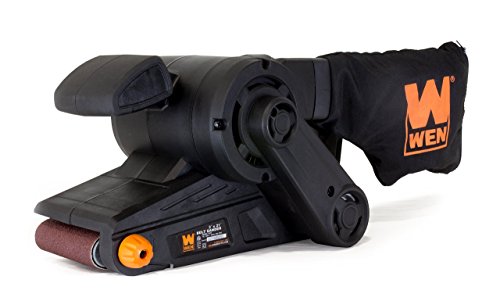
- 7-amp motor reaches over 13 feet per second
- Six-pound design helps reduce fatigue
- Dust bag and two-year warranty included
Best For: DIY refinishing with corded power and easy handling
Cordless Power Pick
DEWALT 20V MAX Brushless Belt Sander

- Brushless 20V motor supports cordless sanding
- 25-speed dial enables application-specific control
- Tool-only design includes quick belt release
Best For: Large projects and DEWALT 20V MAX users
Control-Focused Value
SKIL 7510-01 3 in. x 18 in. Belt Sander

- Pressure control warns against excessive force
- Auto Track keeps the belt centered
- Supports flush-edge sanding and vacuum hookup
Best For: DIY refinishing with guided, controlled sanding
Workshop Combination Pick
WEN 6502T Benchtop Belt and Disc Sander
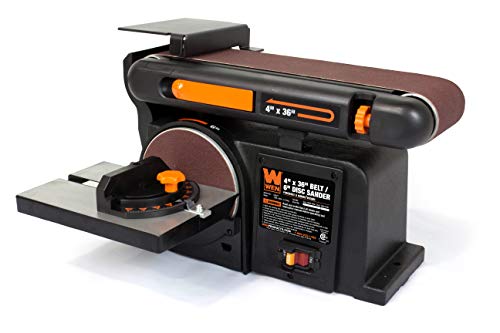
- Combines a 4-by-36-inch belt with a six-inch disc
- Tilting belt adjusts from 0 to 90 degrees
- Cast iron base helps reduce vibration
Best For: Stationary workshop sanding and component shaping
Best Portable Pick
WEN HB321V Variable-Speed Belt Sander

- 7.5-amp motor with 620–1,200 FPM variable speed
- Lightweight 6.4-pound handheld design
- Includes dust bag, dust port, and 80-grit belt
Best For: Portable furniture sanding and surface preparation
Best Benchtop Value
Woodskil 4.5A Belt and Disc Sander

- 4-by-36-inch belt plus 6-inch sanding disc
- 1,900 FPM belt and 3,590 RPM disc speeds
- Adjustable tables and included miter gauge
Best For: Stationary edge, contour, and small-surface sanding
Best Heavy-Duty Station
VEVOR 6-by-48-Inch Belt Sander Combo

- 800W motor with 6-by-48-inch belt and 9-inch disc
- Includes heavy-duty stand for stable operation
- Adjustable belt arm, disc table, miter gauge, and dust port
Best For: Larger furniture and cabinet refinishing in a workshop
Powerful Contour Sanding Pick
Woodskil 4.3A Belt Disc Sander

- 3/4 HP motor with 1,732 FPM belt speed
- Adjustable 0–90° belt and 0–45° worktable
- Dual dust ports and two-year warranty
Best For: Furniture shaping, contour sanding, and demanding DIY shop work
Versatile Refinishing Workhorse
VEVOR 4 x 36-Inch Belt Disc Sander
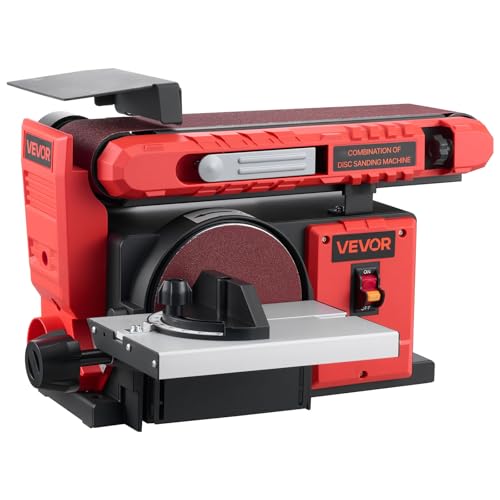
- 400W motor with 4 x 36-inch belt and 6-inch disc
- 0–90° belt adjustment and 0–45° disc table
- Miter gauge and vacuum-compatible dust port
Best For: Home workshops refinishing panels, cabinets, and furniture parts
Compact Furniture Refinishing Choice
VEVOR 1 x 30-Inch Belt Disc Sander

- Compact 16.8-pound benchtop design
- 1,350 RPM belt and 3,450 RPM disc speeds
- Dual dust ports, rubber feet, and eye shield
Best For: Small furniture projects, touch-ups, and space-limited workshops
Compact Corded Pick – WEN 6321 3 in. x 21 in. Belt Sander
For furniture refinishing projects that call for dependable corded power, the WEN 6321 combines a 7-amp motor with a compact six-pound design. Its 13-feet-per-second belt speed suits coarse stock removal, while the dust bag and lock-in trigger help keep longer sanding sessions manageable.
Best For: DIY furniture refinishing where corded power, low weight, and fast material removal matter.
Pros:
- 7-amp motor drives the belt at over 13 feet per second.
- Six-pound design helps limit user fatigue.
- Includes a detachable dust bag and lock-in safety feature.
- Backed by a two-year warranty and nationwide technician network.
Cons:
- Corded operation requires access to a power outlet.
- Supplied specifications identify a coarse 60-grit setup, which may require additional grits for finishing work.
The WEN 6321 is a practical choice when you want an affordable, lightweight belt sander for furniture refinishing and do not need cordless convenience. Plan on changing abrasives for smoother finishing passes.
Cordless Power Pick – DEWALT 20V MAX Brushless Belt Sander
The DEWALT DCW220B brings cordless flexibility to belt sanders for furniture refinishing, with a brushless 20V MAX motor, variable speed control, and a quick-release belt system. It is sold as a tool only, so a compatible battery and charger are needed for operation.
Best For: Larger refinishing jobs and workshops already invested in the DEWALT 20V MAX battery platform.
Pros:
- Brushless motor is designed for power, efficiency, and runtime.
- Variable-speed trigger and 25-speed selection dial support controlled sanding.
- Tool-free belt changes simplify abrasive swaps.
- Compatible dust collection system can provide up to 95% dust collection efficiency with the DEWALT AirLock setup.
Cons:
- Battery and charger are not included.
- AirLock dust collection components are sold separately.
- The supplied 80-grit abrasive may not cover every refinishing stage.
Choose this DEWALT when mobility and adjustable control are more important than an all-in-one purchase. Its two-handed grip and larger sanding surface are useful for demanding jobs, but the platform accessories add to the setup cost.
Control-Focused Value – SKIL 7510-01 3 in. x 18 in. Belt Sander
The SKIL 7510-01 is a user-friendly option for belt sanders for furniture refinishing, pairing a 6-amp motor with pressure control technology that warns when you push too hard. Automatic belt tracking, micro-filtration, and flush-edge sanding add useful features for wood preparation and cleanup.
Best For: DIY woodworkers who want pressure feedback, automatic belt alignment, and edge-sanding capability.
Pros:
- Pressure control technology helps discourage excessive force.
- Auto Track keeps the belt centered during use.
- Micro-filtration captures fine dust particles.
- Flush-edge sanding and vacuum compatibility improve versatility.
Cons:
- Corded 120-volt operation limits portability.
- Its 6-amp motor is less powerful on paper than the 7-amp WEN model in this roundup.
- Supplied details list a medium grit rather than a complete range for every refinishing step.
With its 5.5-pound weight and guidance-oriented controls, the SKIL is a sensible choice for furniture projects where consistent pressure and belt tracking are priorities. Its flush-edge feature is especially useful when working near furniture edges.
Workshop Combination Pick – WEN 6502T Benchtop Belt and Disc Sander
WEN Benchtop Belt and Disc Sander with 4 x 36 in. Belt, 6 in. Disc and Cast Iron Base (6502T)
Check Price On Amazon
WEN Benchtop Belt and Disc Sander with 4 x 36 in. Belt, 6 in. Disc and Cast Iron Base (6502T)
Check Price On AmazonUnlike handheld belt sanders for furniture refinishing, the WEN 6502T is a benchtop machine that combines a 4-by-36-inch belt with a six-inch disc. Its cast iron base helps limit vibration, and the belt tilts from 0 to 90 degrees for varied workshop sanding positions.
Best For: Stationary workshop sanding, shaping smaller furniture components, and projects that benefit from both belt and disc sanding.
Pros:
- Combines a 4-by-36-inch belt and six-inch disc in one machine.
- Belt tilts anywhere from 0 to 90 degrees.
- Cast iron base helps prevent heavy vibrations.
- Tension release lever simplifies sandpaper changes.
Cons:
- Benchtop design is less portable than handheld sanders.
- Requires a stable workspace and 120-volt power source.
- The 4.3-amp motor is lower rated than the handheld corded models listed here.
The WEN 6502T makes the most sense for a dedicated workshop rather than on-site refinishing. Its combination belt-and-disc layout adds versatility, while the stationary cast-iron base favors controlled work on smaller pieces and components.
Best Portable Pick – WEN HB321V Variable-Speed Belt Sander
WEN 7.5-Amp 3-by-21-Inch Variable Speed Handheld Portable Belt Sander (HB321V)
Check Price On AmazonFor furniture refinishing projects that require portable, controlled sanding, the WEN HB321V combines a 7.5-amp motor with variable belt speeds from 620 to 1,200 feet per minute. Its compact 6.4-pound design helps reduce fatigue during longer sessions, while the 3-by-21-inch belt suits broad wood surfaces.
Best For: DIYers who want a lightweight, variable-speed belt sander for furniture panels, tabletops, and general surface preparation.
Pros:
- Variable speed helps tailor sanding intensity to different furniture surfaces.
- Lightweight 6.4-pound body is easier to handle during extended work.
- Includes a dust bag, 1-1/4-inch dust port, quick-release belt tension lever, and 80-grit belt.
Cons:
- Corded design requires access to a power outlet.
- Includes an 80-grit belt, so additional grits may be needed for finishing stages.
The WEN is a practical choice when portability and speed control matter more than benchtop stability. Its dust-collection options and lock-on switch add convenience for repeat refinishing work.
Best Benchtop Value – Woodskil 4.5A Belt and Disc Sander
For furniture refinishing and woodworking that benefit from a stationary setup, the Woodskil belt-disc combo pairs a 4-by-36-inch belt with a 6-inch disc. Its 3/4-horsepower direct-drive motor delivers 1,900 FPM belt speed and 3,590 RPM disc speed for edge work, contour sanding, and smaller surfaces.
Best For: Workshop users who need both belt and disc sanding in one benchtop machine, especially for edges, contours, and small workpieces.
Pros:
- Combines a 4-by-36-inch sanding belt with a 6-inch sanding disc.
- Belt table adjusts from horizontal to vertical positions from 0 to 90 degrees.
- Tilting work table and miter gauge support bevel sanding and more accurate edge work.
Cons:
- At 39.6 pounds, it is less portable than a handheld sander.
- The 4.5-amp motor is less powerful than the motors listed for the other machines in this roundup.
- Its stationary format requires dedicated bench or workshop space.
The Woodskil stands out for versatility in a compact workshop: use the belt for broader edges and contour work, then switch to the disc for small end surfaces. Its adjustable tables make it useful for precision-oriented furniture projects.
Best Heavy-Duty Station – VEVOR 6-by-48-Inch Belt Sander Combo
For larger furniture refinishing jobs and workshop projects, the VEVOR belt-disc combo provides a 6-by-48-inch belt, a 9-inch disc, and an 800-watt motor. The included stand supports stable operation, while adjustable belt and disc positions accommodate horizontal, vertical, and angled sanding.
Best For: Workshop users refinishing furniture panels, cabinets, and other larger pieces who want a stable belt-and-disc machine.
Pros:
- Large 6-by-48-inch belt and 9-inch disc cover a range of sanding tasks.
- Belt arm adjusts from 0 to 90 degrees, and the disc table tilts from 0 to 45 degrees.
- Heavy-duty stand, miter gauge, and dust-collection port support controlled, cleaner work.
Cons:
- Its 75.8-pound weight makes it difficult to move frequently.
- The machine requires assembly using the supplied stand, hardware, and accessories.
- Its larger footprint is better suited to a dedicated workshop than a small workspace.
The VEVOR is the strongest fit when stability, larger abrasive surfaces, and workshop versatility are priorities. It is especially suitable for cabinet and furniture work where a stand-mounted machine can reduce vibration and improve consistency.
Powerful Contour Sanding Pick – Woodskil 4.3A Belt Disc Sander
For shoppers comparing belt sanders for furniture refinishing, the Woodskil stands out as a versatile benchtop combo with a 4 x 36-inch belt and 6-inch disc. Its adjustable belt position, miter gauge, and dual dust ports make it suitable for shaping furniture parts as well as smoothing broader surfaces.
Best For: DIYers and woodworkers who want a powerful combination sander for furniture shaping, contour work, and general refinishing.
Pros:
- 3/4 HP motor delivers up to 1,732 FPM belt speed and 3,570 RPM disc speed.
- Belt adjusts from horizontal to vertical, while the worktable tilts from 0 to 45 degrees.
- Separate dust ports for the belt and disc help support shop-vac connection.
- Includes a miter gauge, two sandpapers, steel base, and a stated two-year warranty.
Cons:
- At 25 pounds, it is less convenient to move than a smaller benchtop model.
- The supplied details identify a 36-grit abrasive, which may be aggressive for final finish preparation.
Choose this Woodskil model when motor strength and belt-position flexibility matter most. For delicate final passes, plan to use an appropriate finer abrasive rather than relying only on the included setup.
Versatile Refinishing Workhorse – VEVOR 4 x 36-Inch Belt Disc Sander
This VEVOR combo is a practical option among belt sanders for furniture refinishing, combining a 4 x 36-inch belt with a 6-inch disc. The adjustable belt and tilting disc table provide useful control for sanding panels, cabinet parts, contours, and smaller woodworking projects.
Best For: Home woodworkers and DIYers seeking a stable, space-conscious combo sander for furniture panels, cabinets, shaping, and general shop tasks.
Pros:
- 400W motor drives the disc at 3,550 RPM and the belt at 600 RPM.
- Belt adjusts from 0 to 90 degrees for horizontal or vertical sanding.
- Disc table tilts from 0 to 45 degrees and includes a miter gauge.
- Dust collection port supports connection to a vacuum cleaner.
Cons:
- The listed 600 RPM belt speed is lower than the belt speed of some comparable models.
- The supplied abrasive specification is coarse, so additional finishing grits may be needed.
- At 33.7 pounds, it is sturdy but not especially portable.
This VEVOR model emphasizes adjustable positioning and a stable frame over portability. It is a sensible fit for a dedicated workspace where furniture components, panels, and contours need repeatable sanding angles.
Compact Furniture Refinishing Choice – VEVOR 1 x 30-Inch Belt Disc Sander
For smaller workspaces, this compact VEVOR is one of the more space-conscious belt sanders for furniture refinishing. Its 1 x 30-inch belt and 5-inch disc suit detail sanding, cabinet work, furniture touch-ups, and other DIY tasks where a smaller footprint is useful.
Best For: DIYers who need a lightweight benchtop sander for furniture touch-ups, smaller wood parts, cabinet work, and detail shaping.
Pros:
- Compact 16.8-pound design is easier to position and store than heavier models.
- 250W motor provides 1,350 RPM belt speed and 3,450 RPM disc speed.
- Two dust collection ports support cleaner sanding with a vacuum.
- Reinforced metal base, rubber feet, eye shield, and included miter gauge add practical workshop features.
Cons:
- The 1 x 30-inch belt offers less sanding surface than 4 x 36-inch alternatives.
- Its 250W motor is less powerful than the larger models in this roundup.
- The listed 80-grit abrasive may not cover every stripping or finishing stage.
This VEVOR is best viewed as a compact detail and light-duty refinishing tool rather than a high-capacity stock-removal machine. Its smaller size and dual dust ports make it appealing for occasional furniture projects and limited bench space.
How We Picked the Best Belt Sanders for Furniture Refinishing
We focused on the features that matter when preparing tables, cabinets, dressers, doors, and other wood surfaces for paint or stain. The lineup includes handheld 3-by-21-inch sanders for broad surface removal, compact models for lighter work, and benchtop belt-and-disc machines for small parts, edges, and repeatable shaping.
We also considered motor output, variable-speed control, pressure or tracking adjustments, dust collection, belt dimensions, portability, and workspace requirements. Because refinishing projects vary widely, no single machine is ideal for every user.
Quick Comparison
| Best For | Look For | Typical Advantage |
|---|---|---|
| Large flat furniture surfaces | 3-by-21-inch handheld belt | Fast stock and finish removal |
| Controlled sanding | Variable speed or pressure control | Less risk of cutting too aggressively |
| Small parts and edge work | Belt-and-disc benchtop design | Stable, repeatable shaping |
| Mobile projects | Cordless brushless motor | Freedom from an outlet |
| Heavy-duty workshop use | Larger belt, sturdy base, dust ports | More stability and sanding capacity |
Key Buying Factors for Belt Sanders for Furniture Refinishing
Handheld or Benchtop Format
A handheld belt sander is generally the better choice for tabletops, panels, and other large surfaces because you can move across the workpiece. A benchtop combination sander is more useful for narrow boards, furniture components, bevels, and detail shaping. Larger machines need a dedicated, stable workspace.
Speed and Control
High speed removes material quickly, but refinishing often benefits from moderation. Variable-speed controls, pressure-control systems, and balanced tracking help you work more carefully near edges and on softer woods. Always begin with light pressure and a less aggressive abrasive.
Belt Size and Motor Power
Longer, wider belts cover more area and can run cooler during extended work. Compact belts improve maneuverability. Motor amperage is useful for comparing corded tools, but it does not alone determine performance; belt speed, tracking, construction, and abrasive quality matter too.
Dust Collection and Ergonomics
Dust bags and shop-vac ports help keep the work area cleaner, though no basic dust system captures everything. Look for comfortable handles, manageable weight, easy belt changes, and a reliable tracking adjustment. Wear eye, hearing, and respiratory protection even when collection is connected.
Who Should Buy Which Belt Sanders for Furniture Refinishing?
Choose a Handheld Corded Model If:
You are refinishing large furniture surfaces and want consistent power without managing battery runtime. The WEN, SKIL, and similar 3-by-21-inch designs are practical starting points for home workshops.
Choose a Cordless Model If:
You work away from outlets, move between rooms, or already own compatible batteries. A cordless brushless option offers convenience, but remember to budget for a battery and charger if they are not included.
Choose a Benchtop Combo If:
You mainly sand furniture parts, trim, small boards, or shaped components. Belt-and-disc machines provide useful versatility, but they are less convenient for smoothing an entire tabletop.
Choose a Larger Stand-Mounted Combo If:
You need a more substantial workshop setup for repeated shaping and heavier stock removal. Confirm that you have adequate floor space, dust extraction, and a stable electrical supply before buying.