Clay soil can turn routine digging into a demanding job, so the right spade needs more than a sharp edge. A strong blade, dependable handle, and comfortable grip can make breaking, lifting, and shaping dense ground noticeably easier.
We selected 10 garden spades for clay soil with different designs and sizes, from narrow trenching tools to compact digging spades. Use the guide below to match each style to your soil, projects, and preferred working position.
Best 10 Garden Spades for Clay Soil Picks for 2026
Root-Cutting Power

- Inverted V tip cuts roots and packed soil
- Carbon steel blade with protective coating
- Lifetime guarantee and ergonomic grip
Best For: Root removal, planting holes, and dense garden soil
Heavy-Duty Hand Tool

- Sharp V-shaped blade for clay and weeds
- Thick 2.5 mm carbon steel construction
- Fully welded, resharpenable design
Best For: Precision digging, planting, and hand weeding
Narrow Clay Digging

- Slim blade concentrates stepping pressure
- Cuts clay, roots, and thick grass
- Lightweight 3-pound design with foot pedal
Best For: Transplanting, drainage digging, and tight spaces
Measured Hand Digging
Kemaier Stainless Steel Trowel

- V-shaped blade and serrated root cutter
- Built-in scale for planting depth
- Full-tang stainless steel construction
Best For: Precision planting, weeding, and small root cutting
Best Sawtooth Edge

- Sawtooth alloy-steel blade
- Wide foot platforms
- Fiberglass handle
Best For: Breaking clods, edging, and trenching in hard soil
Best Heavy-Duty Round Point

- Serrated high-carbon-steel blade
- Reinforced 49-inch handle
- Large round digging head
Best For: Root-filled clay and high-intensity digging
Best for Transplanting

- Narrow blade for root-safe plugs
- Corrugated foot plates
- Lightweight 3-pound design
Best For: Precision planting and tight spaces in clay-like soil
Compact Clay-Cutting Pick
33-Inch Heavy-Duty Garden Shovel
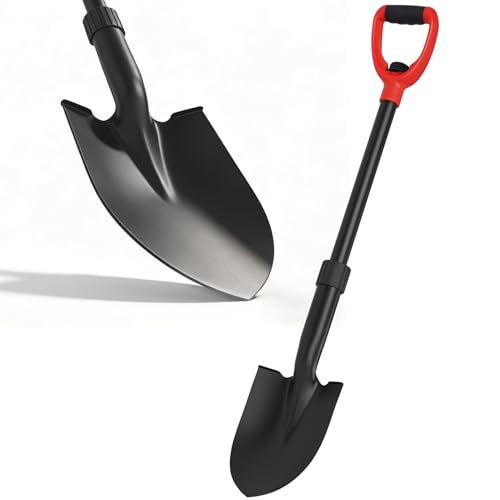
- Pointed forged-steel blade for compacted soil
- Lightweight fiberglass shaft with D-grip
- Tool-free assembly and portable design
Best For: Small beds, edging, transplanting, and camping
Narrow-Profile Clay Specialist

- Narrow manganese-steel blade for precise digging
- 45-inch fiberglass handle improves leverage
- Suitable for clay, rocks, roots, and trenches
Best For: Deep planting, root removal, and drainage trenches
Root-Cutting Power – Root Slayer Serrated Shovel
For gardeners comparing garden spades for clay soil, the Root Slayer 22011 stands out for its inverted V-shaped cutting tip and serrated carbon steel blade. It is designed to improve leverage while cutting through compact soil, packed dirt, and stubborn roots.
Best For: Digging planting holes, removing roots, preparing garden beds, and general landscaping in dense soil.
Pros:
- Inverted V tip helps cut roots and penetrate packed ground.
- Heavy-duty carbon steel blade has a protective powder-coated finish.
- Ergonomic grip and resin-encased steel shaft support control during demanding digging.
- Includes a lifetime guarantee.
Cons:
- At 5 pounds, it is heavier than the other full-size spade listed here.
- It is not intended for prying or excessive leverage.
The Root Slayer is a strong choice when clay soil and roots are the main obstacles. Its cutting-focused blade design is particularly useful for tough excavation, provided it is used for digging rather than prying.
Heavy-Duty Hand Tool – Kemaier Carbon Steel Trowel
Among garden spades for clay soil, this Kemaier hand trowel is the compact option for close-up work. Its sharp V-shaped, 2.5 mm carbon steel blade is intended for hard clay, rocky patches, weeds, and precision digging.
Best For: Hand digging, weeding, planting, and targeted work in compact or rocky soil.
Pros:
- Sharp V-shaped blade helps slice through hard soil and weeds.
- 2.5 mm carbon steel construction is made for repeated heavy use.
- Fully welded handle-to-blade connection helps resist snapping and cracking.
- Blade can be resharpened to extend its working life.
Cons:
- The 6.3-inch blade is better suited to small areas than full-size digging.
- Its compact hand-tool format requires kneeling or bending for ground-level work.
This trowel is a practical complement to a full-size shovel when clay soil needs precise attention around plants, weeds, or narrow planting spots. Its welded construction favors durability in demanding hand work.
Narrow Clay Digging – 45-Inch D-Handle Drain Spade
This 45-inch trench and drain spade is a useful choice among garden spades for clay soil when digging narrow holes or working between established plants. Its slim blade concentrates foot pressure for penetration while helping cut roots and hard ground.
Best For: Transplanting, drainage trenches, narrow planting holes, and digging in clay, grass, or tight spaces.
Pros:
- Narrow blade slides under root systems and cuts clean plugs.
- High-carbon steel blade is coated for rust resistance in wet soil.
- D-grip and non-slip foot pedal provide leverage and stable stepping.
- At 3 pounds, it is relatively lightweight for extended use.
Cons:
- The narrow profile is less suitable for moving large volumes of soil.
- It is described for light to moderate daily gardening rather than the heaviest excavation.
- The wood handle may require more care than a fully metal shaft.
Choose this spade when access and penetration matter more than carrying capacity. Its long, narrow blade and foot pedal make it well matched to transplanting and drainage work in compact clay.
Measured Hand Digging – Kemaier Stainless Steel Trowel
For small-scale jobs involving garden spades for clay soil, this Kemaier stainless steel trowel combines a sharp V-shaped blade with a serrated edge. The 2.5 mm steel is designed for compacted soil, tangled roots, and rocky garden areas.
Best For: Precision planting, weeding, cutting small roots, and measuring bulb or planting depth.
Pros:
- Sharp V-shaped blade tackles compact soil and roots.
- Three-inch sawtooth edge helps cut small branches and weed roots.
- Built-in scale supports more consistent planting depth.
- Full-tang metal construction and a large ergonomic handle help resist breakage.
Cons:
- Its 5.7-inch blade is intended for hand work, not deep excavation.
- At 10.56 ounces, it cannot provide the same leverage as a full-size spade.
- The stainless steel tool is more specialized for planting and weeding than soil hauling.
This is a versatile hand trowel for gardeners who want cutting and measuring features in one compact tool. It is best paired with a larger spade when working across broad areas of clay soil.
Best Sawtooth Edge – Sharp Blade Flat Spade
For gardeners comparing garden spades for clay soil, this flat spade stands out for its sawtooth blade, which is designed to penetrate hard soil and break up hardened clods. Its wide foot platforms also help transfer more force when edging, trenching, or digging holes.
Best For: Edging, furrowing, trenching, cutting thick turf, and breaking up compacted soil.
Pros:
- Sawtooth alloy-steel blade helps tackle hard soil and hardened clods.
- Wide foot platforms provide secure footing and added digging leverage.
- Fiberglass handle and ergonomic PP grip support controlled use.
- Useful square-point design for edging, compost moving, and trenching.
Cons:
- At 4.5 pounds, it is heavier than some garden spades.
- The flat blade is less specialized for narrow transplanting holes.
This is a practical choice when clay work involves both breaking compacted ground and creating clean edges. Its heavier construction favors forceful digging over lightweight handling.
Best Heavy-Duty Round Point – Nohovu 49-Inch Digging Shovel
Among garden spades for clay soil, the Nohovu is built for demanding digging in clay, roots, and other compacted ground. Its serrated high-carbon-steel blade is intended to cut roots and dense soil, while the long handle supports a more upright working posture.
Best For: Heavy digging, root-filled ground, soil turning, trenching, transplanting, and moving larger scoops of material.
Pros:
- Serrated blade edges are designed to cut tree roots, weed roots, and compacted soil.
- High-carbon steel blade is built for hardness, toughness, and wear resistance.
- 49-inch reinforced fiberglass handle helps reduce bending during extended work.
- Large round blade increases carrying capacity with each scoop.
Cons:
- The round point is less suited to precise narrow transplanting plugs.
- Its heavy-duty design may be more tool than needed for light garden maintenance.
This is the strongest fit for gardeners who regularly face clay mixed with roots or need to move soil after breaking ground. The D-grip and reinforced handle add control for sustained digging.
Best for Transplanting – Narrow Steel Spade
For garden spades for clay soil where precision matters, this narrow transplanting spade concentrates pressure at the blade for easier penetration. Its slim profile can cut a round plug with less disturbance to nearby plants, while the D-handle provides leverage in deeper holes.
Best For: Transplanting perennials, planting small plants, digging in tight spaces, and penetrating clay-like soil or thick grass.
Pros:
- Narrow steel blade reaches below root systems and fits confined spaces.
- Blade shape maximizes applied pressure in clay-like and hard soil.
- Corrugated foot plates help reduce slippage when stepping down.
- At 3 pounds, it is relatively lightweight for daily gardening tasks.
Cons:
- Designed for light and medium work rather than the heaviest excavation.
- Narrow blade carries less soil per scoop than a round or flat shovel.
- Wooden handle may require more care than a synthetic handle.
This spade makes the most sense for gardeners who need controlled cuts around established plants rather than a high-capacity digging tool. Its lower weight is useful for routine transplanting and small planting jobs.
Compact Clay-Cutting Pick – 33-Inch Heavy-Duty Garden Shovel
For gardeners comparing garden spades for clay soil, this compact pointed shovel offers a practical balance of penetration, portability, and comfort. Its forged-steel blade is designed to cut through compacted soil, tough roots, and rocky ground, while the fiberglass shaft keeps the tool relatively lightweight.
Best For: Small garden beds, edging, transplanting, camping, and gardeners who want a compact digging tool.
Pros:
- Pointed forged-steel blade handles compacted soil, roots, and rocky ground.
- Ergonomic D-grip helps provide leverage and reduce hand fatigue.
- Lightweight 33-inch design is easy to store, transport, and use.
- Tool-free assembly takes about 10 seconds.
Cons:
- Shorter than a full-size shovel, so it may require more bending.
- Its compact blade is better suited to smaller digging jobs than broad excavation.
This is a versatile option when clay-soil work is mixed with transplanting, edging, or outdoor use. The 120-day warranty adds some purchase reassurance.
Narrow-Profile Clay Specialist – 45-Inch Sharp Shooter Spade
Among garden spades for clay soil, the WIKER Sharp Shooter stands out for its narrow blade and full 45-inch length. The slender manganese-steel head is built to cut through sticky, hard, or rocky soil while creating narrow holes and trenches with less disturbance to nearby plants.
Best For: Deep planting, transplanting, root removal, fence-post holes, drainage trenches, and tight garden spaces.
Pros:
- Narrow blade helps limit damage to surrounding lawn and plants.
- Sharp manganese-steel head is suited to sticky, hard, and rocky soil.
- D-handle provides leverage for excavation work.
- Fiberglass handle and three-layer anti-corrosion coating support outdoor durability.
Cons:
- Narrow blade moves less soil per scoop than a wider spade.
- Its 45-inch length may be less convenient for compact storage or close-quarters work.
This is the most task-specific choice of the three for clay-heavy digging where depth, precision, and root access matter. Its lifetime warranty is an additional advantage for frequent use.
Foot-Press Utility Choice – 31-Inch Compact Digging Shovel
If you need garden spades for clay soil but prefer a compact, approachable tool, this 31-inch shovel combines a round-point metal blade with a small step plate. The foot platform helps you push into compacted ground, while the D-grip and secondary foam grip support control during routine garden work.
Best For: Light-to-medium garden digging, planting, weeding, camping, beach use, and users who value portability.
Pros:
- Round-point blade is designed to cut compacted soil and tangled roots.
- Step plate allows added foot pressure when entering firm ground.
- D-grip and foam handhold provide multiple comfortable grip points.
- Compact 31-inch size is easy to transport and store.
Cons:
- At 2.4 pounds, it is heavier than some compact shovel designs.
- Assembly takes about five minutes and requires the included screws and wrench.
- The shorter shaft may require more bending than a full-length spade.
This shovel is a useful middle ground for occasional clay-soil work, especially when portability and foot-assisted digging are more important than maximum blade capacity. Its broad outdoor versatility also suits camping and seasonal yard tasks.
How We Picked These Garden Spades for Clay Soil
We focused on the features that matter most when working in compacted or wet clay: blade shape, cutting edge, shaft strength, handle design, tool length, and overall suitability for repeated digging. Narrow trenching blades can penetrate dense ground with less resistance, while broader or flatter spades are more useful for edging, lifting, and shaping beds.
We also included a range of sizes and handle styles. Full-length D-grip shovels offer leverage for deep digging, while shorter tools can be easier to control in raised beds, borders, containers, and tight spaces.
Quick Comparison
| Best For | Look For | Most Suitable Style |
|---|---|---|
| Breaking hard clay | Sharp, reinforced metal blade | Heavy-duty digging spade |
| Trenching and drainage | Narrow blade and long shaft | Sharp-shooter or drain spade |
| Edging garden beds | Flat, straight cutting edge | Border or flat spade |
| Raised beds and containers | Compact size and comfortable grip | Small hand or short-handle spade |
Key Buying Factors for Garden Spades for Clay Soil
Blade Strength and Shape
Choose a carbon-steel or other heavy-duty metal blade for hard ground. A pointed or sharply tapered blade is generally better for initial penetration, while a flat blade works well for edging and slicing through established borders. Serrated edges can help with roots, but they may require more care when sharpening.
Handle and Leverage
A long shaft lets you use body weight and leg strength instead of relying only on your arms. D-shaped grips can improve control during forceful cuts and lifting. Fiberglass handles are typically resistant to moisture and impact, while wooden handles offer a traditional feel but should be kept protected from prolonged dampness.
Length, Weight, and Comfort
Longer tools suit open ground and deep digging; shorter models are easier to maneuver in confined planting areas. Weight can improve momentum, but an overly heavy spade may cause fatigue. Look for a secure grip and a shaft length that allows you to work without excessive bending.
Maintenance
Rinse clay from the blade after use, dry the metal thoroughly, and store the spade somewhere sheltered. A light coat of oil can help protect exposed steel, and keeping the cutting edge sharp reduces the force required for future jobs.
Who Should Buy Which Garden Spades for Clay Soil?
Choose a narrow trench or drain spade if your priority is installing drainage, digging planting channels, or cutting through restricted areas. Pick a broad or flat spade for lawn edging, bed shaping, and general garden cleanup. Gardeners working in raised beds or containers may prefer a compact model that offers better control than a full-length shovel. For large plots with stubborn clay, prioritize a heavy-duty blade, long handle, and comfortable D-grip so the tool can deliver leverage without unnecessary strain.