Stubborn roots can turn routine planting, trenching, and edging into hard work. The right spade combines a penetrating shape with a sharp or serrated blade that can cut through roots without feeling unwieldy.
This roundup compares 10 garden spades for roots, from long-handled digging tools to compact options for beds, borders, and container work. Use the guide below to match blade design, reach, and construction to your soil and workload.
Best 10 Garden Spades for Roots Picks for 2026
Best Overall Root-Cutting Spade
Root Slayer Serrated Garden Shovel

- Inverted V tip cuts stubborn roots
- Powder-coated carbon steel blade
- Full-size ergonomic digging design
Best For: Demanding root removal and compact soil
Best for Narrow Trenches

- Slim toothed carbon steel blade
- Fiberglass handle with padded D grip
- Wide footstep for added push power
Best For: Root cutting in tight spaces and trenches
Best Compact Option
Root Slayer Nomad Serrated Spade

- Approximately 70% the size of the original
- Serrated edge with V-shaped cutting tip
- Lightweight 2.7-pound design
Best For: Root removal in raised beds and tight spaces
Best for Edging and Furrows

- Sawtooth head for hard soil
- Square point supports edging and trenching
- Wide foot platform for control
Best For: Edging, furrowing, and general hard-soil work
Heavy-Duty Root Cutting
Thickened Serrated Digging Spade
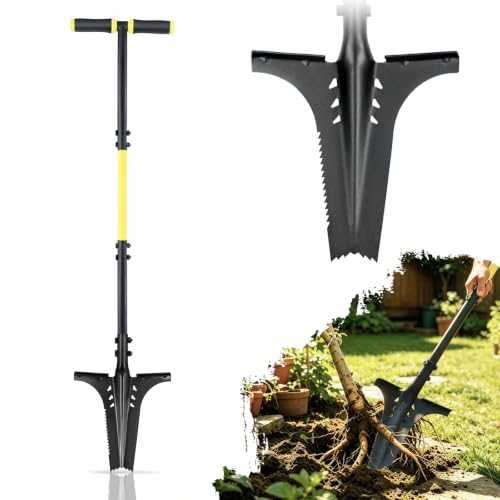
- Heat-treated high-carbon-steel V-shaped blade
- Serrated sides cut roots and aid trenching
- Thickened shaft with foot platform for leverage
Best For: Demanding root cutting, trenching, and hard-turf work
All-Metal Root Saw
Serrated Sharp Blade Garden Spade

- Manganese-steel head with sharpened serrations
- Oval steel handle and non-slip ergonomic grip
- Reinforced footplate for pushing into hard soil
Best For: Narrow digging, trenching, tree transplanting, and root cutting
Fiberglass-Handle Root Saw
44-Inch Narrow Serrated Drain Spade

- 1050MN-steel toothed blade cuts roots
- Fiberglass handle with comfortable D grip
- Wide footsteps add pushing power
Best For: Narrow trenches, planting, and tree-transplanting tasks
Best Compact Root-Cutting Pick

- Pointed stainless-steel blade for perennial roots
- 21.6-inch handle suits kneeling and raised beds
- T-grip wood handle with two-year warranty
Best For: Precise root cutting and transplanting around established plants
Best Narrow Trenching Option

- Long, narrow blade for deep digging
- Serrated edge cuts clods and plant roots
- Fiberglass shaft with D-grip and foot step
Best For: Trenching, deep holes, and narrow root-cutting tasks
Best Heavy-Duty Root-Cutting Pick

- V-shaped double-serrated blade cuts smaller roots
- Carbon-steel blade with rust-resistant coating
- 46-inch shaft and widened anti-slip footrest
Best For: Hard soil, brush, smaller stumps, and landscaping work
Best Overall Root-Cutting Spade – Root Slayer Serrated Garden Shovel
For gardeners comparing garden spades for roots, the Root Slayer 22011 stands out for its inverted V cutting tip and serrated carbon steel blade. Its full-size design is suited to demanding digging in compact soil, planting beds, and landscaping areas.
Best For: Cutting stubborn roots and digging in dense or compact ground.
Pros:
- Inverted V tip and serrated blade help cut roots and packed soil.
- Carbon steel construction with a powder-coated finish supports repeated outdoor use.
- Ergonomic grip and resin-encased steel shaft provide leverage and control.
- Backed by a listed lifetime guarantee.
Cons:
- At 5 pounds, it is heavier than the compact Nomad model.
- The shaft is designed for digging and root removal, not prying or excessive leverage.
This is a strong choice when root-cutting ability and full-size digging performance matter more than minimum weight. Its specialized tip makes it particularly suitable for tough garden and landscaping work.
Best for Narrow Trenches – Drain Spade Root Saw
Among garden spades for roots, this 45.3-inch drain spade is designed for narrow digging jobs. Its slim toothed carbon steel blade can help with root cutting, small deep holes, trenches, and tree transplanting in tight spaces.
Best For: Narrow trenches, small deep holes, and transplanting in confined areas.
Pros:
- Narrow sharp blade with teeth is suited to roots and tight digging spaces.
- Fiberglass handle and padded D grip provide a sturdy, comfortable hold.
- Wide footstep helps increase pushing power.
- 45.3-inch length offers a full-length digging posture.
Cons:
- The narrow 2.3-inch blade is less suited to moving large amounts of soil.
- At 4.8 pounds, it is not especially lightweight.
This spade prioritizes reach and access over broad soil movement. Choose it when you need a toothed blade for roots but regularly work in trenches or other restricted planting spaces.
Best Compact Option – Root Slayer Nomad Serrated Spade
Gardeners seeking garden spades for roots in raised beds or small plots may prefer the Root Slayer Nomad. It is approximately 70% the size of the original Root Slayer, with a serrated edge and V-shaped tip for maneuverable root cutting.
Best For: Raised beds, narrow planting areas, small garden plots, and portable outdoor work.
Pros:
- Compact size improves maneuverability in tight garden spaces.
- Ripsaw-style teeth and an inverted V tip target roots and dense soil.
- Powder-coated carbon steel blade supports strength and corrosion resistance.
- Fiberglass shaft and non-latex grips provide control and comfort.
Cons:
- Its smaller format may be less suitable for large-scale digging.
- The 2.7-pound weight and compact dimensions may provide less reach than full-size spades.
The Nomad balances root-cutting features with easier handling. It is a practical pick for detailed work where a full-size shovel would feel cumbersome, while still offering a durable serrated blade.
Best for Edging and Furrows – Sawtooth Flat Garden Spade
This flat spade is a versatile alternative among garden spades for roots, combining a sawtooth head with a square-point profile. The 43-inch tool is intended for hard soil, trenches, edging, transplanting, turf cutting, and furrowing.
Best For: Edging, furrowing, trenching, and breaking through hardened soil.
Pros:
- Sawtooth blade helps penetrate hard soil and break up hardened clods.
- Square-point design supports edging, turf cutting, and trenching.
- 1050MN steel head and fiberglass handle offer a heavy-duty construction.
- Wide foot platform helps maximize force and control.
Cons:
- Its flat square-point design is less specialized for root cutting than an inverted V tip.
- At 4.5 pounds, it may feel substantial for lighter garden tasks.
Choose this model when root work is part of a broader set of garden jobs. Its sawtooth edge and flat profile make it especially useful for shaping borders, cutting turf, and preparing hard ground.
Heavy-Duty Root Cutting – Thickened Serrated Digging Spade
If you need garden spades for roots that can handle prying as well as cutting, this 45-inch Jardineer spade is built for demanding landscaping work. Its heat-treated high-carbon-steel V-shaped blade, serrated sides, thickened shaft, and foot platform make it suited to compacted turf, tangled roots, trenching, and clean garden edging.
Best For: Gardeners and landscapers tackling stubborn roots, narrow trenches, and hard turf where extra leverage and a root-saw edge are useful.
Pros:
- Serrated sides help cut through roots, clay, and dense weed networks.
- Thickened, tension-tested steel shaft supports prying and pulling forces.
- V-shaped heat-treated blade and foot platform improve penetration into hard soil.
- 45-inch length and T-shaped rubber grip provide leverage and directional control.
Cons:
- Assembly is required before use.
- The narrow trenching design is more specialized than a general-purpose digging spade.
This is the most feature-rich option in the group for root-focused work, particularly when you expect to alternate between digging, trenching, and sawing. Its reinforced construction and long handle are aimed at reducing strain during demanding jobs.
All-Metal Root Saw – Serrated Sharp Blade Garden Spade
This all-metal root saw spade is a solid choice among garden spades for roots when you want a narrow, sharpened blade for tight planting areas and hard soil. The manganese-steel head, oval steel handle, reinforced footplate, and non-slip grip support digging, trenching, tree transplanting, and root cutting.
Best For: Landscaping and garden projects that require a durable narrow spade for small deep holes, pipeline trenches, fence-post work, or transplanting.
Pros:
- Sharpened serrated manganese-steel blade cuts roots while digging.
- Oval steel handle is designed to reduce effort and strain on the back and shoulders.
- Reinforced footplate with non-slip tread supports stronger downward pressure.
- Wide non-slip grip helps maintain control and reduce hand fatigue.
Cons:
- At 4.5 pounds, it is heavier than the 1.3-kilogram Jardineer model.
- The narrow blade is intended for focused digging rather than broad soil moving.
Choose this model if durability and a steel-handled, root-saw design matter more than minimizing tool weight. Its combination of a sharpened serrated blade and reinforced step makes it practical for concentrated digging in restricted spaces.
Fiberglass-Handle Root Saw – 44-Inch Narrow Serrated Drain Spade
For shoppers comparing garden spades for roots, this 44-inch drain spade offers a narrow toothed blade for digging tight spaces, trenching, and planting. Its 1050MN-steel head, fiberglass handle, comfortable D grip, and wide footsteps provide a practical balance of reach, control, and pushing power.
Best For: Gardeners handling narrow trenches, small deep holes, live-tree transplanting, and other planting tasks where a slim root-cutting blade is helpful.
Pros:
- Reinforced toothed blade is designed for digging, trenching, and cutting roots.
- Fiberglass handle offers a sturdy alternative to an all-metal shaft.
- Wide footsteps help secure foot placement and increase pushing power.
- 44-inch length is useful for reaching into narrow or deep work areas.
Cons:
- At 4.4 pounds, it may feel substantial during extended use.
- The narrow drain-spade shape is less suited to moving large amounts of loose soil.
This model is a straightforward root-cutting and trenching tool with a fiberglass handle and wide foot platforms. It fits buyers who want a long-handled, narrow spade for planting and landscaping rather than a general digging shovel.
Best Compact Root-Cutting Pick – Berry&Bird Perennial Spade
For gardeners comparing garden spades for roots, the Berry&Bird Perennial Spade offers a compact, controllable design for working around established plants. Its pointed stainless-steel blade is intended to slice through perennial roots, while the 21.6-inch handle provides useful reach when kneeling or working in raised beds.
Best For: Cutting perennial roots, transplanting, weeding, and detailed work in raised beds or border plantings.
Pros:
- Pointed stainless-steel blade is designed for precise root cutting.
- Compact 21.6-inch length offers control while kneeling.
- T-shaped ash-wood handle supports wrist movement and helps reduce fatigue.
- Rust-resistant construction includes a two-year warranty and 30-day replacement support.
Cons:
- Shorter handle requires more bending than a full-length spade.
- At 1.23 pounds, it is designed more for controlled garden work than heavy excavation.
This is a practical choice when precision matters more than maximum digging depth. Its narrow, short-handled format should suit gardeners working close to plants and in confined beds.
Best Narrow Trenching Option – 44-Inch Drain Root Spade
Among garden spades for roots, this 44-inch drain spade is built for deeper, narrower work. Its long blade reaches into holes and ditches, while the sharp cutting edge and serrated section help break through clods and plant roots without requiring a kneeling position.
Best For: Deep hole digging, trenching, ditch cleaning, transplanting, and cutting smaller plant roots.
Pros:
- Narrow, long blade is suited to deep holes and confined digging areas.
- Serrated edge helps cut clods and plant roots.
- Fiberglass handle and 1050MN steel head provide a sturdy construction.
- D-shaped non-slip grip and wide foot step support leverage and control.
Cons:
- At 4.4 pounds, it is heavier than a compact hand spade.
- The narrow seven-inch-wide profile is less suited to moving large amounts of soil.
This model makes sense for gardeners who need full-length reach and a narrow digging path. The serrated blade adds root-cutting capability, while the foot step and D-grip help with deeper soil work.
Best Heavy-Duty Root-Cutting Pick – Double-Serrated Root Shovel
For demanding garden spades for roots, this 46-inch root shovel combines a carbon-steel blade with double-serrated cutting edges. Its V-shaped profile is intended to reach smaller stumps and brush, while the widened footrest helps transfer force into hard soil.
Best For: Cutting smaller tree roots, removing small stumps and brush, trenching, planting, and landscaping work.
Pros:
- Double-serrated, V-shaped blade is designed for roots, brush, and small stumps.
- High-strength carbon-steel blade has a powder coating for rust and corrosion resistance.
- 46-inch length provides standing reach for outdoor digging.
- Widened anti-slip footrest and shock-absorbing grip support forceful use.
Cons:
- At four pounds, it may feel substantial for light planting tasks.
- The serrated blade is geared toward tougher work rather than delicate transplanting.
This is the strongest fit for gardeners and landscapers who regularly encounter hard soil, brush, or smaller roots. Its reinforced grip and footrest add useful control when applying downward pressure.
How We Picked the Best Garden Spades for Roots
We focused on tools designed for root cutting, narrow digging, trenching, edging, and planting in compacted soil. The selection includes serrated and double-serrated blades, traditional spade profiles, long-handled models, all-metal designs, and a compact perennial spade. We also considered blade reach, handle length, construction, and the type of work each tool is best suited to.
Because product specifications and availability can change, check the current listing for dimensions, materials, weight, and warranty details before buying.
Quick Comparison
| Best For | Look For | Useful Design |
|---|---|---|
| Deep roots and trenching | Long reach and narrow blade | 44- to 46-inch root spade |
| Heavy-duty digging | Rigid construction and aggressive teeth | All-metal or thickened blade |
| General root cutting | Balanced handle and serrated edge | Full-size garden spade |
| Beds and borders | Compact size and precise control | Short perennial spade or trowel |
Key Buying Factors for Garden Spades for Roots
Blade Shape and Teeth
Serrated edges are useful when roots resist a smooth blade. Narrow blades concentrate force and fit into tight gaps, while wider flat spades remove more soil per stroke and are better for general planting and edging. Double-serrated designs can provide cutting edges on both sides, but may require more care during handling and storage.
Length and Leverage
Long-handled spades reduce bending and give you more leverage for deep roots, trenches, and established shrubs. They can be harder to maneuver in raised beds or crowded borders. A short tool offers better control for close work but requires more kneeling and hand pressure.
Build Quality and Comfort
Look for a rigid blade, a secure blade-to-shaft connection, and a handle that feels comfortable when pushing with your foot. All-metal tools can tolerate demanding work but may be heavier. Wooden or cushioned handles may improve comfort, especially during repeated digging.
Soil and Task
Hard clay, compacted ground, and woody roots favor a strong narrow blade with pronounced serrations. For looser soil, planting, and routine edging, a conventional sharp spade may be easier to control. Match the tool to the root size rather than choosing the most aggressive blade by default.
Who Should Buy Which Garden Spades for Roots?
Choose a long-handled root spade if you need to cut roots below the surface, dig trenches, or work around established plants without constant bending. Choose an all-metal or thickened model for frequent heavy-duty use in compacted soil. Choose a standard serrated garden spade for a versatile balance of root cutting, planting, and edging. Choose a compact perennial spade for raised beds, borders, containers, and precise root work where a full-size shovel feels cumbersome.
Before purchasing, confirm the tool’s overall length, blade dimensions, grip style, and expected weight. The best Garden Spades for Roots are not necessarily the largest or sharpest; they are the ones that provide enough cutting power while remaining controllable for your soil and planting conditions.