Rear tine garden tillers are built for demanding soil preparation, from compacted beds and clay to large garden plots that require more power than a front-tine cultivator can provide. Their rear-mounted tines, larger engines, and forward-and-reverse controls make them capable tools for serious seasonal work.
We compared 10 gas-powered models by engine output, tilling width and depth, tine configuration, transmission features, maneuverability, and practical suitability for different garden sizes. Use the guide below to narrow the list by soil conditions, workload, and budget.
Best 10 Rear Tine Garden Tillers Picks for 2026
Best Heavy-Duty Pick
Earthquake Victory Rear Tine Tiller

- Counter-rotating tines till up to 10 inches deep.
- 209cc engine with rugged cast-iron transmission.
- Instant Reverse and five-year limited warranty.
Best For: Breaking hard soil and preparing new ground
Best Wide-Path Value

- 22-inch tilling path covers more ground per pass.
- Three depth levels and removable tines add flexibility.
- Forward and reverse gears support maneuvering.
Best For: Larger gardens and adjustable soil preparation
Best Dual-Rotation Option
YARDMAX 18-Inch Rear Tine Tiller

- Dual rotating tilling design adds versatility.
- 18-inch working width suits general garden preparation.
- Heavy 208.5-pound construction with a gas OHV engine.
Best For: Buyers prioritizing dual rotation and substantial build
Best Compact Rear-Tine Balance

- 20-inch path with four counter-rotating tines.
- 212cc engine and forward/reverse controls.
- Depth regulator supports tilling up to 6.5 inches.
Best For: Consistent, moderately deep garden tilling
Deep-Soil Power Pick
SuperHandy 7HP Rear Tine Tiller

- 7HP engine with counter-rotating steel tines
- 16-inch width and 12-inch tilling depth
- Adjustable handles and depth stake
Best For: Deep soil preparation and vegetable beds
Most Versatile Transmission
NOVUS 18-Inch Dual Direction Tiller
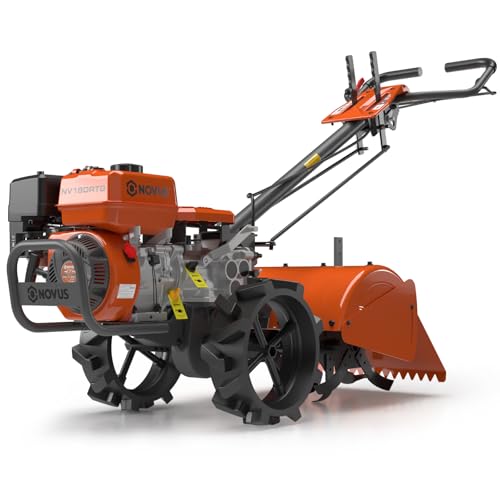
- 212cc engine with full gear transmission
- Forward and counter-rotating tine modes
- Two speeds, reverse, and eight-position depth control
Best For: Versatile tilling across small to large gardens
Easy-Control Choice
Earthquake Pioneer Dual Direction Tiller
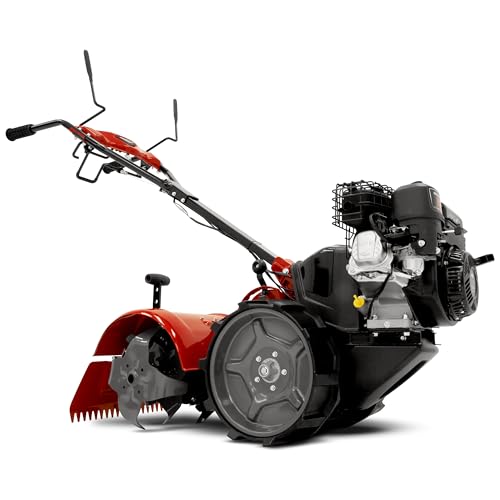
- CRT and SRT modes for breaking or maintaining soil
- Instant reverse for tight turns
- Balanced design with never-flat tires
Best For: Controlled bed preparation and garden maintenance
Heavy-Duty Versatility
NOVUS Dual Direction Rear Tine Tiller

- 212cc engine for compacted soil
- Dual rotating tines with independent controls
- 17-inch path and flat-free wheels
Best For: Large home gardens, vegetable plots, and farm use
Easy Maneuverability
EARTHQUAKE Pioneer Rear Tine Tiller

- CRT and SRT modes for varied soil work
- Instant reverse and balanced compact frame
- Airless traction wheels and five-year warranty
Best For: Tight garden spaces and controlled row-end maneuvering
Low-Maintenance Power
Poulan Pro Dual Direction Rear Tine Tiller

- 212cc engine with full gear transmission
- 18-inch width and up to 10-inch depth
- Dual rotation, two forward speeds, and flat-free tires
Best For: Deep, wide tilling in vegetable gardens and landscaping areas
Best Heavy-Duty Pick – Earthquake Victory Rear Tine Tiller
For gardeners comparing rear tine garden tillers for new ground, compacted soil, or clay, the Earthquake Victory emphasizes digging power and long-term durability. Its counter-rotating tines till a 16-inch path up to 10 inches deep, while Instant Reverse helps with turning in tight spaces.
Best For: Gardeners tackling hard soil who want deep counter-rotating tilling, reverse control, and a substantial warranty.
Pros:
- Counter-rotating tines are designed for tough clay, compacted soil, and new ground.
- 209cc Viper engine and cast-iron transmission with bronze gears support heavy-duty use.
- Instant Reverse and a three-position adjustable handlebar improve maneuverability and control.
- Includes a five-year limited warranty and U.S.-based customer support.
Cons:
- At 154 pounds, it may be demanding to move without engine power.
- The 16-inch tilling width covers less ground per pass than wider models.
The Victory is a strong choice when breaking difficult soil and durability matter more than maximum coverage. Its adjustable controls and reverse handle add practical value around fences and established beds.
Best Wide-Path Value – 212cc Gas Garden Tiller
This gas-powered option gives rear tine garden tillers shoppers a broad 22-inch working path and adjustable coverage. Its 212cc four-stroke engine, forward and reverse transmission, and removable steel tines are aimed at hard-packed soil, clay, and larger garden areas.
Best For: Homeowners and landscapers who want a wide tilling path with adjustable depth and working width.
Pros:
- 22-inch tilling width can reduce passes across larger areas.
- Three-level depth adjustment supports shallow cultivation or deeper soil breaking.
- Forward and reverse gears help with maneuvering and tight turns.
- Chain-driven transmission, alloy steel tines, and solid side wheels are designed for demanding terrain.
Cons:
- As a front-tine tiller, it may not provide the same rear-tine layout as the other models in this roundup.
- The supplied notes do not specify a warranty.
Its main advantage is flexibility: the wide path suits open garden spaces, while removable tines and depth settings accommodate tighter or shallower work. Minimal key-component assembly may also appeal to first-time owners.
Best Dual-Rotation Option – YARDMAX 18-Inch Rear Tine Tiller
YARDMAX 18 in. 212 cc Gas OHV Engine Rear Tine Tiller with Dual Rotating Tilling
Check Price On AmazonThe YARDMAX is a substantial choice among rear tine garden tillers, combining an 18-inch working width with a 212cc-class gas OHV engine. Its dual rotating tilling design gives buyers flexibility when comparing machines for garden preparation and soil turning.
Best For: Gardeners seeking a heavy rear-tine machine with dual-rotation capability and an 18-inch working width.
Pros:
- Dual rotating tilling design provides versatile soil-working capability.
- 212cc-class gas OHV engine supplies power for demanding garden work.
- 18-inch width balances coverage with a more manageable path than wider tillers.
- Machine, hardware, and manual are included.
Cons:
- At 208.5 pounds, it is the heaviest model in this comparison.
- The supplied notes do not provide specific tilling depth or control details.
- Engine displacement may vary between 209cc and 212cc depending on production timing.
The YARDMAX stands out for buyers who prioritize dual rotation and do not mind a notably heavy machine. Confirming the production specification may be worthwhile if engine displacement is important to your decision.
Best Compact Rear-Tine Balance – Pulsar 20-Inch Gas Tiller
The Pulsar offers a balanced setup for rear tine garden tillers shoppers who want a 20-inch path without the greatest listed weight. Its four 13-inch counter-rotating tines work to a stated depth of 6.5 inches, with forward and reverse controls for practical operation.
Best For: Gardeners wanting counter-rotating tines, a 20-inch path, and straightforward forward/reverse control.
Pros:
- Four counter-rotating tines provide a 20-inch tilling width.
- 212cc OHV engine is designed for heavy-duty soil separation.
- Built-in depth regulator helps maintain consistent depth, up to 6.5 inches.
- Tractor-style wheels offer neutral and drive settings, and oils are included.
Cons:
- Its listed maximum depth is shallower than the Earthquake Victory’s 10-inch depth.
- The supplied notes do not specify a warranty.
- At 154 pounds, it remains a substantial machine for transport and storage.
The Pulsar is a practical middle ground, pairing a relatively broad path with counter-rotating tines and a depth regulator. It is especially appealing when consistent, moderately deep tilling is more important than maximum digging depth.
Deep-Soil Power Pick – SuperHandy 7HP Rear Tine Tiller
The SuperHandy is a strong option among rear tine garden tillers when you need substantial digging power for demanding soil. Its 7HP gas engine, counter-rotating steel tines, and 16-inch working width are suited to preparing planting areas and vegetable beds.
Best For: Gardeners who want deep, wide tilling performance and adjustable controls for varied soil-preparation jobs.
Pros:
- 7HP engine and counter-rotating tines target tough soil.
- Tills up to 16 inches wide and 12 inches deep.
- Three-position handle adjustment and adaptable depth stake improve control.
- 13-inch agricultural tires support portability and relocation.
Cons:
- Gas-powered operation requires engine and fuel maintenance.
- Its deep-tilling capability may be more than needed for light garden upkeep.
Choose this model if your priority is aggressive soil preparation with useful depth and handle adjustments. Standard SAE 75 or SAE 80 gear oil can be used for maintenance, according to the supplied product information.
Most Versatile Transmission – NOVUS 18-Inch Dual Direction Tiller
The NOVUS combines an 18-inch working width with dual-direction tines, making it a flexible choice among rear tine garden tillers. Its 212cc four-cycle engine, full gear transmission, and multiple speeds support both ground breaking and routine garden cultivation.
Best For: Small to large gardens where forward and counter-rotating tine modes, adjustable depth, and easy maneuvering are important.
Pros:
- 212cc four-cycle engine is designed for heavy-duty tilling.
- Forward and counter-rotating tine modes handle different soil tasks.
- Full gear transmission is intended for durability and reduced maintenance.
- Two forward speeds, reverse, and eight-position depth adjustment add control.
Cons:
- Gas-powered operation requires routine fuel and engine care.
- Its 18-inch width may be less convenient in especially narrow beds.
The NOVUS stands out for offering a broad working path without giving up tine-direction flexibility. Airless tires, one- or two-hand operation, a two-year warranty, and lifetime technical support further emphasize practical ownership.
Easy-Control Choice – Earthquake Pioneer Dual Direction Tiller
The Earthquake Pioneer is a maneuverability-focused option among rear tine garden tillers. Its dual-direction tines, instant reverse, balanced design, and 17-inch tilling width are built to help with both new garden beds and ongoing soil maintenance.
Best For: Gardeners who want dual tine modes, straightforward reversing, never-flat tires, and a more balanced tiller design.
Pros:
- CRT mode tackles tough soil, while SRT mode suits weeding and maintenance.
- Instant reverse helps with turns and tight areas without stopping.
- Airless rubber tires with steel rims eliminate puncture and air-loss concerns.
- Three-position handlebar and one- or two-hand operation support user control.
Cons:
- Its 127cc engine is smaller than the engines in the other listed models.
- The supplied specifications list the item at 165 pounds, so it remains substantial to move.
This Pioneer model is compelling when control and maneuverability matter as much as digging strength. Its trailing rear shield is designed to leave a smoother, shaped finish, while the five-year product and two-year engine warranties add long-term coverage.
Heavy-Duty Versatility – NOVUS Dual Direction Rear Tine Tiller
For gardeners comparing rear tine garden tillers for compacted soil, the NOVUS combines a 212cc four-cycle engine with counter-rotating and forward-rotating tine modes. Its 17-inch path, independent controls, and flat-free wheels are suited to substantial garden and farm preparation work.
Best For: Home gardens, vegetable plots, and farm applications where deep tilling and adaptable tine direction are priorities.
Pros:
- 212cc gas engine delivers strong torque for hard soil.
- Dual tine rotation supports both loose and compacted ground.
- Independent drive and tine controls include forward, neutral, and reverse.
- Flat-free 14-inch wheels reduce puncture-related maintenance.
Cons:
- At 175 pounds, it is a substantial machine to move and operate.
- Its 17-inch working width is narrower than some larger tillers.
- According to the supplied notes, it cannot ship to California.
The NOVUS is a strong fit when soil-breaking power and control flexibility matter more than lightweight handling. Its two-year warranty and lifetime technical support add useful ownership reassurance.
Easy Maneuverability – EARTHQUAKE Pioneer Rear Tine Tiller
The EARTHQUAKE Pioneer is one of the more maneuverable rear tine garden tillers for gardeners who need to switch between breaking tough ground and smoothing a seedbed. Its compact design, instant reverse, airless wheels, and 17-inch width emphasize controlled operation in garden rows.
Best For: Gardeners working in tighter growing spaces who want dual-direction tilling and straightforward maneuvering.
Pros:
- CRT mode tackles sod and tough soil, while SRT mode helps create a smooth seedbed.
- Instant reverse simplifies backing up without shifting gears.
- Airless, aggressive-lug wheels provide traction without flat tires.
- Five-year warranty and US-based support provide strong coverage.
Cons:
- The 99cc engine is smaller than the 212cc engines in the other listed models.
- The supplied notes do not specify a tilling depth.
- It remains a gas-powered machine requiring fuel and engine maintenance.
The Pioneer stands out for ease of handling rather than maximum engine size. Its lighter, quieter 99cc engine and balanced frame may appeal to users prioritizing control, while the dual-direction system preserves versatility.
Low-Maintenance Power – Poulan Pro Dual Direction Rear Tine Tiller
The Poulan Pro is a practical option among rear tine garden tillers for demanding garden and landscaping jobs. It pairs a 212cc four-cycle engine with a full gear-driven transmission, dual tine rotation, an 18-inch path, and up to 10 inches of tilling depth.
Best For: Gardeners and property owners who want wide, deep tilling with a gear-driven design intended to minimize maintenance.
Pros:
- 212cc engine is designed for tough soil and demanding projects.
- Full gear-driven transmission provides consistent power with minimal belt-related maintenance.
- 18-inch width and up to 10-inch depth cover substantial ground.
- Dual-grip handlebars and flat-free tires support control and stability.
Cons:
- The 18-inch working width may be less convenient in very narrow beds.
- Its gas-powered design requires fuel and routine engine care.
- The supplied notes provide fewer specific details about the warranty than the Earthquake model.
Choose the Poulan Pro when coverage, depth, and drivetrain durability are central to your buying decision. Its two forward speeds, reverse, and dual-direction tines give it a useful balance of power and maneuverability.
How We Picked These Rear Tine Garden Tillers
We focused on specifications that directly affect performance and usability in real garden conditions. The selected models use gas engines ranging from compact 99cc and 127cc designs to larger 209cc and 212cc engines. We also considered working widths, stated tilling depth, gear-driven transmissions, reverse capability, wheel design, and whether the tines rotate forward, counter-rotate, or support both directions.
Because specifications can vary by configuration and seller, confirm the current product listing before purchase. A larger engine does not automatically make a tiller the best choice: working width, controls, weight, and storage requirements matter just as much.
Quick Comparison
- For maximum power: Choose a 209cc or 212cc model for hard soil, clay, and larger plots.
- For flexible soil preparation: Dual-direction tines let you switch between forward cultivating and counter-rotating digging.
- For tighter garden beds: A 16- to 18-inch tilling width is easier to control and maneuver than a 20- to 22-inch design.
- For easier repositioning: Instant reverse or forward-and-reverse controls can reduce lifting and turning at row ends.
- For smaller workloads: A 99cc or 127cc rear-tine model may be easier to handle, provided your soil is not exceptionally compacted.
Key Buying Factors for Rear Tine Garden Tillers
Engine Size and Soil Conditions
Engine displacement provides a useful indication of available power, but it should be matched to the job. Larger engines are generally better for breaking new ground, clay, and neglected beds. Smaller engines can be sufficient for maintaining established gardens and preparing already-loosened soil.
Tine Direction and Transmission
Counter-rotating tines are useful for digging into firm ground, while forward-rotating tines can help with cultivation and finishing. Dual-direction models offer more versatility. A full gear transmission and a clearly positioned reverse control can improve control when the machine becomes difficult to turn or reaches the end of a row.
Width, Depth, and Maneuverability
Wider tillers cover more ground per pass but need more room between rows and may be harder to steer. Narrower models suit raised beds and confined plots. Compare the advertised maximum depth with the adjustment range, since deep passes are often best made gradually rather than in one attempt.
Maintenance and Ownership
Gas tillers require fresh fuel, oil changes, air-filter care, and seasonal storage. Look for accessible controls, durable tires, a protected transmission, and replacement parts or service support. Check operating weight and storage dimensions before ordering; rear-tine machines are substantial equipment.
Who Should Buy Which Rear Tine Garden Tillers?
Buy a high-power 209cc or 212cc tiller if you routinely prepare large plots, break hard ground, or work in dense clay. Choose a dual-direction model if you want one machine for initial soil breaking, bed preparation, and later cultivation. Select a narrower 16- to 18-inch tiller for established vegetable beds, smaller properties, or tighter row spacing. Consider a compact 99cc or 127cc option when easier handling and lower fuel use matter more than maximum digging force.
Before buying, measure your garden access points, compare the machine’s width and weight, and confirm the tilling depth and tine-direction controls. The best rear tine garden tiller is the one that supplies enough power for your soil without adding unnecessary bulk for the work you actually do.