Curved edges, cutouts, and inside profiles are difficult to finish cleanly with a handheld sander. The best benchtop spindle sanders make that work more consistent by combining rotating sleeves with oscillating motion, helping reduce uneven wear and visible sanding marks.
This roundup compares 10 models across compact hobby machines, variable-speed options, belt-and-spindle designs, and heavier benchtop tools. Use the guide below to match motor power, table size, sanding capacity, and portability to the way you work.
Best 10 Benchtop Spindle Sanders Picks for 2026
Best Cast-Iron Precision Pick

- Cast-iron top for a stable work surface
- 2,000 RPM rotation and 58 OPM oscillation
- Six sleeves with drums, inserts, and storage
Best For: Stable contour sanding with multiple sleeve sizes
Best Versatile Belt-and-Spindle Option
WEN 6524 Belt and Spindle Sander
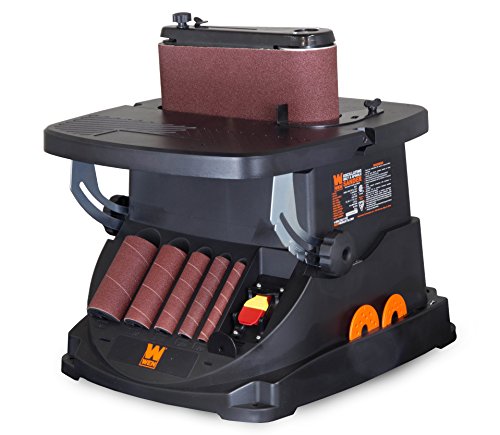
- Works with five spindle drum sizes
- Includes a 4 x 24-inch belt attachment
- Beveling table and accessory storage included
Best For: Users needing belt and spindle sanding in one machine
Best Heavy-Duty Construction Pick
JET JBOS-5 Oscillating Spindle Sander
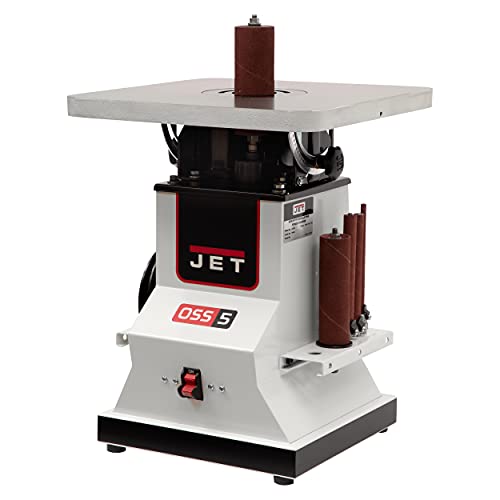
- 1/2-horsepower motor with precision spindle support
- Cast-iron table tilts to 45 degrees
- Includes five spindle assemblies and 100-grit paper
Best For: Durable shop use and bevel sanding
Best Straightforward Dust-Collection Pick
WEN 6510T Oscillating Spindle Sander
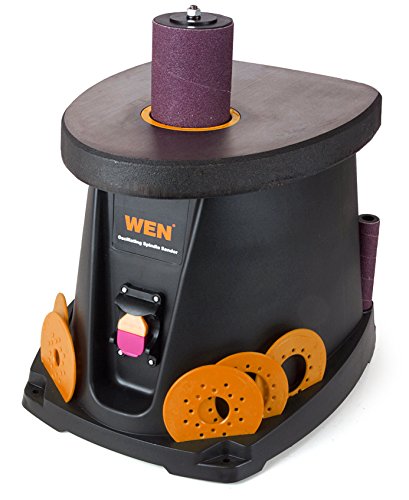
- 3.5-amp motor reaches 2,000 RPM
- Oscillates at 58 OPM
- Onboard dust port and accessory storage
Best For: Home workshops prioritizing dust extraction
Best for Easy Setup
VEVOR Oscillating Belt and Spindle Sander
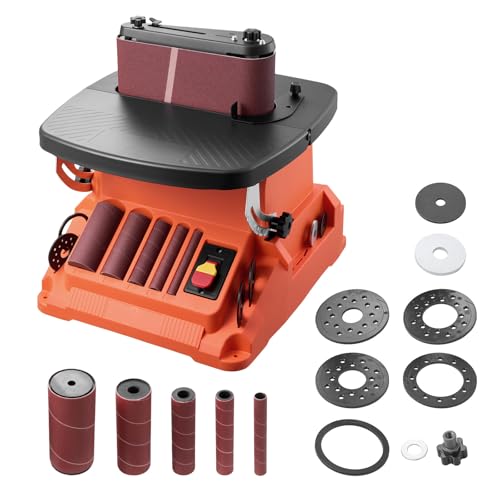
- Combines belt and spindle sanding
- 0–45° tilting worktable
- Includes five sleeve sizes and dust port
Best For: DIY woodworkers needing versatile belt and spindle sanding
Portable Convertible Pick
WEN HA5932 Variable Speed Spindle Sander
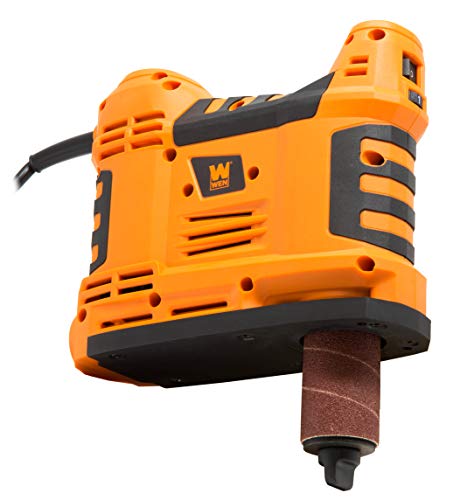
- Works handheld or clamped stationary
- Variable speed from 1,800–3,200 RPM
- Includes four spindle sizes and accessories
Best For: Compact shops needing handheld and benchtop flexibility
Spacious Table Pick
VEVOR 2400RPM Oscillating Spindle Sander

- 15.6-by-11.6-inch cast iron table
- Includes six sleeve sizes up to 3 inches
- 5/8-inch stroke and vacuum dust port
Best For: Furniture and DIY work requiring stable, spacious support
Best Overall Value
WEN AT6535 Oscillating Spindle Sander
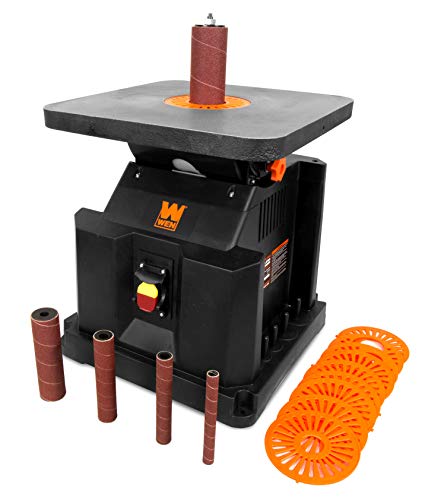
- Five sanding sleeve sizes from 1/2 to 2 inches
- Large 45-degree beveling table
- Onboard accessory and sandpaper storage
Best For: Versatile benchtop sanding with a spacious work surface
Best Variable-Speed Pick
Woodskil Variable-Speed Spindle Sander

- Adjustable 1,000–1,800 RPM speed range
- Six sleeves from 1/2 to 3 inches
- Compact 26-pound design with dust port
Best For: Controlled sanding and portable workshop use
Best Heavy-Duty Build
RIKON 50-300 Oscillating Spindle Sander

- All-steel construction with steel gearing
- Cast-iron tilting table and six inserts
- Five spindle diameters from 1/2 to 2 inches
Best For: Stable, dedicated workshop sanding of curved edges
Best Cast-Iron Precision Pick – Triton TSPS450
The Triton TSPS450 is a sturdy benchtop spindle sander for shaping contours, arcs, curves, and other irregular profiles. Its 3.5-amp motor combines 2,000 RPM rotation with 58 OPM oscillation for efficient sanding and a consistent finish.
Best For: Woodworkers who want a cast-iron-top sander with broad sleeve-size coverage and organized accessory storage.
Pros:
- Cast-iron top supports a stable sanding setup.
- Rotating and oscillating action helps improve speed and finish quality.
- Includes six sanding sleeves, matching rubber drums, and table inserts.
- On-board storage keeps accessories together.
Cons:
- Its 3.5-amp motor is corded rather than cordless.
- The supplied details identify 80-grit sanding media, which may require additional grits for varied finishing work.
With sleeves ranging from 1/2 to 3 inches, the TSPS450 is a versatile choice for contour work. It is especially appealing when stability and included accessories matter more than portability.
Best Versatile Belt-and-Spindle Option – WEN 6524 Belt and Spindle Sander
The WEN 6524 expands benchtop spindle sanders into a two-format tool by combining oscillating spindle sanding with a 4 x 24-inch belt attachment. It offers spindle speeds up to 2,000 RPM, belt speeds up to 1,575 FPM, and a beveling work table for added flexibility.
Best For: DIYers and woodworkers who want one machine for both spindle and belt sanding.
Pros:
- Supports five spindle drum sizes from 1/2 to 2 inches.
- Includes a 4 x 24-inch belt sanding attachment.
- Oscillates the belt and spindle 58 times per minute with a 5/8-inch stroke.
- Includes a beveling table, throat plates, drums, belt attachment, and six pieces of 80-grit sandpaper.
Cons:
- The 27-pound unit is relatively substantial for a benchtop tool.
- The supplied sanding media is 80 grit, so other grits may need to be purchased separately.
The 6524 stands out for versatility rather than a spindle-only design. Choose it when switching between belt and drum sanding is more useful than keeping the machine as simple as possible.
Best Heavy-Duty Construction Pick – JET JBOS-5 Oscillating Spindle Sander
The JET JBOS-5 is a robust benchtop spindle sander built around a 1/2-horsepower motor, precision ball-bearing spindle support, and a sealed, lubricated oscillation mechanism. Its cast-iron table tilts to 45 degrees for bevel sanding and provides a substantial 14-1/2-by-14-1/2-inch work surface.
Best For: Woodworkers prioritizing durable construction, bevel sanding, and smooth mechanical operation.
Pros:
- Precision ball bearings and a heavy-duty worm-and-gear mechanism support consistent oscillation.
- Sealed lubrication helps protect the oscillation gears.
- 45-degree tilting cast-iron table accommodates bevel sanding.
- Includes five spindle assemblies, table inserts, and 100-grit paper.
Cons:
- Its included spindle sizes are more limited than kits offering six or more sleeves.
- The supplied details do not specify a dust-collection port.
The JBOS-5 is a strong fit for demanding shop use where table rigidity and mechanism durability are key concerns. Its 1-inch oscillating action is also designed to reduce heat and extend sleeve life.
Best Straightforward Dust-Collection Pick – WEN 6510T Oscillating Spindle Sander
The WEN 6510T is a straightforward benchtop spindle sander with a 3.5-amp motor, 2,000 RPM spindle speed, and 58 OPM oscillation. Its onboard dust port lets you connect a dust extractor to help reduce cleanup during sanding.
Best For: Home workshops seeking an accessible spindle sander with accessory storage and dust-extraction capability.
Pros:
- 1/2-horsepower, 3.5-amp motor provides 2,000 RPM and 58 OPM.
- Dust port supports connection to a dust collector of your choice.
- Onboard storage keeps accessories organized.
Cons:
- The supplied details do not list included spindle sizes or table inserts.
- A separate dust extractor is needed to use the dust port.
- Its 30.2-pound weight may make repositioning less convenient.
The 6510T focuses on the core spindle-sanding functions while adding practical storage and dust management. It is a sensible option when cleanup control is a priority and you already have, or plan to add, a compatible extractor.
Best for Easy Setup – VEVOR Oscillating Belt and Spindle Sander
For shoppers comparing benchtop spindle sanders, this VEVOR model stands out by combining a sanding belt with oscillating spindle capability. Its 2,400 RPM motor, 5/8-inch stroke, and included sleeve sizes support flat, curved, and contoured woodworking tasks.
Best For: DIY woodworkers and furniture finishers who want both belt and spindle sanding in one benchtop machine.
Pros:
- Combines a 24-inch belt with five spindle sleeve sizes from 1/2 to 2 inches.
- 0–45-degree tilting worktable accommodates angled sanding.
- Dust port supports connection to a vacuum, while onboard storage keeps accessories organized.
Cons:
- Its corded design and 37.5-pound weight make it less convenient to move frequently.
- The included sanding setup is specified at 80 grit, limiting the supplied grit selection.
This is a practical choice when flexibility matters more than a compact footprint. The belt-and-spindle combination broadens its usefulness for furniture, crafts, and general DIY work.
Portable Convertible Pick – WEN HA5932 Variable Speed Spindle Sander
Among benchtop spindle sanders, the WEN HA5932 is a flexible option for users who need portability. It can be used handheld or clamped to a workbench, with variable speed from 1,800 to 3,200 RPM and a 1/4-inch stroke.
Best For: Woodworkers who need handheld sanding flexibility but occasionally want stationary benchtop operation.
Pros:
- Lightweight portable design helps with hard-to-reach sanding.
- Converts to stationary use with the included mounting hardware.
- Includes four spindle diameters, sanding sleeves, clamps, a guide plate, and a 1-1/2-inch dust port.
- Variable-speed motor provides 1,800–3,200 RPM adjustment.
Cons:
- Its 1/4-inch stroke is shorter than the 5/8-inch stroke on the two VEVOR models in this roundup.
- Stationary operation requires clamping it to a workbench.
The WEN is best viewed as a portable sander that can double as a benchtop tool, rather than a dedicated full-size machine. That tradeoff makes it appealing for compact shops and occasional sanding away from the bench.
Spacious Table Pick – VEVOR 2400RPM Oscillating Spindle Sander
This VEVOR is a straightforward benchtop spindle sander designed around stable, spacious work support. Its 15.6-by-11.6-inch cast iron table, 2,400 RPM speed, and 5/8-inch stroke suit furniture finishing, craft work, and DIY woodworking.
Best For: Users who prioritize a broad, stable work surface and a wide range of spindle sleeve sizes.
Pros:
- Cast iron worktable provides a spacious 15.6-by-11.6-inch support area.
- Six sleeve sizes cover 1/2, 3/4, 1, 1-1/2, 2, and 3 inches.
- 5/8-inch stroke supports both thin and thick workpieces.
- Large dust port is designed for vacuum connection, and integrated storage keeps accessories accessible.
Cons:
- It is a corded 110-volt machine, so placement depends on access to power.
- The supplied sanding sleeves are listed as 80 grit, with no additional grit selection noted.
Choose this model when table space and sleeve coverage are more important than belt-sanding capability. Its cast iron table and six included sizes make it well suited to varied contour-sanding projects.
Best Overall Value – WEN AT6535 Oscillating Spindle Sander
WEN AT6535 3.5-Amp Oscillating Spindle Sander with Extra Large Beveling Table Top
Check Price On AmazonThe WEN AT6535 is a versatile choice among benchtop spindle sanders, combining a 3.5-amp motor with five sanding sleeve sizes for curved edges, contours, and general shop work. Its large beveling table and onboard storage add practical convenience for woodworkers.
Best For: Woodworkers who want broad sleeve-size flexibility and a spacious work surface.
Pros:
- Includes five sleeve sizes from 1/2 inch to 2 inches.
- Large 14-1/2-by-14-1/2-inch table bevels up to 45 degrees.
- Onboard storage keeps accessories and sandpaper organized.
- Oscillates 58 times per minute with a 5/8-inch stroke.
Cons:
- The fixed-speed motor operates at 2,000 RPM.
- At 33.2 pounds, it is less portable than lighter compact models.
Choose the WEN if table space, accessory organization, and multiple spindle diameters matter more than variable-speed control. It offers a well-rounded setup for varied benchtop sanding tasks.
Best Variable-Speed Pick – Woodskil Variable-Speed Spindle Sander
The Woodskil variable-speed model stands out among benchtop spindle sanders for its adjustable 1,000-to-1,800 RPM range. Its 4-amp motor, six included sleeves, dust port, and 26-pound compact design make it suited to both detail work and larger sanding projects.
Best For: DIYers and woodworkers who want speed control and a portable footprint.
Pros:
- Variable speed from 1,000 to 1,800 RPM supports more controlled sanding.
- Includes six sleeve sizes from 1/2 inch to 3 inches.
- 4-amp motor is designed for hardwood and larger projects.
- Dust port can connect to a vacuum system.
Cons:
- Its maximum speed is lower than the 2,000 RPM WEN model.
- The supplied notes do not specify table bevel capacity or onboard storage.
The Woodskil is a strong fit when adjustable speed and portability are priorities. Its sleeve range and dust-port compatibility also give it useful flexibility for contours, slots, and detail work.
Best Heavy-Duty Build – RIKON 50-300 Oscillating Spindle Sander
The RIKON Power Tools 50-300 is a heavy-duty option among benchtop spindle sanders, built around an all-steel construction, steel gearing, and a cast-iron tilting table. Its 1/2 HP motor and five spindle diameters are geared toward stable, accurate sanding of curved board edges.
Best For: Shops that prioritize a robust metal build and substantial workpiece support.
Pros:
- All-steel construction includes heavy-duty gearing and metal housing.
- Cast-iron tilting table supports angled work.
- Includes five spindle diameters from 1/2 inch to 2 inches and six table inserts.
- 15/16-inch oscillation occurs 29 times per minute for abrasive cutting action.
Cons:
- Its approximately 76-to-80-pound weight limits portability.
- The supplied notes do not indicate variable-speed control.
- Its 2.5-amp rating is lower than the Woodskil’s 4-amp motor.
The RIKON makes sense for a dedicated workshop where stability and durable construction outweigh easy relocation. Its tilting cast-iron table and included inserts add useful setup flexibility for curved-edge work.
How We Picked These Benchtop Spindle Sanders
We focused on the features that matter most when sanding curves and interior profiles: motor output, oscillating action, spindle and sleeve size range, worktable design, stability, speed control, dust-collection compatibility, and ease of changing accessories. The selection includes compact 3.5-amp machines for occasional woodworking, more versatile variable-speed models, combination belt-and-spindle sanders, and heavier tools intended for frequent shop use.
Because specifications and included accessories can vary by seller or production revision, confirm the current package contents, voltage, warranty, and replacement-sleeve availability before ordering.
Quick Comparison
| Best For | What to Prioritize | Models to Consider |
|---|---|---|
| Occasional hobby use | Compact footprint, simple controls, included sleeves | WEN 6510T, WEN AT6535, Woodskil |
| Versatile shaping | Multiple spindle sizes, belt attachment, strong dust collection | WEN 6524, VEVOR combination model |
| Speed-sensitive materials | Variable-speed control and steady tracking | WEN HA5932, Woodskil |
| Frequent shop work | Rigid construction, larger table, stronger motor | JET JBOS-5, RIKON 50-300, Triton TSPS450 |
Key Buying Factors for Benchtop Spindle Sanders
Motor Power and Oscillation
A higher-rated motor can maintain speed more effectively under pressure, but power alone does not determine performance. Smooth oscillation, a stable base, and low vibration are equally important. Avoid forcing the workpiece; light passes produce cleaner results and reduce heat buildup.
Spindle Sizes and Accessories
Small sleeves handle tighter curves, while larger drums are better for broad profiles and faster material removal. Check both the included diameter range and the cost of replacement sleeves. A belt attachment can add useful versatility, but it may not replace a dedicated edge sander for long straight edges.
Table Size, Beveling, and Stability
A larger cast-iron or reinforced table supports bigger workpieces and makes controlled sanding easier. If you routinely sand angled edges, look for a table that bevels securely and has clear adjustment markings. Mounting holes or a heavy base are valuable when vibration or tipping could affect accuracy.
Dust Collection and Workspace
Look for a compatible dust port and plan to connect a shop vacuum or extractor. Dust collection will not capture every particle, especially around open sleeves, so eye protection and a suitable dust mask remain sensible. Measure your bench space before buying; these tools need clearance for the workpiece as well as the machine.
Who Should Buy Which Benchtop Spindle Sanders?
Choose a compact entry-level model if you mostly make small projects and want straightforward curved-edge sanding without a large investment. A combination belt-and-spindle machine is a better fit when you want one tool for both inside curves and narrow edge work.
Buy a variable-speed model if you work with different wood species, delicate parts, or materials that benefit from slower sanding. For frequent production, larger projects, or maximum stability, prioritize a rigid table, stronger motor, and dependable oscillating mechanism over the lowest price. Whichever model you choose, verify replacement-part support and secure the sander to your bench when precision matters.