Choosing among gas log splitters comes down to more than maximum tonnage. Engine output, hydraulic speed, log capacity, frame design, and towing features all affect how efficiently you can turn logs into firewood.
We compared 10 popular models across portable, half-beam, and full-beam designs to help you match the splitter’s power and handling requirements to your workload.
Best 10 Gas Log Splitters Picks for 2026
Portable Power Pick
Landworks 20-Ton Gas Log Splitter

- 7 HP engine with 20-ton rated force
- Splits logs up to 20 inches long
- 7.5-second cycle and transport wheels
Best For: Portable outdoor firewood splitting
Heavy-Duty Workhorse

- 33-ton capacity with a 223cc OHV engine
- Heavy-duty H-beam structural design
- Adjustable auto-return valve and internal oil filter
Best For: High-volume, stationary firewood processing
Compact Convenience Choice

- 7 HP engine and 20-ton splitting capacity
- 7.5-second cycle for efficient splitting
- Folding handle and 10-inch polyurethane wheels
Best For: Mobile home and property firewood work
Maximum Capacity Pick

- 40-ton force from a 338cc OHV engine
- Converts between horizontal and vertical modes
- Auto return supports over 300 cycles per hour
Best For: Large logs and frequent heavy-duty splitting
Efficient Home Firewood Workhorse
22-Ton BILT HARD Gas Log Splitter
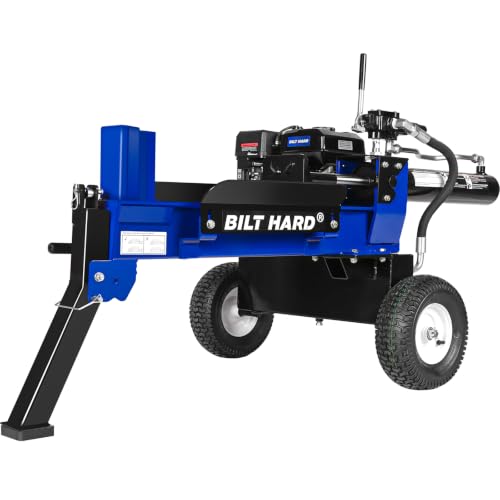
- 22 tons of hydraulic splitting force
- 7-second cycle with a 14 GPM two-stage pump
- Handles logs up to 21 inches; towable on 13-inch wheels
Best For: Homeowners and small-property firewood processing
Portable Half-Beam Option
SuperHandy 25-Ton Gas Log Splitter

- 25 tons of force for logs up to 24 inches in diameter
- Horizontal and vertical splitting positions
- Folding handle and 10-inch polyurethane wheels
Best For: Portable firewood and forestry splitting
Heavy-Duty Towable Choice
27-Ton BILT HARD Gas Log Splitter

- 27-ton-rated force with horizontal and vertical modes
- Handles logs up to 24 inches long
- 16-inch DOT tires and 2-inch ball coupler for towing
Best For: Large rounds, woodlots, and demanding property work
Best Fast-Cycle Pick

- 8-second cycle time
- 209cc, 7HP engine with 20-ton force
- Handles logs up to 20.5 x 16 inches
Best For: Homeowners processing routine firewood quickly
Best Maximum-Power Option

- 389cc, 13HP engine with 40-ton force
- Horizontal and vertical splitting modes
- Tows with 16-inch DOT tires and 2-inch coupler
Best For: Large hardwood and high-volume firewood jobs
Best Midrange Heavy-Duty Pick
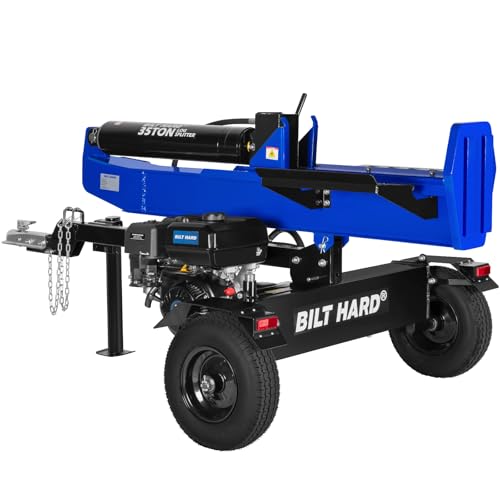
- 301cc, 10HP engine with 35-ton force
- Horizontal/vertical operation
- Handles logs up to 24 inches
Best For: Heavy-duty property maintenance and firewood processing
Portable Power Pick – Landworks 20-Ton Gas Log Splitter
For homeowners comparing gas log splitters, the Landworks 20-ton model emphasizes portability without giving up useful splitting power. Its 7 HP engine, 20-inch log capacity, and rapid auto-return cycle suit routine firewood work away from an electrical outlet.
Best For: Portable outdoor splitting jobs and homeowners who need a compact gas-powered unit.
Pros:
- 7 HP engine and 20-ton rated splitting force
- Handles logs up to 20 inches long and 16 inches in diameter
- 10-inch transport wheels and 7.5-second cycle reset support efficient work
Cons:
- Hydraulic fluid is not included
- Horizontal-only design may be less convenient for very large, heavy logs
- Gas operation requires outdoor use with proper ventilation
At 130 pounds before packaging, this is one of the more maneuverable options in the group. It is a practical choice when transport and quick setup matter more than maximum tonnage.
Heavy-Duty Workhorse – Full Boar 33-Ton Log Splitter
Among gas log splitters, the Full Boar 33-ton model is aimed at demanding jobs where extra force and a substantial frame are priorities. Its 223cc OHV engine, H-beam construction, and adjustable auto-return valve are designed for repeatable splitting.
Best For: High-volume firewood work and users who want more capacity than a compact 20-ton splitter provides.
Pros:
- 33-ton splitting force from a 223cc Full Boar OHV engine
- Heavy-duty H-beam structural design
- 14.3-second cycle and adjustable auto-return control valve
- Internal hydraulic oil filter helps protect it from falling logs and entanglement
Cons:
- At 473 pounds, it is substantially less portable than compact models
- Supplied notes do not specify horizontal-to-vertical conversion
- Cycle time is slower than the 20-ton compact models listed here
This splitter favors stability and force over easy transport. Its heavier construction makes sense for a dedicated splitting area and larger workloads.
Compact Convenience Choice – SuperHandy 20-Ton Splitter
The SuperHandy 20-ton splitter is a practical option for shoppers seeking gas log splitters with a portable format. Its 7 HP engine, 7.5-second cycle, folding handle, and tubeless wheels make it suited to moving between wood piles or work sites.
Best For: Homeowners who want a maneuverable splitter for logs up to 20 inches long.
Pros:
- 7 HP four-stroke OHV engine paired with a two-stage Bucher hydraulic pump
- Handles logs up to 20 inches long and 16 inches in diameter
- Folding handle and 10-inch polyurethane wheels improve transport
- 7.5-second cycle supports quick repeat splitting
Cons:
- Hydraulic fluid is not included
- 20-ton capacity is less suited to exceptionally large or difficult logs
- Gas-powered operation requires proper protective equipment and outdoor use
With a 130-pound platform and folding transport design, the SuperHandy balances capability with mobility. It is especially appealing when storage and setup convenience are important.
Maximum Capacity Pick – Champion 40-Ton PRO Splitter
For shoppers comparing heavy-duty gas log splitters, the Champion 40-Ton PRO model stands out for its high capacity and horizontal-to-vertical flexibility. Its 338cc engine and large operator area are built for handling large, heavy logs.
Best For: Serious firewood processing involving oversized or heavy logs and frequent use.
Pros:
- 40-ton splitting capacity with a 338cc Champion OHV engine
- Converts from horizontal to vertical operation in seconds
- 11.3-second cycle and auto-return valve support over 300 cycles per hour
- Can be towed at up to 70 mph and fits most ATV/UTV applications
Cons:
- At 767 pounds, it is the heaviest option in this roundup
- Its large footprint requires substantial storage and operating space
- Shorter users may find moving large logs easier in vertical mode than horizontal mode
This is the capacity-focused choice rather than a lightweight portable splitter. The vertical mode, towing capability, and high-throughput design make it a strong fit for demanding workloads.
Efficient Home Firewood Workhorse – 22-Ton BILT HARD Gas Log Splitter
For homeowners, farms, and outdoor work, this gas log splitter combines 22 tons of hydraulic force with a 209cc engine and a claimed 7-second cycle time. Its horizontal design, 21-inch log capacity, and towable 13-inch wheels make it a practical option for routine firewood processing around a property.
Best For: Homeowners and small-property users splitting hardwood and seasoned logs up to 21 inches long.
Pros:
- 22 tons of force supports hardwood and seasoned firewood.
- 14 GPM two-stage pump and 7-second cycle time promote efficient operation.
- Rugged steel frame and 13-inch wheels support outdoor use and transport.
Cons:
- Horizontal-only operation may require lifting heavier rounds.
- At 274 pounds, it is not especially lightweight to move manually.
- Its 21-inch capacity is smaller than models designed for longer logs.
This BILT HARD model is a balanced choice among gas log splitters when dependable force and faster cycling matter more than vertical operation or maximum log capacity.
Portable Half-Beam Option – SuperHandy 25-Ton Gas Log Splitter
The SuperHandy 25-ton gas log splitter is built for users who want substantial splitting force in a portable package. Its 7HP engine, Bucher two-stage pump, half-beam frame, and horizontal/vertical wedge setup are suited to logs up to 20 inches long and 24 inches in diameter.
Best For: Users seeking a portable splitter for varied firewood and forestry work, including larger-diameter rounds.
Pros:
- 25 tons of force handles logs up to 24 inches in diameter.
- Horizontal and vertical operation provides flexibility when positioning rounds.
- Folding handle, 10-inch polyurethane wheels, and half-beam design aid portability.
- 7HP engine and two-stage Bucher pump provide consistent gas-powered operation.
Cons:
- Its stated 12-second cycle is slower than some competing models.
- Hydraulic fluid is not included and AW32 fluid is recommended.
- Capacity is limited to logs up to 20 inches long.
Choose this SuperHandy model if portability and vertical splitting are priorities. The larger diameter rating is useful for substantial rounds, while the folding design makes storage and movement easier.
Heavy-Duty Towable Choice – 27-Ton BILT HARD Gas Log Splitter
For larger properties and woodlots, this BILT HARD gas log splitter pairs a 209cc OHV engine with a two-stage pump and a tow-ready chassis. Its horizontal and vertical modes, 24-inch log capacity, 16-inch DOT tires, and 2-inch ball coupler are designed for moving and processing heavier firewood loads.
Best For: Property owners who need a towable splitter for large rounds and demanding firewood jobs.
Pros:
- 27-ton-rated design and a hardened 7-inch wedge suit demanding splitting tasks.
- Horizontal and vertical operation lets users split large rounds on the ground.
- 16-inch DOT tires, safety chains, and 2-inch coupler support towing behind suitable vehicles.
- 11 GPM pump, 13-second cycle, and included hydraulic and engine oil support setup.
Cons:
- Its larger towable frame may be excessive for occasional light-duty use.
- The stated 13-second cycle is slower than the fastest model in this group.
- Towing requires a compatible vehicle and suitable hitch setup.
This is the strongest fit among these gas log splitters for users processing large rounds away from the garage. Vertical operation reduces lifting demands, while the tow package supports transport to a woodlot or work area.
Best Fast-Cycle Pick – 20-Ton Gas Log Splitter
For homeowners comparing gas log splitters, this 20-ton Hushlight model emphasizes quick cycles, manageable portability, and enough capacity for logs up to 20.5 inches by 16 inches. Its 209cc, 7HP engine and dual-gear hydraulic pump are suited to regular household firewood work.
Best For: Homeowners who want fast firewood processing and a relatively compact gas-powered splitter.
Pros:
- Completes cycles in about 8 seconds and is rated for up to 450 splits per hour.
- 209cc, 7HP engine provides 20 tons of splitting force.
- 10-inch pneumatic wheels and a steel frame support transport and durability.
- Handles logs up to 20.5 inches by 16 inches.
Cons:
- Its 20-ton capacity is lower than the larger 35- and 40-ton options in this roundup.
- Horizontal-only operation may be less convenient for especially large logs.
- At 146 pounds, it still requires care when moving and positioning.
This is a practical choice when cycle speed and easier handling matter more than maximum splitting force. The automatic return and compact design can make routine firewood sessions more efficient.
Best Maximum-Power Option – BILT HARD 40-Ton Log Splitter
If you need substantial power from gas log splitters, this BILT HARD model delivers 40 tons of force from a 389cc, 13HP OHV engine. Its horizontal/vertical design, large tires, and towing hardware make it aimed at demanding, high-volume firewood work.
Best For: Users tackling tough hardwoods, large logs, and extended splitting sessions where maximum force and towability are priorities.
Pros:
- 40-ton splitting force handles demanding hardwood applications.
- Horizontal and vertical modes reduce the need to lift extra-large logs.
- 16-inch DOT-certified tires, a 2-inch ball coupler, and safety chains support towing.
- Processes logs up to 24 inches with a 16-second cycle time.
Cons:
- The high-capacity design is likely more machine than needed for occasional light-duty use.
- Its package dimensions are substantial, requiring adequate storage and transport space.
- The supplied package weight information may warrant verifying actual shipping and handling requirements before purchase.
Choose this model when splitting force and mobility across a worksite outweigh compactness. The vertical mode is especially useful for processing heavy logs without lifting them onto the beam.
Best Midrange Heavy-Duty Pick – BILT HARD 35-Ton Log Splitter
This 35-ton BILT HARD is a strong middle ground among gas log splitters, pairing a 301cc, 10HP OHV engine with horizontal and vertical operation. It is built for logs up to 24 inches and includes towing features for moving the machine between work areas.
Best For: Property owners who want heavy-duty splitting capacity without stepping up to the 40-ton model.
Pros:
- 35 tons of force provide substantial capacity for hardwood logs.
- Switches between horizontal and vertical modes to reduce lifting strain.
- 16-inch DOT-certified tires and a 2-inch ball coupler support towing.
- Processes logs up to 24 inches with 16-second cycles.
Cons:
- At 640 pounds, it is a very heavy machine to store or reposition.
- The 16-second cycle is slower than the 20-ton model’s stated cycle time.
- Its large full-beam design may be excessive for occasional small-batch firewood.
The 35-ton model makes sense for buyers who need serious splitting performance and vertical operation but do not require the top force rating of the 40-ton version. Its towing setup adds useful flexibility for larger properties.
How We Picked These Gas Log Splitters
We focused on the specifications that matter most in real firewood work: advertised splitting force, engine size, hydraulic pump design, cycle time, log capacity, operating orientation, portability, and towing equipment. The selection includes compact 20-ton models for occasional residential use as well as 35- and 40-ton machines intended for larger logs, tougher hardwood, and heavier seasonal workloads.
Because manufacturer specifications and included equipment can vary, confirm the current product listing for details such as wheel size, ball-coupler rating, hydraulic fluid requirements, warranty coverage, and whether road towing is permitted in your area.
Quick Comparison
| Best For | Typical Choice | What to Look For |
|---|---|---|
| Occasional home firewood | 20-ton splitter | Compact frame, easy controls, adequate cycle speed |
| Mixed household workloads | 22- to 27-ton splitter | Horizontal/vertical operation and useful log capacity |
| Large hardwood rounds | 33- to 40-ton splitter | Higher force, rigid full-beam frame, larger engine |
| Frequent or team use | Fast-cycle heavy-duty model | Auto return, durable hydraulics, comfortable workflow |
Key Buying Factors for Gas Log Splitters
Splitting Force
Ton ratings provide a useful starting point, but they are not the only measure of performance. A 20-ton machine can handle many common residential logs, while higher-force models provide more margin for large, knotty, or stringy hardwood. Choose extra capacity if you regularly split oversized rounds or do not want to pre-cut difficult pieces.
Engine and Hydraulic System
Gas models are suited to remote work because they do not require an electrical outlet. Compare engine displacement, rated horsepower, pump type, hydraulic flow, and cycle time. A quicker cycle can improve productivity, but only if the machine maintains reliable force and has controls that are easy to operate repeatedly.
Horizontal and Vertical Operation
Horizontal splitting is convenient for smaller rounds that can be lifted onto the beam. Vertical mode lets you roll heavy rounds into position instead, reducing lifting strain. If logs vary widely in size, a machine supporting both orientations is often worth the added cost and weight.
Frame, Capacity, and Transport
Check the maximum log length and diameter against your usual supply. Full-beam frames generally favor rigidity and heavy-duty use, while half-beam designs may reduce weight. For towable units, inspect the coupler, tires, fenders, safety chains, and intended towing speed. Never assume a splitter is road legal without checking its manual and local regulations.
Maintenance and Safety
Look for accessible hydraulic components, protected hoses, a stable work height, and clear two-handed or guarded controls where applicable. Plan for engine oil changes, hydraulic-fluid checks, filter service, fuel storage, and wedge inspection. Operate on level ground, wear eye and hearing protection, and keep bystanders away from the splitting area.
Who Should Buy Which Gas Log Splitters?
Choose a compact 20-ton model if you process moderate amounts of seasoned firewood and value easier storage or movement. Move to a 22- or 27-ton horizontal/vertical splitter for mixed log sizes, heavier hardwood, and more frequent household use. Choose a 33- to 40-ton full-beam machine when maximum force, structural durability, and high-volume processing matter more than portability. For regular multi-person work, prioritize auto-return controls, a fast cycle, comfortable access to the beam, and a design that minimizes repeated lifting.