Clay soil can become dense enough to restrict air, water, and nutrients from reaching grass roots. The right aerator opens pathways through compacted soil so your lawn can drain better and develop a stronger root system.
We’ve selected 10 lawn aerators for clay soil, covering manual core tools, spike models, rolling designs, and liquid conditioners. Use the guide below to match the aeration method, depth, and workload to your yard.
Best 10 Lawn Aerators for Clay Soil Picks for 2026
Deep-Plug Clay Specialist

- Up to 4-inch core-aeration depth
- Non-clogging, replaceable hollow tines
- Steel frame with wide footplate
Best For: Deep manual aeration of compacted clay soil
Drainage Support Pick
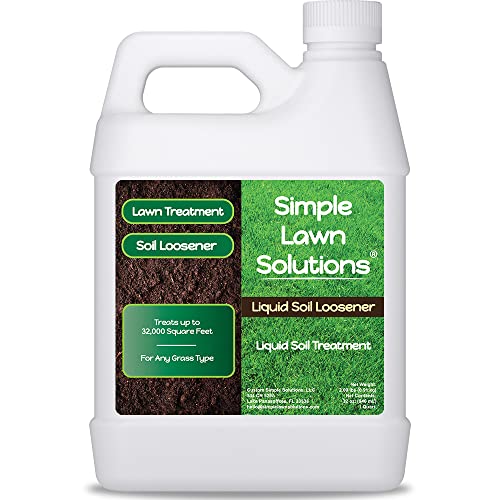
- Conditions compact soil for improved infiltration
- Covers up to 32,000 square feet
- Works alone or alongside core aeration
Best For: Clay lawns with standing water or poor drainage
Low-Clog Spike Option
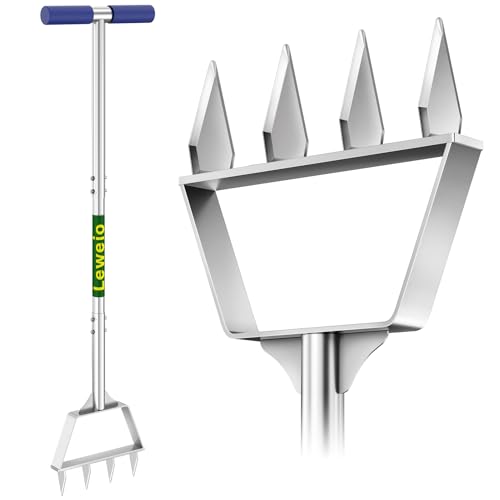
- Four heat-treated conical steel spikes
- Wide footplate for added downward force
- Designed to reduce clogging
Best For: Small and medium compacted lawns
Side-Eject Core Choice
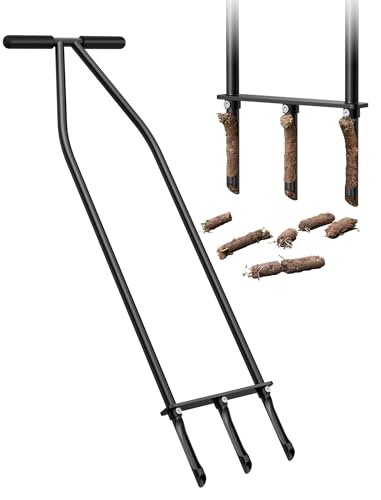
- Three hollow tines pull soil plugs
- Side-ejection design helps limit clogging
- Replaceable tines and knee-friendly footplate
Best For: Manual core aeration on moist, compacted lawns
Best Liquid Option

- Loosens compacted and clay soil
- Easy alternative to manual core aeration
- Made in the USA; safe for children and pets
Best For: Convenient liquid treatment for clay-heavy lawns and gardens
Best Manual Core Tool
Heavy Duty Steel Hollow Tine Aerator

- Removes soil cores with three hollow tines
- Steel construction with replaceable tines
- Long handle and wide foot plate aid control
Best For: Hands-on aeration of compacted or clay-friendly areas
Best Rolling Design

- Rolling rotary design extracts soil plugs
- Wheels aid movement across the lawn
- Built for small to medium lawns
Best For: Mobile manual coring where wheeled operation is preferred
Best with Extra Features

- Hose-end application minimizes heavy labor
- Designed for clay soil, compaction, and thatch
- Covers up to 6,000 square feet
Best For: Low-labor lawn treatment and gradual soil improvement
Best Deep-Penetrating Spike Tool

- Reaches 3.5 inches into compacted soil
- Eleven steel spikes support repeated step-on use
- Kick-to-unclog feature clears soil buildup
Best For: Manual aeration of hard and clay residential lawns
Best Core-Aeration Design

- Removes soil plugs from compacted lawns
- Hollow tines are designed to resist clogging
- Foot pedal and upright handle support manual use
Best For: DIY core aeration in compacted or clay soil
Deep-Plug Clay Specialist – 4-Inch Hollow-Tine Aerator
For shoppers comparing lawn aerators for clay soil, this manual core aerator stands out with a claimed maximum working depth of 4 inches. Its hollow tines remove soil plugs, while the wide footplate and reinforced steel frame help apply body weight to compacted ground.
Best For: Homeowners with small to medium lawn areas who want deep, manual core aeration and replaceable tines.
Pros:
- Hollow tines are designed to eject plugs and resist clogging.
- Reaches up to 4 inches deep for deeper compaction relief.
- Wide footplate, 37-inch height, and rubber grips support upright use.
- Replaceable tines can extend the tool’s service life.
Cons:
- Manual aeration requires repeated stepping and physical effort.
- The product is semi-assembled and requires setup before use.
This is a strong choice when depth and plug removal matter most. Watering dry soil first, as recommended, should make penetration more manageable.
Drainage Support Pick – Liquid Soil Loosener
Unlike the other lawn aerators for clay soil in this roundup, this product is a liquid soil conditioner rather than a poking tool. It is designed to support water infiltration and vertical drainage in compacted soil, either alone or alongside mechanical or core aeration.
Best For: Lawn owners dealing with compact soil, standing water, or poor drainage who want a treatment to pair with aeration.
Pros:
- Can be used alone or with mechanical and core aeration.
- One 32-ounce bottle covers up to 32,000 square feet.
- Suitable for a wide range of grass types.
- Made and manufactured in the United States.
Cons:
- It does not physically remove soil plugs or penetrate the lawn like a core aerator.
- Application requires a sprayer.
This is best viewed as a complementary lawn-care treatment, not a replacement for a manual or mechanical aerator. It may be especially useful where drainage is a primary concern.
Low-Clog Spike Option – Four-Tine Steel Aerator
For lawn aerators for clay soil that use solid spikes instead of hollow cores, this model focuses on straightforward penetration and reduced debris buildup. Its four heat-treated conical spikes, reinforced frame, and wide footplate are intended for compacted clay and other soil types.
Best For: Small and medium yards where a durable, lower-maintenance spike aerator is preferred over plug removal.
Pros:
- Four conical steel spikes are designed for deep penetration.
- Heat-treated, powder-coated steel supports durability and rust resistance.
- 37.4-inch height and cushioned T-handle allow upright operation.
- Polished triangular spike design is intended to reduce clogging.
Cons:
- Solid spikes loosen soil but do not remove cores like hollow tines.
- The tool is recommended for small and medium yards, so larger lawns may take considerable effort.
This option makes sense for buyers who prioritize a simple, sturdy design and fewer clogging interruptions. Choose a true core aerator instead if removing plugs is important to your lawn-care plan.
Side-Eject Core Choice – Alloy Steel Lawn Aerator
This lawn aerator for clay soil uses three hollow tines to pull plugs and create paths for air and water to reach the roots. Its side-ejection design directs plugs out through a ramp, while the footplate and integrally formed alloy-steel frame are built to make manual aeration more manageable.
Best For: Homeowners who want a replaceable-tine core aerator with a side-ejection design and a knee-friendly stepping layout.
Pros:
- Three hollow tines remove soil plugs for core aeration.
- Side ejection is designed to help prevent clogging.
- Replaceable tines can be removed or swapped as needed.
- Footplate design lets users apply force while keeping the knee unrestricted.
Cons:
- Three tines may require more force in especially hard areas.
- The tool works best when the grass is moist.
- Screws connecting the tines need to be tightened firmly.
This is a practical middle ground for shoppers who want core removal without frequently clearing blocked tines. Its option to remove the middle tine may also help when working through harder sections.
Best Liquid Option – Covington Liquid Lawn Aerator
For gardeners seeking lawn aerators for clay soil without using a manual coring tool, the Covington Liquid Lawn Aerator offers a convenient soil-conditioning approach. Its liquid formula is designed to loosen compacted soil, improve water movement, and support nutrient absorption across lawns and gardens.
Best For: Homeowners who want an easy liquid treatment for clay-heavy lawns, gardens, and compacted soil.
Pros:
- Designed to loosen compacted and clay soil while improving soil structure.
- Simple alternative to manual core aeration tools, plugs, and aerator shoes.
- Formulated with humic acids, amino acids, and kelp; the product is described as safe for children and pets.
- Made in the USA and suitable for lawns, gardens, and multiple soil types.
Cons:
- Liquid treatment does not physically remove soil cores like a hollow-tine aerator.
- Coverage and application rates vary from 4–9 ounces per 1,000 square feet.
This is a practical choice when convenience matters more than mechanical core removal. It is especially appealing for routine soil conditioning across larger lawn or garden areas.
Best Manual Core Tool – Heavy Duty Steel Hollow Tine Aerator
For shoppers comparing lawn aerators for clay soil, this three-tine manual core aerator provides direct, physical plug removal. Its hollow steel tines are designed to create pathways for air, water, and nutrients while its wide foot plate and long handle support a more controlled push-and-pull motion.
Best For: Gardeners who want a durable, hands-on tool for targeted core aeration in compacted or clay-friendly soil.
Pros:
- Hollow-tine design extracts soil cores rather than only puncturing the surface.
- Heavy-duty steel construction and replaceable tines support repeated use.
- Long handle, comfort grip, and wide foot plate are designed to improve handling.
- Includes tools for quick, semi-assembled setup.
Cons:
- Manual operation can require substantial effort, especially over larger lawns.
- Best results require watering dry areas 24 hours before use.
- The supplied instructions caution against sideways twisting or prying while tines are underground.
This model is a strong fit for users who specifically want true core extraction and do not mind the physical work. Replaceable tines add useful long-term flexibility for recurring lawn maintenance.
Best Rolling Design – Patented Rolling Lawn Aerator
This rolling lawn aerator is a mobile option for shoppers looking at lawn aerators for clay soil and compacted turf. Its rotary coring design extracts soil plugs as you push the tool, while the reinforced dual push rod and wheels are intended to make coverage more manageable across small to medium lawns.
Best For: Users who prefer a wheeled manual coring tool for small to medium lawns and garden areas.
Pros:
- Rolling rotary design pulls soil plugs to relieve compaction.
- Wheels support mobile push operation across the lawn.
- Designed to improve air, water, and nutrient absorption around grass roots.
- Heavy-duty construction and reinforced dual push rod are intended for regular use.
Cons:
- At 43.7 pounds, it is substantially heavier than a handheld manual aerator.
- Manual pushing still requires physical effort and may be less convenient on very large lawns.
- The supplied information positions it for small to medium lawns rather than extensive acreage.
The rolling format can be more efficient than repeatedly stepping on a handheld tool, particularly where transport and continuous movement are priorities. Its weight may help with plug pulling but should be considered before choosing it for a large property.
Best with Extra Features – Turf Titan Thatch Buster
For homeowners seeking lawn aerators for clay soil without the labor of pushing a manual tool, Turf Titan Thatch Buster is a hose-end liquid option. Its biological formula is designed to support soil loosening, drainage, root growth, and gradual thatch breakdown across lawns up to 6,000 square feet according to the product notes.
Best For: Homeowners who prefer a low-labor, hose-end lawn treatment for compacted or clay lawns.
Pros:
- Hose-end application requires no core aerator or raking.
- Designed to break down thatch and old clippings into usable nutrients.
- Supports airflow, drainage, root growth, and long-term soil vitality.
- One 32-ounce bottle is stated to cover up to 6,000 square feet.
Cons:
- Results are gradual, with noticeable improvement typically appearing in about 45 days.
- Requires consistent application and watering as directed.
- Liquid treatment does not physically remove soil cores.
Turf Titan is a practical choice when minimizing physical effort matters more than immediate mechanical aeration. It is best viewed as a gradual soil-building treatment rather than a quick substitute for removing plugs from severely compacted ground.
Best Deep-Penetrating Spike Tool – Heavy-Duty 11-Spike Aerator
This manual spike tool is a strong candidate among lawn aerators for clay soil when you want direct, step-on penetration. Its 11 steel spikes reach 3.5 inches deep, while the heavy-duty frame, adjustable handle, and kick-to-unclog feature are intended for repeated work in compacted lawns.
Best For: DIY users who want a durable manual spike aerator for hard or clay soil.
Pros:
- 3.5-inch tines are designed for deep penetration in compacted soil.
- Eleven steel spikes help open pathways for air, water, and nutrients.
- Kick-to-unclog design helps clear mud and soil buildup quickly.
- Bolt-on base can be serviced or replaced, and the tool arrives pre-assembled.
Cons:
- Manual step-on operation requires physical effort.
- Spike aeration does not remove soil plugs.
- Heavy-duty construction weighs 8.34 pounds.
Choose this model when depth, serviceability, and straightforward mechanical action are priorities. It should suit smaller residential areas and demanding soil, though larger lawns may require substantial time and effort because the tool is manually operated.
Best Core-Aeration Design – Two-Tine Manual Core Aerator
For shoppers comparing lawn aerators for clay soil, this manual core aerator stands out by removing soil plugs rather than merely puncturing the surface. Its two hollow, heat-treated tines are designed to create open channels for air, water, and nutrients, with a foot pedal and upright handle to help apply force.
Best For: Homeowners who specifically want manual core aeration for compacted lawns.
Pros:
- Hollow tines remove soil plugs to create open channels around grass roots.
- Two sharp, heat-treated steel tines are designed for compacted and clay soil.
- Non-clogging design supports smoother core removal.
- Wide foot pedal and ergonomic handle improve control while reducing bending.
Cons:
- Manual core removal is slower and more labor-intensive than powered aeration.
- The lawn should be watered first if the soil is dry.
- Assembly is required before use.
This is the most targeted option of the three for physically relieving compaction because it removes plugs from the lawn. Its two-tine layout favors controlled DIY work over speed, making it a better fit for smaller areas or homeowners who want true core aeration by hand.
How We Picked the Best Lawn Aerators for Clay Soil
We focused on tools and conditioners designed for compacted or clay-heavy lawns, prioritizing effective soil penetration, durability, ease of use, and practical maintenance. Hollow-tine core aerators earned attention for removing plugs, while spike models provide a simpler way to create drainage channels. We also included rolling and liquid options for homeowners who want less lifting or broader lawn coverage.
Important details included tine construction, working depth, clog resistance, handle design, coverage method, and whether replacement parts or a hose-end applicator are available. Because clay varies in moisture and density, no single aerator is ideal for every lawn.
Quick Comparison
- Best for true compaction relief: Hollow-tine core aerators remove soil plugs and create larger air and water channels.
- Best for lighter maintenance: Spike aerators puncture the surface quickly but may compact soil around each hole.
- Best for larger lawns: Rolling or wheeled aerators reduce repeated bending and make it easier to cover broad areas.
- Best as a supplemental treatment: Liquid soil conditioners can help loosen soil but generally do not replace mechanical core aeration in severely compacted clay.
Key Buying Factors for Lawn Aerators for Clay Soil
Core or Spike Action
Choose hollow tines when the lawn is heavily compacted or water pools after rain. These tools remove plugs instead of merely pressing into the soil. Spike aerators are faster and simpler for routine maintenance, but they are less effective against serious compaction.
Depth and Tine Strength
Look for a working depth of roughly 3 to 4 inches when possible. Steel tines and reinforced frames are better suited to dense clay. Beveled or non-clogging tines can make repeated passes less frustrating, especially when the soil is moist but not saturated.
Timing and Soil Moisture
Aerate clay when it is slightly moist and workable. Soil that is too dry can be extremely difficult to penetrate, while saturated clay may smear and become more compacted. Test a small area before treating the entire lawn.
Comfort and Maintenance
Consider handle height, foot plates, wheel support, tool weight, and how easily soil plugs can be cleared. For manual tools, ergonomic design matters because effective aeration often requires multiple passes. Check whether tines are replaceable and clean the tool after use.
Who Should Buy Which Lawn Aerators for Clay Soil?
Homeowners with severe compaction, poor drainage, or heavy clay should start with a hollow-tine core aerator. A spike tool is a practical choice for smaller lawns or seasonal maintenance where the soil is only moderately dense. Choose a rolling model if you want to cover more ground with less lifting and kneeling.
Liquid aerators and soil conditioners suit users who prefer a low-effort treatment or want to supplement mechanical aeration. They are especially convenient for broad areas, but results can be gradual and depend on the product and soil condition. Whichever model you choose, pair aeration with appropriate watering, mowing, and—when needed—topdressing to improve long-term lawn health.