Compacted soil can limit water, air, and nutrients from reaching grass roots, leading to thin, stressed, or patchy turf. The right aerator creates channels or removes plugs so your lawn can recover more effectively.
These 10 picks cover small-yard hand tools, heavy-duty core aerators, rolling designs, tow-behind equipment, and liquid treatments. Use the guide below to match the aeration method, coverage, and effort level to your lawn.
Best 10 Lawn Aerators for Compacted Soil Picks for 2026
Best Overall Manual Core Aerator
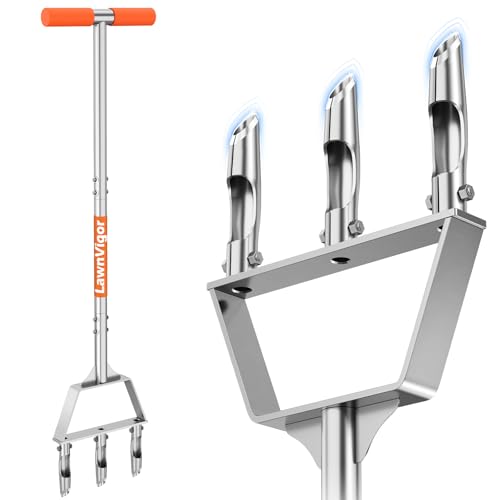
- Three hollow tines remove deeper soil plugs
- Wide foot pedal and ergonomic handle
- Replaceable, non-clogging tines
Best For: Targeted manual aeration in compacted or clay soil
Best for Large Lawns
Brinly 42-Inch Tow-Behind Plug Aerator

- 42-inch coverage for efficient aeration
- Tray holds up to 175 pounds of added weight
- Folding tow bar and transport mode
Best For: Large properties with a compatible lawn tractor
Best Compact Hand Tool

- Two heat-treated hollow tines remove cores
- Wide foot pedal improves leverage
- Upright ergonomic handle reduces bending
Best For: DIY aeration of compacted lawn sections
Best for Small Areas
Walensee 15-Spike Manual Aerator

- 15 spikes cover more ground per step
- Foot pedal and cushioned T-handle
- Detachable design for storage
Best For: Small lawns and lightly compacted patches
Best Liquid Option
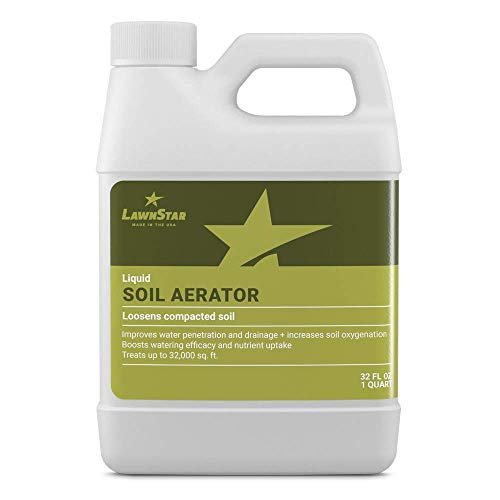
- Covers up to 30,000 square feet
- Improves water penetration and drainage
- Spray-on alternative to mechanical aeration
Best For: Large lawns and low-effort soil conditioning
Best Spike Aerator
304 Stainless Steel Manual Lawn Aerator

- Durable 304 stainless-steel construction
- Choose 11 or 15 spikes
- Four-spring system aids repeated pressing
Best For: Hands-on aeration of slightly moist compacted soil
Best Core Aerator
Heavy-Duty Hollow-Tine Lawn Tool

- Aerates up to 4 inches deep
- Non-clogging, replaceable hollow tines
- Upright design with wide footplate
Best For: Deep plug removal in clay and compacted soil
Dual-Tine Depth Control

- Combines spike and hollow-tine aeration
- 5.12-inch tines reach deep into soil
- Stainless steel with adjustable padded handle
Best For: Small lawns needing both spike and core aeration
Rolling Core Aeration
Patented Manual Lawn Coring Tool

- Rotary design extracts soil plugs while rolling
- Wheeled push operation covers small to medium lawns
- Heavy-duty construction with reinforced push rods
Best For: Users wanting mobile manual coring for small to medium lawns
Kick-to-Unclog Steel Spikes

- Eleven 3.5-inch steel spikes reach compacted soil
- Kick-to-unclog spring clears mud quickly
- Bolt-on base supports serviceability
Best For: Compact lawns and clay soil needing deep spike aeration
Best Overall Manual Core Aerator – 3-Tine Hollow Plug Aerator
For homeowners comparing lawn aerators for compacted soil, this manual core aerator offers a focused way to remove soil plugs and open deeper channels for air, water, and nutrients. Its three hollow tines, wide foot pedal, and upright handle are especially useful for targeted lawn work, including clay soil, when the ground is watered first.
Best For: Small to medium lawn areas needing manual core aeration and plug removal.
Pros:
- Three hollow tines create larger, deeper holes and are designed to resist clogging.
- Heat-treated tines and a bend-resistant metal frame support repeated use.
- Wide foot pedal and ergonomic, non-slip handle improve control and reduce bending.
- Replaceable tines and included assembly tools simplify maintenance and setup.
Cons:
- Requires watering dry soil before use.
- Should not be rocked, twisted, or pried sideways while embedded.
- Manual operation is better suited to targeted areas than large lawns.
This is a practical choice when you want genuine core aeration without a tow vehicle. The non-clogging design and replaceable tines add useful long-term convenience, but careful technique is important for reliable plug removal.
Best for Large Lawns – Brinly 42-Inch Tow-Behind Plug Aerator
Among lawn aerators for compacted soil, the Brinly PA-42BH-A is the heavy-duty option for covering broad areas behind a compatible towing vehicle. Its heat-treated steel plugging spoons remove plugs up to three inches deep, while the enclosed tray accepts up to 175 pounds of added weight for more penetration.
Best For: Large lawns and property owners who need tow-behind, adjustable-depth aeration.
Pros:
- 42-inch working width helps cover large areas more efficiently.
- Weight tray holds up to 175 pounds to improve penetration in compacted soil.
- Three independently rotating tine sections help limit turf damage during turns.
- Folding tow bar and transport lever make storage and repositioning easier.
Cons:
- At 67.9 pounds, it is considerably heavier and less portable than manual tools.
- Requires a compatible towing vehicle or lawn tractor.
- Its large footprint needs more storage space than a handheld aerator.
This model makes the most sense when productivity matters more than compact storage. The adjustable weight capacity and independently rotating sections give it useful capability on uneven terrain, while the tow-behind format is excessive for small patches.
Best Compact Hand Tool – Two-Tine Core Lawn Aerator
This two-tine manual core aerator is a straightforward choice for homeowners looking at lawn aerators for compacted soil. Its hollow tines remove soil cores to improve air, water, and nutrient flow, while the wide foot pedal and upright handle help apply force without excessive bending.
Best For: Homeowners who need a simple hand tool for compacted lawn sections and routine DIY aeration.
Pros:
- Two sharp, heat-treated hollow tines remove soil plugs effectively.
- Non-clogging design helps release cores during repeated use.
- Wide foot pedal provides a stable stepping surface for added downward force.
- Ergonomic non-slip handle and quick assembly support comfortable use.
Cons:
- Two tines cover less ground per step than wider or tow-behind aerators.
- Dry soil should be watered before aerating.
- Manual use may be slow for extensive lawns.
This aerator is a sensible middle ground for spot treatment and regular homeowner maintenance. It delivers true core removal in a relatively simple format, though larger properties will benefit from a wider or tow-behind design.
Best for Small Areas – Walensee 15-Spike Manual Aerator
For light-duty lawn aerators for compacted soil, the Walensee uses 15 iron spikes to create multiple small channels with each step. Its three-row layout is convenient for lawn edges, narrow spaces, and spot maintenance, but the manufacturer notes that it is not intended for heavy sticky clay, rocky ground, or large-scale jobs.
Best For: Small lawns, lawn edges, narrow areas, and lightly compacted patches.
Pros:
- Fifteen 2.8-inch spikes provide broad coverage per step.
- Foot pedal and cushioned T-handle offer leverage without using aerator shoes.
- 34.6-inch handle helps reduce bending during maintenance.
- Detachable construction supports easier carrying and storage.
Cons:
- Not recommended for heavy sticky clay or rocky ground.
- Creates spike channels rather than removing soil cores.
- Not designed for large-scale aeration jobs.
This is the most approachable option for spot aeration and routine upkeep where the soil is only lightly compacted. Its multi-spike coverage is efficient for small areas, but tougher soil calls for a hollow-tine core aerator instead.
Best Liquid Option – LawnStar Liquid Lawn Aerator
For homeowners comparing lawn aerators for compacted soil, this liquid formula offers a low-effort alternative to mechanical tools. The concentrated LawnStar treatment is mixed at a 1:1024 ratio, applied as a spray, and is designed to improve water penetration, drainage, and soil conditioning across a large lawn area.
Best For: Large lawns and users who prefer spray-on soil conditioning over manual aeration.
Pros:
- Provides up to 30,000 square feet of coverage from a 32-ounce bottle.
- Designed to loosen and condition compacted soil while improving water uptake and drainage.
- Offers a convenient alternative to core or mechanical aeration.
- Backed by a 30-day no-questions-asked return and refund guarantee.
Cons:
- Does not physically remove soil plugs or create holes like a core aerator.
- Requires accurate dilution and spray application.
LawnStar is a practical choice when coverage and convenience matter most. It suits routine lawn care, but gardeners seeking visible plug removal or deep mechanical penetration should consider a manual core aerator instead.
Best Spike Aerator – 304 Stainless Steel Manual Lawn Aerator
This manual spike tool is a durable option for shoppers seeking lawn aerators for compacted soil without using liquid treatments. Its solid stainless-steel spikes create multiple aeration channels with each press, while the adjustable 11- or 15-spike setup lets you choose between easier handling and wider coverage.
Best For: Small to medium lawns where hands-on, reusable spike aeration is preferred.
Pros:
- Made entirely from rust-resistant 304 stainless steel, including the 15 spikes.
- Offers configurable 11- or 15-spike operation.
- Four heavy-duty springs support smoother rebound during repeated use.
- Creates multiple holes per press without extracting soil plugs.
Cons:
- Solid spikes do not provide the soil-plug removal of a hollow-tine core aerator.
- Requires repeated downward presses and performs best when soil is slightly moist.
- Hard, rocky, frozen, or muddy ground can make operation more difficult.
With its corrosion-resistant construction and adjustable spike count, this aerator is built for repeated seasonal use. Prepare dry soil with light watering first, then press vertically for more consistent penetration and coverage.
Best Core Aerator – Heavy-Duty Hollow-Tine Lawn Tool
For deeper treatment of compacted or clay soil, this hollow-tine tool is one of the more targeted lawn aerators for compacted soil. Its three non-clogging tines reach up to 4 inches, eject soil plugs automatically, and can be replaced when worn.
Best For: Homeowners who want deep core aeration and a stand-up tool for dense clay or compacted ground.
Pros:
- Reaches up to 4 inches deep to improve airflow, water absorption, and nutrient delivery.
- Hollow tines automatically eject plugs to help prevent clogging.
- Replaceable tines can extend the tool’s service life.
- Wide footplate, 37-inch height, and rubber grips support upright operation.
Cons:
- Its three-tine design covers less area per press than a multi-spike aerator.
- Requires physical effort and works best after dry soil has been watered.
- Arrives semi-assembled rather than fully assembled.
This is the strongest fit for users who specifically want genuine plug removal and deeper penetration. The steel frame, foot pedal, and replaceable tines make it a practical long-term choice for periodic core aeration, especially in clay soil.
Dual-Tine Depth Control – Bigwish Manual Core Aerator
For homeowners comparing lawn aerators for compacted soil, the Bigwish stands out for combining two aeration methods in one manual tool. Its 5.12-inch spikes and hollow tines can penetrate deeply, relieve compaction, and remove soil plugs for improved access to air, water, and nutrients.
Best For: Small residential lawns where you want both spike aeration and core soil removal.
Pros:
- Combines two thick spikes with two hollow tines for dual-function aeration.
- Extended 5.12-inch tines reach deeper than conventional 3-inch spikes.
- Stainless steel construction is designed to resist rust, bending, and paint peeling.
- Adjustable T-handle and padded grip support more comfortable operation.
Cons:
- Manual operation requires physical effort.
- Only four tines work at a time, so larger lawns may take longer to aerate.
- For best results, the lawn should be watered one to two days before use.
The Bigwish is a versatile choice if you want the flexibility to loosen compacted soil with spikes and extract plugs when deeper aeration is needed. Its adjustable handle and durable stainless steel build add practical value for recurring lawn care.
Rolling Core Aeration – Patented Manual Lawn Coring Tool
Among lawn aerators for compacted soil, this rolling manual coring tool is designed to make plug removal more efficient across small to medium lawns. Its rotary coring design extracts soil plugs as you push, helping improve the movement of air, water, and nutrients toward grass roots.
Best For: Small to medium lawns where a wheeled, push-operated coring tool is preferred.
Pros:
- Rotary coring action punches holes and pulls soil plugs.
- Wheeled design supports mobile push operation across the lawn.
- Reinforced dual push rods and heavy-duty materials are built for regular use.
- Scientifically balanced weight design is intended to support efficient plug pulling.
Cons:
- At 43.7 pounds, it is substantially heavier than compact handheld tools.
- Its 60-inch length and wheeled format may be less convenient for tight garden areas.
- Manual pushing still requires effort and provides a workout.
This aerator is a practical fit for users who want rolling mobility instead of repeatedly stepping on a compact tool. The heavier construction may help with coring, but its size and weight are worth considering before buying.
Kick-to-Unclog Steel Spikes – Heavy-Duty Lawn Aerator
For hard or clay areas, this heavy-duty option among lawn aerators for compacted soil uses 11 steel spikes to reach 3.5 inches deep. A kick-to-unclog spring helps clear soil buildup during use, while the bolt-on base is designed to make servicing or replacing parts more manageable.
Best For: Compact residential lawns, gardens, and clay soil where deep step-on spike aeration is needed.
Pros:
- Eleven steel spikes provide 3.5-inch penetration for compacted soil.
- Kick-to-unclog design helps clear mud and soil without hand cleaning.
- Bolt-on base allows the base and hardware to be serviced or replaced.
- Pre-assembled manual design includes an adjustable handle and needs no fuel, batteries, or electricity.
Cons:
- Spike aeration loosens soil but does not extract soil plugs.
- Repeated step-on operation can be physically demanding.
- Its 11-spike design may require more effort in especially hard ground.
This model makes sense when durability, deep spike penetration, and quick unclogging matter more than core removal. It is particularly suited to homeowners tackling compact lawns or clay soil with a straightforward manual tool.
How We Picked the Best Lawn Aerators for Compacted Soil
We focused on the features that matter most when breaking up dense soil: aeration method, tine or spike construction, working depth, clog resistance, coverage, durability, and ease of use. Core aerators that remove plugs generally provide deeper, more effective relief for seriously compacted lawns, while spike tools create smaller channels with less cleanup.
We also included options for different property sizes and maintenance styles, from handheld tools for targeted repairs to tow-behind equipment for broad lawns. Liquid aeration products are considered a convenience-focused alternative rather than a direct replacement for mechanical core aeration.
Quick Comparison
- Best for large lawns: A tow-behind plug aerator offers wider coverage when used with a suitable riding mower or lawn tractor.
- Best for maximum soil relief: Hollow-tine core aerators remove plugs and open space for water and oxygen.
- Best for small areas: Manual spike or core tools work well around garden beds, narrow side yards, and isolated compacted patches.
- Best for reduced physical effort: Rolling aerators and liquid treatments can cover ground more conveniently than repeatedly stepping on a handheld tool.
Key Buying Factors for Lawn Aerators for Compacted Soil
Core Versus Spike Aeration
Choose hollow tines if the soil is heavily compacted or clay-heavy and you want to remove plugs. Spike aerators are simpler and often easier to maintain, but they can compress soil around the holes and may be less effective for severe compaction.
Coverage and Lawn Size
Hand tools are practical for small lawns and spot treatment but require repeated effort. A rolling design can improve speed, while a tow-behind model is better suited to large properties with compatible towing equipment.
Construction and Clog Resistance
Look for steel or stainless-steel components, reinforced frames, secure handles, and replaceable tines. Non-clogging features are especially useful when soil is moist enough for core aeration but not so wet that plugs smear or the tool becomes difficult to pull.
Depth and User Comfort
Deeper tines can address compacted layers more effectively, but they also demand more force. Wide foot plates, springs, adjustable handles, wheels, and ergonomic grips can make repeated passes more manageable.
Who Should Buy Which Lawn Aerators for Compacted Soil?
Choose a manual core aerator if you have a small to medium lawn and want the strongest mechanical improvement with a manageable purchase price. Choose a spike aerator for lighter compaction, routine maintenance, or targeted areas where removing soil plugs is unnecessary.
Choose a tow-behind plug aerator for large lawns and tractor owners who prioritize productivity. Choose a rolling aerator if you want to cover ground without repeatedly lifting and repositioning a handheld tool. Consider a liquid aerator when convenience, broad coverage, and minimal physical effort matter most, while keeping expectations realistic for severely compacted soil.