Monitoring temperature is one of the simplest ways to tell whether a compost pile is active, balanced, and progressing toward finished compost. The right thermometer helps you check conditions below the surface without disturbing the pile.
These 10 picks cover practical needs ranging from compact 12-inch probes to extended 48-inch models, with Fahrenheit, Celsius, or dual-scale readings and both digital-guide and analog designs.
Best 10 Soil Thermometers for Compost Picks for 2026
Best Beginner Pick
20-Inch Fahrenheit Compost Thermometer
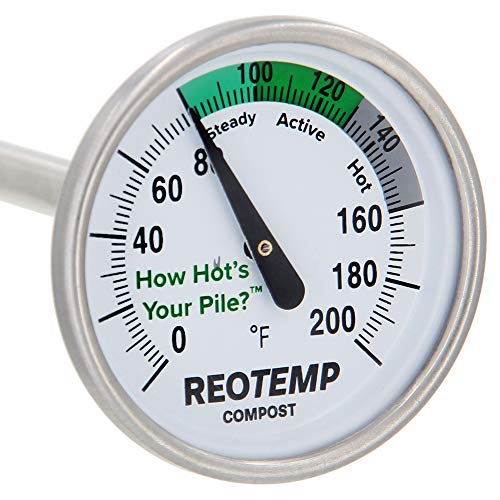
- 20-inch stainless steel probe
- Three compost activity zones
- Digital composting guide included
Best For: Beginner composters with outdoor piles
Best Long-Reach Option
48-Inch Dial Compost Thermometer

- 48-inch stem for deep piles
- Large 3-inch analog face
- Field calibration adjustment screw
Best For: Large or deep compost piles
Best for Small Bins
12-Inch Soil and Compost Thermometer
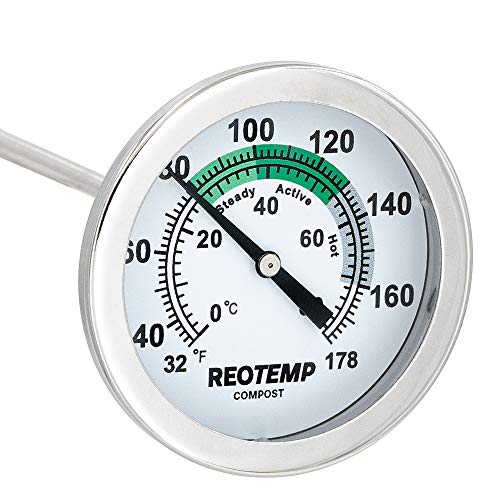
- 12-inch probe for small bins
- Fahrenheit and Celsius readings
- Waterproof, dust-proof construction
Best For: Small compost bins, tumblers, and soil checks
Best Value Dial
12-Inch Dual-Scale Compost Thermometer

- 12-inch stainless steel probe
- Dual Fahrenheit/Celsius display
- Recommended temperature zones
Best For: Simple monitoring of small to medium garden piles
Beginner-Friendly Composting
16-Inch Fahrenheit Compost Thermometer
- 16-inch stainless steel stem
- Color-coded compost activity zones
- Digital guide included
Best For: Beginner composters who prefer Fahrenheit readings
Versatile Dual-Scale Monitoring
20-Inch Greenco Compost Thermometer

- 20-inch stainless steel stem
- Fahrenheit and Celsius dial
- IP55 water-resistant sealed lens
Best For: Composters needing deeper reach and dual-unit readings
Deep-Pile Heavy Duty Choice
36-Inch Heavy Duty Compost Thermometer
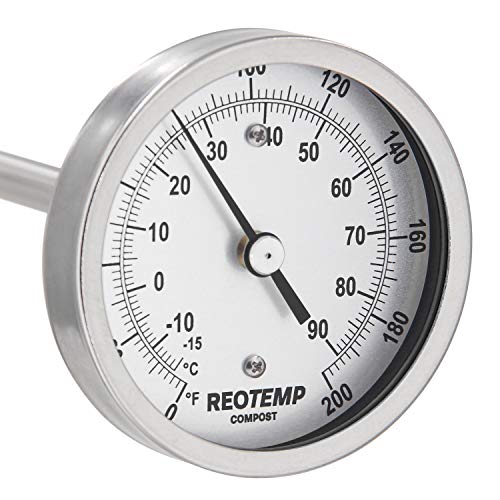
- 36-inch extra-long stem
- Rugged all-stainless construction
- Large Fahrenheit/Celsius dial
Best For: Deep compost piles and demanding outdoor use
Best with Extra Features
VIVOSUN 20-Inch Compost Thermometer

- 0–200°F analog temperature range
- Colored zones for quick compost checks
- Rust-resistant 304 stainless steel stem
Best For: Beginner composters checking outdoor piles
Best Extra-Long Probe
Garden Weasel 36-Inch Thermometer

- 36-inch probe reaches deep piles
- Reads up to 220°F in Fahrenheit and Celsius
- Battery-free analog operation
Best For: Deep compost piles and worm compost
Best Fast-Reading Value
Long Stem Compost Soil Thermometer

- Nearly 20-inch stainless steel probe
- Measures up to 220°F
- Supports Fahrenheit and Celsius
Best For: Routine compost and soil temperature checks
Best Beginner Pick – 20-Inch Fahrenheit Compost Thermometer
Reotemp 20 Inch Fahrenheit Backyard Compost Thermometer with Digital Composting Guide
Check Price On AmazonFor gardeners seeking soil thermometers for compost, this 20-inch analog model offers deep pile access and an easy-to-read Fahrenheit dial. Its three temperature zones help beginners understand compost activity at a glance.
Best For: Beginner composters managing outdoor piles who want a long, durable probe and practical guidance.
Pros:
- 20-inch stainless steel stem reaches deep into compost piles.
- Three temperature zones indicate compost activity.
- Hermetically sealed construction helps prevent dial fogging.
- Includes a digital composting guide.
Cons:
- Displays Fahrenheit only.
- Analog dial may be less precise to read than a digital display.
This is a straightforward choice for new composters who value simple zone-based readings, durable construction, and included instructions over advanced digital features.
Best Long-Reach Option – 48-Inch Dial Compost Thermometer
VeeGee Dial Compost Thermometer, with Glass Face, 48" Stem, 3" Dial, 0 to 200 Degrees F
Check Price On AmazonAmong soil thermometers for compost, this VeeGee model stands out for its 48-inch probe, making it suited to deep piles and hard-to-reach readings. The large 3-inch analog face covers 0–200°F and uses 2-degree subdivisions.
Best For: Large or deep compost piles where an extended probe and large display are useful.
Pros:
- 48-inch stem reaches deeply into compost.
- Large 3-inch dial is easy to view.
- Hermetically sealed case helps prevent lens fogging.
- Includes an adjustment screw for field calibration.
Cons:
- The long design is less convenient for small bins.
- At 3.8 pounds, it is substantially heavier than the shorter models.
Choose this thermometer when reach is the priority. Its calibration feature and broad 0–200°F range add flexibility, while the oversized stem may be more tool than needed for compact composters.
Best for Small Bins – 12-Inch Soil and Compost Thermometer
This 12-inch model is one of the more versatile soil thermometers for compost, with a probe sized for smaller bins, tumblers, and soil measurements. Its corrosion-resistant stainless steel construction and dual Fahrenheit/Celsius scale support outdoor use.
Best For: Small compost bins, tumblers, and gardeners who want to check both compost and soil temperatures.
Pros:
- 12-inch stem suits smaller piles and containers.
- Supports Fahrenheit and Celsius readings.
- Waterproof and dust-proof construction is designed for outdoor use.
- Includes a digital composting guide and storage case.
Cons:
- Shorter probe may not reach the center of large piles.
- The supplied specifications identify a digital display, but do not provide a clear resolution value.
This compact option makes sense for home gardeners who work with modest compost volumes or want one thermometer for both soil and compost. Its shorter probe is the main limitation for larger piles.
Best Value Dial – 12-Inch Dual-Scale Compost Thermometer
For shoppers comparing soil thermometers for compost on a practical budget, this stainless steel dial model provides a 12-inch probe and dual Fahrenheit/Celsius markings. Its recommended temperature zones make it easy to check whether a pile is in a useful operating range.
Best For: Home gardeners who want a simple, readable thermometer for smaller compost piles.
Pros:
- 12-inch probe works well for many garden compost setups.
- Dual temperature display shows Celsius and Fahrenheit.
- Recommended temperature zones support quick interpretation.
- Stainless steel construction is suited to outdoor conditions.
Cons:
- 2-inch dial is smaller than the display on the VeeGee model.
- Its listed upper range is 160°F, narrower than some competing models.
This is a sensible no-frills choice for routine monitoring. The dual-scale dial and zone markings keep readings approachable, while the 12-inch length is best matched with smaller or moderately sized piles.
Beginner-Friendly Composting – 16-Inch Fahrenheit Compost Thermometer
Reotemp 16 Inch Fahrenheit Backyard Compost Thermometer with Digital Composting Guide
Check Price On AmazonFor gardeners seeking soil thermometers for compost, this 16-inch Fahrenheit model offers a straightforward way to monitor pile activity. Its color-coded dial, stainless steel construction, and included digital composting guide make it especially approachable for beginners.
Best For: Beginner composters who want an easy-to-read Fahrenheit thermometer with guidance for managing a pile.
Pros:
- 16-inch stainless steel stem reaches into many backyard compost piles.
- Color-coded temperature zones provide a quick indication of compost activity.
- Hermetically sealed construction helps prevent dial fogging.
- Includes a digital composting guide and plastic-free, compostable packaging.
Cons:
- Uses Fahrenheit only, so it may be less convenient for Celsius users.
- Its 16-inch reach is shorter than the deeper-stem options in this roundup.
This is a practical entry-level choice when simple readings and composting instruction matter more than extended reach or dual-scale measurement.
Versatile Dual-Scale Monitoring – 20-Inch Greenco Compost Thermometer
This Greenco model is a versatile option among soil thermometers for compost, with a 20-inch stem and a dial that displays both Fahrenheit and Celsius. Its color-coded face, sealed lens, and included instructions support regular outdoor pile monitoring.
Best For: Gardeners who want a longer stem and dual Fahrenheit/Celsius readings for compost temperature checks.
Pros:
- 20-inch stainless steel stem reaches deeper into a compost pile.
- Dual-scale dial covers 40–180°F and approximately -17.77–82.22°C.
- Color-coded ranges and a 2-inch dial help make readings easier to interpret.
- Hermetically sealed, PC-coated lens is rated IP55 water-resistant and backed by a lifetime warranty.
Cons:
- The listed scale uses 2-degree increments, which may be less precise than finer displays.
- The product notes describe it as battery powered and rechargeable, but do not specify charging details.
With its longer reach and dual-unit display, this is a well-rounded pick for composters who want flexibility without moving to an extra-long industrial stem.
Deep-Pile Heavy Duty Choice – 36-Inch Heavy Duty Compost Thermometer
REOTEMP Heavy Duty Compost Thermometer - Fahrenheit and Celsius (36 Inch Stem), Made in The USA
Check Price On AmazonFor large or deep compost piles, this heavy-duty thermometer stands out among soil thermometers for compost with its 36-inch stem. The all-stainless steel construction, waterproof design, and large dual-scale dial are built for substantial outdoor monitoring.
Best For: Gardeners and compost operators who need maximum reach for deep piles and a rugged, dual-scale instrument.
Pros:
- 36-inch stem reaches significantly deeper than the other listed models.
- Heavy-duty 5/16-inch stainless steel stem is designed for rugged use.
- Large 3-inch dial displays both 0–200°F and -10–90°C.
- Hermetically sealed dial is waterproof and designed not to fog up.
Cons:
- The 36-inch length may be cumbersome for small backyard piles or compact storage.
- At 1.4 pounds, it is heavier than a typical shorter-stem thermometer.
This is the strongest fit when pile depth, durability, and broad temperature coverage take priority over portability and compact handling.
Best with Extra Features – VIVOSUN 20-Inch Compost Thermometer
For gardeners comparing soil thermometers for compost, the VIVOSUN offers a straightforward 20-inch design with an easy-to-read analog dial. Its 0–200°F range, colored composting zones, and sealed lens make it practical for checking pile conditions outdoors.
Best For: Beginner composters who want a clear, reusable thermometer for routine pile checks.
Pros:
- 304 stainless steel stem is rust-resistant and built for repeated outdoor use.
- Dial includes colored zones for steady, active, and hot composting conditions.
- IP55 waterproof lens helps resist moisture and fogging.
- Advertised accuracy is within ±2°F.
Cons:
- Temperature range tops out at 200°F.
- Requires a 3–5 minute wait for a reading.
- Designed for approximately 6 centimeters of immersion according to the supplied details.
The VIVOSUN is a sensible choice when readability and simple operation matter more than an extra-long probe. Its reinforced stainless steel construction also suits regular compost maintenance.
Best Extra-Long Probe – Garden Weasel 36-Inch Thermometer
Among soil thermometers for compost, the Garden Weasel stands out for its 36-inch probe, which can reach deeper into soil or larger compost piles. The analog design needs no batteries and displays readings in Fahrenheit and Celsius.
Best For: Gardeners managing deep compost piles, worm compost, or soil areas that require extended reach.
Pros:
- 36-inch probe provides substantially more reach than standard long-stem models.
- Measures temperatures up to 220°F.
- Battery-free analog operation is simple and reusable.
- Includes a lifetime guarantee against defects in materials and workmanship.
Cons:
- The extra-long design may be less convenient for small bins or shallow beds.
- Readings are analog rather than digital.
- Supplied details identify it as water resistant rather than fully waterproof.
The Garden Weasel is the strongest fit here for depth and coverage. Choose it when a conventional 20-inch stem may not reach the center of your compost setup.
Best Fast-Reading Value – Long Stem Compost Soil Thermometer
This long-stem model is a practical option for shoppers seeking soil thermometers for compost with a stainless steel probe and fast readings. It measures up to 220°F, is reusable, and supports Fahrenheit and Celsius temperature checks.
Best For: Gardeners who want a simple long-stem thermometer for routine compost soil measurements.
Pros:
- Nearly 20-inch length offers useful reach for compost and soil.
- Stainless steel construction is described as durable and environmentally friendly.
- Designed for high accuracy and fast readings.
- Measures up to 220°F.
Cons:
- The supplied details are inconsistent about power, describing it as battery-free in the bullets but battery powered in the specifications.
- Specific accuracy and response-time figures are not provided.
- Listed indoor/outdoor usage is indoor, despite its compost-soil application.
This thermometer offers a basic, reusable format with a useful probe length and broad temperature range. Verify the power requirements before buying if battery-free operation is important to you.
How We Picked the Best Soil Thermometers for Compost
We focused on the features that matter most in real composting conditions: probe length, readable temperature range, measurement format, construction, and ease of use. A useful compost thermometer should reach the active center of a pile, provide a scale suited to your routine, and withstand repeated insertion into damp organic material.
We also included a range of designs so shoppers can match the tool to their setup. Shorter probes suit bins and smaller piles, while long-stem models work better for large windrows or deep backyard compost. Analog dial thermometers are simple and battery-free; digital-guide models may be easier for beginners who want composting instructions included.
Quick Comparison
| Feature | What to look for | Best suited to |
|---|---|---|
| Probe length | 12 to 20 inches for bins; 36 to 48 inches for deep piles | Small household composters to large piles |
| Temperature scale | Fahrenheit, Celsius, or dual-scale display | Your preferred measuring system |
| Display style | Analog dial or digital readout | Simple checking or quick visual readings |
| Construction | Stainless steel probe and weather-resistant housing | Frequent outdoor use |
Key Buying Factors for Soil Thermometers for Compost
Choose the Right Probe Length
The probe must reach the hottest interior zone, not just the cooler outer layer. A 12-inch model is often sufficient for a compact bin, while a 20-inch thermometer offers more flexibility. Choose a 36- or 48-inch stem for deep piles, large compost bays, or commercial-style windrows.
Check the Temperature Range and Scale
Compost temperatures can rise well above ordinary soil temperatures, so confirm that the thermometer covers the range you expect. Dual Fahrenheit-and-Celsius scales are convenient for households using different reference systems. A clearly marked dial can be more useful than a wider range if it is difficult to read.
Prioritize Durability and Cleaning
Look for stainless steel probes and a sturdy connection between the stem and dial or housing. After each use, wipe the probe clean and allow it to dry. Avoid forcing any thermometer through woody material, stones, or compacted sections that could bend the stem.
Consider Reading Speed and Convenience
Analog models do not require batteries and are ready whenever you need them. Digital options can be fast and precise but may require battery maintenance. A built-in composting guide can be helpful for beginners, especially when learning which temperature ranges indicate active decomposition.
Who Should Buy Which Soil Thermometers for Compost?
- Small-bin composters: Choose a 12-inch probe that is easy to store and maneuver.
- Typical backyard gardeners: A 16- to 20-inch stainless steel thermometer offers a practical balance of reach and portability.
- Deep piles and large compost bays: Select a 36- or 48-inch stem so you can measure the core without dismantling the pile.
- Beginners: Consider a model with a composting guide and clearly labeled temperature zones.
- Low-maintenance users: An analog dial is a dependable choice because it needs no batteries.
- Households using metric measurements: Pick a dual-scale Fahrenheit-and-Celsius model for easier reference.
Whichever model you choose, take readings in several parts of the pile and record them over time. Consistent measurements provide a more useful picture of compost activity than a single temperature check.