The right soil temperature can make the difference between reliable germination and seeds that sit dormant. Analog soil thermometers offer a simple, battery-free way to check planting beds, containers, worm bins, and compost piles.
We compared 10 options across probe length, temperature range, dial readability, construction, and intended use so you can choose a thermometer that fits your garden routine.
Best 10 Analog Soil Thermometers Picks for 2026
Best Planting Guide
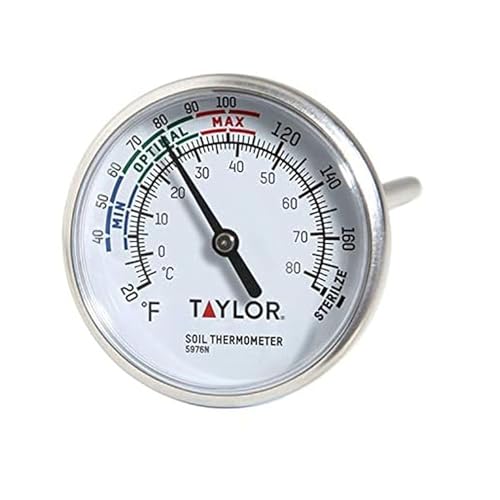
- 20°F–180°F analog temperature range
- Planting and germination zones on the dial
- 4-inch stainless steel stem with clip
Best For: Seed starting and everyday garden planting checks
Best for Compost Piles
Reotemp 20-Inch Compost Thermometer
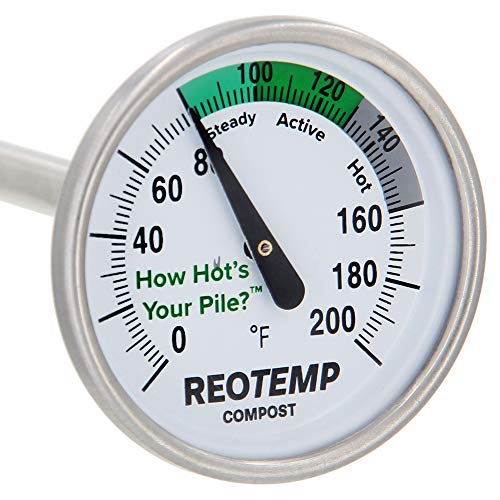
- 20-inch stainless steel stem
- Three compost activity zones
- Sealed construction helps resist fogging
Best For: Deep compost pile temperature checks
Best for Worm Bins

- 55°F–90°F monitoring range
- Color-coded green, yellow, and red marks
- 5-inch stainless steel stem
Best For: Worm bins and shallow compost monitoring
Best Multi-Use Pocket Pick
SP Bel-Art Bi-Metallic Thermometer

- Compact 1.3-inch pocket design
- Waterproof, reusable analog dial
- Also suited to liquids, concrete, A/C, and HVAC
Best For: Portable multi-purpose temperature checks
Best Everyday Pick
Stainless Steel Soil Thermometer
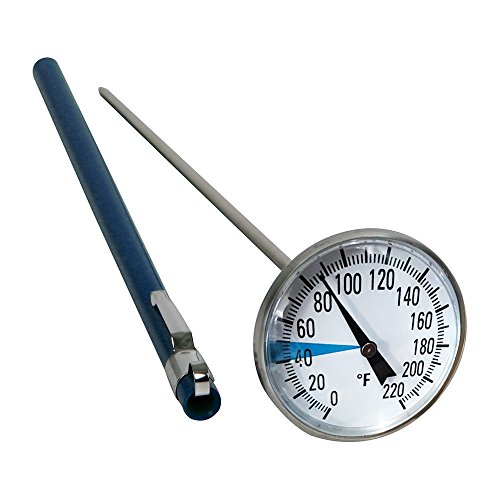
- 0–220°F analog temperature range
- 5-inch stainless steel stem
- Power-free, glass-covered dial
Best For: Routine soil and compost temperature checks
Best for Everyday Use
K83W Worm Composting Thermometer
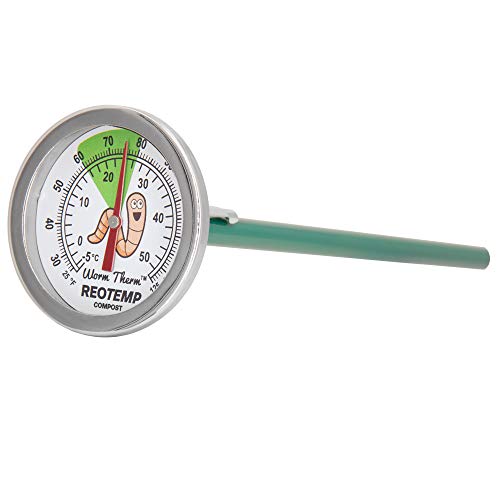
- Green zone for red wiggler worms
- 7.5-inch stem for deeper bins
- Includes guide and protective sheath
Best For: Vermicomposting and red wiggler worm bins
Best for Seed Starting
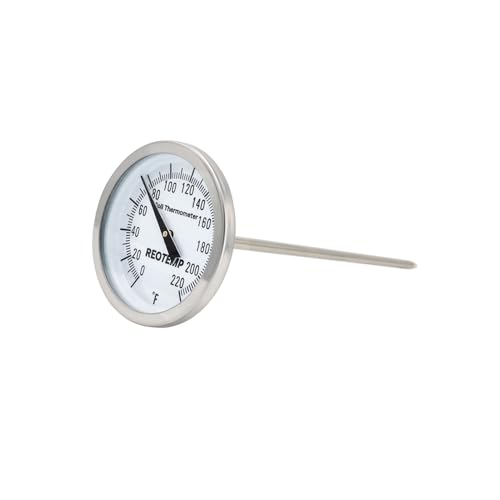
- 0–220°F Fahrenheit scale
- 5-inch stem for garden soil
- Waterproof and factory calibrated
Best For: Seeding, transplanting, and garden checks
Best Compact Pair
5-Inch Stainless Steel Soil Thermometers

- Two reusable analog thermometers
- Waterproof, easy-to-read dual-scale dial
- Protective storage case included
Best For: Shallow garden and compost temperature checks
Best Long-Reach Pick
Garden Weasel 36-Inch Soil Thermometer

- Extra-long 36-inch probe
- 0°F–220°F Fahrenheit and Celsius readings
- No batteries required
Best For: Deep compost piles and hard-to-reach soil
Best Compost-Focused Dial
20-Inch Core Compost Thermometer
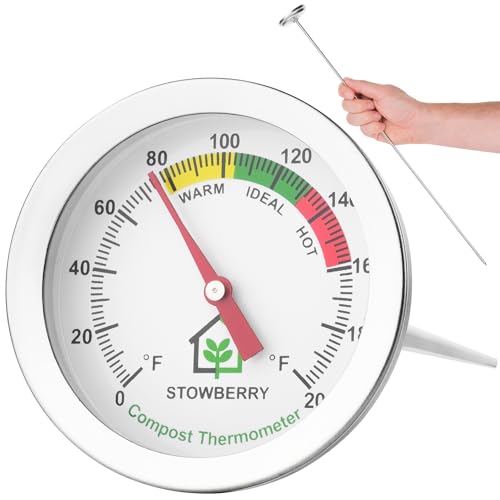
- 20-inch stainless steel probe
- 2-inch dial with activity zones
- No batteries and weather resistant
Best For: Large bins, tumblers, and compost heaps
Best Planting Guide – Taylor Soil Thermometer
For gardeners comparing analog soil thermometers, the Taylor Soil Thermometer is a practical choice for checking whether beds, containers, greenhouses, and seed-starting areas have reached suitable planting temperatures. Its clearly marked dial zones help simplify timing without batteries or a digital display.
Best For: Seed germination, planting decisions, raised beds, containers, and general garden monitoring.
Pros:
- Measures from 20°F to 180°F with an easy-to-read analog dial.
- Marked minimum, maximum, and optimal planting zones reduce guesswork.
- Four-inch stainless steel stem reads at least two inches below the surface.
- Includes a stem clip for leaving it in place or attaching it to planters.
Cons:
- Its 4-inch length is less suited to deep compost piles.
- The analog design does not provide digital readouts or recorded measurements.
With its planting-focused temperature zones and reusable stainless steel construction, this is one of the more straightforward analog soil thermometers for routine garden scheduling.
Best for Compost Piles – Reotemp 20-Inch Compost Thermometer
Reotemp 20 Inch Fahrenheit Backyard Compost Thermometer with Digital Composting Guide
Check Price On AmazonAmong analog soil thermometers and compost temperature tools, this Reotemp model stands out for its 20-inch reach. The long stainless steel stem lets you check deeper inside a pile, while the dial’s three activity zones help beginners interpret compost conditions.
Best For: Monitoring deep compost piles and learning basic compost temperature management.
Pros:
- Twenty-inch stem reaches well into compost piles.
- Three dial zones indicate compost activity at a glance.
- Stainless steel construction is hermetically sealed to help prevent fogging.
- Includes access to a digital composting guide and compostable packaging.
Cons:
- The long stem is less convenient for shallow garden beds or containers.
- The Fahrenheit-focused dial may be less convenient for users who prefer Celsius.
This is a specialized pick rather than a compact garden thermometer, but its deep reach and compost-specific dial make it a useful option for managing larger piles.
Best for Worm Bins – Urban Worm Soil Thermometer
Urban Worm Soil Thermometer - 5-in Stainless Steel Stem - Perfect for Gardening & Worm Bin
Check Price On AmazonFor gardeners seeking analog soil thermometers suited to worm composting, the Urban Worm model focuses on the temperature range where worms are described as happiest. Its 5-inch stainless steel stem and color-coded tick marks make routine checks quick and easy.
Best For: Worm bins, soil monitoring, and compost areas where a 55°F–90°F range is the main concern.
Pros:
- Color-coded green, yellow, and red marks support quick interpretation.
- Five-inch stainless steel stem reaches into soil and worm compost.
- Waterproof and reusable for outdoor use.
- Designed around the stated 55°F–90°F worm comfort range.
Cons:
- Its 55°F–90°F scale is narrow for broader garden temperature needs.
- The product information lists a 5-inch stem, so it may not suit deep compost piles.
With its focused range and simple color cues, this thermometer is a sensible specialized choice for worm-bin owners who want fast visual feedback.
Best Multi-Use Pocket Pick – SP Bel-Art Bi-Metallic Thermometer
SP Bel-Art H-B Durac Bi-Metallic Soil Thermometer - Pocket Thermometer for Accurate Readings
Check Price On AmazonFor shoppers who want an analog soil thermometer that can also serve other tasks, the SP Bel-Art H-B Durac is a compact bi-metallic pocket model. The supplied notes describe it for soil, concrete, liquids, cooking, automotive air-conditioning, and HVAC checks.
Best For: Portable spot checks across gardening, construction, kitchen, automotive, and HVAC applications.
Pros:
- Compact 1.3-inch pocket-style design is easy to carry.
- Waterproof and reusable.
- Can be used for soil, concrete, liquids, car A/C, and HVAC checks.
- Bi-metallic dial design provides an analog reading without batteries.
Cons:
- Its listed 1.3-inch length is much shorter than dedicated soil probes.
- The notes list a 10,000-millisecond response time, so readings may take longer to stabilize.
- It is described for indoor use, which may be less convenient for outdoor garden monitoring.
This is best viewed as a versatile pocket thermometer with soil capability, not a dedicated deep-reading garden instrument. Its main advantage is portability across several temperature-sensitive tasks.
Best Everyday Pick – Stainless Steel Soil Thermometer
For gardeners comparing analog soil thermometers, this model offers a straightforward, power-free way to check soil, compost, and planting conditions. Its 5-inch stainless steel stem and 1.5-inch glass-covered dial are designed for readable measurements from 0 to 220°F.
Best For: Indoor and outdoor gardeners who want a durable general-purpose soil and compost thermometer.
Pros:
- Power-free analog design requires no external power source.
- Stainless steel construction with a 5-inch stem for soil and compost use.
- Large, high-visibility 1.5-inch dial with a 0–220°F range.
Cons:
- The analog dial may require closer reading than a digital display.
- Listed for outdoor use, so indoor applications may be more limited.
This is a practical choice if you want a simple, reusable thermometer for routine planting and compost checks without relying on batteries or complicated controls.
Best for Everyday Use – K83W Worm Composting Thermometer
Among analog soil thermometers, this model is tailored to vermicomposting rather than general garden beds. Its 2-inch dial highlights the preferred range for red wiggler worms, while the 7.5-inch stem reaches deeper into a compost bin.
Best For: Red wiggler worm bins, vermicomposting projects, and gardeners monitoring compost conditions.
Pros:
- Green optimal-range indicator helps monitor conditions for red wiggler worms.
- Long 7.5-inch stem reaches into deeper worm bins.
- Waterproof stainless steel case and glass lens support easy cleaning.
- Includes a protective sheath with pocket clip and a composting guide.
Cons:
- Its upper temperature range is 86°F, making it unsuitable for hotter soil or compost measurements.
- The worm-bin-focused scale is less versatile for general gardening.
If vermicomposting is your priority, the highlighted worm-safe range and included guide make this more specialized than a standard garden thermometer.
Best for Seed Starting – K82-3 Soil Thermometer
This analog soil thermometer is built for common gardening tasks such as seeding and transplanting. It combines a 5-inch stainless steel stem with a 2-inch Fahrenheit dial covering 0 to 220°F, providing a broad range for checking garden soil temperatures.
Best For: Seed starting, transplanting, and general garden soil temperature measurements.
Pros:
- Designed specifically for seeding, transplanting, and gardening.
- Easy-to-read 2-inch dial displays a 0–220°F range.
- Corrosion-resistant 304 stainless steel case, bezel, and 5-inch stem.
- Waterproof construction and a glass lens support easy cleaning and durability.
Cons:
- The 5-inch stem may not reach as deeply as the longer worm-bin model.
- It uses an analog scale rather than a digital readout.
With its broad temperature range, factory calibration, and gardening-oriented design, this is a well-suited option for growers checking soil before planting or transplanting.
Best Compact Pair – 5-Inch Stainless Steel Soil Thermometers
For gardeners comparing analog soil thermometers, this two-pack offers a simple way to check soil or compost temperatures without batteries. Each stainless steel probe reaches 5 inches, while the dual Fahrenheit-and-Celsius dial is designed for straightforward outdoor use.
Best For: Gardeners who want two compact thermometers for routine soil and compost checks.
Pros:
- Includes two reusable analog thermometers.
- Stainless steel construction is designed for outdoor use.
- Waterproof design with an easy-to-read Fahrenheit and Celsius dial.
- Includes a protective storage case.
Cons:
- The 5-inch immersion depth is shorter than the probes on the other options here.
- The temperature range tops out at 160°F.
This is a practical choice when you want a compact pair for shallow measurements, seed-starting areas, or smaller compost applications. The included case also makes storage more convenient between uses.
Best Long-Reach Pick – Garden Weasel 36-Inch Soil Thermometer
Among analog soil thermometers, the Garden Weasel stands out for its extra-long 36-inch probe. It reads soil and compost temperatures in Fahrenheit and Celsius without batteries, making it useful for reaching deeper into piles and beds.
Best For: Gardeners and composters who need deep measurements and a long-reach probe.
Pros:
- 36-inch probe reaches deep into soil and compost.
- Measures from 0°F to 220°F in Fahrenheit and Celsius.
- Analog, hand-powered design requires no batteries.
- Stainless steel construction and a lifetime defect guarantee are included in the product offering.
Cons:
- The 36-inch length may be more than needed for small containers or shallow beds.
- It is water resistant rather than described as waterproof.
The unusually long probe makes this the strongest fit for deep compost piles or hard-to-reach planting areas. Choose it when measurement depth matters more than compact storage.
Best Compost-Focused Dial – 20-Inch Core Compost Thermometer
This 20-inch analog soil thermometer is built around deep compost monitoring. Its stainless steel probe reaches toward the core of larger piles, and the 2-inch dial uses activity zones labeled Steady, Active, and Hot for quick interpretation.
Best For: Backyard composters monitoring large bins, tumblers, or compost heaps.
Pros:
- 20-inch probe supports deeper core readings.
- 2-inch analog dial is designed for quick viewing.
- Activity zones help identify compost conditions at a glance.
- Weather-resistant, reusable design requires no batteries.
Cons:
- It is sold as a single thermometer.
- The supplied details do not specify a numerical upper temperature range.
Its combination of a long probe and compost activity zones makes it especially useful for adjusting aeration or other compost conditions. It can also be used for garden soil, but its feature set is most clearly aimed at compost piles.
How We Picked These Analog Soil Thermometers
We focused on practical features that affect everyday temperature checks: probe length, measurement range, dial size, waterproofing, stainless-steel construction, portability, and ease of reading. The selection includes compact models for seed starting and transplanting, longer probes for compost piles, and specialized thermometers for worm bins.
Because analog instruments do not require batteries, durability and clear calibration are especially important. We also considered whether each design is easy to insert, remove, clean, and store between uses.
Quick Comparison
- Best for seed starting: Choose a compact thermometer with a roughly 5-inch probe and a readable 0-to-220-degree Fahrenheit scale.
- Best for compost: Select a 20- or 36-inch probe to measure heat deeper inside a pile without disturbing it.
- Best for worm bins: Look for a shorter, easy-to-handle model designed for moderate soil or compost temperatures.
- Best for multiple beds: A two-pack can make it easier to monitor separate containers or planting areas.
Key Buying Factors for Analog Soil Thermometers
Probe Length
A 5-inch stem works well for seed trays, raised beds, pots, and shallow planting holes. Long probes are more useful for compost, where the center of the pile may be significantly warmer than the surface.
Temperature Range
A range of 0 to 220 degrees Fahrenheit covers most gardening, seed-starting, and composting needs. For worm bins, confirm that the scale is easy to read around the moderate temperatures where worms are most active.
Dial Readability and Accuracy
Large numerals and clear markings help you take quick readings outdoors. Bi-metallic designs are convenient, but allow the probe to remain in the soil long enough for the needle to stabilize. If accuracy is critical, compare the thermometer with a known reference before relying on it for delicate seeds.
Construction and Maintenance
Stainless-steel stems resist corrosion and are easier to clean after use. Waterproof construction is useful in damp beds and compost, but do not assume every thermometer can be left outdoors permanently. Wipe the probe clean and store it dry after measuring.
Who Should Buy Which Analog Soil Thermometers?
New gardeners and seed starters should choose a compact, straightforward model with a clear dial and a 5-inch probe. It will be easier to use in trays, containers, and shallow beds.
Composters should prioritize a long 20- or 36-inch probe and a broad temperature scale. These features help identify whether the interior of a pile is heating evenly.
Worm-bin owners should select a manageable stainless-steel thermometer with clear markings and a probe suited to the depth of the bin. Avoid unnecessarily long models that are difficult to position accurately.
Gardeners managing several planting areas may benefit from a two-pack, while anyone who values portability should look for a pocket-sized design. Whichever model you choose, insert the probe consistently and wait for a stable reading before making planting or compost-management decisions.