Successful seed starting depends on more than air temperature. A reliable soil thermometer helps you check the actual temperature around your seeds, where germination conditions can differ significantly from the room or greenhouse temperature.
We’ve selected 10 soil thermometers for seed starting, including simple analog probes, multipurpose digital meters, and long-stem models suited to raised beds, propagators, compost bins, and deep containers.
Best 10 Soil Thermometers for Seed Starting Picks for 2026
Best Analog Guidance
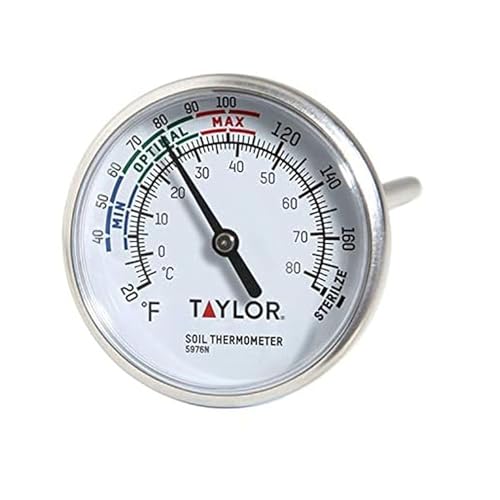
- 20°F–180°F analog temperature range
- Marked germination and planting zones
- 4-inch stem with included clip
Best For: Straightforward seed-starting temperature checks
Best Multifunction Tester

- Measures temperature, moisture, pH, and sunlight
- Backlit LCD with rotating viewing head
- Four-inch probe for soil measurements
Best For: Growers tracking several soil and light conditions
Best Deep-Reading Dial

- 6.5-inch stainless steel probe
- Top-view dial for easier reading
- Plant temperature guidance included
Best For: Deep soil checks during early planting and transplanting
Best Wide-Range Waterproof Dial
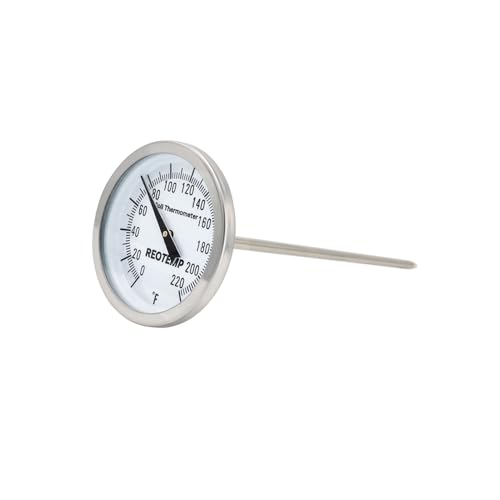
- 0°F–220°F temperature scale
- Five-inch stainless steel stem
- Waterproof, factory-calibrated design
Best For: Durable seeding and transplanting measurements
Deep-Reach Compost Monitor
20-Inch VIVOSUN Compost Thermometer

- 19.7-inch stainless steel stem
- 0–200°F range with ±2°F stated accuracy
- IP55 lens and colored temperature zones
Best For: Deep compost piles and outdoor gardening
Seed-Starting Essential
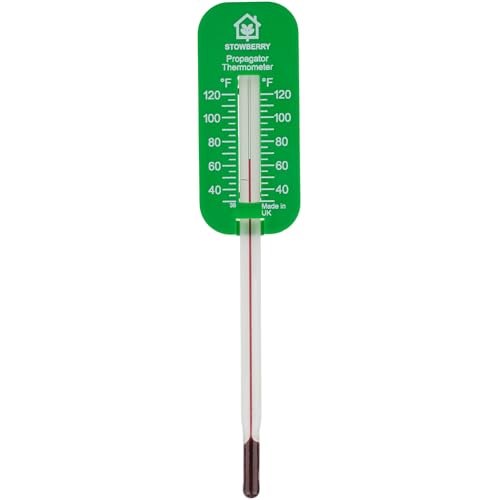
- 6-inch probe for gardens and propagators
- Clear analog scale for quick readings
- Reusable plastic case
Best For: Seed sowing and greenhouse propagation
Compact Worm-Bin Pick

- 5-inch stainless steel stem
- 55–90°F range for worm-bin monitoring
- Waterproof analog display with color zones
Best For: Shallow containers and worm compost bins
Best Long-Reach Pick
Garden Weasel 36-Inch Soil Thermometer

- 36-inch stainless steel probe
- Battery-free analog display
- Reads 0–220°F in Fahrenheit and Celsius
Best For: Deep soil beds and compost piles
Best for Compost and Large Beds
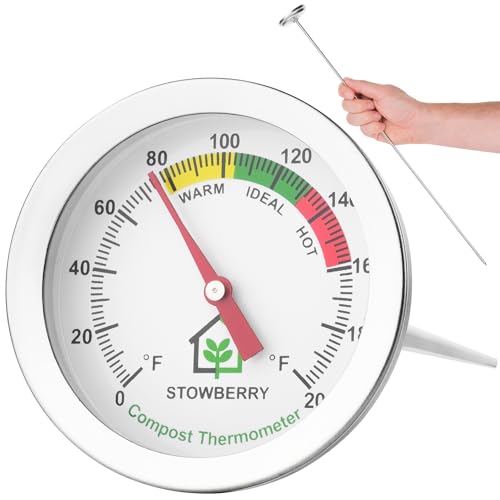
- 20-inch stainless steel probe
- 2-inch dial with activity zones
- No batteries required
Best For: Compost piles, tumblers, and deeper garden soil
Best Compact Option
Smart Choice 5-Inch Soil Thermometer
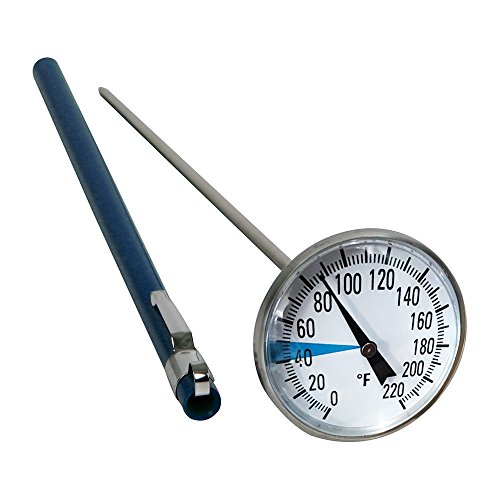
- 5-inch stainless steel stem
- 1.5-inch glass-covered dial
- Battery-free operation up to 220°F
Best For: Seed trays, pots, and shallow soil
Best Analog Guidance – Taylor Soil Thermometer
For gardeners who want straightforward soil thermometers for seed starting, the Taylor combines an easy-to-read analog dial with planting guidance printed directly on the face. Its stainless steel stem measures below the surface without batteries or a digital display.
Best For: Seed starting, raised beds, greenhouses, containers, and gardeners who prefer an analog tool.
Pros:
- Measures from 20°F to 180°F with clearly marked temperature zones.
- Four-inch stainless steel stem inserts at least 2 inches into the soil.
- Includes a stem clip for leaving it in place or attaching it to planters.
- Reusable stainless steel construction is suited to outdoor conditions.
Cons:
- Analog display may be less precise to read than a digital screen.
- Provides soil temperature only, rather than moisture, pH, or light readings.
The marked minimum, maximum, and optimal zones make this a practical choice when you want quick planting guidance rather than extra soil measurements.
Best Multifunction Tester – 4-in-1 Digital Soil Meter
This multifunction tester expands beyond soil thermometers for seed starting by measuring temperature, moisture, pH, and sunlight. Its backlit LCD, rotating head, and four-inch probe are useful when you want several growing conditions in one handheld device.
Best For: Indoor and outdoor growers who want temperature readings alongside moisture, pH, and light information.
Pros:
- Measures soil temperature, moisture, pH, and sunlight intensity.
- Backlit LCD and 45-degree rotating head improve viewing convenience.
- Probe reaches approximately 4 inches into the soil and readings are designed for quick use.
- Works with gardens, farms, potted plants, and succulents.
Cons:
- Requires four AAA batteries, which are not included.
- Soil should not be completely dry or hard when inserting the probe.
- The instructions call for readings from at least five locations for average pH and moisture results.
This is the more versatile option for growers managing multiple variables, though it involves more setup and battery dependence than a dedicated analog thermometer.
Best Deep-Reading Dial – Luster Leaf Rapitest 1630
The Luster Leaf Rapitest 1630 is a dedicated choice among soil thermometers for seed starting, with a long 6.5-inch probe for deeper readings. Its dial includes recommendations for several plant varieties and guidance for germination and transplanting.
Best For: Early-season planting and transplanting where a long probe and plant-specific temperature guidance are helpful.
Pros:
- Long 6.5-inch stainless steel probe reaches deeper into soil.
- Dial can be viewed from the top for convenient reading.
- Includes soil temperature recommendations for several plant varieties.
- Designed and calibrated specifically for soil use.
Cons:
- Temperature range tops out at 90°F.
- Analog dial may require closer viewing than a backlit digital display.
Its extended probe is the key advantage for deeper beds, while the included germination and transplant guidance helps turn the reading into a planting decision.
Best Wide-Range Waterproof Dial – K82-3 Soil Thermometer
For a rugged analog option, the K82-3 covers a broad 0°F to 220°F range and uses a five-inch stem for seeding and transplanting. Its waterproof design and glass lens make it practical for repeated garden use and cleaning.
Best For: Gardeners who want a durable, wide-range thermometer for seeding, transplanting, and general outdoor measurements.
Pros:
- Measures from 0°F to 220°F on an easy-to-read two-inch dial.
- Five-inch corrosion-resistant 304 stainless steel stem reaches below the surface.
- Waterproof construction supports easy cleaning.
- Factory calibrated and ready to use.
Cons:
- Uses an analog display rather than digital readout.
- Listed as battery powered, so it may require battery maintenance.
- Hand-wash-only care is specified.
The K82-3 stands out for its broad temperature scale and water-resistant construction, making it a strong fit for gardeners who prioritize durability and flexibility over extra soil functions.
Deep-Reach Compost Monitor – 20-Inch VIVOSUN Compost Thermometer
Among soil thermometers for seed starting, this VIVOSUN model stands out for its extra-long 20-inch design. Its 0–200°F analog scale, stainless steel construction, and colored temperature zones make it especially useful when you also monitor compost or deep outdoor planting areas.
Best For: Gardeners who want a long-reach thermometer for compost piles, outdoor soil, and broader temperature monitoring.
Pros:
- Long 19.7-inch stainless steel stem reaches deep into compost or soil.
- 0–200°F range and stated ±2°F accuracy provide detailed readings.
- IP55 waterproof lens and colored zones support clear, at-a-glance monitoring.
- Reinforced stainless steel construction is designed for repeated outdoor use.
Cons:
- Its 20-inch length may be excessive for shallow seed-starting trays.
- Requires 3–5 minutes of insertion time for a reading.
- Analog display may be less convenient than a digital readout for some users.
This is a versatile choice if your seed-starting setup is part of a larger gardening or composting routine. For small trays, its long probe is more than necessary, but the wide temperature range adds flexibility for outdoor use.
Seed-Starting Essential – Greenhouse Soil Thermometer
This compact greenhouse soil thermometer is a straightforward option for soil thermometers for seed starting. Its 6-inch probe is suited to gardens, propagators, and greenhouses, while the clear analog scale is designed for quick readings during sowing and propagation.
Best For: Home growers checking soil in seed trays, propagators, greenhouses, and small garden spaces.
Pros:
- Designed specifically for seed sowing, propagation, and plant care.
- Six-inch length is practical for many containers and garden beds.
- Clear analog scale makes readings quick and easy to view.
- Reusable plastic case is built for repeated garden use.
Cons:
- The supplied notes do not specify the thermometer’s temperature range.
- Plastic construction may offer less ruggedness than a stainless steel model.
- No digital display or stated numerical accuracy is provided.
With its focused greenhouse and propagation design, this is the most purpose-built option here for routine seed starting. It keeps the task simple, though shoppers who need a documented temperature range may prefer a model with more detailed specifications.
Compact Worm-Bin Pick – Urban Worm Soil Thermometer
Urban Worm Soil Thermometer - 5-in Stainless Steel Stem - Perfect for Gardening & Worm Bin
Check Price On AmazonThe Urban Worm Soil Thermometer is a compact option among soil thermometers for seed starting, with a 5-inch stainless steel stem that fits shallow soil and worm bins. Its 55–90°F scale and green, yellow, and red markings make temperature checks easy to interpret.
Best For: Gardeners managing small containers, worm bins, or seed-starting areas where a short probe is more practical.
Pros:
- Five-inch stainless steel stem suits shallow soil and worm compost.
- Colored tick marks make the analog display easy to monitor.
- Waterproof design supports outdoor use.
- Temperature scale covers the stated 55–90°F worm comfort range.
Cons:
- Its 55–90°F range is narrower than models intended for broad compost monitoring.
- Short stem may not reach deep beds or large compost piles.
- Supplied notes do not state a specific accuracy rating.
This thermometer is best when you value a compact probe and simple visual cues over a wide measurement range. It can work for shallow seed-starting containers, but its worm-bin focus makes it especially appealing to gardeners who also raise composting worms.
Best Long-Reach Pick – Garden Weasel 36-Inch Soil Thermometer
For gardeners comparing soil thermometers for seed starting, the Garden Weasel stands out when you need to reach deep into raised beds, soil, or compost. Its 36-inch stainless steel probe and battery-free analog display provide readings from 0 to 220°F, with Fahrenheit and Celsius scales.
Best For: Gardeners who need an extra-long probe for deep soil or compost temperature checks.
Pros:
- 36-inch probe reaches deep into soil and compost.
- Analog display requires no batteries.
- Water-resistant stainless steel construction with a lifetime guarantee.
Cons:
- The unusually long probe may be more than needed for seed trays or small containers.
- Analog readings may be less convenient than a digital display for users who prefer numerical readouts.
This is a durable, versatile choice if your seed-starting setup also includes deep beds or compost monitoring. For small containers, its long reach may be unnecessary.
Best for Compost and Large Beds – 20-Inch Compost Thermometer
This 20-inch model is a practical option among soil thermometers for seed starting when you also want to monitor compost or deeper garden soil. Its stainless steel probe reaches into the core of larger piles, while the 2-inch analog dial includes activity zones for quick interpretation.
Best For: Gardeners who want one thermometer for seed-starting soil, compost bins, tumblers, and large heaps.
Pros:
- 20-inch corrosion-resistant stainless steel probe reaches deep into compost.
- Large 2-inch dial is designed for quick reading.
- Requires no batteries and is intended for outdoor use.
Cons:
- Its compost-focused activity zones may be less relevant for simple seed-tray checks.
- A 20-inch probe can be cumbersome in small pots or shallow containers.
Choose this model if compost management is as important to you as checking planting temperatures. It offers useful reach without the extreme length of a 36-inch probe.
Best Compact Option – Smart Choice 5-Inch Soil Thermometer
For seed trays, pots, and routine garden checks, this Smart Choice model offers a compact alternative among soil thermometers for seed starting. The 5-inch stainless steel stem and 1.5-inch glass-covered analog dial measure up to 220°F without requiring an external power source.
Best For: Indoor and outdoor gardeners checking temperatures in pots, seed-starting containers, compost, and shallow soil.
Pros:
- Compact 5-inch stem suits pots and smaller planting areas.
- Glass-covered 1.5-inch dial is designed for visibility.
- Stainless steel construction and battery-free operation.
Cons:
- The shorter stem cannot reach as deeply as the other two models.
- The 1.5-inch dial is smaller than the 2-inch display on the 20-inch model.
This is the most practical fit for typical seed-starting containers and shallow garden soil. Select a longer model if you regularly need readings from deep beds or compost piles.
How We Picked the Best Soil Thermometers for Seed Starting
We evaluated these picks by focusing on the measurements that matter during propagation: temperature range, probe length, readability, construction, and ease of use. We also considered whether each thermometer is better suited to seed trays, garden beds, compost, or general soil testing.
Analog thermometers can be dependable and require no batteries, while digital models are useful when you want a quick numerical reading or additional measurements such as moisture, pH, and light. Probe length and scale visibility are especially important when working in deep containers or dense planting media.
Quick Comparison
| Best For | Recommended Type | What to Look For |
|---|---|---|
| Seed trays and propagators | Short analog or digital probe | Clear scale, compact stem, quick readings |
| Raised beds and garden rows | Medium-length soil thermometer | Durable probe and a useful temperature range |
| Compost or worm bins | Long-stem thermometer | Extended probe, sturdy construction, readable dial |
| Multiple soil checks | Digital multi-function meter | Temperature plus moisture or pH readings |
Key Buying Factors for Soil Thermometers for Seed Starting
Temperature Range
Choose a range that covers your crops and growing environment. A 0–220°F scale is common and provides flexibility for soil, compost, and outdoor gardening, although seed starting usually requires only the lower portion of that range.
Probe Length and Placement
A short probe is convenient for cell trays and shallow pots. Longer stems are better for raised beds, large containers, and compost, but they can be cumbersome in small propagation cells. Insert the probe near the seed zone without disturbing roots or compacting the medium.
Readability and Accuracy
Large markings and a clear dial make frequent checks easier. Digital displays can be faster to read, but they require batteries and should be used according to the manufacturer’s instructions for insertion depth and cleaning.
Construction and Maintenance
Stainless steel probes resist corrosion and are easier to wipe clean between containers. Avoid submerging a thermometer unless it is specifically designed to be waterproof, and clean soil from the probe after each use to prevent cross-contamination.
Who Should Buy Which Soil Thermometers for Seed Starting?
For indoor seed starting, choose a compact thermometer that is easy to place accurately in trays and propagators. Gardeners who want several readings from one tool may prefer a digital 4-in-1 meter, provided its temperature function meets their needs.
For general vegetable beds and transplanting, a standard stainless-steel soil thermometer with a medium-length stem offers a practical balance of reach and portability. Compost makers, worm-bin owners, and gardeners checking deep piles should select a 20-inch or longer probe so the reading comes from the interior rather than the surface.
If you mainly grow a few trays of seedlings, prioritize readability and simple operation over extra features. If you use the thermometer across compost, beds, and containers, a wider temperature range and stronger, longer probe may provide better long-term value.