Soil temperature can determine whether seeds germinate evenly, transplants establish quickly, and cool- or warm-season crops get the start they need. A reliable thermometer removes guesswork from planting decisions.
We compare 10 short probe soil thermometers and compact alternatives, focusing on probe length, readability, temperature range, construction, and practical garden use.
Best 10 Short Probe Soil Thermometers Picks for 2026
Best Overall
Taylor 4-Inch Soil Thermometer
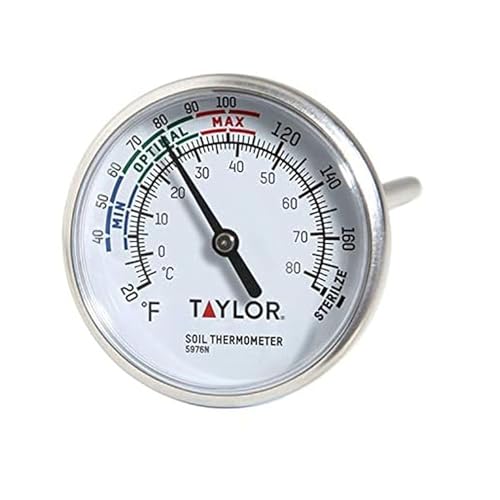
- 20°F–180°F analog temperature range
- Marked planting and germination zones
- Stainless steel stem with clip
Best For: Seed starting and everyday garden monitoring
Best for Compost
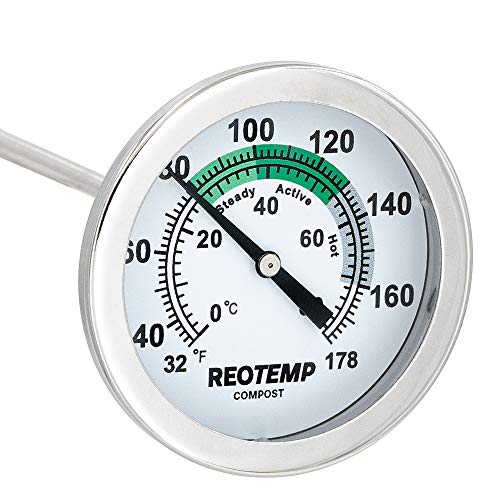
12-Inch Compost Dial Thermometer

- 12-inch stainless steel probe
- Dual Fahrenheit and Celsius dial
- Marked compost temperature zones
Best For: Deep compost pile monitoring
Best Temperature Range
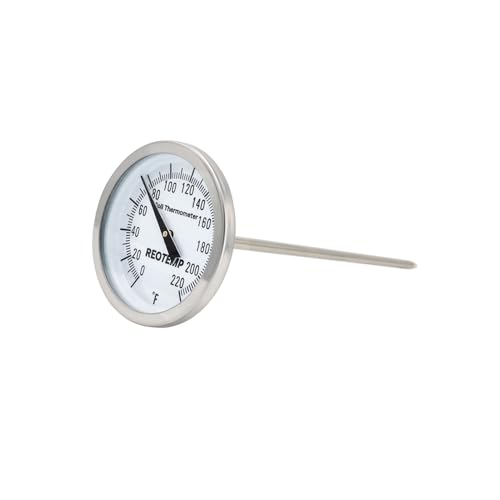
- 0°F–220°F measurement range
- Five-inch corrosion-resistant stem
- Waterproof and factory calibrated
Best For: Seeding and transplanting across a broad temperature range
Best for Worm Bins

- Color-coded 55°F–90°F range
- Five-inch stainless steel stem
- Waterproof analog design
Best For: Monitoring worm bins and worm compost
Best Digital Compost Probe
K83B1 12-Inch Soil & Compost Thermometer
- Digital display with quick stated response time
- 304 stainless steel construction
- Includes composting guide and storage case
Best For: Beginner composters and smaller bins or piles
Best Compact Greenhouse Probe
IN-342 6-Inch Soil Thermometer
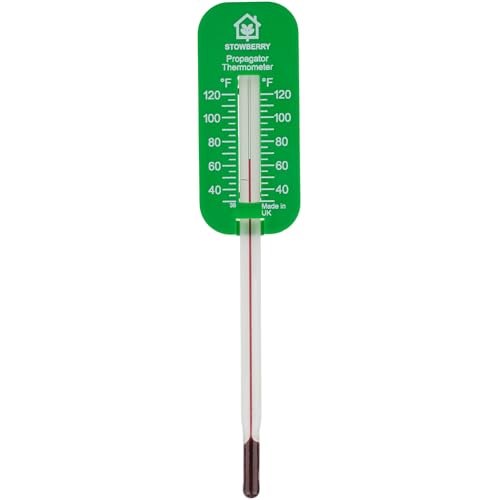
- Compact 6-inch probe for shallow soil
- Analog scale with simple operation
- Designed for gardens, propagators, and greenhouses
Best For: Seed starting and small greenhouse or container setups
Best Rugged Dial Probe
Smart Choice Stainless Steel Soil Thermometer
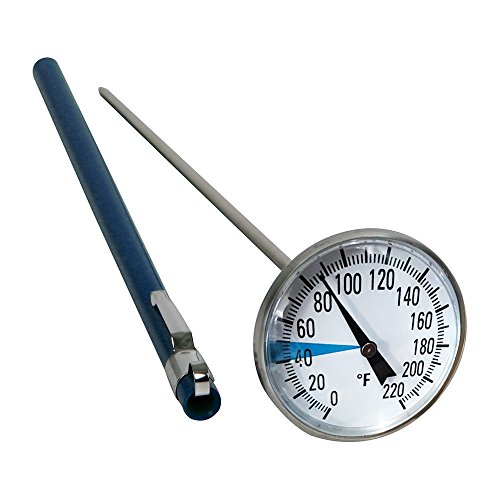
- 5-inch stem with 1.5-inch dial
- Stainless steel construction with glass-covered display
- No external power source required
Best For: Everyday soil and compost checks in pots, beds, and gardens
Deep-Pile Compost Monitor
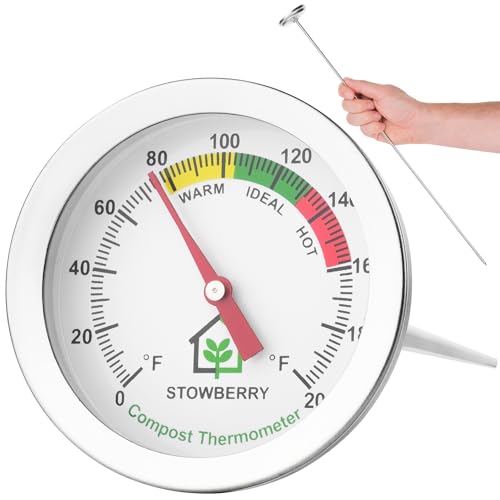
- 20-inch stainless steel probe
- 2-inch Fahrenheit activity-zone dial
- Battery-free outdoor operation
Best For: Large compost piles and tumblers
Two-Pack Garden Pick
Copkim 7.5-Inch Soil Thermometers
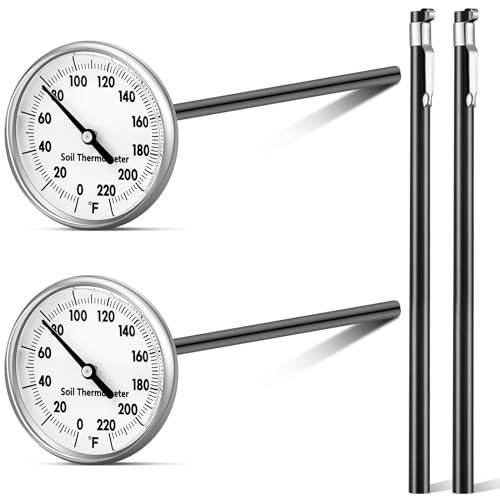
- Two thermometers with protective cases
- 7.5-inch stainless steel stems
- 0–220°F range with 1°F resolution
Best For: Routine garden checks and backups
Dual-Scale Deep Reader
Greenco 20-Inch Compost Thermometer

- 20-inch 304 stainless steel stem
- Fahrenheit and Celsius dial
- IP55 water-resistant sealed lens
Best For: Deep compost monitoring with dual scales
Best Overall – Taylor 4-Inch Soil Thermometer
For gardeners seeking short probe soil thermometers, the Taylor combines a compact 4-inch stem with a clear analog dial and planting guidance. Its marked temperature zones help identify suitable conditions for germination and planting without batteries.
Best For: Seed starting, raised beds, containers, greenhouses, and general garden monitoring.
Pros:
- Measures from 20°F to 180°F with a large, easy-to-read dial.
- Marked minimum, maximum, and optimal zones support planting decisions.
- Stainless steel construction and included stem clip support repeated use.
- Four-inch stem measures at least 2 inches below the soil surface.
Cons:
- Analog display may be less precise to read than a digital screen.
- Designed for outdoor soil and planting use rather than deep compost monitoring.
Its compact probe and built-in planting zones make this a practical all-purpose choice when you want straightforward soil readings and minimal maintenance.
Best for Compost – 12-Inch Compost Dial Thermometer
Although longer than many short probe soil thermometers, this compost thermometer is suited to users who need deeper readings. Its 12-inch stainless steel probe reaches into compost piles, while the large dual-scale dial shows both Fahrenheit and Celsius.
Best For: Compost piles and deeper garden or organic-material temperature checks.
Pros:
- Long 12-inch probe reaches well below the surface.
- Two-inch dial includes Fahrenheit and Celsius scales.
- Recommended temperature zones help monitor compost activity.
- Stainless steel construction is designed for outdoor conditions.
Cons:
- Its long probe is less convenient for shallow containers and small planting cells.
- The dial reaches up to 160°F, rather than the broader range of some garden thermometers.
Choose this model when depth matters more than compactness; it is specifically built around checking the internal temperature of composting material.
Best Temperature Range – K82-3 5-Inch Soil Thermometer
The K82-3 is one of the more versatile short probe soil thermometers for gardeners who want a broad measurement range. Its 5-inch stem reaches into soil for seeding and transplanting, and the 0°F–220°F Fahrenheit scale covers a wide range of conditions.
Best For: Seeding, transplanting, and gardeners who prefer a wide Fahrenheit scale.
Pros:
- Measures from 0°F to 220°F on an easy-to-read 2-inch dial.
- Five-inch 304 stainless steel stem suits soil temperature checks.
- Waterproof design supports easy cleaning.
- Factory calibrated and ready to use.
Cons:
- Provides a Fahrenheit scale only according to the supplied details.
- Listed as battery powered despite its analog display.
Its broad scale and waterproof construction make the K82-3 a useful option for gardeners who want more temperature coverage than a planting-focused dial typically provides.
Best for Worm Bins – Urban Worm 5-Inch Thermometer
Urban Worm Soil Thermometer - 5-in Stainless Steel Stem - Perfect for Gardening & Worm Bin
Check Price On AmazonFor worm bins and composting setups, the Urban Worm is a focused alternative to general short probe soil thermometers. Its 5-inch stainless steel stem reaches into soil or worm compost, while colored tick marks make the 55°F–90°F range easy to monitor.
Best For: Worm bins, worm compost, and gardeners tracking a narrow temperature range.
Pros:
- Green, yellow, and red markings simplify at-a-glance monitoring.
- Five-inch stainless steel stem reaches into soil and worm compost.
- Highlights the stated 55°F–90°F comfort range for worms.
- Waterproof and reusable design can be wiped clean.
Cons:
- Its 55°F–90°F scale is too limited for broad soil-temperature testing.
- The supplied details list a single unit count despite mentioning two thermometers and two stems.
This is a specialized choice rather than an all-purpose garden thermometer, but the color-coded scale is convenient when maintaining worm-bin conditions is the priority.
Best Digital Compost Probe – K83B1 12-Inch Soil & Compost Thermometer
For gardeners and composters who prefer a digital readout, this short probe soil thermometer offers a 12-inch stem suited to smaller compost bins, tumblers, piles, and soil checks. Its stainless steel construction and stated waterproof, dust-proof design support regular outdoor use.
Best For: Beginner composters and gardeners monitoring smaller compost piles or soil temperatures.
Pros:
- Digital display with a stated 500-millisecond response time
- 12-inch stem reaches smaller compost bins and soil
- Corrosion-resistant 304 stainless steel case and bezel
- Includes a digital composting guide and storage case
Cons:
- The digital format requires more care than a basic dial thermometer
- The 12-inch stem may be limiting for deeper piles
The K83B1 is a practical choice when quick digital readings and composting guidance matter. Its shorter stem is especially appropriate for compact setups rather than large, deep compost heaps.
Best Compact Greenhouse Probe – IN-342 6-Inch Soil Thermometer
This compact analog option is among the shorter probe soil thermometers for seed starting, propagators, greenhouse beds, and garden containers. Insert the 6-inch probe into the soil and use the clear scale to check conditions for sowing and plant growth.
Best For: Greenhouse growers, seed starters, and gardeners working in shallow soil or containers.
Pros:
- Compact 6-inch length suits propagators and smaller planting areas
- Analog display needs no stated external power source
- Designed for repeated outdoor use
- Useful for timing seed sowing and propagation
Cons:
- Plastic outer construction may be less rugged than stainless steel alternatives
- Analog readings may be less convenient for users who prefer digital displays
The IN-342 keeps soil-temperature checking simple and compact. It is a sensible fit for shallow planting environments where a short probe and easy-to-read analog scale are more important than extended reach.
Best Rugged Dial Probe – Smart Choice Stainless Steel Soil Thermometer
For gardeners wanting a durable analog tool, this short probe soil thermometer combines a 5-inch stem with a 1.5-inch glass-covered dial. It measures soil and compost temperatures without an external power source and is rated for a range up to 220 degrees Fahrenheit.
Best For: Indoor and outdoor gardeners who want a readable, reusable thermometer for soil and compost.
Pros:
- Rugged stainless steel components
- 1.5-inch glass-covered dial is designed for visibility
- 5-inch stem works well for many pots, beds, and compost checks
- Requires no external power source
Cons:
- The 5-inch stem offers less reach than the 12-inch model in this roundup
- Analog display may not suit users seeking digital precision
The Smart Choice model is a straightforward pick for repeat soil and compost checks. Its short stem, broad temperature range, and stainless steel dial construction make it well suited to everyday planting decisions.
Deep-Pile Compost Monitor – 20-Inch Compost Thermometer
For gardeners comparing short probe soil thermometers, this model takes a different approach with a 20-inch stainless steel probe designed to reach the core of large compost piles. Its analog, 2-inch dial displays Fahrenheit readings and activity zones for quick outdoor checks.
Best For: Large compost bins, tumblers, and deep heaps where core-temperature readings matter.
Pros:
- 20-inch corrosion-resistant stainless steel probe reaches deep into compost.
- 2-inch dial includes Fahrenheit readings and Steady, Active, and Hot zones.
- Requires no batteries and is designed for outdoor use.
Cons:
- The long probe is less convenient for shallow garden beds or container plants.
- Displays Fahrenheit only according to the supplied details.
This is a practical choice when a short probe would not reach the active center of a compost pile. Choose it for depth and simple, battery-free monitoring rather than compact portability.
Two-Pack Garden Pick – Copkim 7.5-Inch Soil Thermometers
Among short probe soil thermometers, the Copkim two-pack is sized for routine garden, ground, and compost checks. Each analog thermometer has a 7.5-inch stainless steel stem, a 0–220°F range, and a compact dial for convenient placement and quick readings.
Best For: Home gardeners who want a portable pair of thermometers or a backup for multiple planting areas.
Pros:
- Includes two thermometers and two black protective cases.
- 7.5-inch stems offer a practical depth for many garden checks.
- Stainless steel construction and 1°F resolution support repeatable readings.
Cons:
- The shorter stems may not reach the center of large compost heaps.
- The supplied details specify an analog Fahrenheit display rather than Celsius.
The two-pack provides useful flexibility for gardeners checking more than one location or keeping a spare on hand. Its shorter stems make it more manageable than deep compost probes, though less suited to large piles.
Dual-Scale Deep Reader – Greenco 20-Inch Compost Thermometer
For shoppers seeking short probe soil thermometers but needing greater reach, the Greenco uses a 20-inch stainless steel stem for compost and deep soil readings. Its 2-inch dial shows both Fahrenheit and Celsius, with color-coded ranges and 2-degree increments.
Best For: Compost monitoring when dual temperature scales, a sealed dial, and a long probe are useful.
Pros:
- 20-inch, 304 stainless steel stem reaches deep into compost.
- Dual Fahrenheit and Celsius display with color-coded temperature ranges.
- PC-coated, hermetically sealed lens is rated IP55 for water resistance.
- Includes composting instructions and a lifetime warranty claim.
Cons:
- The 20-inch stem is less compact for shallow beds and container gardening.
- The supplied details describe battery-powered and rechargeable operation, unlike simpler battery-free models.
This model suits gardeners who want deep readings plus Celsius and Fahrenheit at a glance. Its sealed, water-resistant dial adds outdoor practicality, while the long stem favors compost heaps over small planting containers.
How We Picked the Best Short Probe Soil Thermometers
We evaluated these thermometers for the tasks gardeners most often perform: checking seed-starting trays, garden beds, propagators, transplant holes, worm bins, and compost. Our comparison emphasizes useful probe length rather than simply choosing the longest instrument available.
We also considered dial or display readability, Fahrenheit and Celsius markings, measurement range, stainless-steel construction, waterproofing claims, and whether the design suits repeated outdoor use. Products with longer stems remain useful for compost piles, but shorter models are generally easier to position accurately in containers and shallow beds.
Quick Comparison
- For seed starting and planting: Choose a compact thermometer with a readable dial and a probe around 5 to 8 inches long.
- For raised beds and deeper soil: A 10- to 12-inch probe provides more reach without requiring a separate compost tool.
- For compost or worm bins: Prioritize a longer stainless-steel stem and a broad temperature scale.
- For flexible measurement: Fahrenheit-and-Celsius markings make the thermometer easier to use with international growing charts.
- For multiple beds or locations: A two-pack can save time when checking several containers or planting areas.
Key Buying Factors for Short Probe Soil Thermometers
Probe Length and Placement
Probe length affects where you can take a reading. Short stems are convenient in seed trays, pots, propagators, and shallow beds, while 12-inch models reach deeper soil and can work in smaller compost piles. Insert the probe to a consistent depth each time so readings are comparable.
Temperature Range
For ordinary planting, a range around 0 to 220 degrees Fahrenheit covers far more than most garden soil requires. Compost users should check whether the scale reaches the temperatures expected during active decomposition. A narrow but highly legible scale may be easier to read than an overly crowded one.
Dial Readability and Units
Large numerals and clear markings matter when reading the instrument outdoors. Dual Fahrenheit and Celsius scales are helpful if you follow seed packets, horticultural charts, or composting instructions that use different units.
Materials and Durability
Stainless-steel probes resist corrosion and are easier to clean after use. Look for a firmly attached stem, a sealed or waterproof housing when available, and a design that can be wiped down between beds to reduce the chance of transferring soil or debris.
Soil Versus Compost Use
Not every garden thermometer is intended for the heat and depth of a compost pile. If compost monitoring is your main goal, choose a long-stem model with a suitable high-temperature range. For seeds and transplants, a shorter probe is typically faster and easier to handle.
Who Should Buy Which Short Probe Soil Thermometers?
New gardeners and seed starters should choose an easy-to-read 5- to 8-inch model that fits trays, pots, and planting holes. Vegetable gardeners with raised beds may prefer a 10- to 12-inch probe for consistent readings below the surface.
Compost managers should select one of the longer 20-inch designs or a dedicated compost thermometer. Worm-bin owners need a model that reaches the bin comfortably without being awkward to store. Finally, gardeners checking several containers may benefit from a two-pack, especially when comparing sun-exposed and shaded locations.
Whichever style you choose, take measurements at the same depth and time of day, avoid touching the probe to stones or container walls, and clean it before moving between growing areas.