The right soil temperature can make the difference between quick germination and wasted seeds. The best digital soil thermometers give gardeners a fast, readable way to check conditions before planting, watering, or moving seedlings outdoors.
We selected 10 options ranging from simple temperature probes to multifunction soil meters, including models for containers, raised beds, compost, worm bins, and larger gardens. Use the guide below to match features, probe length, and measurement style to your routine.
Best 10 Digital Soil Thermometers Picks for 2026
Best Simple Digital Pick
Luster Leaf 1625 Digital Soil Thermometer

- Focused on soil temperature for planting decisions
- Compact 9-inch design
- Batteries included
Best For: Early-season planting and transplanting
Best for Connected Monitoring
ECOWITT WN34BS Soil Temperature Sensor

- LCD display with waterproof sensor
- Supports up to eight channels
- Optional app monitoring and alerts
Best For: Multi-location garden and greenhouse tracking
Best No-Battery Alternative
- Analog dial needs no batteries
- Marked planting temperature zones
- Durable stainless steel stem
Best For: Simple seed-germination and planting checks
Best Multifunction Tester

- Measures soil temperature plus six other factors
- Dual display with adjustable viewing head
- Works for indoor and outdoor plants
Best For: Whole-plant-care monitoring beyond temperature
Classic Precision Pick
Stainless Steel Soil Thermometer
- Rugged stainless steel build
- Large 1.5-inch dial display
- 0–220°F range with 5-inch stem
Best For: Power-free soil and compost temperature checks
All-in-One Digital Pick

- Measures soil temperature and five other soil factors
- Displays air temperature and humidity
- Works indoors and outdoors
Best For: Beginners needing broad plant-care measurements
Compost Monitoring Pick
K83B1 Soil & Compost Thermometer
- 12-inch stem for compost and soil
- 32–178°F temperature range
- Includes digital composting guide
Best For: Beginners monitoring compost bins and tumblers
Most Versatile Digital Soil Thermometer

- Measures temperature, moisture, pH, and sunlight
- Backlit LCD with a 45-degree rotating head
- Suitable for indoor and outdoor plants
Best For: Gardeners wanting multiple soil and plant readings in one tool
Best for Worm Bins

- Five-inch stainless steel stem
- Color-coded analog temperature scale
- Waterproof and reusable
Best For: Monitoring soil and worm-compost temperatures
Best All-Around Analyzer
Rapitest 4-Way Digital Soil Analyzer
- Tests pH, moisture, light, and temperature
- Digital output with a corded probe
- Includes tips and a 450-plus plant list
Best For: Home gardeners wanting guided, multifunction soil testing
Best Simple Digital Pick – Luster Leaf 1625 Digital Soil Thermometer
The Luster Leaf 1625 is a straightforward choice for gardeners who need digital soil thermometers for checking conditions during early-season planting or transplanting. Its compact 9-inch design and included batteries make it ready for routine garden use.
Best For: Gardeners who want a focused digital tool for checking soil temperature before planting.
Pros:
- Designed to help determine soil temperature for early-season planting and transplanting.
- Compact 9-inch profile is easy to handle around garden beds and containers.
- Three required batteries are included.
Cons:
- Its supplied notes focus on soil temperature rather than broader soil measurements.
- Battery-powered operation requires replacement batteries over time.
The 1625 is a practical, purpose-built option when soil temperature is the main factor guiding your planting schedule. It is less suited to shoppers seeking a multi-function soil analysis meter.
Best for Connected Monitoring – ECOWITT WN34BS Soil Temperature Sensor
The ECOWITT WN34BS stands out among digital soil thermometers for gardeners who want local readings plus optional remote monitoring. It combines an LCD display with a 30 cm stainless steel probe, wireless transmission, and support for multi-location tracking when paired with compatible equipment.
Best For: Gardeners, growers, and greenhouse users who want to monitor soil temperature across multiple locations.
Pros:
- LCD display provides real-time readings at the sensor.
- IP65 waterproof design and 11.81-inch stainless steel probe suit garden, lawn, farm, and greenhouse use.
- Supports up to eight sensor channels and optional app-based history, graphs, and email alerts with a GW1100 gateway.
- Transmits readings approximately every 77 seconds over up to 300 feet in open areas.
Cons:
- Remote app and server features require a separately sold GW1100 Wi-Fi gateway.
- Additional sensors are sold separately for multi-location monitoring.
This is the most capable choice here for connected soil-temperature tracking, especially where several beds or growing areas need regular observation. Buyers wanting only a simple handheld reading may find its networking features unnecessary.
Best No-Battery Alternative – Taylor Soil Thermometer
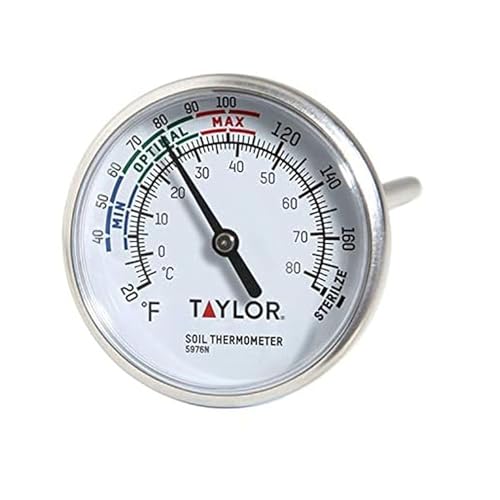
Although it is analog rather than digital, the Taylor Soil Thermometer is a useful comparison for shoppers considering digital soil thermometers. Its large dial shows temperatures from 20°F to 180°F, with marked minimum, maximum, and optimal zones to support seed germination and planting decisions.
Best For: Gardeners who prefer a durable, battery-free thermometer with built-in planting guidance.
Pros:
- Requires no batteries or digital screen.
- Clearly marked temperature zones help identify suitable germination and planting conditions.
- Four-inch stainless steel stem measures below the surface and includes a stem clip.
- Suitable for gardens, raised beds, greenhouses, and containers.
Cons:
- It uses an analog dial, not a digital display.
- The stem is designed to insert at least 2 inches into soil, offering less reach than longer probes.
The Taylor is a sensible option when simplicity, readability, and no-battery operation matter more than digital precision or connected features. Its marked planting zones are especially helpful for beginners.
Best Multifunction Tester – 7-in-1 Digital Soil Test Kit
This 7-in-1 tester is a broad soil-care option for shoppers comparing digital soil thermometers with multifunction meters. Along with soil temperature, it measures moisture, pH, fertility, light intensity, air temperature, and humidity, with readings shown through a dual-display design.
Best For: Indoor and outdoor growers who want soil-temperature readings alongside wider plant-care measurements.
Pros:
- Measures seven factors, including soil temperature and ambient conditions.
- Dual display shows soil readings on the upper dial and temperature and humidity data on the LCD screen.
- 90-degree adjustable head offers six viewing angles.
- Single probe is intended to minimize root disturbance when inserted at least 5 inches into moist soil.
Cons:
- It should not be used in water, stones, or very loose soil.
- The probe should not be left in soil for extended periods and needs cleaning after use.
- Its many measurements may be more than needed for shoppers seeking temperature alone.
This kit makes sense when soil temperature is only one part of your plant-care routine. Choose it over a dedicated thermometer if pH, moisture, fertility, light, and humidity readings are also useful to you.
Classic Precision Pick – Stainless Steel Soil Thermometer
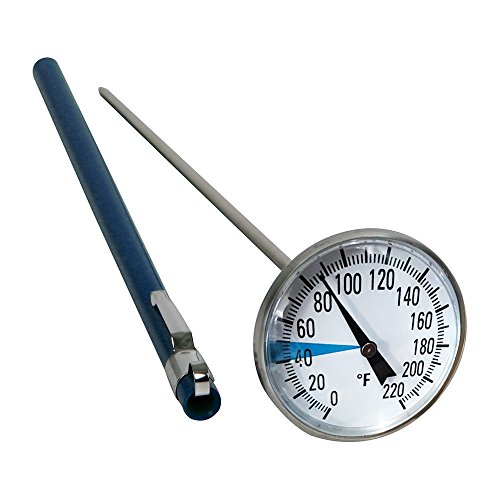
For gardeners who want straightforward digital soil thermometers alternatives, this analog stainless steel model offers a quick, easy-to-read temperature check for garden soil and compost. Its 5-inch stem and 0–220°F range suit both indoor and outdoor planting tasks.
Best For: Gardeners who prioritize a durable, power-free thermometer for soil and compost temperature checks.
Pros:
- Rugged stainless steel construction with a glass-covered 1.5-inch dial.
- 5-inch stem supports deeper, potentially more representative soil readings.
- Requires no external power source and has a broad 0–220°F range.
Cons:
- Uses an analog display rather than a digital readout.
- Designed for outdoor use, so it may be less versatile for broader environmental monitoring.
This is a practical choice when durability and simplicity matter more than extra soil measurements. The large dial and long stem make it a focused tool for planting and composting decisions.
All-in-One Digital Pick – 7-in-1 Soil Tester
Among digital soil thermometers, this 7-in-1 tester stands out for combining soil temperature with moisture, pH, fertility, light, air temperature, and humidity readings. A dual-dial and LCD design makes it useful for monitoring plants indoors or outdoors.
Best For: Beginners and plant growers who want soil temperature readings alongside broader plant-care measurements.
Pros:
- Measures soil moisture, pH, fertility, temperature, and light.
- LCD screen also displays air temperature and humidity.
- Single probe is approximately 6.8 inches long and intended for medium to large pots.
- Supports indoor gardens, lawns, farms, potted plants, and outdoor beds.
Cons:
- Requires three batteries, which should be replaced or installed together.
- Readings may take 3–5 minutes, depending on the measurement.
- It is not intended for testing liquid.
This model is better suited to gardeners who want a multipurpose monitoring tool rather than a temperature-only instrument. Its extra functions add convenience, though they also bring more setup and operating considerations.
Compost Monitoring Pick – K83B1 Soil & Compost Thermometer
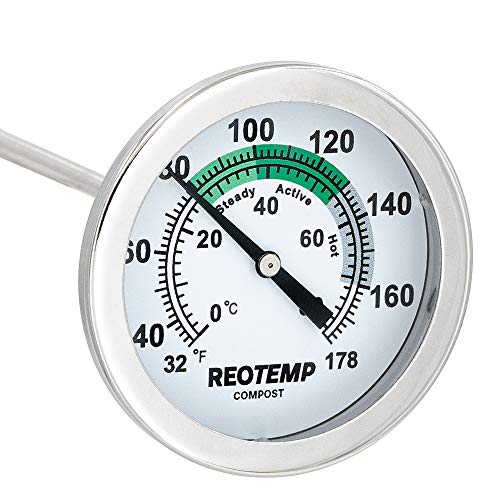
This 12-inch thermometer is designed for compost piles, tumblers, and soil temperature checks. It covers 32–178°F and includes a digital composting guide, making it a useful option for shoppers comparing digital soil thermometers for compost management.
Best For: Beginner composters and gardeners monitoring smaller compost bins, tumblers, or soil.
Pros:
- 12-inch stem reaches into compost piles and soil.
- Corrosion-resistant 304 stainless steel case and bezel.
- Waterproof and dust-proof construction with a quality glass lens.
- Includes a digital composting guide and storage case.
Cons:
- Temperature range ends at 178°F, narrower than some soil thermometers.
- Its compost-focused design may be more specialized than needed for general garden use.
With its long probe and protective construction, the K83B1 is a focused choice for tracking compost conditions. The included guide adds value for beginners who are learning how to manage a compost pile.
Most Versatile Digital Soil Thermometer – 4-in-1 Soil Moisture Meter
For gardeners who want more than temperature readings, this digital soil thermometer combines temperature, moisture, pH, and sunlight measurements in one handheld tool. Its backlit display, rotating head, and simple probe-based operation make it practical for indoor plants, gardens, farms, and containers.
Best For: Growers who want one digital tester for checking several common soil and plant-care conditions.
Pros:
- Measures soil temperature, moisture, pH, and sunlight intensity.
- Large backlit LCD screen supports reading in daylight or darkness.
- 45-degree rotating head can make the display easier to view without bending over.
- Designed for quick readings after inserting the probe about 4 inches into the soil.
Cons:
- Requires four AAA batteries, which are not included.
- Cannot be used to test liquids directly.
- Very dry or hard soil should be watered before testing, and the manufacturer recommends readings from multiple locations.
This is the most feature-rich option in the group, especially for users who want pH and light information alongside temperature. It requires more careful testing than a simple thermometer, but the visual display and adjustable head add convenience.
Best for Worm Bins – Urban Worm Soil Thermometer
Urban Worm Soil Thermometer - 5-in Stainless Steel Stem - Perfect for Gardening & Worm Bin
Check Price On AmazonThe Urban Worm Soil Thermometer is a straightforward option for checking temperatures in soil and worm compost. Its 5-inch stainless steel stem reaches into the material, while the green, yellow, and red markings make the analog scale easy to interpret at a glance.
Best For: Worm-bin owners and gardeners who prefer a simple, reusable analog thermometer.
Pros:
- Five-inch stainless steel stem is suited to soil and worm compost.
- Color-coded green, yellow, and red markings simplify monitoring.
- Waterproof and reusable for outdoor use.
- Its 55°F to 90°F scale aligns with the stated comfort range for worms.
Cons:
- Uses an analog display rather than a digital readout.
- Its stated temperature range is limited to 55°F through 90°F.
- It focuses on temperature and does not provide moisture, pH, or light readings.
This is a focused temperature-monitoring tool rather than a multifunction soil analyzer. Choose it when easy visual checks and a stainless steel probe matter more than digital precision or additional soil data.
Best All-Around Analyzer – Rapitest 4-Way Digital Soil Analyzer
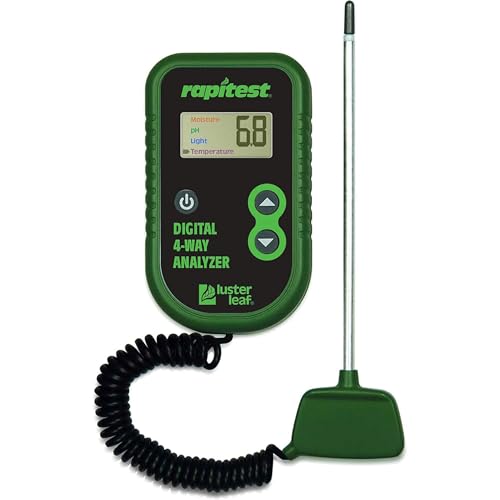
The Luster Leaf Rapitest 4-Way Digital Soil Analyzer is a practical choice for gardeners seeking a digital soil thermometer with broader testing capability. It checks soil pH, moisture, light, and temperature, with a corded probe that lets you handle the sensor while viewing the output.
Best For: Home gardeners who want a digital four-way soil analyzer backed by included guidance.
Pros:
- Measures soil pH, moisture, light, and temperature.
- Digital output is designed for easy reading.
- Corded probe makes it easier to handle the probe and view the display at the same time.
- Includes instructions, gardening tips, and a plant list covering more than 450 plants.
Cons:
- It is a multifunction analyzer rather than a temperature-only instrument.
- The supplied details do not specify its temperature range or accuracy.
- The corded design may be less compact than a single-piece probe.
Rapitest is a strong fit for gardeners who want temperature readings alongside the other basic soil measurements and appreciate reference material for interpreting results. Its included plant list and guidance add value for newer growers.
How We Picked the Best Digital Soil Thermometers
We focused on measurement usefulness, probe design, display readability, stated temperature range, and the types of gardening tasks each tool suits. The roundup includes dedicated soil thermometers for straightforward readings, longer probes for beds and compost, and multifunction meters that also measure moisture, pH, light, or air conditions.
Because accuracy can depend on soil contact, depth, moisture, and calibration, we also considered practical details such as waterproof construction, stainless-steel stems, response convenience, and whether a model is best used for occasional checks or repeated monitoring.
Quick Comparison
| Best For | Look For | Recommended Type |
|---|---|---|
| Seed starting | Clear readings and a compact probe | Dedicated digital thermometer |
| Raised beds and garden rows | Longer stem and durable construction | Long-probe soil thermometer |
| Compost or worm bins | Extended reach and broad temperature range | Compost thermometer |
| General plant diagnosis | Temperature plus moisture or pH | Multifunction soil meter |
| Simple visual checks | Low-maintenance, easy-to-read display | Analog or basic digital model |
Key Buying Factors for Digital Soil Thermometers
Probe Length and Construction
A short probe works well in seed trays and pots, while a longer stem reaches the center of raised beds, compost piles, and larger containers. Stainless steel is useful when the probe will be inserted frequently or cleaned between readings.
Temperature Range and Units
Choose a range that covers your intended use. Germination checks typically need moderate soil temperatures, while composting can require a wider range. A Fahrenheit/Celsius switch is helpful if you follow growing charts or recipes using either unit.
Display and Operating Conditions
Large LCD screens are easier to read outdoors, especially when bending over beds. If the tool may encounter damp soil or rain, look for water-resistant or waterproof construction, but do not assume the entire device can be submerged unless the manufacturer says so.
Single-Purpose Versus Multifunction Testing
Dedicated Digital Soil Thermometers are usually simpler and faster for temperature checks. Combination meters can provide useful context about moisture, pH, light, or air humidity, but extra sensors do not automatically mean greater accuracy. Buy the functions you will actually use.
Who Should Buy Which Digital Soil Thermometers?
For Seed Starters and Container Gardeners
Choose a compact, easy-to-read thermometer with a probe suited to shallow trays and pots. A dedicated model keeps the process quick when you are checking several containers.
For Vegetable Gardeners
Look for a durable probe with enough reach for bed depth and a display that is readable in daylight. A multifunction meter may be worthwhile if you also want moisture or pH information.
For Composters and Worm-Bin Owners
Select a longer-stem thermometer designed for compost or organic material, with a range broad enough to identify cool, active, or overheated areas. Take readings at multiple depths for a more useful picture.
For Gardeners Who Want One General Tool
A 4-way or 7-in-1 tester can consolidate several checks into one device. It is a practical choice for troubleshooting, but verify the instructions for sensor placement and calibration before relying on readings for important planting decisions.